China-Fueled Gold Rush Rally Hits a Wall as Supply Expansion Gains Momentum

Authored on
Modified
China’s stockpiling spree drove gold to record highs
Production expansion campaign brings the rally cycle to a halt
Central bank demand remains resilient amid reserve asset reallocation
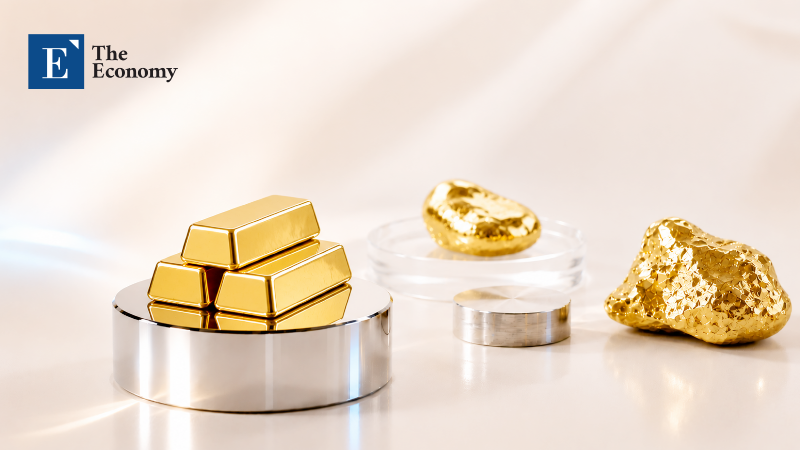
Global gold prices have entered a sharp downturn, exposing cracks in the gold rush that China helped drive. Aggressive purchases by the Chinese government and large-scale hoarding by retail investors underpinned years of gains in bullion prices, but market sentiment has shifted dramatically in recent months. The reversal is widely attributed to expectations of rising supply as major gold mine developments accelerate across China and production growth gathers pace.
Gold Retreats to Start-of-Year Levels After Reaching $5,500 per Ounce
On Aug. 7, gold futures for August delivery on the New York Mercantile Exchange settled at $4,365.3 per ounce, down 3.1% from the previous session. The sharp decline pushed gold futures back to levels seen at the start of the year, erasing all gains accumulated in 2026. Gold had maintained strong upward momentum since last year and briefly surpassed $5,500 per ounce earlier this year.
As international gold prices turned sharply lower, China, one of the world’s largest gold-consuming markets, cooled almost immediately. According to the South China Morning Post (SCMP), daily sales at some gold retail outlets in China fell from several kilograms to only a few hundred grams. Retail demand evaporated rapidly as investors who bought near record highs postponed additional purchases following the price correction.
Zhou Baolin, a jeweler operating in Shanghai’s Yuyuan Garden, one of China’s leading gold trading hubs, has experienced the shift firsthand. “During the first two months of the year, we sold an average of two to three kilograms of gold every day, but since the decline in international gold prices accelerated, daily sales have collapsed to just 100?200 grams,” Zhou said. Analysts believe the investment frenzy was heavily dependent on expectations of rising prices, allowing bearish sentiment to spread just as rapidly during the correction.
China’s Gold Buying Spree Powered Years of Price Gains
Chinese consumers have tightened their wallets because of growing fears that gold prices, after the record-setting rally earlier this year, may have peaked and face further downside. At the center of the gold rush was China’s aggressive accumulation of bullion. China’s influence on the global gold market is immense. The country is both the world’s largest gold consumer and one of the most significant central-bank buyers. At the end of last year, the People’s Bank of China purchased approximately $961 million worth of gold from Russia, a transaction widely regarded as the largest gold deal in the history of bilateral trade between the two countries. According to China’s National Bureau of Statistics, Russian gold exports to China exceeded $900 million for two consecutive months, highlighting a steady supply flow. In October of last year, Russian gold exports to China surpassed $930 million.
The central bank’s gold accumulation strategy forms part of a broader effort to diversify reserves amid dollar strength and geopolitical risks. The People’s Bank of China has gradually amassed substantial gold holdings over decades. China’s gold reserves, which stood at five million ounces (141.7 metric tons) in 1952, fell to 85 metric tons after gold was used to purchase food during the nationwide famine of the late 1950s. Holdings remained around 359 metric tons before rising to 546.9 metric tons following China’s accession to the World Trade Organization (WTO) in 2001. Subsequent purchases in 2009, 2015, and 2019 expanded reserves to 1,775.8 metric tons.
Gold reserves increased even more rapidly after Russia invaded Ukraine in February 2022. The process began with a 29.2-ton purchase in November of that year. The People’s Bank of China acquired 288 metric tons through April 2024, paused purchases between May and October, and resumed buying after Donald Trump won the U.S. presidential election in November. Gold holdings increased by 34.59 metric tons during the 10 months leading up to August last year alone.
China’s buying spree generated substantial upward pressure on global gold prices, but the rally began to lose momentum in March. Gold prices fell more than 13% during the month, marking the steepest decline since October 2008. The trend has continued ever since. Spot gold prices declined roughly 3% in May and have fallen more than 20% from the Shanghai Gold Exchange’s record high of approximately $175 per gram reached at the end of January. Gold prices have traded sideways around $140 per gram over the past two months, but escalating geopolitical and macroeconomic risks have amplified perceived risks among consumers.

China Expands Gold Supply for a Seventh Consecutive Year as Gold Emerges as a New Export Commodity
China’s aggressive gold mine development campaign has played a significant role in the sudden reversal of gold prices. Rising demand for gold amid broader dollar weakness and inflation concerns has prompted China to accelerate mine development efforts. China’s gold production target for this year stands at 260 metric tons, up 7.7% from last year. If achieved, annual production growth will exceed 7% for a second consecutive year. China produced 240.08 metric tons of gold last year, representing a 7.15% increase from the previous year.
China’s gold output has now increased for seven consecutive years. According to National Bureau of Statistics data, last year’s production surpassed that of the United States, the world’s second-largest producer. At the current pace, China is expected to overtake South Africa, the world’s largest producer, within this year. During the first half alone, China’s gold production rose 18% year over year to 129 metric tons, while South African output fell 7% to 134 metric tons. South Africa has suffered a sharp decline in production since 2002 due to rising extraction costs at major mines and large-scale labor strikes. The country produced 275 metric tons of gold last year, the lowest level in a decade.
China has recently achieved a series of major gold discoveries. On April 16, a giant gold deposit containing 308 metric tons of reserves was discovered in Yangshan, Gansu Province. The mine, with an estimated economic value of roughly $7 billion, is the largest gold deposit ever discovered in China. Earlier, on April 8, another deposit containing 51.83 metric tons of reserves was found in Laizhou, Shandong Province. Its estimated economic value is approximately $1.1 billion.
China’s enthusiasm for gold mine development reflects the substantial profits generated by gold exports. The country earned roughly $900 million from gold sales last year. Gold prices, which began last year at $517 per ounce, climbed above $700 at one point before ending the year at $636.6 per ounce. For China, gold has effectively emerged as a new export commodity.
Demand from central banks around the world remains robust. According to the European Central Bank’s annual report, The International Role of the Euro, released earlier this month, gold accounted for 27% of global central-bank reserve assets at the end of last year, surpassing U.S. Treasuries at 22%. Gold’s share rose from 16% at the end of 2023 to 20% at the end of 2024 and then to 27%, while the share of U.S. Treasuries declined from 26% to 25% and then 22% over the same period. It marked the first time since 1996 that gold holdings exceeded U.S. Treasury holdings in reserve portfolios.
The trend is evident in broader indicators as well. International Monetary Fund (IMF) data show that the dollar’s share of global foreign-exchange reserves fell below 57% in the third quarter of last year, the lowest level since 1995. The figure has steadily declined since peaking at 72% in 2001. Concerns over the “weaponization” of dollar-denominated assets have contributed to the shift. Following Russia’s invasion of Ukraine, Western countries froze approximately $300 billion in Russian dollar assets. In response, emerging economies including China and India accelerated efforts to increase gold holdings, viewing bullion as an asset insulated from sanctions risk. Analysts also point to the U.S. government’s massive fiscal deficits, which have weakened confidence in the safe-haven status of Treasury securities, along with heightened geopolitical tensions, as key drivers of the sustained shift toward gold.
Similar Post