Tesla–SpaceX Merger Talks Gather Pace Amid Chinese EV Offensive, Setting Stage for Shift Toward Robotics and Space
Tesla–SpaceX Merger Talks Gather Pace Amid Chinese EV Offensive, Setting Stage for Shift Toward Robotics and Space

Matthew Reuter is a senior economic correspondent at The Economy, where he covers global financial markets, emerging technologies, and cross-border trade dynamics. With over a decade of experience reporting from major financial hubs—including London, New York, and Hong Kong—Matthew has developed a reputation for breaking complex economic stories into sharp, accessible narratives. Before joining The Economy, he worked at a leading European financial daily, where his investigative reporting on post-crisis banking reforms earned him recognition from the European Press Association. A graduate of the London School of Economics, Matthew holds dual degrees in economics and international relations. He is particularly interested in how data science and AI are reshaping market analysis and policymaking, often blending quantitative insights into his articles. Outside journalism, Matthew frequently moderates panels at global finance summits and guest lectures on financial journalism at top universities.
Authored On
Modified
EV profits shrink as AI and robotics development costs mount
Combination with SpaceX pursued to secure funding and technology
Prospects for more advanced vehicle technology coexist with potential investment focus on robotics
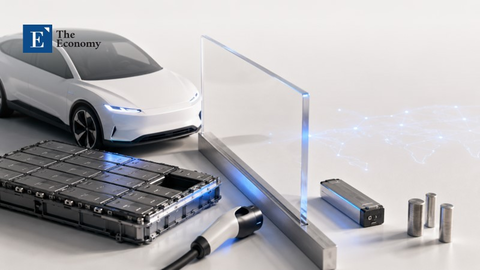
Tesla has sharply lowered its long-term vehicle sales target and begun reviewing a merger with SpaceX. The plan aims to pool the funding and technology needed to develop artificial intelligence (AI) and robots as profitability in its electric vehicle business deteriorates. If the merger goes through, leading scenarios include using SpaceX’s AI and communications infrastructure to advance autonomous driving and restructuring investment around robotics. Both strengthening EV competitiveness and reducing the share of investment devoted to automobiles remain possibilities.
Tesla Sharply Cuts Annual Sales Target to 5 Million Vehicles
According to Bloomberg and other outlets on the 22nd (all dates hereafter local time), Tesla CEO Elon Musk said during the previous day’s third-quarter earnings announcement that the company was expanding production capacity, setting a target of achieving annual sales of 5 million vehicles around 2030. That is one-quarter of the 20 million target announced in 2020, marking a sharp reduction in a sales ambition that had effectively disappeared from the company’s official targets in recent years. Given that vehicle deliveries totaled 1.6 million last year, even the new target assumes sales will more than triple over five years. Deliveries in the third quarter of this year fell about 2% year on year to 486,532 vehicles, leaving the company in need of additional drivers of sales growth.
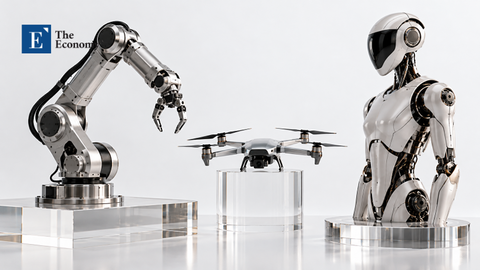
Tesla identified AI-powered autonomous driving features as its key means of expanding sales. During the earnings announcement, Musk cited Full Self-Driving (FSD), its driver-assistance software, as a major driver of vehicle demand. The company said it had more than 1.7 million paying users worldwide, half of whom use the service through subscriptions. This appears to be a strategy to secure recurring revenue by adding software fees to vehicle sales. Tesla also provided a more specific timeline for commercializing its Optimus humanoid robot. Musk said initial production had begun on a mass-production line at the Fremont factory in California and identified around the end of next year as the point when products would be supplied to outside companies. He added, however, that scaling up production would take time because work remained to improve the robot’s hand and finger design, durability, and AI performance.
Talks on a USD 3.5 Trillion Corporate Combination Spanning EVs to Space
Alongside the expansion of its AI and robotics businesses, merger discussions with SpaceX, also led by Musk, have entered a formal process. During SpaceX’s earnings announcement on the 20th, Musk said the two companies had each established special committees composed of independent directors at shareholders’ request. While calling a combination of the two companies a “good idea,” he explained that he could not participate in the special committees’ discussions because he was an interested party. The companies’ market capitalizations stand at about USD 1.5 trillion for Tesla (approximately USD 1.55e+3 billion) and USD 2 trillion for SpaceX (approximately USD 2.06e+3 billion). If completed, the merger could create a corporate giant worth a combined USD 3.5 trillion (approximately USD 3.61e+3 billion). The plan would bring electric vehicles, energy storage systems, rocket launches, and satellite communications together under one company. The combined entity would also include the AI business of xAI, which SpaceX acquired in February.
The companies cite AI software, semiconductor design and manufacturing, robotics, and satellite communications as the business rationale for the merger. Explaining the anticipated benefits of the combination, Musk emphasized that there was considerable room to expand cooperation in each field. The two companies announced a joint venture this year called “Terafab” to build a large-scale semiconductor manufacturing facility in Austin, Texas. The plan is to produce chips needed for autonomous vehicles, robots, and orbital AI data centers, making it a joint investment linking automotive computing technology with space infrastructure. During the latest SpaceX earnings announcement, Musk set the first trial chip production at Terafab for around May–June next year, with full-scale mass production targeted for the third quarter of 2028.
Table 1. Changes in Tesla’s Third-Quarter Profitability and Investment and Borrowing Plans
| Category | Key Metric | Details |
|---|---|---|
| Rising costs | Operating expenses | Up 39% year on year in the third quarter of this year |
| Research and development expenses | USD 1.63 billion in the third quarter of last year → USD 2.761 billion in the third quarter of this year Up approximately 69% | |
| Deteriorating profitability | Operating margin | 5.8% in the third quarter of last year → 2.6% in the third quarter of this year |
| Operating profit | USD 718 million in the third quarter of this year Down 56% year on year | |
| Additional pressures | Lower regulatory credit revenue and reduced profit in the energy storage business | |
| Investment and financing | Capital expenditure outlook | This year’s forecast lowered from USD 25 billion → USD 20 billion |
| Borrowing limit | Secured up to USD 30 billion in preparation for increased future investment |
Tesla Seeks Cost Savings Through Merger as Profitability Deteriorates
With semiconductor manufacturing facilities and AI development requiring substantial funding, Tesla’s deteriorating profitability is adding weight to the merger discussions. Tesla’s operating expenses rose 39% year on year in the third quarter of this year, pushing its operating margin down from 5.8% to 2.6%. Research and development (R&D) expenses, in particular, increased about 69% over the same period, from USD 1.63 billion (approximately USD 1.68 billion) to USD 2.761 billion (approximately USD 2.85 billion), adding to the cost burden. Combined with lower regulatory credit revenue and reduced profit in the energy storage business, operating profit fell 56% to just USD 718 million (approximately USD 738 million). Its ability to generate profits has weakened just as funding needs for new businesses are growing. Tesla has therefore moderated the pace of spending by lowering its capital expenditure forecast for this year from USD 25 billion (approximately USD 25.8 billion) to USD 20 billion (approximately USD 20.6 billion), while also securing a borrowing limit of up to USD 30 billion (approximately USD 30.9 billion) in preparation for increased future investment.
The plan to deploy investment funds more efficiently is also seen as reflecting hopes of easing the management burden concentrated on Musk alone. Justus Parmar, CEO of Fortuna Investments, which has invested in both companies, said a merger could reduce duplicated work and save the time Musk spends moving between the two companies, as well as legal and administrative costs. The explanation is that it would create room to consolidate administrative tasks arising from operating as separate listed companies and jointly deploy personnel and funding for shared businesses. JPMorgan also cited the companies’ shared technical talent and AI infrastructure, along with Musk’s management and development philosophy, as business justifications for a merger. This is interpreted as a judgment that, as more businesses rely on Musk’s personal vision and execution, a merger could reduce the fragmentation of his management efforts. Investors also expect joint borrowing and the integration of support functions to ease the cash-flow burden of large-scale capital expenditure.
Combining AI and Communications to Strengthen EV Competitiveness
Two scenarios are being discussed for the future of Tesla’s EV business after a merger. The first is the possibility of further strengthening its EV competitiveness by combining it with SpaceX’s AI and communications infrastructure. If the merger goes through, Tesla’s accumulated real-world driving data and the AI development capabilities of SpaceX subsidiary xAI could be used within the same company. This means cooperation between the two companies could become closer in the development process of feeding vehicle data into AI training and then deploying improved software back to vehicles. SpaceX’s proposed orbital data center business, if realized, is also seen as a potential source of the computing resources Tesla needs for AI development. If these resources can improve autonomous driving performance and the quality of vehicle software, the infrastructure secured through the merger could underpin the competitiveness of the automotive business.
More advanced autonomous driving technology would also create greater scope to expand businesses that generate revenue through transportation services even after vehicles are sold. During its latest earnings announcement, Tesla proposed adding some customer-owned vehicles to its robotaxi network around the second quarter of next year. The plan is to add privately owned vehicles to the company’s own fleet for paid transportation services, and Tesla is working to establish service areas and vehicle management systems. A combination with SpaceX raises the possibility of using Starlink as a communications network for robotaxis and autonomous systems. If plans to integrate satellite communications into vehicle services take shape, they could provide an additional means of connecting vehicles to the operating network.
Maintaining EV Scale While Focusing Investment on Robotics and AI
The second scenario is for the merged entity to maintain the EV business at a certain scale while concentrating new investment and personnel on robotics and AI. If Tesla shareholders gain exposure to SpaceX’s growth businesses through a share exchange, the burden of persuading investors on the basis of expectations for expanding vehicle sales is also expected to ease. Moves to repurpose production facilities for robotics are already underway. Tesla has converted the Model S and X production space at its Fremont factory into an Optimus manufacturing facility and is also building a robot production line in Austin, Texas. If robotics receives higher priority in capital allocation after the merger, the EV division could focus on sales of core models and cash generation, while robotics and AI lead new investment.
If Tesla moderates the pace of EV investment and production expansion, established automakers could gain more room to expand their sales base. However, to translate that into market share gains, they would have to withstand the offensive from Chinese manufacturers competing on price. Trade barriers in the United States and Europe are expected to ease competitive pressure on local manufacturers in this process. The United States has raised its Section 301 tariff rate on Chinese-made EVs to 100%, while the European Union (EU) has also imposed company-specific countervailing duties to limit the price advantage of Chinese-made vehicles. If tariff burdens dampen sales of Chinese-made vehicles, automakers producing locally would have an opportunity to capture replacement demand. Tesla, which has production facilities in the United States and Germany, is also positioned to benefit. This means that even if it concentrates new investment on robotics and AI, it could still respond to increased demand and improve profitability by raising utilization rates at its existing EV factories.
Matthew Reuter is a senior economic correspondent at The Economy, where he covers global financial markets, emerging technologies, and cross-border trade dynamics. With over a decade of experience reporting from major financial hubs—including London, New York, and Hong Kong—Matthew has developed a reputation for breaking complex economic stories into sharp, accessible narratives. Before joining The Economy, he worked at a leading European financial daily, where his investigative reporting on post-crisis banking reforms earned him recognition from the European Press Association. A graduate of the London School of Economics, Matthew holds dual degrees in economics and international relations. He is particularly interested in how data science and AI are reshaping market analysis and policymaking, often blending quantitative insights into his articles. Outside journalism, Matthew frequently moderates panels at global finance summits and guest lectures on financial journalism at top universities.
Similar Post