“Labor Shortages Fuel Robot Market”: China and Japan Expand Automation Investment, Potentially Reshaping Asian Manufacturing

Aoife Brennan is a contributing writer for The Economy, with a focus on education, youth, and societal change. Based in Limerick, she holds a degree in political communication from Queen’s University Belfast. Aoife’s work draws connections between cultural narratives and public discourse in Europe and Asia.
Authored On
Modified
China and Japan expand robot deployment across industry, accelerating automation amid labor shortages
Commercialization of the technology spurs growth in related industries, including insurance
“Highly skilled workers will become more important”: The basis of competitiveness in Asian manufacturing is expected to shift
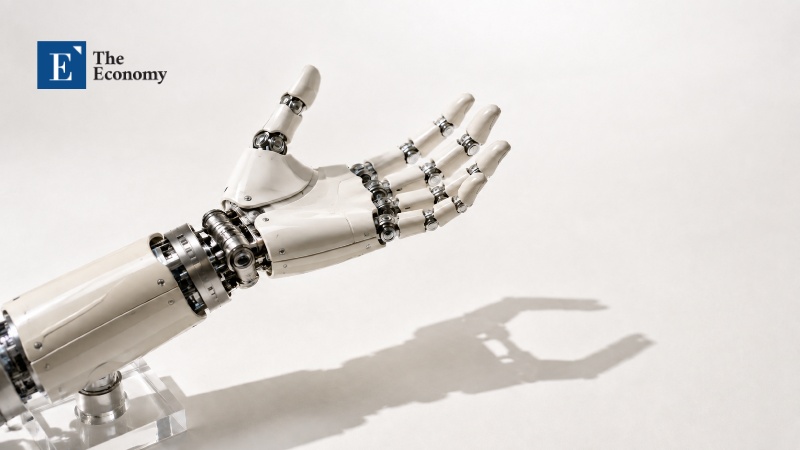
China’s agricultural robot market is growing rapidly. As shrinking and aging rural populations make it harder to secure workers during peak farming seasons, efforts to automate repetitive tasks using drones and robots are spreading. This trend extends beyond China to countries such as Japan. With labor shortages becoming particularly acute in manufacturing and construction, investment in robots and physical artificial intelligence (AI) to address the shortfall is surging.
Advances in China’s Agricultural Drones
According to a Financial Times (FT) report on the 25th (all dates hereafter are local time), Chinese agricultural drone manufacturer XAG is tackling rural labor shortages with a next-generation agricultural robot system. Unveiled in July, XAG’s “X Series Agricultural Robots” comprise the X100 and X150 agricultural drones, the XA1 docking station, and the LM1 smart chemical mixing unit. The drones spray pesticides along preset routes and return to the docking station, where battery charging, chemical refilling, and cleaning are performed automatically. At an earlier demonstration in Guangzhou, it took about 3 minutes to charge and refill a drone and get it airborne again.
In an interview with the FT, XAG Senior Vice President Justin Gong said, “The shrinking rural population and the aging agricultural workforce are making it increasingly difficult to secure skilled drone pilots.” He added, “During peak farming seasons in particular, pilots have to travel between multiple farms to carry out crop protection work, making it harder for farms in remote areas to access services on time.” Estimating that about 12 million people move from rural areas to cities in China each year, he projected that about 3 million agricultural drones would be needed over the next 3 years. He also suggested that potential demand could reach as many as 12 million drones if an unmanned crop protection system were established across the country’s farmland.
Robots Gain Ground in Agriculture
As labor shortages deepen in Chinese agriculture, specialized stores have emerged to promote the commercialization of automation technologies. A prime example is China’s first specialized agricultural robot 4S store, which opened in Wuxi, Jiangsu Province, in June. Operated by the Institute of Intelligent Agricultural Robotics under the National Innovation Center par Excellence in the Yangtze River Delta, the store provides integrated services ranging from agricultural robot demonstrations and hands-on trials to sales, delivery, technical support, and customized solutions. Unlike conventional farm machinery dealers, it selects suitable robots based on farms’ crops, growing conditions, and work processes, and offers guidance on deploying them in actual farming operations.
The Chinese government has also made the deployment of agricultural drones and robots a major policy priority. In the “2026 No. 1 Central Document,” released in February, the Communist Party of China Central Committee and the State Council outlined plans to promote the integration of AI and agriculture and expand the use of drones, the Internet of Things (IoT), and robots. The No. 1 Central Document is a top-level policy directive that has focused on agriculture, rural areas, and farmers every year since 2004. Authorities plan to accelerate research and development (R&D) and field deployment of advanced intelligent farm machinery while also supporting the development of key technologies for agricultural biomanufacturing.
Japan’s Automotive and Construction Industries Also Accelerate Automation
Efforts to address labor shortages through automation are also evident in Japan. For example, Toyota, Japan’s largest automaker, said at an investor briefing last month that it could spend up to JPY 1 trillion (approximately USD 6.47 billion) annually on factory modernization starting in 2028. An estimated 400,000 robots will be needed for automation, with 150,000 expected to be deployed at Toyota’s own production facilities and the remaining 250,000 at affiliates and major suppliers. The possibility of establishing a dedicated robotics team under the chief production officer (CPO) has also been discussed.
Japan’s construction industry, which faces chronic recruitment difficulties and an aging workforce, is also stepping up the development of humanoids equipped with physical AI technology. Shimizu Corporation recently invested in U.S. robotics startup Noble Machines and began jointly developing a bipedal humanoid optimized for Japanese construction sites. The plan is to combine Noble Machines’ robots with Shimizu’s on-site data and expertise to take over tasks such as transporting materials and performing precision work. Meanwhile, Hazama Ando has begun developing a humanoid capable of operating construction machinery such as excavators in collaboration with Kobe City College of Technology, while Obayashi Corporation is conducting demonstration research on bipedal robots for site inspections.
Table 1. Robot Adoption in Chinese and Japanese Industries
| Country | Company/Organization | Key Details |
|---|---|---|
| China | XAG | Unveiled an agricultural drone system that automates pesticide spraying, charging, chemical refilling, and cleaning |
| Institute of Intelligent Agricultural Robotics | Operates a specialized 4S store offering agricultural robot trials, sales, technical support, and field deployment services | |
| Chinese government | Promotes the integration of agriculture and AI and supports R&D and field deployment of drones, IoT, and robots | |
| Japan | Toyota | Pursuing large-scale investment and robot deployment to modernize factories; considering a dedicated organizational unit |
| Shimizu Corporation and Noble Machines | Jointly developing a bipedal humanoid to assist with material transport and precision work at construction sites | |
| Hazama Ando | Developing a humanoid to operate construction machinery | |
| Obayashi Corporation | Conducting demonstration research on bipedal robots for construction site inspections | |
| Tokio Marine & Nichido Fire Insurance | Launching dedicated insurance covering damage to autonomous robots, liability, and work interruption costs |
As automation accelerates across industries, the market for services supporting robot operations is also showing signs of growth. On the 26th, Nikkei reported that Tokio Marine & Nichido Fire Insurance, a subsidiary of Tokio Marine Holdings, would begin selling insurance specifically for autonomous robots equipped with physical AI in November. The product features broad coverage encompassing wheeled mobile robots, quadruped robots, and humanoids. It covers not only repair and replacement costs when robots are damaged by natural disasters or collisions, but also companies’ legal liability for injuries or property damage caused by robot malfunctions. If a robot breaks down and work stops, the policy also pays for replacement workers and temporary robot rentals.
Premiums are expected to be about 20% higher than those for conventional industrial robot insurance. Unlike conventional industrial robots, which perform repetitive tasks in fixed locations, autonomous robots often share spaces with people or move outdoors, exposing them to relatively greater risks of collisions and tipping over. Nikkei projected that annual premiums for a robot priced at JPY 5 million (approximately USD 32,308) would amount to several hundred thousand yen. Tokio Marine & Nichido Fire Insurance plans to sell coverage for about 1,000 robots by fiscal 2027.
Will the Labor Market Be Restructured?
The related markets are expected to continue growing rapidly. According to market research firm Grand View Research, the Asia-Pacific industrial robot market is projected to expand from USD 27.7646 billion (approximately USD 28.3 billion) this year to USD 51.4237 billion (approximately USD 52.4 billion) in 2033, representing a compound annual growth rate of around 9.2%. China is singled out as one of the countries likely to see particularly strong growth. Another market research firm, Frost & Sullivan, projected that China’s industrial mobile robot market would expand from CNY 22.2 billion (approximately USD 3.39 billion) last year to CNY 53 billion (approximately USD 8.09 billion) in 2030. Over the same period, it forecast that the market for articulated robots used in automotive and electronics manufacturing processes would grow from CNY 38.6 billion (approximately USD 5.89 billion) to CNY 74 billion (approximately USD 11.3 billion).
Market observers suggest that the spread of automation could reshape the traditional competitive landscape of Asian manufacturing. If AI and robots take over repetitive production processes, the existing market structure, which prioritizes securing low-wage labor, is expected to change. One market expert said, “In the past, manufacturing competitiveness depended on how cheaply companies could secure labor, but going forward, the ability to operate production facilities with fewer workers will emerge as a key competitive factor.” The expert added, “Following the shift in white-collar jobs, demand for workers performing simple, repetitive tasks is also likely to decline in production jobs, and the market is highly likely to reorganize around highly skilled workers who can design, operate, and manage robots.”
Aoife Brennan is a contributing writer for The Economy, with a focus on education, youth, and societal change. Based in Limerick, she holds a degree in political communication from Queen’s University Belfast. Aoife’s work draws connections between cultural narratives and public discourse in Europe and Asia.
Similar Post