"40,000 Employees in Europe by 2030" BYD Expands Local Business, Faces Employment Management Challenges Amid Labor Rights Controversies in Brazil and Hungary

As one of the youngest members of the team, Tyler Hansbrough is a rising star in financial journalism. His fresh perspective and analytical approach bring a modern edge to business reporting. Whether he’s covering stock market trends or dissecting corporate earnings, his sharp insights resonate with the new generation of investors.
Authored On
Modified
BYD plans to expand local European employment to over 40,000 by 2030
Expected increase in labor demand due to expanded production facilities and entry into automotive finance business
Labor rights infringement controversies in Brazil and Hungary, compliance with European labor regulations seen as a 'variable'
China's largest electric vehicle manufacturer BYD has announced plans to significantly increase local employment in Europe. As movements to expand production facilities and business within Europe accelerate, the company has presented a mid-to-long-term employment blueprint to address the rising local labor demand. However, market analysts caution that due to past labor rights infringement controversies during local factory construction in countries like Brazil and Hungary, how BYD complies with local labor standards and regulations could become a critical factor in its future European business expansion.
BYD's European Workforce Expansion Plan
According to Bloomberg on the 12th (local time), Stella Li, BYD's Vice President of Overseas Business, told Bloomberg TV at the Paris Motor Show that "the number of employees in Europe will certainly exceed 40,000 by 2030." Considering that BYD currently has nearly 10,000 employees in Europe, this means the company plans to expand its local workforce about fourfold over the next four years. If this scenario materializes, BYD would become the largest employer among non-European automakers operating in Europe.
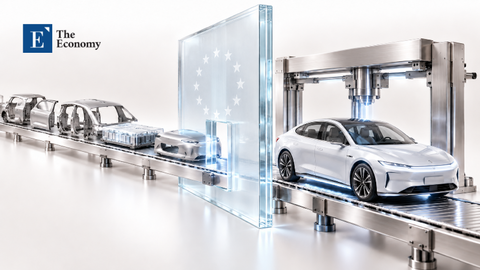
The reason behind BYD's plan appears to be an intention to expand production facilities in Europe. Last month, Alfredo Altavilla, BYD's European Special Advisor, said at a new dealership opening event for BYD's premium car brand Denza in Turin, Italy, "To achieve target sales while complying with European regulations, three vehicle assembly plants and one battery factory are needed in Europe." This indicates a goal to secure additional production bases beyond the first European passenger car plant established in Szeged, southern Hungary.
Considering acquisition of local factories
On the same day, Advisor Altavilla also stated that BYD is visiting automotive production facilities across European countries to identify potential acquisition targets. He emphasized that the key assessment criterion is the cost required to convert existing facilities to suitable production for BYD vehicles. Unlike some Chinese automakers that collaborate with European firms or share production lines, BYD prefers wholly owning existing factories and independently operating them. This strategy aims to reduce time and cost associated with acquiring new factory sites and building production lines, utilizing the existing facilities and logistics infrastructure to begin production early.
Currently, France and Spain are the leading candidates for new production bases. Advisor Altavilla evaluated that these two countries possess relatively favorable conditions for factory acquisition and renovation. Vice President Li also mentioned at the Paris Motor Show the possibility of securing two additional factories in Europe, identifying France and Spain as main candidates. Conversely, Italy is effectively dropping out of BYD's options. On the 14th, Adolfo Urso, Italy's Minister for Enterprises and Made in Italy, told parliament, "Although officials from BYD and other Chinese automakers visited various factories in Italy and conducted government consultations, they couldn't find suitable facilities. Chinese companies want so-called 'turnkey' factories that can immediately start production post-acquisition, but Stellantis hasn't sold existing Italian factories meeting these conditions," he explained.
Potential increase in demand for finance personnel
In addition, BYD's automotive finance business in Europe may also increase local labor demand. On the 13th, Bloomberg reported that BYD is considering launching its own automotive finance business as early as next year to support the expansion of Denza's European sales. Since leasing and installment financing are common methods for purchasing vehicles in the European premium car market, BYD aims to secure competitiveness not only in vehicle price but also in monthly payments and financing terms. Existing premium automakers such as BMW and Mercedes-Benz already offer various purchasing assistance services through their own finance subsidiaries.
Operating such financial products requires securing professionals in various fields. Especially since Denza entered the European market in April this year without sufficient data on used car transaction prices and long-term residual values, experts to evaluate the profitability and risk of financial products are expected to be crucial. Furthermore, considering that financial regulations and consumer protection systems vary across European countries, the need for personnel to handle local legal and regulatory issues will inevitably increase.
Table 1. BYD's European Production and Business Expansion Plan
| Category | Key Points |
|---|---|
| Expansion of Production Bases | Planning to secure two additional vehicle assembly plants and one battery plant by acquiring and renovating existing production facilities; France and Spain are being reviewed as top candidates |
| Entry into Automotive Finance | Planning to operate own leasing and installment finance business to support Denza's European sales expansion |
Precedents of Labor Rights Disputes
However, some express concerns that BYD's large-scale employment expansion strategy might not proceed smoothly. There have been earlier incidents where Chinese-style long working hours and complex subcontracting employment structures caused friction in various countries. For example, in December 2024, Brazilian labor authorities investigated a BYD factory under construction in Camaçari, Bahia, and concluded that 163 Chinese workers were effectively working under slave labor conditions. These workers were employed by BYD's construction subcontractor, China Jinjiang Group, and worked excessive hours beyond local labor law limits, including seven-day work weeks. Some workers handed over their passports to employers and had contracts agreeing that most of their wages would be remitted to China. The living conditions were poor, with 31 workers sharing a house with only one bathroom.
Jinjiang Group wholly denied the labor exploitation allegations, claiming the controversy resulted from cultural differences between China and Brazil and misunderstandings during translation. They argued that although 107 workers voluntarily submitted passports for Brazilian temporary ID issuance, local authorities interpreted this as forced confiscation. Nevertheless, the Brazilian labor prosecutor's office upheld their findings, increasing the number of affected workers to 220, and filed a damages lawsuit against BYD and two subcontractors in May last year. By the end of last year, they agreed to pay a total of 40 million Brazilian reais (about US$8.18 million), with subcontractors paying and BYD guaranteeing the compensation. The controversy resurfaced in April this year when the Brazilian Ministry of Labor listed BYD among companies providing working conditions equivalent to slave labor. BYD filed an objection with the court the same month, and the court suspended the listing until a final judgment after noting possible legal issues with the administrative body's decision that deemed BYD the actual employer of subcontractor workers.
Labor Issues Also Arise at Hungarian Factory
Similar labor rights breach allegations emerged in Hungary. According to The Guardian, in May, US labor rights organization China Labour Watch (CLW) claimed issues including long working hours, unpaid wages, and unfair employment practices occurred among Chinese migrant workers at the BYD electric vehicle factory under construction in Szeged, southern Hungary. CLW conducted field investigations and interviews with 50 workers between October and November last year, followed by additional inquiries earlier this year before releasing findings. Some workers reported working up to 14 hours daily, seven days a week, without proper overtime pay. Some subcontractors withheld 20-30% of wages or delayed payments for up to three months, and required workers to bear visa issuance, airfare, and job placement costs to raise resignation barriers.
The root cause of these issues was identified as the complex subcontracting structure. Chinese workers involved in factory construction included BYD’s direct employees, main contractors, multi-level subcontractors, and labor brokerage firms. Issues such as delayed wage payments, opaque contract terms, and improper visa usage were concentrated among subcontractor workers. Subsequently, local authorities conducted 47 employment and industrial safety inspections at the BYD construction site, imposing cumulative fines of 139.2 million forints (about US$443,308), and temporarily halting the work of 594 employees and operation of 20 pieces of equipment due to safety issues. Fines were primarily levied on construction subcontractors, but BYD’s local subsidiary also received warnings for labor and safety regulation violations.
As one of the youngest members of the team, Tyler Hansbrough is a rising star in financial journalism. His fresh perspective and analytical approach bring a modern edge to business reporting. Whether he’s covering stock market trends or dissecting corporate earnings, his sharp insights resonate with the new generation of investors.
- Previous "Expanding Domestic Equipment Market Routes by Supporting US Factory Construction" Japan Collaborates with US Foundries to Simultaneously Expand Equipment Exports and Production Cooperation
- Next "Open Maritime Route for Europe's Rearmament" Greece, Which Fostered Korean Shipbuilding, Starts Revival Hand in Hand with Korean Shipyards
Similar Post