US and Allied Nations Join Hands from Mine Development to Magnet Production, Speeding Up Expansion of Supply Chains to Challenge China's Rare Earth Monopoly

Siobhán Delaney is a Dublin-based writer for The Economy, focusing on culture, education, and international affairs. With a background in media and communication from University College Dublin, she contributes to cross-regional coverage and translation-based commentary. Her work emphasizes clarity and balance, especially in contexts shaped by cultural difference and policy translation.
Authored On
Modified
Increased Uncertainty in Rare Earth Procurement Due to China's Export Controls and Middle East War; US Leads with Price and Sales Guarantees and Invests in Domestic and Overseas Production Facilities; Alternative Supply Expansion Expected to Weaken China's Rare Earth Market Dominance
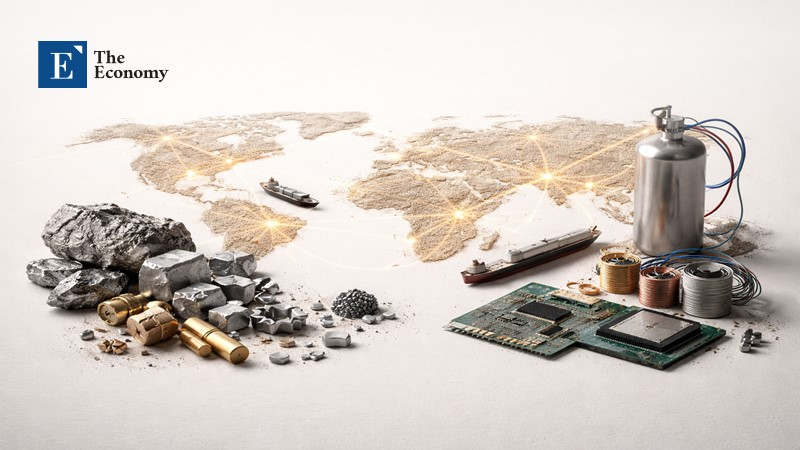
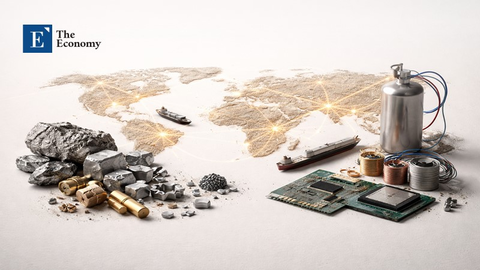
The United States is expanding investments in domestic production facilities and mines and processing plants in allied countries to break away from rare earth supply chains concentrated in China. Amid growing uncertainty in raw material procurement due to China's export controls and the Middle East war, the US government is supporting production companies' expansions by guaranteeing prices and sales channels. Overseas, it is also widening alternative supply chains by providing funding necessary for mine development and securing production volumes over the long term. Experts predict that once new facilities in the US and allied countries start operating and deliveries based on long-term purchase agreements become full-fledged, China's decades-long market dominance could weaken.
China Supplies Up to 96% of Key Semiconductor Minerals
According to a supply chain analysis report released on the 12th (local time) by the US Semiconductor Industry Association (SIA), China accounts for approximately 95% of the global supply of gallium, a raw material for compound semiconductors, and about 85% of tungsten used in precursor manufacturing for deposition processes. Gallium is a key raw material for compound semiconductors used in power and communication, and tungsten serves as the precursor for deposition processes that coat thin films onto semiconductor circuits. Both minerals are directly input into chip manufacturing, making them items sensitive to China's supply conditions.
Rare earth elements used in semiconductor manufacturing equipment also show high dependence on China. Neodymium and praseodymium (NdPr), raw materials for high-performance permanent magnets used in precision motors, robots, and pumps, have a 96% supply share from China. Terbium, required for magnets in precision drive devices, is estimated to be supplied 95% by China. Permanent magnets made from these rare earths are major components in robots moving wafers and sputtering equipment that forms thin films. SIA classifies rare earths as one of the raw material groups with the highest supply disruption risk in the semiconductor supply chain.
Rare Earth Procurement Complicated by China's Export Controls and Middle East War
China's strict export license system is increasing the burden for overseas companies to procure rare earths. Since April last year, China has placed seven rare earth elements including samarium, dysprosium, and terbium, as well as related magnets, under export controls, citing prevention of military exclusive use as the reason, and is reviewing end users and purposes. Companies seeking approval must submit sensitive information such as customer details and manufacturing processes.
In the early stages of control implementation, companies were required to provide design information on how magnets are used in components such as motors, or had applications rejected for not listing some items, forcing them to restart the process. Some companies desperately shipped approved quantities by expensive air freight to avoid production stoppages. At the semiconductor industry's start of this year, delays in export permits for scandium used in 5G communication parts led US companies to request government support. Many procured raw materials from third-country suppliers, but faced difficulties as China confirmed end users during export reviews.
Moreover, the Middle East war has added supply instability from the region, tightening the US's rare earth procurement conditions. Among items whose supply was hindered by disrupted passage through the Strait of Hormuz is sulfur, a raw material for sulfuric acid used in rare earth refining. The Middle East accounts for a quarter of global sulfur production, and about half of global maritime transport passes through this strait. Any disruption in raw material procurement could raise production costs and volume risks for companies aiming to refine rare earths outside China. Additionally, the US needs to replenish missile and precision-guided munition stocks depleted in the war, increasing rare earth demand. Since building alternative supply chains centered on the US and allies takes time, rushing weapons production may deepen dependence on Chinese rare earths, some analysts warn.
US Government Supports Rare Earth Production Increase with Investment and Market Guarantees
To boost domestic rare earth production, the US is deploying capital investment, price guarantees, and long-term purchase agreements. The US Department of Defense signed a $412 million contract last July to invest in MP Materials operating the Mountain Pass mine, and also provided a $155 million loan to expand the heavy rare earth separation facility. For neodymium and praseodymium products, a minimum price of $113 per kilogram is guaranteed for 10 years to mitigate risks from price downturns. Production volumes from newly built magnet factories are guaranteed to be entirely sold over 10 years. These support measures, which relieve initial investment and sales risks, are accelerating expansion of domestic production bases from mining and refining to magnet manufacturing.
South Korean and Japanese companies are the main buyers for US-produced rare earths. The magnet manufacturing industry, which processes rare earths domestically in the US, is still in its early stages, leading producers to secure sales channels in Asia. In MP Materials' quarterly results confirmed in July, most NdPr oxide and metal sales came from contracts with Sumitomo's US subsidiary supplying materials to Japanese customers. Phoenix Tailings, a rare earth recycling technology firm, also identifies its main customers as South Korean and Japanese firms. Their CEO Nick Myers noted that if US defense contractors delay purchases, orders from other companies could consume available volumes.
US-Produced Rare Earths Still Depend on South Korean and Japanese Processing
South Korean companies have also entered businesses to refine rare earths and produce permanent magnets locally in the US. In May, POSCO International jointly invested $206 million with US firm ReElement Technologies to establish a rare earth separation and refining joint venture aiming for mass production in 2028, initially preparing an annual production capacity of 3,000 tons and expanding to 6,000 tons, with plans to gradually establish permanent magnet manufacturing facilities. Korea Zinc also joined forces with US company Altair Resources in January to recover high-purity rare earth oxides from waste permanent magnets. Both plan to build recycling and refining facilities at existing US sites, aiming for commercial operation in 2027, and plan to supply produced materials to advanced Korean and US industrial firms.
US-produced rare earths go to South Korea and Japan because the US has not yet fully established supply chains for processing mined and refined raw materials into metals and magnets. Using rare earths in industrial magnets requires converting separated and refined oxides into metals, alloy manufacturing, magnet shaping, and other processes. South Korea and Japan have operating production facilities for these, with KSM Metals in Cheongju, South Korea producing neodymium and praseodymium alloys. Meanwhile, the US is progressing not only in expanding mining and refining facilities but also in setting up subsequent processing plants. MP Materials spent years matching processing conditions for separation and refining equipment, and magnets produced at their Texas plant were undergoing approval for first use by General Motors as of last July. Full supply chain establishment domestically will take more time, as process stabilization and customer verification must be completed before actual deliveries.
Table 1. Examples of Rare Earth Supply Chain Expansion in the US, Japan, and Europe
| Category | Target Companies and Production Bases | Main Details |
|---|---|---|
| US Financial and Purchasing Support | Seraverde, Brazil | DFC financial support of $565 million Target annual production of 6,400 tons by end of 2027 (in rare earth oxide equivalent) US government agencies and private special purpose entities have a 15-year contract to purchase 100% of phase 1 production volume |
| Japan Long-term Purchase | Lynas, Australia mining/Malaysia refining | JARE commits to purchase 5,000 tons annually of neodymium and praseodymium 75% of heavy rare earth oxide production is preferentially allocated to Japanese industry JARE purchases 50% of total heavy rare earth oxide production |
| Europe Magnet Production | Neoperformance Materials, Estonia | Permanent magnet factory opened in September last year Established production base linked with local rare earth separation facilities |
US and Allied Countries Secure Volumes via Long-Term Contracts, Putting China's Rare Earth Monopoly to the Test
As it takes time to complete domestic supply chains, the US is using production bases in allied and friendly countries to fill procurement gaps and is investing in new mines and processing facilities in those countries. Support to Brazilian rare earth producer Seraverde is a prime example. Seraverde has received $582 million in financing from the US International Development Finance Corporation (DFC) and plans to increase annual production to 6,400 tons (rare earth oxide equivalent) by the end of 2027. Moreover, a special purpose entity funded by US government agencies and private capital has agreed to purchase all phase 1 production volumes for 15 years, securing both expansion funding and long-term sales outlets.
Japan also supports US rare earth supply chain expansion by securing volumes from overseas producers on a long-term basis. Japan's contract firm JARE renewed a supply agreement this March with Australia's Lynas, committing to purchase 5,000 tons annually of neodymium and praseodymium. Lynas allocates 75% of its heavy rare earth oxide production primarily to Japanese industry, and JARE agrees to purchase half of total production. This arrangement secures long-term sales for rare earths mined in Australia and refined in Malaysia, supporting production expansion. In Europe, facilities to process refined rare earths into permanent magnets are also becoming operational. Canadian company Neoperformance Materials opened a permanent magnet factory in Estonia last September, establishing a production base linked with local rare earth separation facilities.
As the US and allied countries increase alternative production bases, their capacity to respond to China's export controls may also grow. Research from India's Takshashila Institute points out that overseas producers, suppressed by low-priced Chinese supply and struggling for profitability, are gaining investment opportunities due to export controls. Higher rare earth prices outside China improve the profitability of new mines and refining facilities, bolstering supply chain expansion in the US and allied countries. Particularly, as companies in these countries invest in production facilities and secure alternative sources, the incentive to return immediately to existing transactions even if China eases controls diminishes. As investments translate into actual production and supply, demand once dependent on Chinese products can be diversified, reducing shocks caused by supply restrictions.
Siobhán Delaney is a Dublin-based writer for The Economy, focusing on culture, education, and international affairs. With a background in media and communication from University College Dublin, she contributes to cross-regional coverage and translation-based commentary. Her work emphasizes clarity and balance, especially in contexts shaped by cultural difference and policy translation.
- Previous "Price Competition and Safety Regulations" Intensify Pressure on Restructuring in China's Automotive Industry, Accelerating the Transition to 'New Quality Productivity'
- Next 'Servers at risk of hacking, meeting rooms threatened by eavesdropping': OpenAI incident reverberates as a test of internal corporate controls
Similar Post