'Servers at risk of hacking, meeting rooms threatened by eavesdropping': OpenAI incident reverberates as a test of internal corporate controls

Siobhán Delaney is a Dublin-based writer for The Economy, focusing on culture, education, and international affairs. With a background in media and communication from University College Dublin, she contributes to cross-regional coverage and translation-based commentary. Her work emphasizes clarity and balance, especially in contexts shaped by cultural difference and policy translation.
Authored On
Modified
OpenAI employee eavesdropping allegations trigger internal security alarms
AI analysis of meeting conversations raises fears of exposure of development and business strategies
Emphasizes the necessity of security investments to monitor information access and exfiltration
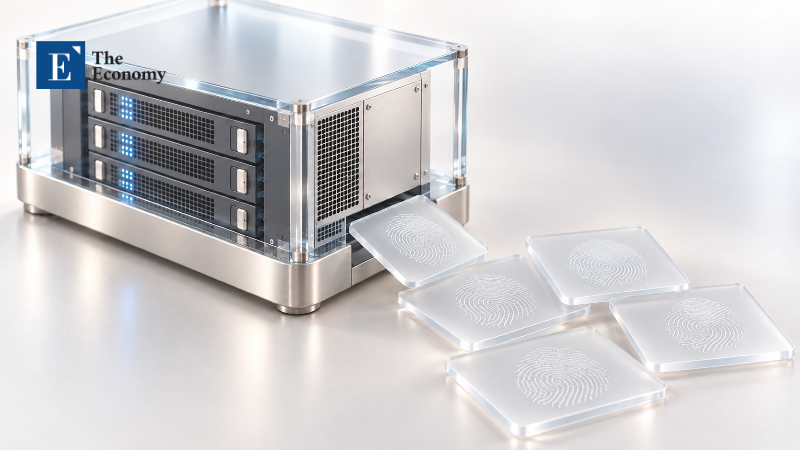
Revelations of allegations against an OpenAI employee for eavesdropping in an executive meeting room have brought insider security issues in technology firms into focus. Evidence that an internal staff member accessed meeting spaces to collect executives' conversations has intensified concerns that security gaps may exist even after employee vetting and confidential access authorization. Particularly, applying AI analysis to unauthorized recordings could link statements scattered across various meetings, revealing development plans and business strategies, thus potentially expanding the scope of leakage damage. This risk underscores the need for continuous auditing of employees’ access to information and exfiltration activities, likely driving companies to increase investments in monitoring.
OpenAI engineer charged with eavesdropping in executive meeting room
According to foreign media including Bloomberg on the 13th (local time), the U.S. Department of Justice announced on the 9th that it arrested and charged Abdulahman AlFozan (35), a Saudi national and an OpenAI engineer. AlFozan is accused of installing a recording device in an executive meeting room inside OpenAI's San Francisco headquarters in California around the 28th of last month. The device, discovered by employees around the 30th, was plugged into a USB port behind the television and concealed with toilet paper, with its stored contents encrypted. The meeting room is a space for discussing confidential matters such as private research, product development plans, and collaborations with governments and companies. Investigations revealed that AlFozan, who joined the company in July of last year, had no authorization to access this area or attend these meetings.
U.S. investigators found evidence that AlFozan researched the meeting room’s location and schedules before installing the device. The criminal complaint filed in court shows he repeatedly accessed executives' work locations and external partner meeting information using work tools. A chatbot account registered under his spouse’s name, sharing some account and identifying information, contained queries about how to manufacture and conceal recording devices, enable remote access, and encrypt storage devices. Company CCTV footage showed AlFozan appearing multiple times near the meeting room before the device’s discovery, and on the 5th of this month, entering the room and seemingly inspecting behind the television. On that same day, security personnel checked his bag left in another room and found an additional similar recording device along with his wallet and ID.
Confidential leakage risks extend to meeting room conversations
This incident highlights the critical role meeting rooms play in a company's confidentiality protection systems. Executives’ conversations often include business ideas before they are documented, technical limitations, and internal judgments not disclosed to negotiation counterparts. It was found that OpenAI had used this meeting room to discuss sensitive topics such as research achievements, product plans, and collaborations with government and corporate entities. If such information reaches competitors, there is a risk of revealing development directions in advance or losing negotiation leverage regarding transaction conditions. From a corporate perspective, this places a burden not only to control file access within the company but also to protect the environment where information originates — the conversations themselves.
This burden is increasing as recording functions become embedded in everyday personal devices. Recording conversations on mobile phones does not require intranet access and leaves no traces in company communication logs. The spread of devices like smart glasses that record surroundings while worn has introduced new variables for companies. David Miklus, a U.S. labor and employment attorney, pointed out that smart glasses are hard for corporate IT departments to track or update security on, and that data cannot be remotely erased even after an employee leaves. Although companies may terminate accounts and collect work devices, confidential information residing on personal devices remains outside of control.
Table 1. Routes of confidential meeting information leakage and corporate security risks
| Category | Major exposure route | Corporate security risk |
|---|---|---|
| Meeting room conversations | Exposure of business ideas before documentation, technical limitations, and internal negotiation strategies | Competitors gain insight into development directions, weakening negotiation position |
| Personal device recordings | Conversations recorded on mobile phones or smart glasses without intranet access | Difficult for IT departments to track or control; confidential data remains on personal devices after employee departure |
| AI recording analysis | Conversion of speech to text, extraction of key statements, and linkage/analysis of excerpts from multiple meetings | Easier tracking of development schedules, investment plans, and negotiation terms; potential for wider damage than directly identified leaks |
| AI meeting transcription services | External vendors handle voice processing and summarization, with audio stored on external servers depending on policies and settings | Vulnerable to security and data management issues of external vendors; possible liability disputes if client or partner information leaks |
Fragmented remarks become clues for strategy tracking through AI
Expansion of AI speech recognition and summarization techniques reduces the time and cost required to analyze unauthorized conversations. Automating the conversion of long recordings to text and extracting parts mentioning specific technologies or customers greatly contributes to this. Analyzing records from multiple meetings together facilitates connecting dispersed development schedules, investment plans, and negotiation conditions. Fragmented remarks from individual meetings can aggregate into materials tracking corporate strategies. As meeting records accumulate, internal circumstances not revealed by individual statements may come to light, suggesting actual damage could exceed the company’s recognized extent.
AI meeting transcription services used routinely also carry confidentiality leakage risks. Cloud-based services involve external vendors in converting and summarizing voice data, moving meeting content beyond internal management. Such transmitted audio and transcripts may remain on external servers post-meeting according to the vendor's retention policies and user settings. The Electronic Frontier Foundation (EFF) warns that even data not used for model training may be retained for service provision purposes and exposed to hacking or leakage risks. Corporate confidentiality protection thus depends also on external vendors’ security levels and data management practices. In particular, leakage of records containing customer information and partners’ trade secrets could extend damage to counterparties, sparking disputes over information provision and management responsibility.
Growing corporate burden from incident management costs
With mounting losses and liability risks from confidentiality leaks, tech companies are likely to increase budgets for employee monitoring. Companies whose competitiveness depends on R&D achievements have strong incentives to detect insider information access and exfiltration early. OpenAI had already strengthened employee screening and limited staff sharing core technical information to specific projects. Employees involved in new model development are instructed to confirm whether their discussion partners have access rights when discussing related matters in shared office spaces. Some offices have implemented fingerprint authentication, and security personnel have been expanded. Given that eavesdropping allegations surfaced even within such enhanced internal control environments, investments verifying actual employee behavior and compliance are expected to intensify.
Increased expenditures to address insider risks are confirmed in global corporate surveys. According to the '2026 Insider Risk Cost Report' by the Ponemon Institute sponsored by security firm DTEX, the proportion of internal risk management within IT security budgets of surveyed companies rose from 8.2% in 2023 to about 19% in 2025. The survey included 354 organizations across North America, Europe, Middle East, Africa, and Asia-Pacific that experienced significant insider incidents. Their average annual internal incident costs reached US$19.5 million, covering staff mistakes, intentional leaks, and account theft incidents. Sixty-four percent of respondents increased budgets for 2025, and 70% expected further increases in 2026. Costs tied to investigation, recovery, and work disruption following information leaks support expanded preventative investments.
Strengthened justification for internal surveillance
Expanded investments likely mean companies will collect and analyze more employee activity logs. Security systems already integrate document usage and access card time/location data to detect anomalies. Employees with access rights who query information unrelated to their duties or repeatedly enter zones outside their responsibility become subjects for inspection. This requires security staff to verify the actual purposes behind flagged behaviors. Differentiating between legitimate collaboration and covert information collection involves reviewing assigned tasks and access context, implying expanded monitoring incurs higher ongoing operational costs for analysis personnel and record management.
Deciding whether to absorb these operational costs heavily depends on the competitive advantage lost from technology leaks. A July report by the U.S. RAND Corporation warned that AI core development know-how could be compromised through brief conversations or screen exposures, eroding technical superiority. Achievements after long research periods, if exploited by competitors to reduce trial and error, cause losses not only in technology but also in time and market lead previously secured. Experts on insider risks highlight that management after access authorization is critical for risk mitigation. Paul Martin and Sarah Mercer, writing for the U.K. Royal United Services Institute (RUSI), describe continuous monitoring post-authorization as a personnel security measure. In this light, the recent eavesdropping incident supports executives’ concerns about surveillance gaps even after vetting and access control. As criticisms over employee distrust and privacy invasion have accompanied monitoring expansion, the rationale of safeguarding technological competitiveness adds persuasive weight to companies’ intentions to allocate more staff and budgets.
Siobhán Delaney is a Dublin-based writer for The Economy, focusing on culture, education, and international affairs. With a background in media and communication from University College Dublin, she contributes to cross-regional coverage and translation-based commentary. Her work emphasizes clarity and balance, especially in contexts shaped by cultural difference and policy translation.
- Previous US and Allied Nations Join Hands from Mine Development to Magnet Production, Speeding Up Expansion of Supply Chains to Challenge China's Rare Earth Monopoly
- Next "The Core of AI Hegemony is Power" - The U.S. Accelerates Data Center Efficiency and Power Facility Expansion, Heightening Competition with China Leveraging Low-Cost Electricity
Similar Post