"Price Competition and Safety Regulations" Intensify Pressure on Restructuring in China's Automotive Industry, Accelerating the Transition to 'New Quality Productivity'

As one of the youngest members of the team, Tyler Hansbrough is a rising star in financial journalism. His fresh perspective and analytical approach bring a modern edge to business reporting. Whether he’s covering stock market trends or dissecting corporate earnings, his sharp insights resonate with the new generation of investors.
Authored On
Modified
China Significantly Strengthens New Vehicle Safety Verification and Quality Management Regulations; Restructuring Pressure Expected to Intensify Amid Domestic Sales Slump and Cutthroat Competition; Shift from Quantitative to Qualitative Growth, Spread of 'New Quality Productivity' Strategy in Chinese Industry
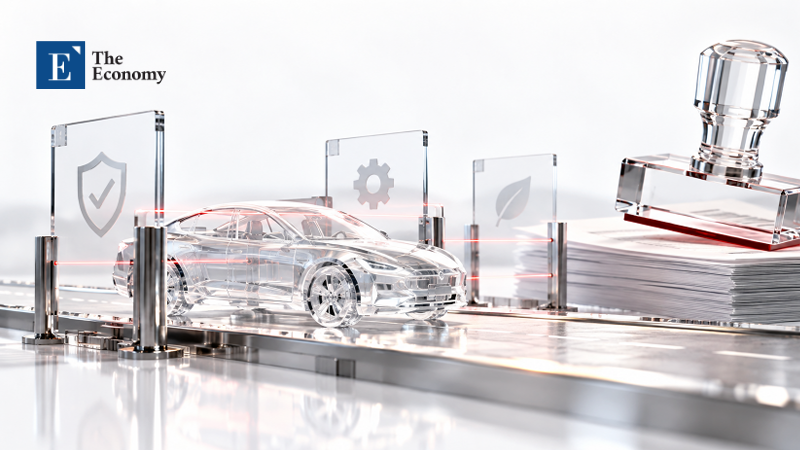
Local regulatory authorities in China are intensifying their scrutiny of the quality and safety of Chinese-made electric vehicles. Repeated recall incidents and controversies over vehicle defects have increased the quality management burden on companies. Market analysts suggest that this trend of strengthened regulations will accelerate restructuring in China's automotive industry, which is facing profitability deterioration due to slowing demand and price competition. It is also assessed that this aligns with China’s 'new quality productivity' strategy emphasizing technological innovation and quality improvement.
China Raises Regulatory Thresholds for Complete Vehicle Manufacturers
According to a report by Hong Kong's South China Morning Post (SCMP) on the 12th (local time), China’s Ministry of Industry and Information Technology (MIIT) recently released a 'Notice on Strengthening the Management of Innovative Design, R&D Testing, and Verification of Automobile Products (Draft for Comments),' jointly prepared with the Ministry of Public Security, Ministry of Ecology and Environment, and the State Administration for Market Regulation. The core of this plan is to enhance the safety verification obligations for new vehicles and expand the review criteria for innovative designs. First, complete vehicle manufacturers must conduct at least 30,000 km of vehicle reliability testing during the type approval process for new models; this applies to new energy vehicles including electric vehicles as well as traditional internal combustion engine vehicles. Required verifications cover comprehensive vehicle reliability and durability, body structure, software function stability, environmental adaptability, heating and cooling performance, waterproof, dustproof, and sealing performance. Additionally, manufacturers must conduct vehicle environmental adaptability tests for at least one year.
Regulations on vehicle designs employing new technologies will also be strengthened. Authorities plan to expand safety verifications of 41 innovative design elements, including yoke-type steering wheels, electric doors, virtual buttons, special seats, and vehicle displays. Fully recessed door handles and foldable or flexible displays are prohibited, while 'zero gravity' seats that enable weightless postures and rotating seats will require separate verifications concerning collision safety, pinch prevention, and operational reliability. These new approval standards will be effective from January 1, 2027. Consequently, manufacturers must submit additional technical specifications and test and verification data for innovative designs when applying for new vehicle approvals, and existing approved vehicles must supplement related technical data and verification outcomes by July 1, 2027. New models that fail to conduct sufficient tests or submit false verification data will not be approved by authorities, and approved vehicles identified with safety defects may face production suspension and recalls.
Repeated Noise About Vehicle Quality
Earlier, in August, the Chinese government also announced a large-scale quality and safety inspection targeting complete vehicle manufacturers. The MIIT, Ministry of Public Security, Ministry of Ecology and Environment, and the State Administration for Market Regulation jointly announced a 'Special Action to Improve Consistency and Quality in Road Motor Vehicle Manufacturing' and declared a nationwide one-year intensive inspection. Key inspection areas include production consistency, product reliability, durability, and new technology testing and verification. The inspections verify whether the specifications of mass-produced vehicles conform to government approval standards, conducting comprehensive investigations from parts procurement and production processes to quality management systems and the durability of core components. Additionally, advanced driver assistance systems (ADAS) and autonomous driving function testing and verification, functional safety, cybersecurity, data security, and accident data recording are designated as major inspection targets.
The intensification of regulatory intervention is believed to stem from recurring quality controversies in the local market. For example, according to Reuters in August, Tesla and eight Chinese automakers decided to recall about 4.3 million vehicles due to safety concerns that vehicle doors may not open normally in emergencies. About 2.98 million of these recalls involved Tesla vehicles, with Xiaomi, Leapmotor, and XPeng also participating in extensive recalls. Recently, a private vehicle performance test video released by 'Dongchedi,' a leading automotive information platform under ByteDance, further fueled market anxiety. The video showed that during an emergency braking test at 100 km/h, the brake pedal bracket of all three Huawei Maestro V800 electric vehicles involved broke under load.
Table 1. Strengthening of China’s Automotive Quality and Safety Regulations
| Category | Main Content |
|---|---|
| New Vehicle Approval Standards | Mandatory driving reliability and environmental adaptability tests; strengthened safety verification and data submission requirements for innovative designs |
| Mass Production Quality Control | Comprehensive inspections of conformity between approved specifications and actual production vehicles, parts procurement, production processes, ADAS, cybersecurity, etc. |
| Penalties | Restrictions on approval for new vehicles lacking sufficient verification or submitting false data; production suspension and recall for vehicles with safety defects |
Automaker Profitability 'Plummets'
Markets analyze that the regulatory strengthening trend will significantly impact the competitive landscape of local industries. Recently, the Chinese complete vehicle market has experienced prolonged demand slowdown. According to Reuters, passenger car sales in China last month totaled approximately 1.63 million units, down 28.1% year-on-year, while new energy vehicle sales (including electric and plug-in hybrids) fell about 16.7% to roughly 1.08 million units. Conversely, during the same period, China's automobile exports surged 73.2% to 923,000 units. This reflects local companies offloading unsold production volumes overseas.
The problem is that fierce competition among companies during this process has worsened overall profitability. According to the China Securities Journal citing the China Passenger Car Association (CPCA), from January to August this year, China's automotive industry revenue rose 2.9% year-on-year to 7.0062 trillion yuan (approximately US$1.08 trillion). However, costs increased 4% to 6.237 trillion yuan (approximately US$963 billion), and profits fell sharply by 16% to 253.4 billion yuan (approximately US$39.1 billion). Profit margins relative to revenue declined from 4.3% in 2024 to 4.1% in 2025, and further to 3.6% in the first eight months of this year. This margin is significantly below the average profit margin of 6.6% for sub-industries in China over the same period.
Will Incompetent Companies Be Filtered Out?
Amid this, China’s strengthened automotive safety regulations may encourage industry restructuring. Given that many companies already struggle to maintain profitability amid chronic overcapacity and price wars, stringent regulations involving cost increases could act as a sieve. Indeed, global consulting firm AlixPartners predicted in July last year that out of 129 brands selling electric and plug-in hybrid vehicles in China, only 15 would remain financially viable by 2030, representing about 12% of the total.
Cost burdens due to tougher regulations are likely to be most pronounced during new vehicle development. With stricter driving, durability, and extreme environment testing requirements for new vehicle approvals, manufacturers must invest additional funds in testing personnel, facilities, and vehicle operations. If issues arise during verification, design changes and retesting will be necessary, potentially delaying new vehicle launches. Particularly companies that previously shortened testing periods to reduce development costs and speed up development cycles are expected to suffer more devastating impacts. Additionally, defect inspections and recall obligations for existing sold vehicles may impose further financial pressure.
Momentum Builds for 'New Quality Productivity' Policy
Some observers assess that regulatory actions align with a qualitative growth strategy broadly promoted across local industries. The Chinese government is focusing on fostering 'new quality productivity,' which emphasizes industrial competitiveness through technological innovation and productivity improvement, moving away from growth reliant on expanding output and low-price competition. 'New quality productivity' is a concept first introduced by Chinese President Xi Jinping in September 2023, centered on advanced technology, high production efficiency, and quality enhancement. On June 9, the Central Committee of the Chinese Communist Party and the State Council issued new guidelines for developing new quality productivity, pledging to curb reckless investments and overproduction in advanced industries. This aims to prevent cutthroat competition in emerging sectors and strengthen technological safety and reliability while minimizing resource waste.
Artificial Intelligence (AI) is one field where this policy direction is especially pronounced. In August last year, the Chinese State Council announced the 'AI Plus' action plan, expressing intentions to integrate AI across manufacturing, science and technology, consumption, and public services to improve productivity and efficiency. The goal is to expand AI applications in six core areas and increase the adoption rate of next-generation smart terminals and AI agents to over 70% by 2027. Furthermore, the financial sector is showing moves to focus funds on advanced technology development and industrial upgrading. The People’s Bank of China expanded the quota for its Science and Technology Innovation and Technology Renovation Re-lending Program to 1.2 trillion yuan (about US$185 billion) this year, increasing financial support for tech companies and obsolete equipment upgrades. As of the end of April, bank loan amounts under this program reached 1.5 trillion yuan (approximately US$232 billion), and new quality productivity guidelines issued on June 9 included supporting tech companies with listings, bond issuance, mergers and acquisitions, and enhancing capital supply necessary for long-term technology development.
As one of the youngest members of the team, Tyler Hansbrough is a rising star in financial journalism. His fresh perspective and analytical approach bring a modern edge to business reporting. Whether he’s covering stock market trends or dissecting corporate earnings, his sharp insights resonate with the new generation of investors.
- Previous "Changed cell structure due to EUV limits" China’s CXMT accelerates memory chase; large-scale IPO funds, domestic demand, and leaked Korean technology are the 'foundation'
- Next US and Allied Nations Join Hands from Mine Development to Magnet Production, Speeding Up Expansion of Supply Chains to Challenge China's Rare Earth Monopoly
Similar Post