"Expanding Domestic Equipment Market Routes by Supporting US Factory Construction" Japan Collaborates with US Foundries to Simultaneously Expand Equipment Exports and Production Cooperation

Anne-Marie Nicholson is a fearless reporter covering international markets and global economic shifts. With a background in international relations, she provides a nuanced perspective on trade policies, foreign investments, and macroeconomic developments. Quick-witted and always on the move, she delivers hard-hitting stories that connect the dots in an ever-changing global economy.
Authored On
Modified
Pursuing US Semiconductor Factory Construction with Japanese Financial Support
Opportunities for Supplying Japanese Equipment and Production Cooperation with Expanded Local Manufacturing
Expanding Revenue Base in the US Market Using Materials and Equipment Technological Strengths
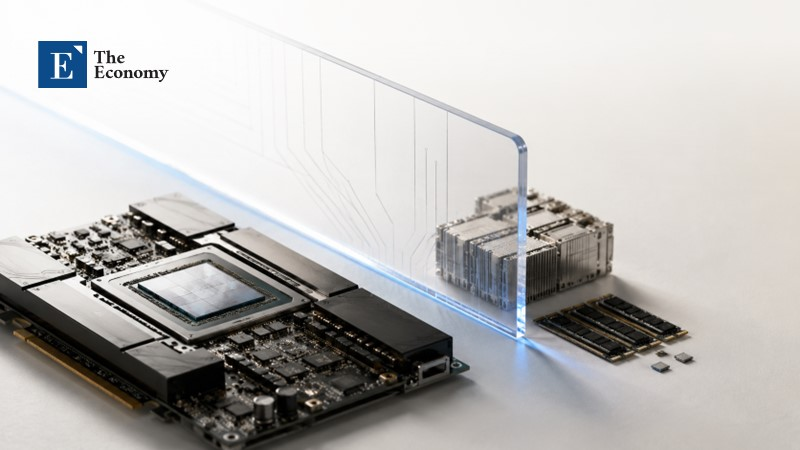
Japan supports its domestic materials, parts, and equipment industries' entry into the US market by aiding the construction of semiconductor factories in the United States. Under a model where Japan finances and US companies operate the plants, Japanese firms are expected to participate in equipment supply and semiconductor manufacturing cooperation. This plan is seen as an effort to link Japan’s accumulated technological capabilities in materials and equipment to profits for domestic firms from the expansion of US semiconductor production. Additionally, Japan’s materials and parts industries are expanding their supply capacities for core products while investing in the development of advanced materials and sensors for AI and electric vehicles, thereby broadening their product offerings to overseas clients.
Investment of US$21 billion; Tokyo Electron and Renesas Business Participation
According to reports including the Yomiuri Shimbun on the 15th, US semiconductor foundry GlobalFoundries plans to build two semiconductor factories in New York state in cooperation with Japanese companies. These factories are expected to produce logic semiconductors for communications and automobiles to supply Japanese automakers with production bases in the United States. Logic semiconductors are a type of system semiconductor that perform information processing functions such as calculation, judgment, and control, unlike memory semiconductors that store data.
Previously, on the 14th (local time), former US President Donald Trump announced via the social media platform Truth Social, "Today, under my leadership, GlobalFoundries and the Department of Commerce led by Secretary Howard Lutnick announced a super-large investment of US$21 billion to construct two massive new semiconductor manufacturing facilities in Malta, New York." Trump explained that this investment would create 27,000 high-wage jobs in construction and supply chains in New York state as well as over 1,000 highly skilled manufacturing jobs. He added, "Under my command, Japan will provide the necessary funds for this US$21 billion investment."
The investment funds are expected to be raised through loans from major Japanese banks including the Japan Bank for International Cooperation (JBIC). Of the two new factories, the first is scheduled to begin construction within this year with production set to start in 2029. Japan's leading semiconductor manufacturing equipment maker Tokyo Electron and semiconductor company Renesas Electronics are expected to participate in the plant construction project. Renesas announced in February a plan to jointly manufacture next-generation automotive semiconductors with GlobalFoundries.
Opportunities for Exporting Japanese Materials and Equipment Based on US Production Base
This investment is analyzed to be aimed at broadening business opportunities for the Japanese semiconductor industry by utilizing US local companies’ production bases. According to the business structure proposed by GlobalFoundries, a special purpose vehicle (SPV) jointly owned by both the US and Japan will hold the factories and production facilities; GlobalFoundries will manage construction, provide process technology, and handle operations post-startup. The Malta site already has existing production facilities and skilled labor, and has secured major permits required for the first plant's construction. Japan’s involvement consists of injecting funds into this local foundation while securing opportunities for its domestic companies in equipment supply and semiconductor procurement.
The primary source of revenue expected for Japanese companies is equipment orders generated during factory construction. Tim Breen, GlobalFoundries CEO, explained that part of the Japanese investment funds will flow to Japanese semiconductor equipment companies including Tokyo Electron. He also expressed intent to actively involve Japanese companies in the equipment procurement process. For Japan, fulfilling its US investment commitments offers a structure to simultaneously expand sales for its equipment sector. Tokyo Electron has stated its intention to participate in expanding production capacity in the US based on its cooperative relationship supplying equipment to GlobalFoundries factories worldwide.
Table 1. Utilization of GlobalFoundries' US Customer Network and Renesas Production Cooperation
| Category | Main Contents | Direction of Cooperation |
|---|---|---|
| New Factory Customers | Initial customers include Renesas and Apple | GlobalFoundries to manage customer relationships |
| Utilization of US Customer Network | Apple advancing semiconductor production for its products in the US; GM has direct supply contracts for automotive semiconductors | Foundation linking new facilities with Japanese capital and equipment to existing US company procurement networks |
| Additional Customer Acquisition | Negotiations ongoing with multiple customers beyond existing partners | Responding to demand for securing production volumes in the US |
| Renesas Process Cooperation | Collaboration on process technology for SoC, power semiconductors, and MCU production | Pursuing stable supply of semiconductors for vehicle electrification, advanced driver assistance, and industrial automation |
| Expansion of Production Bases | Utilize new production capacity in New York as an extension of Renesas’ production base | Plans to expand cooperation to Germany, Singapore, and is considering introducing some process technologies into Renesas’ own factory in Japan |
Expanding Semiconductor Sales Channels Using US Customer Network
On the sales front, GlobalFoundries’ secured US customer network offers an advantage. Initial customers for the new factory include Apple and Renesas, with client relationship management handled by GlobalFoundries. Apple has already been advancing semiconductor production for its products domestically with GlobalFoundries, and General Motors (GM) has direct supply contracts for automotive semiconductors. This sets conditions to connect the new production facilities receiving Japanese capital and equipment with existing procurement networks of US companies. CEO Breen stated negotiations are ongoing with multiple other customers seeking production volume within the US beyond current partners.
Particularly, Renesas plans to expand its applicable process technologies while utilizing the US manufacturing facility. Renesas CEO Hidetoshi Shibata revealed the plan to utilize the new production capacity in New York as an extension of its production base. The agreed cooperation includes process technologies for producing system-on-chip (SoC), power semiconductors, and microcontrollers (MCU). The objective is the stable supply of semiconductors needed for vehicle electrification, advanced driver assistance systems, and industrial automation. Production cooperation will start in the US and expand to other GlobalFoundries hubs in Germany and Singapore; Renesas is also considering introducing some process technologies into its own factory in Japan.
Accelerated Expansion of Japanese Materials and Equipment Amid Advanced Semiconductor Demand
Alongside expanded cooperation with overseas clients, Japan is also enhancing its domestic materials, parts, and equipment manufacturing facilities and research and development (R&D) infrastructure. Tokyo Electron completed a new research building in Miyagi Prefecture in April last year with an investment of 52 billion yen (approximately US$342 million) to develop plasma etching equipment. This investment aims to improve equipment performance necessary for precision processing as semiconductor circuits become finer and more complex in structure. Additionally, in the same region, Tokyo Electron is advancing plans to build a new production facility with an investment of 104 billion yen (about US$683 million), targeting completion by summer 2027. The new plant will apply logistics automation and manufacturing process mechanization to enhance equipment supply capacity and production efficiency.
Material suppliers continue expanding supplies of high-purity, high-performance products essential to advanced semiconductor manufacturing. Semiconductor material company Resonac announced in June plans to begin production of high-purity hydrogen fluoride gas for semiconductors at its Tokuyama plant in Yamaguchi Prefecture within this year. This will augment the production base alongside its existing Kawasaki plant, establishing supply systems from two locations within Japan. The high-purity hydrogen fluoride gas is used in etching processes that carve semiconductor circuits and is seeing increasing demand in ultra-low temperature etching for deep and precise multi-layer structures. Resonac intends to focus on improving both product purity and supply stability in line with high integration of semiconductors used in AI and data centers.
Investment in materials critical to photolithography processes, essential for fine circuit implementation, is also active. Semiconductor and chemical materials maker Shin-Etsu Chemical has established a production and R&D base for semiconductor photolithography materials in Isesaki City, Gunma Prefecture, and announced expanded supply capacity through operation of the new facility at its earnings briefing in April this year. The first phase investment plan, including land acquisition costs, amounts to 83 billion yen (about US$545 million). This is the fourth photolithography material production base secured after Taiwan. Shin-Etsu Chemical has developed and commercialized photoresists, photomask blanks, and extreme ultraviolet (EUV) lithography materials used in forming semiconductor circuits. The new base also houses R&D functions to support customers’ transitions to finer processes by developing necessary materials.
Active Investments in Protective and Insulating Materials for High-Integration Semiconductors
Expansion and new product development are also underway in the packaging materials sector that connect and protect semiconductors. Comprehensive chemical maker Asahi Kasei plans to double the production capacity of photosensitive polyimide at its plant in Fuji City, Shizuoka Prefecture, to 32 billion yen (about US$105 million) investment by 2030 compared to 2024. This material is used as a semiconductor protective film and insulating layer, with investments intended to address increased demand due to high integration of AI semiconductors. In May this year, Asahi Kasei developed film-type materials that can be uniformly applied to large rectangular panels, targeting productivity improvements in advanced packaging.
Asahi Kasei is also developing sensor businesses using compound semiconductors alongside semiconductor materials. Its electronics components subsidiary, Asahi Kasei Microdevices (AKM), has developed sensor products by combining compound semiconductor technology with analog circuit technology from silicon semiconductors. A representative technology is the Thin-Film Hall Element, which converts magnetic fields into electrical signals. In 1983, AKM commercialized a product combining indium antimonide (InSb) thin film with ferrite magnetic materials. It enhanced sensitivity by employing a magnetic field focusing structure and improved electrode structure to ensure thermal stability and durability, thereby establishing a mass production foundation. The technologies accumulated during this development process are also applied to other semiconductor devices such as infrared sensors and light-emitting diodes (LEDs).
Anne-Marie Nicholson is a fearless reporter covering international markets and global economic shifts. With a background in international relations, she provides a nuanced perspective on trade policies, foreign investments, and macroeconomic developments. Quick-witted and always on the move, she delivers hard-hitting stories that connect the dots in an ever-changing global economy.
- Previous "Even with accelerated localization, supply remains insufficient" Continued Nvidia dependence amid China's AI chip shortage, including smuggling and overseas cloud utilization
- Next "The Core of AI Hegemony is Power" - The U.S. Accelerates Data Center Efficiency and Power Facility Expansion, Heightening Competition with China Leveraging Low-Cost Electricity
Similar Post