"Even with accelerated localization, supply remains insufficient" Continued Nvidia dependence amid China's AI chip shortage, including smuggling and overseas cloud utilization

Aoife Brennan is a contributing writer for The Economy, with a focus on education, youth, and societal change. Based in Limerick, she holds a degree in political communication from Queen’s University Belfast. Aoife’s work draws connections between cultural narratives and public discourse in Europe and Asia.
Authored On
Modified
China's massive purchase of Nvidia gaming and workstation GPUs
Despite the progress of domestic semiconductor firms like Huawei, supply falls far short
Expansion of smuggling advanced chips and circumventing export controls via overseas clouds amid U.S. export restrictions
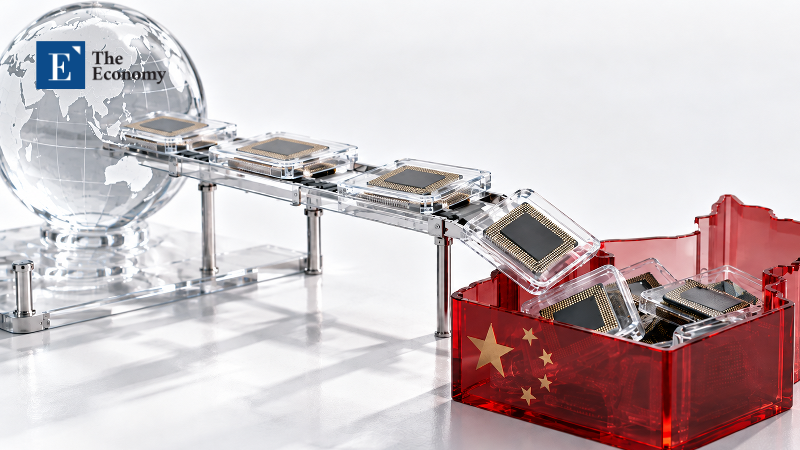
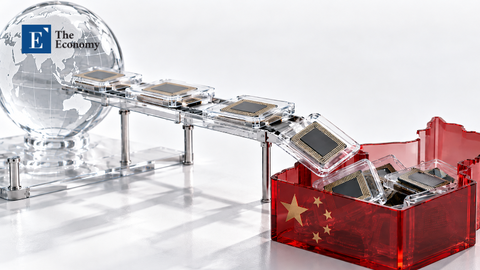
Chinese companies are massively purchasing Nvidia's graphics processing units (GPUs) designed for gaming and workstations. Amid U.S. export controls restricting access to advanced artificial intelligence (AI) semiconductors, some GPUs permitted for export are being repurposed for AI computations to supplement the lack of computing resources. Market analysts point to the supply limitations of China's own AI chips as the reason behind this trend. As local AI chip manufacturers like Huawei cannot keep up with surging demand, reliance on overseas computing resources continues.
China absorbs Nvidia chips
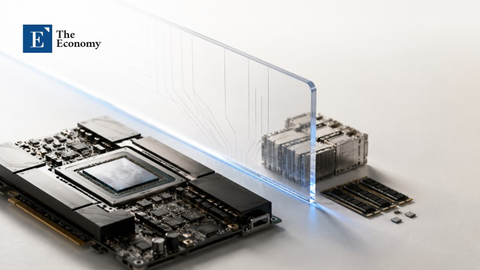
On the 13th (local time), the Financial Times (FT) reported that Chinese firms purchased over one million Nvidia gaming and workstation chips this year to fill the gap in AI computing capabilities. Instead of data center accelerators subject to U.S. export controls for advanced AI chips, some gaming and workstation GPUs permitted for export are being acquired and utilized for AI computations. The products bought by Chinese companies include the RTX PRO 6000D, RTX PRO 5000, and RTX 5090. Although these three are generally slower than Huawei's Ascend 910C in most tasks, they can handle lightweight AI tasks like prefill (the stage where AI reads user-inputted questions or documents before generating answers).
Actual cases of large-scale purchases by Chinese companies are also being confirmed one after another. On the 13th, Chinese economic media Daily Economic News reported, quoting sources, that local IT company iSoftStone secured 8,000 Nvidia RTX PRO 6000D GPUs. These products are said to be used at a factory in Tongzhou, Beijing, for the production, validation, and delivery of completed AI servers. Based on current local market prices, the estimated value of the purchase is about 560 million yuan (approximately US$86.9 million). Earlier on the 9th, Chinese financial IT company Tianyang Technology also announced a contract to purchase 20,000 RTX PRO 5500 Blackwell GPUs from suppliers.
China's own AI chip development efforts
This trend is interpreted as stemming from structural limitations in the local AI chip supply chain. China's semiconductor industry has recently been accelerating AI chip self-sufficiency. Notably, Huawei is promoting the commercialization of the next-generation AI accelerator Ascend 950 series, following the existing Ascend 910C, while Alibaba is developing the AI accelerator series 'Zhenwu' through its semiconductor design subsidiary TiHead. Additionally, Baidu's Kunlunxin and Cambricon have entered the competition to develop next-generation AI chips. In semiconductor manufacturing, SMIC is strengthening its production capabilities based on AI demand, and memory maker ChangXin Memory Technologies (CXMT) is also securing substantial funds through an IPO for new factory construction and facility expansion.
This localization movement is also reflected in actual market share changes. According to a July 13 report by Reuters citing market research firm IDC, the shipment of data center AI accelerators in China in the first half of this year totaled 2.008 million units. Huawei's shipments neared 572,000 units, claiming a 28% market share. TiHead held 7%, Cambricon 5%, and Kunlunxin 4% market shares. Meanwhile, Nvidia's shipments during the same period dropped 44% year-over-year to 678,000 units, and its market share fell from about 55% annually last year to 34%.
Table 1. Overview of China's AI Chip Supply Chain
| Category | Key Details |
|---|---|
| Localization Expansion | Acceleration of in-house AI chip development centered on Huawei, TiHead, Cambricon, and Kunlunxin |
| Supply Shortage | Domestic AI chip production capacity unable to keep pace with rapidly growing computation demand, leading to persistent supply gaps |
| Production Constraints | Rising costs and yield pressures due to HBM price increases and restrictions on advanced lithography equipment access |
Computation demand outpaces supply
The problem is that despite these changes, China's domestic AI chip supply capacity is failing to keep up with the soaring computational demand. On the 13th, FT reported that China's AI chip production this year is expected to reach about 3.5 million units, while total demand is projected to exceed 5 million units—resulting in a shortfall of at least 1.5 million units. Huawei, a key domestic supplier, has acknowledged it is unable to fully meet domestic demand. At the 'Huawei Connect 2026' event held in Shanghai on June 17, Huawei's rotating chairman Xu Zhijun stated, "We have not secured enough production capacity to even satisfy China's domestic demand" and claimed there is no plan to actively expand business into overseas markets.
It is also difficult to rapidly increase AI chip supply in the short term. The rising procurement costs of high-bandwidth memory (HBM) have increased production burdens for Chinese semiconductor companies. According to a Reuters report last month, Chinese AI chip firms like Huawei and Cambricon have repeatedly raised product prices reflecting the increase in HBM prices. Huawei's next-generation AI accelerator Ascend 950DT card price has surpassed 250,000 yuan (about US$38,846), while the existing Ascend 910C card price has risen from about 90,000 yuan (about US$14,000) at the beginning of the year to over 110,000 yuan (about US$17,077). Furthermore, restricted access to advanced semiconductor manufacturing equipment also limits production efficiency. Chinese firms have been unable to procure extreme ultraviolet (EUV) lithography equipment due to U.S.-origin regulations, instead producing semiconductors using deep ultraviolet (DUV) equipment and multi-patterning technology. Repeating lithography and etching steps multiple times increases production costs and complicates achieving yield targets.
Cases of smuggling Nvidia products multiply
This supply shortage has increased Chinese industry’s dependence on Nvidia chips. Numerous incidents of illegal exports of Nvidia’s advanced AI chips to China have been uncovered. On the 9th, Reuters reported that Ting Wei Willy Sun, a Taiwanese national, pleaded guilty in the U.S. District Court in Manhattan, New York, to four charges including conspiracy to violate U.S. export control laws, smuggling conspiracy, fraud against the U.S. government, and obstruction of justice. Previously, in March, U.S. prosecutors indicted Sun along with Supermicro co-founder Xiang Wally Liao and Taiwan branch sales manager Louis Steven Chang for conspiring to illegally export U.S.-made AI technology worth approximately US$2.5 billion to China. According to investigators, beginning in October 2023, they used a transaction structure involving third-country companies to ship servers equipped with high-performance Nvidia GPUs such as the B200, H100, and H200 to China without export permits. In particular, Sun acted as an intermediary for export orders and concealed the final shipment to China, reportedly even placing dummy servers in December last year to evade inspections by the U.S. Department of Commerce.
Similar incidents occurred last year. In August, the U.S. Department of Justice arrested and charged Chinese nationals Geng Chuan and Yang Shuiwei, residing in California, for illegally exporting tens of millions of dollars worth of advanced AI chips to China. Using their company ALX Solutions, founded in 2022, they exported AI chips to China without U.S. Department of Commerce authorization until July last year. From August 2023 to July 2024, they purchased more than 200 Nvidia H100 chips from Supermicro while falsely reporting Singapore and Japan as end customers and dispatched over 20 shipments to logistics companies based in Singapore and Malaysia. However, on-site investigations found no operational business at the declared addresses, and evidence showed that they directly received payments from Chinese firms.
Indirect access via Southeast Asian infrastructure
Instead of smuggling advanced AI chips, increasing numbers of Chinese firms rent computing resources from overseas data centers. They use Nvidia GPUs installed in data centers in Southeast Asia such as Singapore and Malaysia as cloud services. For instance, in November last year, FT reported that Alibaba and ByteDance were training large-scale language models (LLMs) using U.S.-made advanced semiconductors installed in Southeast Asian data centers. On the 30th of last month, Tencent signed a five-year lease agreement with U.S. cloud company Oracle to utilize approximately 100,000 advanced AI chips installed at several Southeast Asian data centers. The contract is estimated to be worth US$7 billion, with initial payments accounting for about 30% of the total contract value.
The U.S. government is working to block these Chinese approaches. Last year, The New York Times reported that the Bureau of Industry and Security (BIS) under the U.S. Department of Commerce is investigating Chinese companies' advanced semiconductor procurement routes and their use of overseas cloud infrastructure. Investigations include MegaSpeed International, headquartered in Singapore. MegaSpeed is known to have purchased large quantities of Nvidia advanced AI chips and supplied them to data centers in Malaysia and Indonesia, which are believed to provide remote computing services to Chinese customers. Separately, U.S. authorities are also reviewing the possibility that MegaSpeed illegally exported some semiconductors to mainland China.
Aoife Brennan is a contributing writer for The Economy, with a focus on education, youth, and societal change. Based in Limerick, she holds a degree in political communication from Queen’s University Belfast. Aoife’s work draws connections between cultural narratives and public discourse in Europe and Asia.
- Previous German defense industry expands shipbuilding business with Europe's rearmament strength, testing the position of non-regional companies in strengthening the regional defense ecosystem
- Next "Expanding Domestic Equipment Market Routes by Supporting US Factory Construction" Japan Collaborates with US Foundries to Simultaneously Expand Equipment Exports and Production Cooperation
Similar Post