"Open Maritime Route for Europe's Rearmament" Greece, Which Fostered Korean Shipbuilding, Starts Revival Hand in Hand with Korean Shipyards

Siobhán Delaney is a Dublin-based writer for The Economy, focusing on culture, education, and international affairs. With a background in media and communication from University College Dublin, she contributes to cross-regional coverage and translation-based commentary. Her work emphasizes clarity and balance, especially in contexts shaped by cultural difference and policy translation.
Authored On
Modified
Opportunity to rebuild Greek shipbuilding amid expanding warship demand due to Europe's rearmament
Pursuit of local construction by combining Hanwha Ocean technology and Onex facilities
Expectations to secure long-term orders and restore manufacturing employment
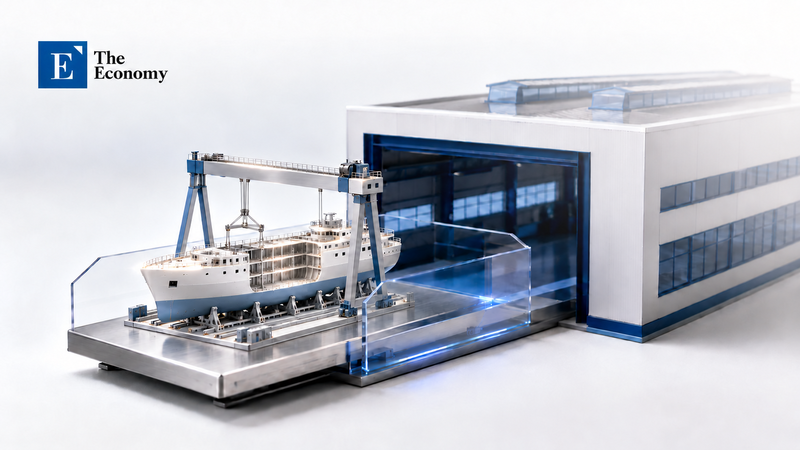
Greece is accelerating cooperation with Korea to rebuild its shipbuilding industry. The plan is to integrate Hanwha Ocean's technology and shipbuilding experience into domestic shipyards to increase warship orders and revive manufacturing and employment. With increased warship demand driven by European countries' defense enhancements, Greek shipyards have an opportunity to secure long-term orders. Additionally, the U.S. is supporting shipyard modernization funding to check China's port influence in the Eastern Mediterranean, strengthening efforts to restore the production base.
Hanwha Ocean and Onex Jointly Target Greek Warship Projects
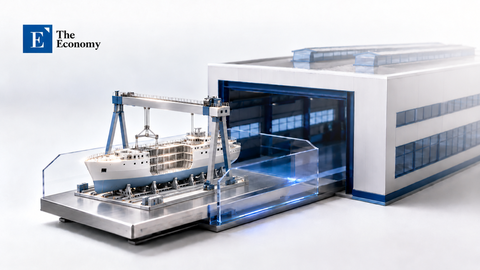
According to Greek economic newspaper Naftemporiki on the 15th (local time), the Greek Shipyards Association met with the European Union (EU) Executive Commission's special delegation on the 13th and presented seven strategic proposals, including formalizing a 70% domestic value-added ratio. Ahead of Greece's EU Council Presidency in the second half of next year, the plan is to create conditions for domestic shipyards to participate as the primary contractor responsible from design through construction, sea trials, and follow-up support. To this end, they requested institutionalization of a national shipbuilding plan spanning 15 years and to reflect local production and infrastructure expansion achievements in the execution criteria of European defense industry support funds. They also requested procurement regulations be revised to secure 70% of value-added generated during warship construction domestically and funding support for production facilities such as docks and ship lifting equipment.
In external cooperation, they presented a goal to restore Western world shipbuilding market share to 33% through a joint production system among Greece, Europe, and the U.S. As a cooperation model to disperse the shipbuilding volume concentrated in Asia and reinforce Western supply chains, they cited the partnership between Greek shipbuilding group Onex and Hanwha Ocean. Their cooperation concretized in May as a strategic alliance following a March agreement to jointly participate in Greek Navy and Coast Guard projects. Onex is gradually investing in shipyard infrastructure worth EUR 1.35 billion (approximately USD 1.56 billion), while Hanwha Ocean provides advanced technology and shipbuilding know-how. Part of the investment funds is planned to be covered by financing from the U.S. International Development Finance Corporation (DFC), and the two companies plan to promote local construction and maintenance, repair, and overhaul (MRO) business for Greek Navy and allied warships.
Expanding Greek Warship Construction and Maintenance Base with Hanwha Technology
The sector the two firms are primarily targeting is the Greek Navy's submarine acquisition project. Hanwha Ocean and Onex agreed to participate as mutually exclusive partners in the warship projects of the Greek Navy and Coast Guard, including this initiative. Onex operates the Neorion shipyard on Syros Island and the Elefsina shipyard near Athens. In particular, the Elefsina shipyard has been modernized using U.S. financial support. In November 2023, DFC signed a loan contract worth USD 125 million (approximately USD 128 million) with Onex to support the expansion of ship repair and modification capabilities, including for liquefied natural gas (LNG) carriers. The facility improvement goal was to enable handling up to 200 vessels annually.
Cooperation between Hanwha affiliates and Onex is also progressing in energy equipment and shipyard productivity improvements. On February 25, prior to Hanwha Ocean's agreement, Hanwha Power Systems signed a cooperation contract with Onex in Washington, USA, covering shipbuilding and energy sectors. The cooperation scope includes development of new vessels powered by LNG fuel, offshore and coastal regasification facilities, and projects related to energy production and storage facilities. In shipyard operations, they plan to improve new shipbuilding processes and workflows, and increase procurement efficiency of equipment by leveraging Hanwha's global supplier network and purchasing systems. They aim to enhance linkages between technical support and procurement to speed up contract execution and project completion. Additionally, they plan to jointly expand marine energy-related production and facility integration business within the U.S.
First Order of an Oil Tanker Led to Cooperation for Shipbuilding Industry Reconstruction
The Korea-Greece shipbuilding cooperation dates back to a half-century ago when Korean large-scale shipbuilding began. In 1972, Greek shipowner George Livanos placed an order for two ultra-large crude carriers of 260,000 tons each with Hyundai Heavy Industries before the Ulsan shipyard was even established. This order provided funding needed for shipyard construction, enabling Hyundai to start building the shipyard alongside ship construction. The first vessel, 'Atlantic Baron,' was delivered in November 1974, marking Korea's entry into the global shipbuilding market. The collaboration, started by Greeks assigning early orders, is now evolving into a project where Korean companies contribute their technology and manufacturing experience to rebuild Greek shipyards.
Greece's expectation for rebuilding its shipbuilding industry aims to revive the long-stagnant manufacturing sector and local employment. Greek shipbuilding constructed and repaired hundreds of ships in the 1960s and 1970s but deteriorated due to economic slowdown in the 1980s, nationalization, and subsequent financial crises. With privatization delayed or cancelled, orders moved overseas, leading to unemployment in shipyard clusters near Athens and affiliated suppliers. Recently, private investors and shipowners participating in shipyard operations have begun attracting domestic ship repair work. Greece's annual ship repair volume increased from 330 vessels in 2013 to 700 in 2024, with Onex-operated two shipyards repairing 220 ships in 2024. The local industry is expanding new ship and offshore facility construction businesses based on this recovered repair workload.
Table 1. Movements of Europe, U.S., and China Surrounding Greek Shipbuilding Rebuilding
| Category | Major Projects and Bases | Key Details |
|---|---|---|
| European Production Facility Investment | Rheinmetall's Acquisition of Mangalia Shipyard | Purchase price of Romanian shipyard: EUR 138 million Pursuit of warship construction for the Romanian Navy |
| European Warship Orders | Four warships for Romanian Navy | Including 2 offshore patrol vessels and 2 support ships, totaling approximately EUR 920 million (about USD 1.06 billion) Linked to EU Defense Loan Support Program SAFE |
| U.S. Support for Shipyards | DFC's support for Elefsina Shipyard | Support for restoring Greek production base Utilizing site about 19 km from Piraeus port, countering China's expanding regional influence |
| China's Port Expansion | COSCO's acquisition of stakes in Piraeus port operator | Increased stake to 67% since gaining management rights in 2016 Logistics hub connecting Europe, Asia, and Africa |
| U.S. Port Strategy | Small Greek ports and surrounding industrial facilities | Interest in acquisition of port shares Pursuit of expanded energy exports to Europe and port infrastructure acquisition |
Greek Shipbuilding Revival Boosted by European Warship Demand and U.S. Funding
Long-term orders expected to supplement the revived production base centered on repair work include European warship orders. Recently in Europe, investments to acquire existing shipyards and convert them into warship production facilities have been continuing with the backdrop of defense enhancements in various countries. German defense company Rheinmetall agreed on the 9th to acquire Romania's Mangalia shipyard for EUR 138 million (about USD 159 million) and is pursuing construction of four warships for the Romanian Navy there. The EUR 920 million (about USD 1.06 billion) project, including two offshore patrol vessels and two support ships, is linked with the EU's defense loan support program SAFE (Security Action for Europe). The flow of combined warship orders and production facility investments is interpreted as a factor bolstering Greek industry’s efforts to expand participation of its shipyards in European defense businesses.
In rebuilding Greek shipbuilding, along with European warship demand, U.S. funding support also plays a role. The interests of Greece in restoring its production base and the U.S. in countering China's port influence in the Eastern Mediterranean align. Chinese state-owned shipping company COSCO acquired management rights for the Piraeus port amidst Greece’s financial crisis in 2016 and has since increased its stake to 67%. Piraeus port is a key logistics hub connecting Europe, Asia, and Africa. The U.S. counters Chinese influence through investments in nearby ports and industrial facilities. DFC stated in its Elefsina shipyard support project that the location approximately 19 km from Piraeus port positions the funding support as a check on China's regional influence expansion. The U.S. has also shown interest in acquiring shares in smaller Greek ports, simultaneously promoting expanding energy exports to Europe and securing port infrastructure.
Stepping Stone for Hanwha Ocean's European Entry
Improved investment conditions for Greek shipyards due to U.S. support create favorable conditions for Hanwha Ocean, which aims to establish a production base locally. Since the existing shipyards have equipment, personnel experienced in ship repair, and nearby cooperating suppliers, the initial business burden can be reduced. Additionally, Greece’s relatively low labor costs are cited as an advantage for local production. According to European statistics, Greece’s hourly labor costs are estimated at around EUR 18 (approximately USD 20.73) in 2025, about half the EU average of EUR 34.9 (approximately USD 40.19). Though not limited to shipbuilding, this serves as an indicator of the cost burden of operating a production base within Europe. Hanwha Ocean sees an opportunity to secure production competitiveness by applying its construction technology and process management experience to the local industrial base.
Europe’s trend to strengthen in-region defense production and procurement enhances the value of the Greek base. SAFE limits equipment component costs procured outside of the EU, European Economic Area, European Free Trade Association member states, and Ukraine to 35% or less as a principle. Since the location and governance of participating companies are even scrutinized, establishing local production systems and supply chains has become crucial to target the European defense market. For Hanwha Ocean, joint construction with Onex creates opportunities to increase the use of European components and expand cooperation with local suppliers. By operating production facilities in Greece according to European procurement standards, local employment and industrial contributions can also be included in bid proposals.
Siobhán Delaney is a Dublin-based writer for The Economy, focusing on culture, education, and international affairs. With a background in media and communication from University College Dublin, she contributes to cross-regional coverage and translation-based commentary. Her work emphasizes clarity and balance, especially in contexts shaped by cultural difference and policy translation.
Similar Post