“Targeting Global Markets With Low Production Costs”: Chinese EV Makers Integrate Supply Chains and Expand Overseas Bases as Mexico Counters With Tariffs and Local Content

As one of the youngest members of the team, Tyler Hansbrough is a rising star in financial journalism. His fresh perspective and analytical approach bring a modern edge to business reporting. Whether he’s covering stock market trends or dissecting corporate earnings, his sharp insights resonate with the new generation of investors.
Authored On
Modified
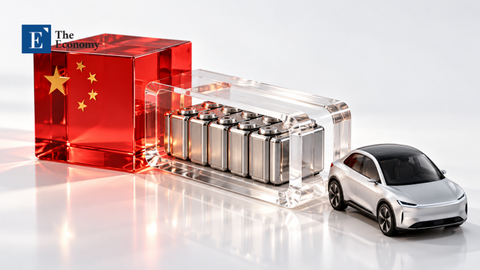
China cuts EV costs through vertical integration and low labor costs
Individual companies, including BYD and CATL, integrate supply chains from critical minerals to batteries and finished vehicles
Production bases expand into Mexico and Morocco; Mexico mounts a “defense” against Chinese automakers’ growing market share
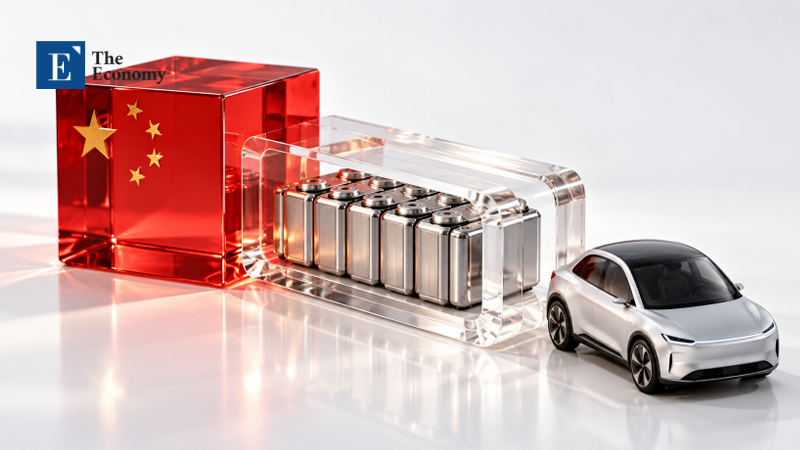
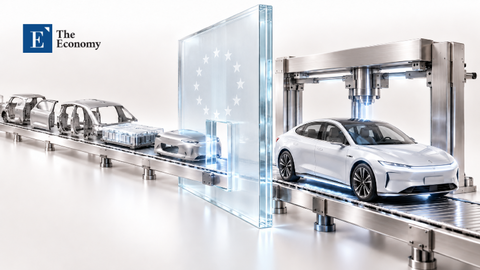
Chinese electric vehicle makers are accelerating their push into global markets, leveraging their overwhelming cost competitiveness. They have secured a cost advantage through inexpensive labor and vertical integration spanning critical mineral refining, battery materials and cells, and final vehicle assembly. Chinese companies are also seeking further savings by expanding their supply chains to overseas bases with relatively low production costs, such as Mexico and Morocco. Mexico, meanwhile, is stepping up its response by strengthening industrial protection policies, including higher tariffs and increased use of domestically produced parts.
The Price Competitiveness of Chinese EVs
On the 16th local time, U.S. automotive industry publication Automotive News reported, citing an analysis by global management consultancy AlixPartners, that the average production cost of a Chinese-brand EV was estimated at USD 20,000 (approximately USD 20,538). That is USD 11,000 (approximately USD 11,308) below the USD 31,000 (approximately USD 31,846) production cost of a comparable European-brand EV. In other words, European manufacturers’ production costs are about 55% higher than those of Chinese manufacturers.
The International Energy Agency (IEA) offered a similar assessment last year. It found that battery electric vehicle production costs in China were more than 30% lower than in advanced economies, with about 40% of that gap attributable to differences in the prices of powertrain components such as motors and batteries. Automakers are also taking note of China’s cost competitiveness. Germany’s Volkswagen, for example, said last November that it could “reduce development costs for some EV models developed locally in China by up to 50%.” This resulted from integrating software and hardware development and vehicle validation processes through its research and development (R&D) and testing facilities in Hefei, Anhui Province, and strengthening cooperation with local suppliers.
Vertical Integration Eases the Cost Burden
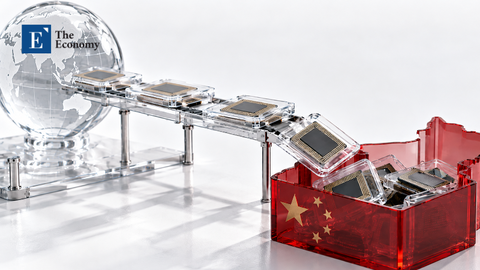
Chinese EV makers’ cost competitiveness is based on vertically integrated supply chains spanning the procurement of critical minerals, production of battery materials and components, and final vehicle assembly. Chinese companies have built supply networks for key battery raw materials by using domestic mineral resources while investing in mines or establishing joint ventures with local companies in major resource-producing regions, including Australia, South America, Africa and Indonesia. Companies that import raw ore and refine and process it into the high-purity materials needed for battery manufacturing are also concentrated in China. According to the IEA’s Global Critical Minerals Outlook 2025, China is the largest refiner of 19 of the world’s 20 major energy-related minerals, accounting for an average share of about 70% of their refining markets.
Materials produced this way are processed into key battery components, including cathode materials, anode materials and electrolytes, and China also has a prominent presence in these supply chains. According to the IEA’s Global EV Outlook 2026, China accounted for 85% of global production of cathode active materials for EVs and more than 90% of anode active materials last year. Its share of battery cell production also exceeded 80%, while its share of EV production stood at about 70%. In short, all major processes, from critical mineral refining to battery material and cell manufacturing and finished vehicle production, are concentrated in China.
Companies Continue Efforts to Integrate Supply Chains
Efforts to integrate supply chains are also evident at the individual company level. BYD, for example, not only produces its own EV batteries but also directly develops and manufactures major components such as electric motors, power control units and power semiconductors. It is also bringing raw-material supply in-house. According to Reuters, in 2023 BYD secured mining rights covering a total of 852 hectares in “Lithium Valley,” a promising lithium-producing area in the Brazilian state of Minas Gerais. The site is roughly half a day’s drive from BYD’s vehicle assembly plant in the state of Bahia, and BYD has reportedly been conducting mineral exploration through a local subsidiary.
China’s largest battery manufacturer, CATL, is also accelerating its business expansion. Last June, CATL broke ground on a USD 6 billion (approximately USD 6.15 billion) integrated battery production project with Indonesia’s state-owned mining company ANTAM, Indonesia Battery Corporation (IBC) and other partners. The project centers on building a supply chain in Indonesia spanning nickel mining and refining, battery material manufacturing, cell production and used-battery recycling. Through its subsidiary Brunp Recycling, CATL also operates a business that recovers critical minerals such as nickel, cobalt and lithium from used batteries and feeds them back into the production of new battery materials.
Table. Cost Competitiveness of China’s EV Industry
| Category | Key Details |
|---|---|
| Critical Mineral Procurement | Secures raw-material supply chains by using domestic resources, investing in overseas mines and establishing joint ventures |
| Mineral Refining | The largest refiner of 19 of 20 major energy minerals, with an average market share of about 70% |
| Battery Materials | Produced 85% of cathode active materials and more than 90% of anode active materials last year |
| Batteries and Finished Vehicles | Accounted for more than 80% of global battery cell production and about 70% of EV production last year |
| Domestic Production Costs | Labor costs of USD 585 per vehicle in 2024, lower than those of U.S., Japanese and European manufacturers |
| Overseas Production Bases | Expanding vehicle assembly and battery material production facilities into low-wage locations such as Mexico and Morocco |
Establishing Overseas Bases to Reduce Labor Costs
Chinese automakers also enjoy a substantial competitive advantage in labor costs. Although wages for Chinese manufacturing workers have recently been rising, labor costs in vehicle production remain lower than in other major countries. According to a survey of more than 250 vehicle assembly plants worldwide conducted last April by global consultancy Oliver Wyman, Chinese automakers’ average labor cost per vehicle in 2024 was USD 585 (approximately USD 600). That was 56.4% below the U.S. automaker average of USD 1,341 (approximately USD 1,377) and 23.9% below the Japanese automaker average of USD 769 (approximately USD 792). It was only about a quarter of the European premium automaker average of USD 2,232 (approximately USD 2,292). Oliver Wyman found that, in addition to securing relatively inexpensive labor, Chinese companies had reduced the working hours needed to produce a vehicle by using new production equipment, efficient supply chains and large-scale production systems.
Chinese companies are also expanding their production bases to overseas locations where labor costs are lower than in China. Mexico is a prime example. China’s JAC is assembling vehicles at a plant in Ciudad Sahagún, Hidalgo, in partnership with Mexican company Giant Motors Latin America (GML). BYD and Geely were reportedly shortlisted in February in the bidding to acquire a Nissan–Mercedes-Benz joint-venture plant in Aguascalientes, Mexico. According to Oliver Wyman’s figures, Mexico’s average labor cost per vehicle in 2024 was just USD 305 (approximately USD 308). In Morocco, where average labor costs per vehicle are only USD 106 (approximately USD 108), production bases are being established primarily by Chinese battery-related companies. Chinese battery material supplier BTR is pursuing a project to invest MAD 3 billion (approximately USD 317 million) in a battery anode material production base in Morocco with an annual capacity of 50,000 metric tons (t).
Mexico Moves to Protect Its Domestic Industry
As Chinese automakers accelerate their expansion into overseas markets, the competitive landscape of local automotive industries is also changing rapidly. According to the Mexican Association of Automotive Distributors (AMDA), sales of Chinese-brand vehicles in Mexico totaled 137,525 in the first half of this year, up 27.7% from the same period a year earlier. Chinese brands’ share of the overall new-vehicle market also rose by 3 percentage points over the same period, from 14% to 17%. Their market share, which was below 1% as recently as 2020, has surged in just six years.
Against this backdrop, the Mexican government has moved to tighten import restrictions to protect its domestic automotive industry. A key example was its January increase in tariffs on vehicles imported from countries without a free trade agreement (FTA), including China, to 50%. The government has also set targets to increase production of vehicles for the domestic market by 10% and raise the share of domestically produced parts used in the automotive supply chain by 15 percentage points by 2030. The aim is to secure its own supply chains for the materials and components needed to produce vehicles, rather than remaining merely an assembly and export base for foreign automakers. Efforts to foster an EV brand are also gaining momentum. After announcing “Olinia,” a project to develop a domestically produced compact EV, last January, the Mexican government unveiled its first prototype, “Olinia 1,” in June. The vehicle is a low-speed urban EV that can seat up to 6 people. The government said domestically produced parts and materials account for about 50% of the prototype and plans to raise that share to 75% by 2030.
As one of the youngest members of the team, Tyler Hansbrough is a rising star in financial journalism. His fresh perspective and analytical approach bring a modern edge to business reporting. Whether he’s covering stock market trends or dissecting corporate earnings, his sharp insights resonate with the new generation of investors.
Similar Post