“Regulatory Easing Energizes Investment”: Europe’s AI Ecosystem Gains Growth Momentum as Defense Startups Advance Amid Rearmament
“Regulatory Easing Energizes Investment”: Europe’s AI Ecosystem Gains Growth Momentum as Defense Startups Advance Amid Rearmament

Aoife Brennan is a contributing writer for The Economy, with a focus on education, youth, and societal change. Based in Limerick, she holds a degree in political communication from Queen’s University Belfast. Aoife’s work draws connections between cultural narratives and public discourse in Europe and Asia.
Authored On
Modified
Nvidia expands investment in AI startups across Europe, including Germany, France and the UK
EU lays groundwork for industry growth by easing AI regulations, energizing fundraising by local technology companies
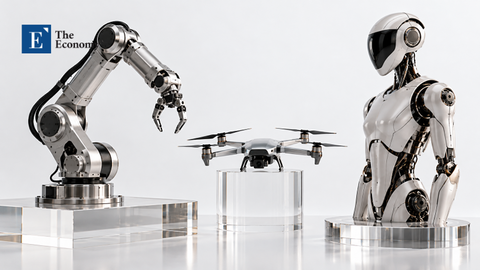
Europe’s rearmament drives a surge in demand for defense AI, accelerating growth at drone and autonomous-weapons startups

Nvidia is committing substantial funding to Europe’s technology ecosystem. With the European Union (EU) recently delaying the application of regulations on high-risk artificial intelligence (AI) and easing some administrative burdens, rapidly rising investment in AI startups is gradually improving growth conditions for European technology companies. Alongside the push to increase defense spending across Europe, investment demand is also spreading to industries where AI technologies are being commercialized quickly, including defense and robotics.
Nvidia’s European Investment Strategy
According to US business news outlet CNBC on the 20th (all dates hereafter are local time), Nvidia announced plans to invest in four German startups at the Invest in Germany Summit held the previous day in Berlin, Germany. The investment targets are AI-powered robotics developer Agile Robots, hospital information management software developer Avelios Medical, AI-based video sound generation company Mirelo, and satellite designer and manufacturer Reflex Aerospace. The investments are part of Nvidia’s announced plan to commit USD 10 billion (approximately USD 10.2 billion) to companies, universities and research institutions across Europe. The amount to be invested in each company was not disclosed.
Nvidia has also recently announced a series of investment expansions in European countries beyond Germany. Nvidia CEO Jensen Huang previously unveiled plans to invest in four local startups in France and discussed ways to expand AI infrastructure and develop technology with French President Emmanuel Macron. In the UK, the company also announced plans to invest in five advanced-technology startups working in areas including AI drug discovery, infrastructure prediction and quantum computing, and pledged to provide USD 250 million (approximately USD 255 million) worth of computing resources for AI safety research over the next five years. In Sweden, it plans to establish an AI innovation hub with a local foundation to support healthcare and climate startups, while strengthening its collaboration with Volvo Cars on autonomous-driving technology.
Europe’s Once-Frozen AI Market
Market observers are focusing on the rapid revival of AI investment in Europe. Concerns have persisted that insufficient investment and gaps in technology infrastructure could leave Europe behind in the AI race against the US and China. For example, speaking last month at the Hofburg Dialogue in Vienna, Austria, European Central Bank (ECB) President Christine Lagarde noted, “Last year, the US developed 59 notable AI models and China developed 35, while the UK and France produced just one each,” adding that “the scale of AI investment pouring in from the US and China differs substantially from Europe’s.” She also said, “The US accounts for 75% of global AI computing capacity through its data centers, while Europe accounts for just 5%,” stressing the urgent need to expand computing capacity to keep pace with growing demand.
Research organizations have offered similar assessments. In a contribution by Richard Windsor published in April through Telecom Expert Voices, global telecommunications and digital industry research firm Strand Consult described Europe’s AI competitiveness as little more than a “rounding error” in the global market. Although French AI company Mistral is pursuing plans to build a roughly 200-megawatt (MW) data center and deploy 13,800 GB300 chips, the assessment was that these efforts remain markedly insufficient compared with those in the US and the Middle East. Strand Consult identified the regulatory environment and industry culture as key reasons for the weakness of Europe’s AI industry. In particular, it argued that the EU’s AI Act constrains business activity by preemptively regulating an industry that has yet to take shape.
AI Act Raises Regulatory Barriers
The AI Act is the world’s first comprehensive AI regulation. Its core approach is to classify AI systems into four risk levels—unacceptable risk, high risk, limited risk and minimal risk—and apply differentiated regulations. High-risk AI includes systems that could significantly affect individuals’ fundamental rights or safety, such as those used in recruitment and personnel evaluations, education and critical infrastructure operations. Companies developing these technologies must fulfill various obligations, including establishing risk management systems, managing training data quality, preparing technical documentation and retaining system operation logs. They must also undergo conformity assessments before launching products. Penalties for violations are substantial. The use of prohibited AI technologies can result in fines of up to EUR 35 million (approximately USD 40 million) or 7% of global annual revenue, whichever is higher. Violations of key obligations relating to high-risk AI can incur penalties of up to EUR 15 million (approximately USD 16.9 million) or 3% of revenue.
The problem is that compliance with these regulations requires considerable funding and specialized personnel. Large technology companies can respond through dedicated legal, security and quality-management teams, but early-stage startups with limited capital and staff must devote additional resources to data validation, risk assessments and regulatory documentation, separately from technology development. Developers of high-risk AI, which must meet the relevant obligations even before launching products, can be particularly burdened by commercialization delays and rising costs associated with certification preparations and regulatory compliance. This delays the launch of new services and the generation of revenue, while also making follow-on fundraising more difficult.
Table 1. EU Measures to Ease AI Regulations
| Category | Key Details |
|---|---|
| High-risk AI | Postpone implementation of regulations on stand-alone systems for biometrics, recruitment, education, critical infrastructure and other uses until December 2027 |
| AI embedded in products | Postpone implementation of regulations on systems embedded in products such as machinery, toys, elevators and medical devices until August 2028 |
| Reducing burdens on businesses | Extend simplified procedures for AI literacy and database registration requirements for small and medium-sized enterprises to some mid-sized companies |
| Testing support | Expand national regulatory sandboxes and introduce a joint EU-level sandbox |
| Addressing overlapping regulations | Reduce overlapping application of the AI Act and product-specific safety rules, and simplify conformity assessment procedures |
| Maintaining safety regulations | Prohibit AI that generates nonconsensual sexual synthetic content or child sexual abuse material, and maintain transparency obligations for chatbots and AI-generated content |
Startups Stir as Policy Direction Shifts
Recently, however, the EU’s policy direction has also begun to shift. In July, the EU brought into force amendments simplifying the AI Act and postponed the implementation of key provisions on high-risk AI, originally scheduled to take effect in August this year, until December 2027. High-risk AI embedded in products such as machinery and toys was granted a grace period until August 2028. The decision reflected concerns that uniformly imposing compliance obligations on companies while technical standards and detailed guidelines remained delayed could unnecessarily increase development costs and disrupt product commercialization. The EU also introduced measures to reduce companies’ administrative burdens, including extending some simplified regulatory procedures beyond small and medium-sized enterprises to mid-sized companies.
Against this backdrop, fundraising and business expansion by European AI startups have begun to gain momentum. According to the “2026 Sifted AI 100,” released on the 15th by European technology publication Sifted, European AI startups have raised a cumulative EUR 29.6 billion (approximately USD 33.9 billion) this year, more than double the total raised last year. Growth has been particularly pronounced among companies developing AI technologies tailored to specific industries, such as healthcare, finance and industrial automation. Of the 100 promising European AI startups selected by Sifted, 51 were industry-specific AI companies, while the number applying AI to physical environments, including robotics, rose from 11 last year to 14.
Investment Also Picks Up in Defense
The rise of European AI startups is also evident in the defense industry. As European countries increase defense spending following Russia’s invasion of Ukraine and accelerate efforts to secure advanced military technologies such as drones and autonomous weapons systems, funding is flowing into emerging defense companies that use AI. According to the NATO Innovation Fund and market research firm Dealroom, European startups in defense, security and resilience attracted USD 8.7 billion (approximately USD 8.85 billion) in venture investment last year, up 55% from the previous year. AI-related companies accounted for 44% of the total funding.
A prominent example of this trend is German defense AI startup Helsing. Founded in 2021, Helsing has developed AI software that analyzes battlefield data to support military decision-making, and has recently expanded into AI-powered unmanned attack aircraft and autonomous fighter jets. In July, it raised USD 1.8 billion (approximately USD 1.83 billion) from investors including Dragoneer Investment Group and Lightspeed Venture Partners, at a valuation of USD 18 billion (approximately USD 18.3 billion). Germany’s Quantum Systems also raised USD 1.2 billion (approximately USD 1.22 billion) in a funding round that same month involving Blackstone, Airbus and other investors, at a valuation of USD 8 billion (approximately USD 8.14 billion). Quantum Systems develops military reconnaissance drones and autonomous navigation technology, and plans to use the funding to develop unmanned air, ground and maritime systems and expand production capacity.
Aoife Brennan is a contributing writer for The Economy, with a focus on education, youth, and societal change. Based in Limerick, she holds a degree in political communication from Queen’s University Belfast. Aoife’s work draws connections between cultural narratives and public discourse in Europe and Asia.
Similar Post