All Tech News
All News

Nvidia is committing substantial funding to Europe’s technology ecosystem. With the European Union (EU) recently delaying the application of regulations on high-risk artificial intelligence (AI) and easing some administrative burdens, rapidly rising investment in AI startups is gradually improving growth conditions for European technology companies. Alongside the push to increase defense spending across Europe, investment demand is also spreading to industries where AI technologies are being commercialized quickly, including defense and robotics.
Read More
Anxiety over recovering investments is growing in the financial markets that funded the race to expand artificial intelligence (AI) data centers. Despite large orders, mounting capital expenditure and interest burdens have led investors to question companies’ ability to repay their debts. With initial public offerings (IPOs) delayed and related bond prices falling, banks that have been unable to sell construction loans to other investors also face pressure over providing additional funding. Across an industry that still needs massive investment, concerns are spreading that some companies may be unable to withstand rising financing costs.
Read More
Tesla has sharply lowered its long-term vehicle sales target and begun reviewing a merger with SpaceX. The plan aims to pool the funding and technology needed to develop artificial intelligence (AI) and robots as profitability in its electric vehicle business deteriorates. If the merger goes through, leading scenarios include using SpaceX’s AI and communications infrastructure to advance autonomous driving and restructuring investment around robotics. Both strengthening EV competitiveness and reducing the share of investment devoted to automobiles remain possibilities.
Read More
The discovery of critical security vulnerabilities in PHP (Hypertext Preprocessor), a programming language used by seven out of 10 websites worldwide, has put global internet security on high alert. The flaws allow outside attackers to execute malicious code on servers without authentication. Attempts to exploit them were detected even before disclosure, followed by signs of attack preparations by hackers suspected of links to North Korea. With some organizations suspending services to prevent attacks, the security threat has translated into business disruption and recovery burdens. The security industry expects major vulnerabilities like those in PHP to continue emerging for some time as artificial intelligence (AI) tools uncover hidden flaws in existing software.
Read More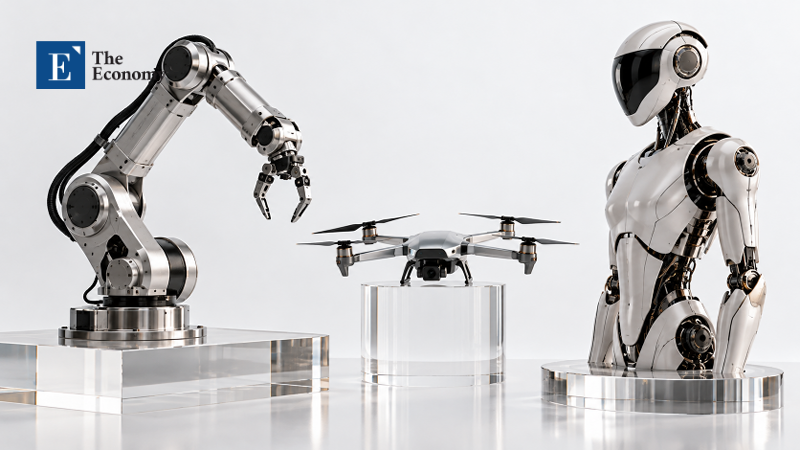
China’s agricultural robot market is growing rapidly. As shrinking and aging rural populations make it harder to secure workers during peak farming seasons, efforts to automate repetitive tasks using drones and robots are spreading. This trend extends beyond China to countries such as Japan. With labor shortages becoming particularly acute in manufacturing and construction, investment in robots and physical artificial intelligence (AI) to address the shortfall is surging.
Read More
U.S. artificial intelligence (AI) company Anthropic has begun the listing process by publicly filing its registration statement for an initial public offering (IPO). Buoyed by surging revenue and a quarterly operating profit, it is seeking a valuation of up to USD 2 trillion (approximately USD 2.04e+3 billion). But a recent slowdown in revenue growth is raising questions about the momentum needed to sustain that lofty valuation. Its capacity to invest in accelerating growth is also limited. Huge payment obligations under existing infrastructure contracts mean a substantial share of the IPO proceeds is likely to go toward fulfilling prior commitments. With existing shareholders also set to sell shares early in the listing, the stock could face selling pressure before the growth expectations embedded in the IPO price translate into results.
Read More
China’s largest DRAM maker, ChangXin Memory Technologies (CXMT), is moving into production of HBM3E, the fifth generation of high-bandwidth memory (HBM). As U.S. export controls make it harder for Chinese artificial intelligence (AI) chipmakers to secure advanced memory, the company is seeking to build a domestic supply chain despite low yields of 20–30% and high production costs. Market observers caution, however, that China will struggle to raise yields quickly, given that HBM requires not only high-performance DRAM but also an ecosystem encompassing stacking and bonding equipment, advanced packaging, and inspection and validation technologies.
Read More
Candidates in U.S. elections are adopting new campaign strategies targeting artificial intelligence (AI) chatbots. As more voters use generative AI to research candidates and policies, a practice known as generative engine optimization (GEO) is gaining ground. Some observers, however, warn that because generative AI can present inaccurate or biased information as fact, turning political information into a battleground for AI optimization could distort voters’ judgments about the information they receive.
Read More