AI, Economy & Markets


Monetary policy shocks often begin as interpretation failures, not true surprises Newspaper coverage, market reports and investors can distort the central bank’s original signal LLMs may help expose where human bias enters the policy communication chain
Read More
Cheap AI is becoming expensive infrastructure Usage limits reveal the real cost of heavy AI use The next AI race is about compute, power, and pricing In late March, heavy Claude users ran into a new kind of shortage.
Read More

AI will replace human labor only when it becomes cheaper, reliable, and easier to manage than people The next 3–4 years will bring selective task automation, not mass job replacement The main risk is not total unemployment, but weaker entry-level career paths and greater pressure on workers
Read More








Agentic AI evaluation must measure firm capacity, not just model quality The real AI divide is between adoption and trustworthy scale Strong firms will prove control, value, oversight, and workforce readiness Τhe fact that n
Read More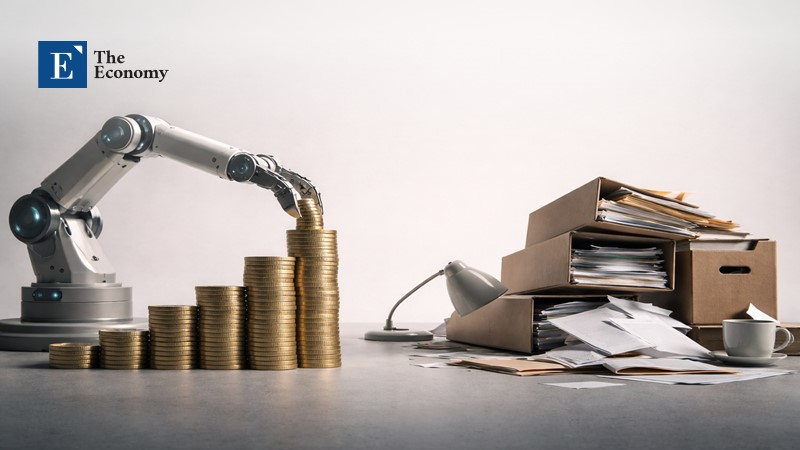
AI can raise productivity without creating enough jobs to offset the losses Unlike the China shock, the AI shock may keep production at home while still weakening careers The real policy challenge is not just skills, but who captures the gains from automation
Read More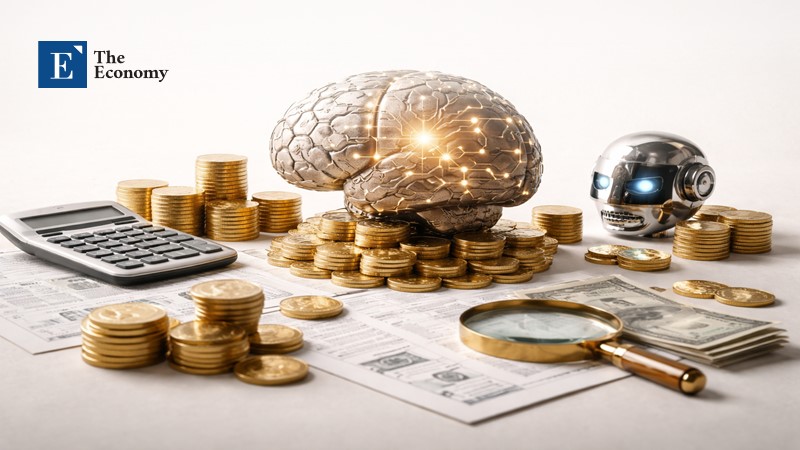
AI is shifting income from wages to profits and capital That will intensify wealth-tax, capital-tax, and AI-tax debates If governments wait, unemployed growth will weaken fiscal legitimacy According to data compiled by
Read More
AI-driven job losses slash labour income and VAT, straining European Union budgets. Public demand for universal basic income surges just as tax capacity erodes. Digital VAT enforcement, a rent surtax, and automatic income top-ups offer a solvency lifeline.
Read More
AI can raise business output while shrinking labour’s share of income That weakens household demand first in B2C sectors, then spreads across the wider economy Without broader distribution of AI gains, growth may continue, but it will become narrower and more fragile
Read More
AI job loss can reduce consumption fast That can shrink the VAT base and strain budgets Europe may face the pressure first In 2023, value-added tax (VAT) accounted for 20.5% of total tax revenue across OECD countries.
Read More
AI tools let a handful of workers match whole teams’ output. Job-loss forecasts overlook the widening productivity gulf inside occupations. Spreading agentic-design skills and sharing gains can turn the windfall into broad prosperity.
Read More
Current AI labour data hides deeper structural shifts Displacement risks are underestimated by early signals Policy must act before the shock becomes visible One key number should make anyone betting on a smooth transition
Read More
Current research on AI’s job impact is sparse, uneven, and contradictory Official metrics miss rising under-employment, so today’s calm may disguise looming layoffs Governments must invest now in adaptable training and safeguards before clearer data arrive
Read More
Physical AI will erase millions of jobs, making labour redundancy inevitable. A mandatory Universal Basic Adjustment Benefit must be enacted before the shock. AI’s productivity boost widens gaps so sharply that reskilling alone cannot save workers.
Read More

AI speeds up routine work, but complex tasks still need expert judgment The AI productivity paradox shows that faster outputs can create more review work Sustainable AI use requires strong human oversight and better workflows
Read More