"Protecting Domestic Industry vs Securing a Core Market" EU and China Enter High-Level Trade Talks as Disputes Intensify

Anne-Marie Nicholson is a fearless reporter covering international markets and global economic shifts. With a background in international relations, she provides a nuanced perspective on trade policies, foreign investments, and macroeconomic developments. Quick-witted and always on the move, she delivers hard-hitting stories that connect the dots in an ever-changing global economy.
Authored On
Modified
EU and China to hold high-level trade working-level talks in France
EU has continued to raise regulatory barriers over China’s industrial subsidies
“With U.S. and Japan constrained,” EU remains a critical export market for China
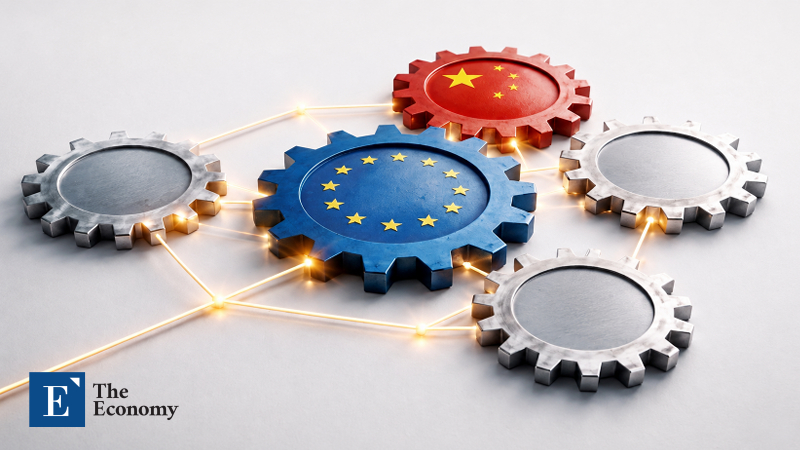
Trade policy representatives from the European Union and China are set to enter negotiations. As trade tensions between the two sides reach a peak amid Beijing’s aggressive industrial subsidy drive, efforts to restore dialogue channels aimed at preventing further confrontation and coordinating trade issues are gaining momentum. Markets view the meeting as a likely venue where China’s push to defend a core export market and the EU’s effort to protect its industrial competitiveness will collide head-on.
Imminent High-Level EU-China Trade Talks
On June 3, local time, the South China Morning Post, citing multiple sources, reported that trade policy representatives from China and the EU are expected to meet in Paris, France. According to the sources, Maroš Šefčovič, the EU commissioner for trade, plans to hold a separate meeting on June 4 with Li Chenggang, China’s international trade representative and vice minister of commerce, on the sidelines of the Organisation for Economic Co-operation and Development ministerial meeting in Paris. The move is seen as an effort to lay the groundwork for negotiations ahead of Chinese Commerce Minister Wang Wentao’s scheduled visit to Brussels, Belgium, on June 28-29.
The two sides are expected to use the meeting to seek common ground in their chilled trade relationship. The EU has maintained a hostile trade stance toward China for years, taking issue with Beijing’s large-scale industrial support. Brussels has judged that China has distorted market competition by providing excessive subsidies and low-interest loans to strategic industries such as electric vehicles, batteries, solar panels and steel, fueling overproduction and disrupting markets through mass exports of low-cost goods. The OECD recently found that about 60% of the increase in Chinese companies’ global market share can be explained by government subsidies, and that Chinese firms received on average three to eight times more subsidies than competitors in OECD countries.
The issue has also had a clear adverse impact on the EU’s trade balance. Last year, the EU’s goods trade deficit with China reached a record-high $409.3 billion. Exports to China stood at just $227.1 billion, while imports approached $636.4 billion. The items showing particularly sharp import growth were electric vehicles, batteries and solar panels, sectors heavily supported by Chinese government subsidies. The widening trade deficit trend has continued this year. In the first quarter, the EU’s trade deficit with China surged by more than 50% compared with the same period two years earlier.
The EU’s Hard-Line Regulatory Drive
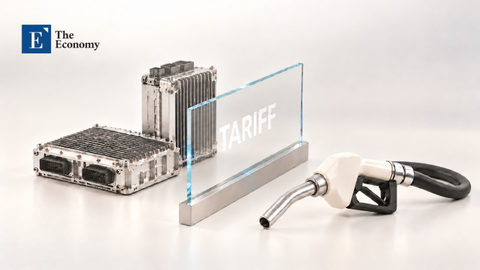
The EU has continued to impose strong sanctions on China to protect its domestic industries. The starting point was the anti-subsidy investigation into Chinese electric vehicles launched in 2023. After an investigation lasting about a year, the EU concluded that Chinese government subsidies had distorted competition in the internal market and imposed provisional countervailing duties on Chinese electric vehicles in July 2024. It marked the first large-scale trade sanction targeting Chinese EVs. In October of the same year, the EU finalized additional tariffs of up to 35.3% on Chinese EVs by company after approval from member states. The two sides are currently reviewing a plan to partially ease tariffs if Chinese companies guarantee minimum selling prices above a certain level, but no substantive agreement has been reached.
Strong regulations have also emerged in multiple sectors beyond electric vehicles. Last year, measures were implemented to restrict Chinese companies’ participation in Europe’s public procurement market for medical devices, while regulations on mergers and acquisitions based on the Foreign Subsidies Regulation have recently gained momentum. A representative example came on May 28, when the European Commission announced that it would launch an in-depth investigation under the FSR into Chinese e-commerce company JD.com’s planned acquisition of European consumer electronics retailer Ceconomy. The FSR was designed to prevent companies that have received subsidies, low-interest loans, tax benefits and other support from governments or public institutions outside the EU from gaining a competitive advantage in the EU market.
The EU has not ruled out the possibility of additional regulations. According to a Financial Times report on May 28, Stéphane Séjourné, the EU commissioner in charge of industrial strategy, said in a recent interview with European media that “Europe’s chemicals, metals and clean technology industries are at risk of being destroyed by China’s unfair competition,” adding that trade defense tools such as import quotas and tariffs should be used actively to protect EU industry. On May 29, the Competitiveness Council under the European Commission also said in a statement that “cooperation and dialogue with China, an important partner, will continue,” while stressing that “the current trade and investment relationship with China is not sustainable.”
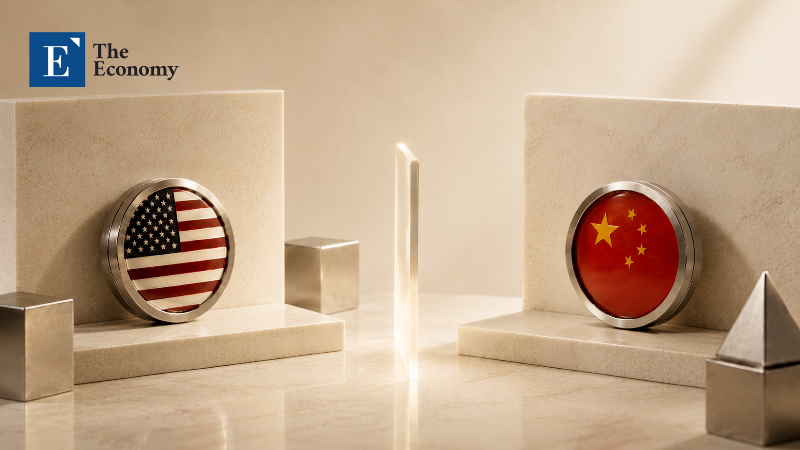
Growing Constraints on China’s Access to Major Markets
Despite these tensions, China has not given up on Europe because access to other major markets remains constrained. The United States is the clearest example. Washington began imposing large-scale tariffs on Chinese products in 2018, and in 2024 raised tariffs on Chinese electric vehicles from 25% to 100% while imposing additional tariffs on semiconductors, batteries and solar products. The second Donald Trump administration sharply increased tariffs across Chinese imports last year, at one point pushing the average tariff rate above 100%. The two countries later agreed through negotiations to reduce tariffs on some items, but the overall tariff rate on Chinese goods remains high.
The dollar-based financial network is also being used as a tool to pressure China. In March and April, the United States placed Chinese refiners and crude oil terminal operators that had imported large volumes of Iranian crude on sanctions lists. The sanctioned companies face asset freezes in the United States, bans on transactions with U.S. companies and disruptions to access to the dollar payment network. Given that a substantial share of international crude trading is conducted in dollars, the measures have effectively put the brakes on oil purchases, financing, insurance and vessel operations across their businesses.
Pressure on supply chains surrounding China is also intensifying. The Office of the U.S. Trade Representative is currently investigating countries’ forced-labor-related trade practices under Section 301 of the Trade Act and pursuing additional tariffs of 10-12.5% on countries deemed to have insufficient controls over products made with forced labor. Foreign media view the move as effectively targeting China over allegations of forced labor in the Xinjiang Uyghur region. After effectively banning imports of Xinjiang-made products in 2021, Washington is now moving toward additional sanctions by extending the scope of regulation to third countries that fail to sufficiently block forced-labor goods.
Japan, another key market, is also a difficult environment for Chinese companies to enter. Although Japan does not impose large-scale tariffs on Chinese products, domestic companies hold substantial shares in core consumer goods markets. In the auto market in particular, Japanese brands such as Toyota, Honda, Nissan and Suzuki wield overwhelming influence, making it difficult in practice for Chinese EV makers to secure a foothold. In addition, the Japanese government is implicitly checking Chinese companies’ market penetration through supply chain restructuring and subsidy policies in areas such as semiconductors, batteries and advanced technologies.
Against this backdrop, the EU is emerging as a key alternative market along with ASEAN, Africa and India. ASEAN is geographically close to China and closely connected through regional supply chains, while India maintains steady demand for Chinese consumer goods and parts generated by its vast domestic market. In Africa, Chinese companies have long-established infrastructure and local networks, and demand for low-cost electric vehicles, electronics and solar equipment is gradually expanding. The EU is strengthening various trade regulations, but it has not chosen the U.S. approach of broadly blocking market access for Chinese products. Given that the EU remains one of the world’s largest single markets with high purchasing power, it still holds considerable strategic value for China.
Anne-Marie Nicholson is a fearless reporter covering international markets and global economic shifts. With a background in international relations, she provides a nuanced perspective on trade policies, foreign investments, and macroeconomic developments. Quick-witted and always on the move, she delivers hard-hitting stories that connect the dots in an ever-changing global economy.
Similar Post