“Ceasefire MOU Reduced to Scrap Paper”: US-Iran Military Conflict Reignites as Economic and Political Risks Erupt on Both Sides

Matthew Reuter is a senior economic correspondent at The Economy, where he covers global financial markets, emerging technologies, and cross-border trade dynamics. With over a decade of experience reporting from major financial hubs—including London, New York, and Hong Kong—Matthew has developed a reputation for breaking complex economic stories into sharp, accessible narratives. Before joining The Economy, he worked at a leading European financial daily, where his investigative reporting on post-crisis banking reforms earned him recognition from the European Press Association. A graduate of the London School of Economics, Matthew holds dual degrees in economics and international relations. He is particularly interested in how data science and AI are reshaping market analysis and policymaking, often blending quantitative insights into his articles. Outside journalism, Matthew frequently moderates panels at global finance summits and guest lectures on financial journalism at top universities.
Authored On
Modified
US and Iran abandon ceasefire MOU and resume reciprocal airstrikes
Mounting war costs exposing the US to deeper economic and political risks
Iran’s economy already near collapse as hard-liner–negotiator power struggle intensifies
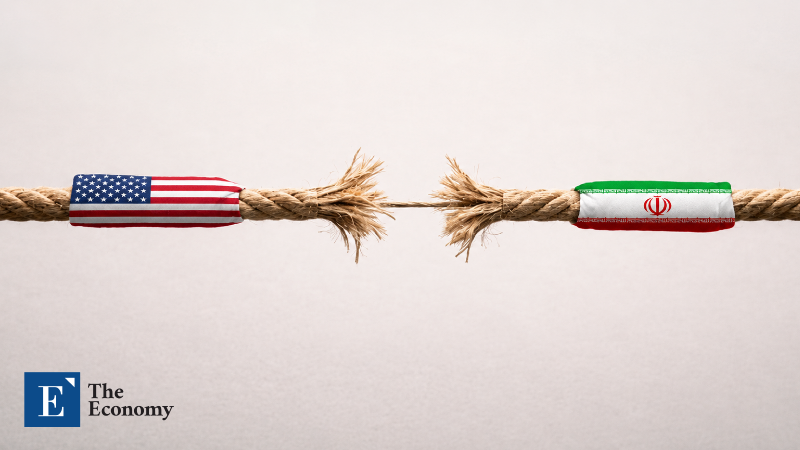
The US Embassy in Amman has ordered the evacuation and dispersal of personnel from the international airport and port facilities in Aqaba, Jordan’s Red Sea coastal region, amid the growing risk of airstrikes and fires. The measure followed the collapse of a memorandum of understanding intended to end hostilities between the United States and Iran, which have resumed military operations as the geographical scope of Iranian retaliatory attacks expands.
With tensions escalating rapidly, the international community is increasingly concerned that a prolonged conflict could draw both countries into a costly war of attrition accompanied by extensive economic and political losses.
US-Iran Military Conflict Reignites
On July 19, local time, the US Embassy in Jordan said through the social media platform X, formerly Twitter, that it had received “specific and credible threat information” and strongly advised all American citizens to immediately suspend travel to Aqaba International Airport and the city’s port facilities and leave the surrounding area. The embassy also prohibited members of the public from visiting any US military base in Jordan. The measures were widely interpreted as a response to the recent intensification of military clashes between the United States and Iran, as Tehran expanded retaliatory attacks against American military installations and other US-linked assets across the Middle East.
The United States and Iran reached a ceasefire agreement in early April and implemented a memorandum of understanding to formally end the conflict in mid-June, but the two countries resumed high-intensity military operations around the Strait of Hormuz on July 7. US President Donald Trump subsequently declared that the memorandum had merely been a “test” of Iran and announced that the United States was withdrawing from the agreement. Iran responded by concentrating its attacks on power stations, desalination plants, US military facilities, and other strategic infrastructure in Saudi Arabia, Kuwait, Bahrain, Jordan, and Qatar. American military casualties have also continued to rise. US Central Command, which oversees military operations against Iran, said that two US service members stationed in Jordan were killed and one remained missing after American and allied forces attempted to defend against Iranian ballistic-missile and drone attacks on July 17. CENTCOM did not disclose the precise location of the attack, although foreign media outlets have suggested that a US air base in Jordan was likely among the targets.
Iran subsequently declared its own formal withdrawal from the memorandum and raised the intensity of its response. Iranian Deputy Foreign Minister Kazem Gharibabadi announced on July 18 that Tehran was suspending the implementation of all obligations under the agreement. Several hours later, Iran’s Supreme Leader Ayatollah Seyed Mojtaba Khamenei issued a statement arguing that the confrontation had once again demonstrated that the signature of an American president had neither value nor binding force. Referring to the United States as the “Great Satan,” Khamenei said the latest experience of aggression and broken promises provided further evidence of Washington’s dishonesty, irrationality, untrustworthiness, and contemptible conduct. On the same day, CENTCOM announced that it had begun a new series of airstrikes against Iran under orders from Trump as commander in chief. On July 19, Iran’s state-run Islamic Republic News Agency reported that explosions had been heard near Qeshm Island in southern Iran and Bandar Abbas, one of the country’s principal port cities, although the exact locations and causes of the explosions had not yet been confirmed.
United States Struggles Under Mounting War Risks
As the possibility of further escalation becomes increasingly apparent, international attention is shifting toward the additional losses that both countries could be forced to absorb. The United States has already accumulated an enormous financial burden from the war. According to a preliminary analysis by the Center for Strategic and International Studies, Washington has spent an estimated $40 billion in direct military costs during its confrontation with Iran. The estimate includes the cost of munitions, equipment destroyed during operations, and the repair of damage to US military bases, but excludes personnel expenses, equipment maintenance, and other costs already incorporated into the ordinary defense budget. The New York Times has separately estimated that the total burden imposed on American taxpayers and consumers could reach at least $132 billion after accounting not only for direct military expenditure but also for rising energy and commodity prices and the broader cost of higher interest rates.
A prolonged full-scale war with Iran would expose the United States to substantial risks at home and abroad. According to a recent analysis by US political publication The Hill, the greatest danger under an escalation scenario would be the depletion of American weapons inventories. The United States expended enormous quantities of ammunition during approximately 40 days of fighting before the ceasefire agreement. CSIS estimates that the military used roughly half of its Patriot missile inventory during the operation. More than half of the available Terminal High Altitude Area Defense interceptors used against short-, medium-, and intermediate-range ballistic missiles are also believed to have been consumed, along with more than 45% of the US inventory of Precision Strike Missiles. The Department of Defense has consequently requested a record $1.5 trillion defense budget for fiscal year 2027 and is seeking additional congressional funding to replenish depleted weapons. Whether the supplementary budget will be approved remains uncertain, however, and even with sufficient funding, restoring US inventories to normal levels is expected to take several years because of production-capacity constraints.
The possibility that energy disruptions could generate renewed inflation and an economic slowdown represents another major risk. Although the United States is itself a leading oil producer, it does not currently possess sufficient strategic petroleum reserves to fully absorb a major supply shock originating in the Middle East. If the renewed conflict drives energy prices sharply higher, companies may reduce production and investment while raising consumer prices, simultaneously weakening household purchasing power and real disposable income. The Federal Reserve would also face difficulty cutting interest rates to support the economy while inflation remained elevated, increasing the risk of a stagflationary combination of weak growth and persistent price pressures. Relations with US allies in the Gulf are also likely to deteriorate. Gulf states have been exposed to Iranian retaliatory attacks since the beginning of the war, while the closure or disruption of the Strait of Hormuz has restricted the energy exports that form the economic lifeline of the region. If such uncertainty continues, it could also obstruct efforts by Gulf governments to diversify their economies by developing tourism, services, and other non-energy industries.
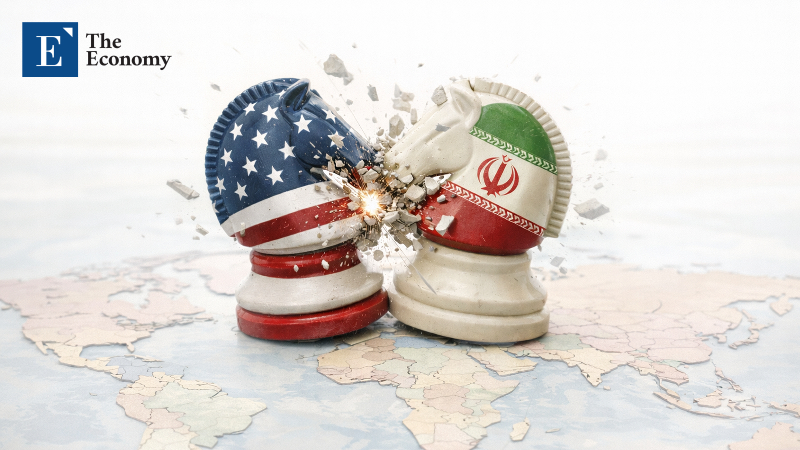
Iran Faces Deepening Economic and Political Crisis
Iran had already fallen into a severe economic crisis before the outbreak of war, as international sanctions contributed to a collapse in the value of its currency. Conditions deteriorated further after hostilities began in late February and the United States and Israel attacked industrial facilities producing key raw materials, together with critical infrastructure across the country. Thousands of Iranian businesses have already closed, and many remain unable to resume operations. Iranian government official Gholamhossein Mohammadi told the state-affiliated Tasnim News Agency that the war had eliminated one million jobs and caused two million people to become unemployed either directly or indirectly. The United Nations Development Programme has projected that the conflict could push as many as 4.1 million additional Iranians into poverty, while the International Monetary Fund has forecast that Iran’s economy could contract by 6.1% this year.
Iran attempted to establish an economic lifeline during the ceasefire by substantially increasing crude-oil exports to China, but even this source of revenue could disappear if military escalation continues. According to The Wall Street Journal, Iran exported approximately 70 million barrels of oil between mid-June and mid-July, after the United States temporarily suspended its maritime blockade of Iranian crude exports. The shipments were worth an estimated $5 billion to $6 billion. A renewed blockade or intensified disruption of maritime routes would sharply reduce these earnings, compounding the deterioration of Iran’s private economy. Falling household and corporate income would reduce government tax revenue, inevitably forcing cuts in public spending and making it increasingly difficult for the state to maintain ordinary administrative functions and essential services.
Iran’s economic difficulties are being compounded by a political crisis stemming from the supreme leader’s prolonged absence from public view. According to CNN, prominent hard-line conservative groups, including the Paydari Front, suspect that the current leadership’s efforts to negotiate with the United States amount to a “soft coup” intended to erode the authority of the supreme leader. Their criticism has been directed in particular at President Masoud Pezeshkian and parliamentary speaker Mohammad Bagher Ghalibaf. Hostility toward the leadership erupted publicly during the funeral of former Supreme Leader Ayatollah Ali Khamenei earlier in July. According to the Iranian opposition outlet Iran International, some mourners shouted “Death to the compromiser” at Pezeshkian, while Foreign Minister Abbas Araghchi was met with chants of “Death to the traitor” and “Shame on you.” The demonstrations suggest that Iran’s confrontation with the United States is no longer generating only external military and economic pressure, but is also intensifying an internal struggle between hard-liners demanding continued resistance and political figures seeking negotiations as a means of limiting further national losses.
Matthew Reuter is a senior economic correspondent at The Economy, where he covers global financial markets, emerging technologies, and cross-border trade dynamics. With over a decade of experience reporting from major financial hubs—including London, New York, and Hong Kong—Matthew has developed a reputation for breaking complex economic stories into sharp, accessible narratives. Before joining The Economy, he worked at a leading European financial daily, where his investigative reporting on post-crisis banking reforms earned him recognition from the European Press Association. A graduate of the London School of Economics, Matthew holds dual degrees in economics and international relations. He is particularly interested in how data science and AI are reshaping market analysis and policymaking, often blending quantitative insights into his articles. Outside journalism, Matthew frequently moderates panels at global finance summits and guest lectures on financial journalism at top universities.
- Previous “Domestic Autonomy, External Control”: US Moves to Govern Access to Frontier AI, but Can It Unify the Patchwork of State Regulations?
- Next “Escalating Spoofing and Jamming Contest”: Russia and Ukraine Intensify Drone-Centered Electronic Warfare as Global Military Investment Shifts Toward Drones and AI
Similar Post