“Blocking Even Remote Access”: U.S. Expands Regulatory Net Against China’s Circumvention of AI Chip Procurement, While Nvidia Uses Whitelist to Screen Customers

As one of the youngest members of the team, Tyler Hansbrough is a rising star in financial journalism. His fresh perspective and analytical approach bring a modern edge to business reporting. Whether he’s covering stock market trends or dissecting corporate earnings, his sharp insights resonate with the new generation of investors.
Authored On
Modified
U.S. BIS to extend semiconductor export controls on China to cover “remote access”
Nvidia also tightens supply-chain controls through a whitelist system
Repeated attempts to circumvent restrictions detected, with transaction volumes steadily rising
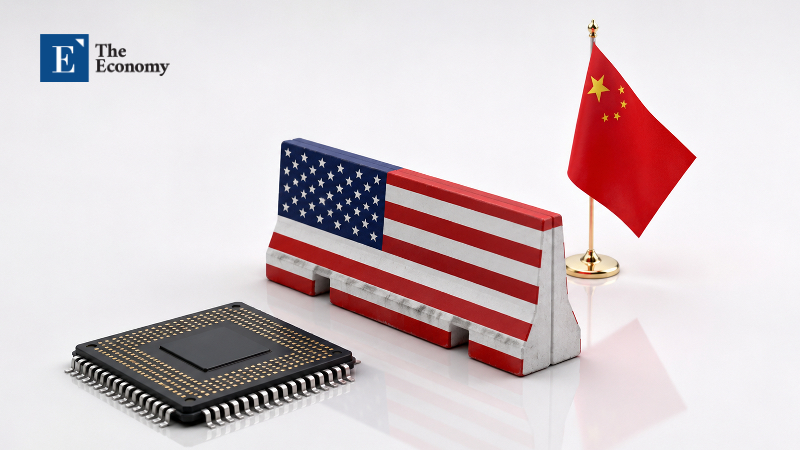
The Donald Trump administration has moved once again to tighten semiconductor restrictions on China. As China repeatedly attempts to smuggle and use U.S.-made semiconductors via third countries in Southeast Asia and elsewhere, Washington is seeking not only to penalize straightforward circumvention purchases but also to block remote access to advanced U.S.-made chips. U.S. private-sector companies, including Nvidia, are likewise strengthening supply-chain controls in step with the government’s actions.
U.S. Tightens Export-Control Posture
On the 28th, The Information, citing multiple sources, reported that the Bureau of Industry and Security (BIS) at the U.S. Department of Commerce is drafting new export-control rules aimed at Chinese AI companies that use cutting-edge semiconductors indirectly through data centers in third countries. The United States currently restricts Chinese companies from directly purchasing advanced U.S.-made AI chips, but it has not sufficiently controlled the loophole of remotely leasing chips installed in data centers located in countries outside the scope of the restrictions. BIS has directly targeted such remote-access channels in its new rules.
The crux of the regulations is to require data-center operators or major chip buyers to block remote access by Chinese companies when exporting advanced AI chips to designated countries such as Thailand and Singapore. Rather than directly prohibiting Chinese companies from using cloud or server services, the approach would impose access-control obligations at the stage when advanced U.S.-made chips are exported to data centers in third countries. The regulations are also likely to include know-your-customer (KYC) requirements under which data-center operators verify customers’ identities and their actual intended use of computing resources. Industry consultation could begin as early as September, although specific licensing requirements have yet to be finalized.
Closing Gaps in Existing Guidance
The measures are seen as designed to address blind spots in guidance issued by the U.S. government in late May. At the time, BIS reaffirmed that U.S. government authorization is required not only when supplying advanced computing semiconductors to companies headquartered in export-controlled countries such as China, but also when supplying such chips to overseas entities controlled by those companies. The intent was to assess whether transactions fall under export controls based not only on the location of the entity that actually orders or receives the semiconductors, but also on the ultimate parent company and substantive control relationship. The move was intended to prevent Chinese companies from establishing separate entities in third countries and procuring Nvidia’s latest semiconductors under the names of local firms.
BIS described the measure not as a new export control, but as guidance clarifying the interpretation and enforcement standards of rules that have been in effect since 2023. Nevertheless, even after the institutional overhaul, the focus of U.S. restrictions remained on “to whom semiconductors are exported or transferred.” If Chinese companies lease the computing capacity of graphics processing units (GPUs) legally acquired and installed by data centers in third countries, the chips themselves do not move into China, making direct sanctions difficult under the existing export-control framework alone.
Private Companies Join the Crackdown
The United States is also intensifying practical pressure on Chinese AI companies beyond institutional regulatory discussions. According to foreign media reports, BIS enforcement units have recently stepped up investigations into Chinese AI companies’ leasing of computing capacity at overseas data centers and into semiconductor-smuggling cases. One prominent subject of investigation is Chinese AI startup Moonshot AI. Last month, Michael Kratsios, director of the White House Office of Science and Technology Policy (OSTP), said Moonshot AI may have trained its latest AI models using Nvidia’s advanced semiconductors located in Thailand. BIS has also said it is investigating the matter and will take forceful enforcement action if illegal activity is confirmed.
Private companies are also reinforcing their own supply-chain controls in line with the U.S. government’s pressure. Nvidia recently began operating a “whitelist” for customers in Asian markets including Singapore, Malaysia, and Japan, supplying advanced AI semiconductors only to companies that pass strengthened compliance reviews. According to the Financial Times (FT), more than half of Nvidia’s existing Asian customers were excluded from the approved purchaser list under the new review process, with neocloud providers specializing in leasing AI computing resources particularly affected. The screening process has also gone beyond conventional document checks. Nvidia employees are reportedly visiting customer data centers in person to inspect whether facilities are genuinely operational, verify server installations and contracts, and conduct interviews with end users. The U.S. Department of Commerce is also involved in the process through oversight and policy support.
China Procures AI Chips Despite Regulatory Net
The United States has escalated sanctions because repeated Chinese attempts to circumvent the restrictions have continued to surface. In June 2023, Reuters reported that Nvidia A100 and H100 chips subject to U.S. export controls were being traded covertly in Shenzhen’s Huaqiangbei electronics market and elsewhere. Ten Hong Kong- and China-based vendors contacted by Reuters said at the time that small quantities of A100 chips and similar products could be procured without much difficulty. Using overseas data centers rather than physically bringing chips into China has also been employed for years. In August 2024, The Wall Street Journal reported that Chinese AI companies were remotely leasing computing resources from Nvidia H100 servers installed in overseas data centers, including in California, to train AI models.
Signs of organized circumvention transactions have also emerged. According to U.S. investigative authorities, California-based ALX Solutions, operated by Chinese nationals and others, purchased more than 200 Nvidia H100 chips from Supermicro between August 2023 and July 2024 and declared that the end customers were located in Singapore and Japan. However, when U.S. export-control officials checked on the ground in Singapore, the reported customer companies could not be found at the declared addresses. ALX Solutions associates were subsequently indicted on charges of illegally exporting Nvidia chips to China. Singaporean authorities also charged two Singaporeans and one Chinese national in February last year with falsely declaring end users to server suppliers.
| Period | Major case | Circumvention method |
|---|---|---|
| June 2023 | Black-market trading of Nvidia A100 and H100 chips identified in Shenzhen’s Huaqiangbei and elsewhere | Small-scale smuggling through Hong Kong and Chinese vendors |
| August 2024 | Chinese AI companies use H100 servers at overseas data centers | Remote leasing of computing resources installed abroad |
| August 2023–July 2024 | ALX Solutions purchases more than 200 H100 chips | False declaration that Singaporean and Japanese companies were end users |
| July–October 2025 | More than $1 billion worth of advanced U.S.-made semiconductors traded on China’s black market | B200 server racks and other products brought into China via Southeast Asia |
| March 2026 | Attempt to supply $2.5 billion worth of advanced AI servers through circumvention detected | Concealment of the final destination through false paperwork, fake servers, and Southeast Asian intermediary buyers |
| March 2026 | Attempt to smuggle AI chips worth millions of dollars detected | Thailand presented as an intermediate destination for supply to Chinese buyers |
| August 2026 | Nine people indicted over an attempt to export 130 B300 servers to China | False declaration of Taiwan as the end-use location, followed by transport to China via Hong Kong, Japan, and Indonesia |
Clear Expansion in Procurement Scale
The scale of transactions has also grown steadily. FT reported that, in the three months after the United States tightened controls on Nvidia AI chips in July last year, more than $1 billion worth of advanced U.S.-made semiconductors was traded on China’s black market. Chinese vendors identified by FT dealt in B200 server racks, mainly in Guangdong, Zhejiang, and Anhui, and a substantial number of products were believed to have entered China through Southeast Asia. In March, evidence also emerged that China may have penetrated internal server-manufacturing and distribution networks. The U.S. Department of Justice at the time charged three people, including a Supermicro co-founder, with attempting to illegally supply advanced AI servers to China through indirect channels. Prosecutors alleged that the defendants prepared false documents, positioned fake servers in anticipation of on-site inspections, and used Southeast Asian companies as intermediary buyers to conceal China as the final destination. Sales of the servers involved are estimated to have approached $2.5 billion.
In the same month, the U.S. Department of Justice also charged one Chinese national and two U.S. citizens with attempting to supply Chinese buyers with export-controlled AI chips worth millions of dollars. Investigators believe they purchased advanced semiconductors from a California-based hardware company and sought to send them to China through Thailand as an intermediate destination. Similar suspected circumvention exports have been repeatedly uncovered in Taiwan. Since May, Taiwanese prosecutors have investigated allegations that AI servers equipped with advanced Nvidia chips were exported to China using false documents. This month, they indicted nine people, including an Nvidia employee and current and former Supermicro associates. According to prosecutors, the defendants falsely declared that 130 B300-equipped servers would be used in Taiwan, when their actual purpose was to transport the servers to China via Hong Kong, Japan, Indonesia, and other locations. Of those servers, 74 arrived in China, while 56 were intercepted by Taiwanese customs.
As one of the youngest members of the team, Tyler Hansbrough is a rising star in financial journalism. His fresh perspective and analytical approach bring a modern edge to business reporting. Whether he’s covering stock market trends or dissecting corporate earnings, his sharp insights resonate with the new generation of investors.
- Previous Trump Administration Tightens Visa Rules and Curtails International Students’ ‘Internship Opportunities,’ Risking a Repeat of Britain’s Talent Loss
- Next “Low-Price Offensive Backfires” Chinese Solar Industry Faces Earnings Decline and Restructuring Pressure as Emerging Markets Reap the Benefits
Similar Post