Trump’s Bid to Cut Diesel Prices Through Russian Supplies Sparks Backlash Over Sanctions Relief as Inflation and Tightening Pressures Persist

Aoife Brennan is a contributing writer for The Economy, with a focus on education, youth, and societal change. Based in Limerick, she holds a degree in political communication from Queen’s University Belfast. Aoife’s work draws connections between cultural narratives and public discourse in Europe and Asia.
Authored On
Modified
Trump moves to ease energy sanctions on Russia and expand imports
Opposition persists in Ukraine and Europe, and within the U.S. Republican Party
Price relief remains uncertain, with further Fed tightening still a possibility
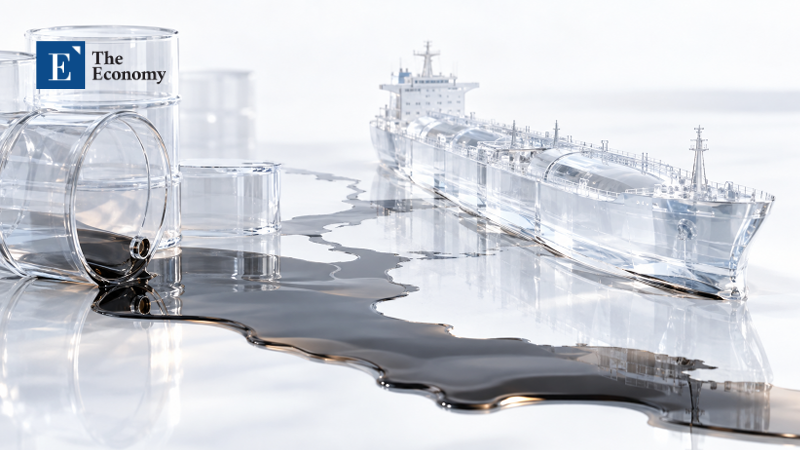
U.S. President Donald Trump’s plan to expand imports of Russian diesel continues to draw criticism. As Trump eases some sanctions on Russian energy in an effort to stabilize prices, opposition is mounting in Ukraine and Europe, as well as within his own Republican Party. Experts also caution that increasing Russian diesel supplies alone is unlikely to bring down energy prices, while some warn that persistently high oil prices and rising inflation expectations could intensify pressure on the Federal Reserve to tighten monetary policy further.
U.S. Authorizes Russian Diesel Supplies
According to international media reports compiled on October 11 (all dates hereafter are local), Trump announced on his social media platform Truth Social on October 9 that he had “just concluded very successful discussions with President Putin” and that “Russia has agreed to immediately supply more than 300,000 metric tons of diesel fuel to the United States and the global market, followed by another 500,000 tons in November and 1 million tons immediately thereafter.” He added that “Russia will subsequently supply an additional 3 million tons of diesel fuel within a short period, depending on the condition of its diesel refining facilities,” and claimed that U.S. control of the Strait of Hormuz, together with Russian energy supplies, would rapidly drive down diesel prices worldwide.
On the same day, the U.S. Treasury Department’s Office of Foreign Assets Control (OFAC) announced that it was issuing a temporary general license authorizing the supply of Russian diesel to the global market. The United States, which had imposed sanctions prohibiting Russian energy imports following Russia’s invasion of Ukraine in 2022, has thus temporarily reopened a channel for trade. According to documents released by the Treasury Department, transactions involving the sale, delivery, offloading and importation of Russian diesel, including imports into the United States, are authorized through April 6 next year.
Ukraine and Europe Push Back
Ukraine condemned the U.S. decision as “an investment in prolonging the war.” Shortly after the agreement between the U.S. and Russian leaders, Ukrainian President Volodymyr Zelensky wrote on X, formerly Twitter, that “easing sanctions without a clear and lasting de-escalation agreement with Russia is an unmistakable sign of weakness and works in Russia’s favor,” adding that “this enables Russia to kill more people, prolong the war, take the United States even less seriously, and inflict greater losses and damage on the world.” In response, Trump told reporters before departing for a campaign rally in Tennessee on October 10 that Zelensky “could have concluded numerous agreements, but for some reason never did,” and that “I recommend installing a new leader who can reach a deal.” He was effectively pressing Zelensky to step aside by suggesting that it was time for Ukraine to have a new president.
The backlash extended beyond Ukraine to European countries. Kaja Kallas, the European Union’s High Representative for Foreign Affairs and Security Policy, said that “suspending sanctions on Russian diesel gives Russia more revenue to wage its war,” adding that “now is not the time to ease pressure on Russia, and Europe will not do so.” British Prime Minister Andy Burnham reaffirmed solidarity with Ukraine after speaking directly with Zelensky, while a German government spokesperson said in a statement to AFP that “Germany’s support for Ukraine’s efforts to defend itself remains unwavering.” Polish Prime Minister Donald Tusk also voiced his support, saying, “I am convinced that no one can break Ukraine and its president in their struggle against Russian aggression.”
Opposition Persists Within the United States
Concerns over Trump’s decision also persist within the Republican Party. According to The New York Times, former Representative Mike Rogers, who is running for a U.S. Senate seat in Michigan, told reporters that “not an inch should be conceded to Russian President Putin,” expressing disagreement with Trump’s approach. Alaska Senator Dan Sullivan, who is seeking reelection in the November midterms, likewise argued that “the answer to high oil prices lies in American energy dominance” and called for expanded energy production in Alaska rather than imports of Russian energy. Republican Representative Brian Fitzpatrick of Pennsylvania also said he would introduce legislation to block purchases of Russian oil and force a vote in the House.
As international uncertainty over Russian energy intensified, Trump abruptly announced on Truth Social on October 11 that “an energy ceasefire has been reached in the war between Russia and Ukraine” and that it would “take effect immediately.” He urged both sides not to violate it, saying that “both sides have agreed,” but provided no details on the ceasefire’s scope or duration. Zelensky responded that “Ukraine supports a ceasefire, and it is important that Russia supports it as well,” adding that he was awaiting specific explanations from the U.S. side. Russia’s official position has yet to be confirmed.
Table 1. International Opposition to Sanctions Relief for Russian Diesel
| Party | Key Position |
|---|---|
| Ukraine | Strongly opposes sanctions relief, warning that it could increase Russia’s war funding and prolong the conflict |
| Europe | The EU reaffirms its commitment to maintaining pressure on Russia, while Britain, Germany and Poland emphasize continued solidarity with and support for Ukraine |
| U.S. Republican Party | Calls for increased domestic production instead of Russian energy imports and pursues legislation to block purchases of Russian oil |
U.S. Under Mounting Inflation Pressure
Trump’s focus on energy supply chains appears intended to alleviate domestic inflationary pressure. According to an October 9 Reuters report, U.S. diesel prices have soared since the outbreak of war between the United States and Israel on one side and Iran on the other. The latest figures from the American Automobile Association (AAA) put the nationwide average diesel price at $6.28 per gallon, approximately 71% higher than a year earlier. The market’s supply-demand imbalance has worsened as the Iran war constrains energy supplies from the Middle East, compounded by disruptions to refinery operations stemming from the Russia-Ukraine war.
Experts nevertheless see little prospect of a meaningful decline in U.S. diesel prices even if Russian exports begin in earnest. Michael Lynch, a distinguished fellow at the Energy Policy Research Foundation, said, “If the United States and others obtain diesel from Russia, Russia’s existing customers will no longer receive those volumes and will have to source diesel elsewhere,” adding that “prices will ultimately remain virtually where they are now.” Daniel Sternoff, a senior fellow at Columbia University’s Center on Global Energy Policy, likewise said that “supplies of refined petroleum products such as diesel are still barely above half their prewar levels.” He projected that “a modest increase in Russian diesel supplies to the global market could somewhat ease upward price pressure, but would not bring prices down substantially.”
Fed Tightening Could Accelerate
If this scenario materializes, the Federal Reserve is expected to move more quickly toward tighter monetary policy. According to the Federal Reserve Bank of New York’s September Survey of Consumer Expectations, median U.S. inflation expectations for the year ahead have already climbed to 3.9%. That represents an increase of 0.3 percentage points from the previous month and the highest reading in three years and four months, since May 2023. Inflation expectations indicate how much consumers anticipate prices will rise. With near-term expectations already elevated, a prolonged period of high oil prices could cause consumers’ inflation outlook to influence actual wage- and price-setting. Inflation concerns are also intensifying in financial markets. The U.S. five-year breakeven inflation rate (BEI), which reflects market inflation expectations over the next five years, stood at 2.35%, close to its highest level this year. The BEI is calculated as the yield spread between conventional Treasury securities and Treasury Inflation-Protected Securities (TIPS).
U.S. Treasury yields, which have recently been setting fresh highs day after day, further complicate the Fed’s policy calculus. The yield on the 10-year U.S. Treasury has risen by more than 70 basis points in the second half of this year (one basis point equals 0.01 percentage points), driven by inflationary pressure from high oil prices and strains on U.S. public finances, among other factors. Commenting on these conditions, one market expert said, “With high oil prices and inflationary pressure persisting, and inflation expectations rising as well, the Fed can hardly ignore the need for additional interest rate increases.” The expert added, “However, as the Trump administration focuses on price stability and economic stimulus ahead of the midterm elections, the Fed’s moves to intensify monetary tightening could clash with the government’s economic policy stance.”
Aoife Brennan is a contributing writer for The Economy, with a focus on education, youth, and societal change. Based in Limerick, she holds a degree in political communication from Queen’s University Belfast. Aoife’s work draws connections between cultural narratives and public discourse in Europe and Asia.
Similar Post