Trump’s Tariff Inflation Shock Proves Limited as Energy and Semiconductor Costs Increase the Burden on U.S. Households

Siobhán Delaney is a Dublin-based writer for The Economy, focusing on culture, education, and international affairs. With a background in media and communication from University College Dublin, she contributes to cross-regional coverage and translation-based commentary. Her work emphasizes clarity and balance, especially in contexts shaped by cultural difference and policy translation.
Authored On
Modified
Tariff cuts and suspensions lower import costs, easing the U.S. inflation shock
War and surging electricity demand prove the greater burden on households
Memory shortages, compounded by energy and materials supply risks, intensify chipflation
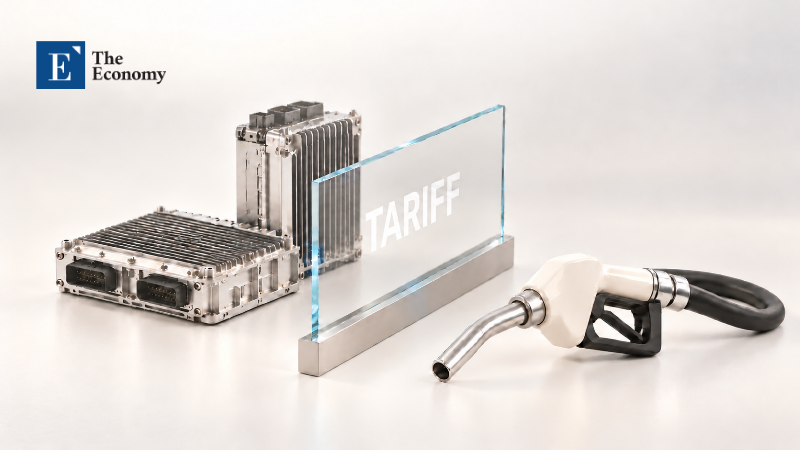
The inflationary shock from U.S. tariffs appears to have fallen short of initial fears. Higher import costs have been only partially passed through to consumer prices, while tariff reductions on Chinese goods and successive suspensions have also eased importers’ cost burdens. Energy prices have instead emerged as the greater strain on U.S. households. The Iran war has sent gasoline prices soaring, while data center expansion is adding upward pressure on electricity rates. Meanwhile, disruptions to energy and raw materials supplies from the Middle East are squeezing semiconductor production costs, heightening concerns over “chipflation.”
Distribution Costs Dilute the Tariff-Driven Inflation Shock
According to an analysis of 67 non-petroleum consumer goods categories by researchers at the Federal Reserve Bank of New York on the 11th (all dates hereafter are local time), tariffs added 2.9 percentage points to these categories’ year-over-year price inflation as of February this year. The researchers estimated that a 1-percentage-point increase in the average tariff rate raised consumer goods prices by approximately 0.25% after one year. Distribution costs, including transportation, wholesaling and retailing, account for roughly half the price consumers pay for goods, diluting the impact of tariffs. The researchers estimated that a tariff-induced 10% increase in import prices and domestic producer prices would raise retail prices by 5.6%. The findings suggest that the magnitude of price increases was constrained as tariff hikes passed through to retail prices.
The impact of tariffs on inflation was also expected to diminish over time. The researchers’ estimated trajectory shows the tariff contribution to year-over-year consumer goods inflation peaking at 2.9 percentage points in February before falling to around zero percentage points in August. This reflects tariff reductions early this year, combined with base effects as last year’s price increases drop out of the annual comparison. Goods prices remain elevated by tariffs, with the price gap relative to a no-tariff scenario estimated to narrow from approximately 3% in February to about 2% in August. The subsequent price trajectory incorporates additional tariffs on Canadian products and the effects of an automobile tariff increase scheduled for January next year.
Slower Housing Cost and Wage Growth Cushion the Tariff Shock
Assessments also suggest that the impact of tariffs on overall inflation was limited. New York Fed President John Williams estimated that tariffs accounted for 0.5 percentage points of the roughly 2.75% inflation rate recorded in January this year. He explained that a steady moderation in housing cost inflation and wage growth slowing to levels consistent with low inflation had eased overall price pressures. He added that no significant supply chain bottlenecks had emerged, and that there were no signs of broad-based inflationary pressures spreading. Medium- and longer-term inflation expectations, he said, also remained stable within their pre-pandemic range.
This analysis supports the interpretation that the tariff shock spread less extensively than the widespread price surge feared last year. At the time, forecasts proliferated that businesses would begin passing higher costs through more fully to selling prices as they exhausted inventories accumulated before the tariffs took effect. Last October, Citigroup’s Global Chief Economist Nathan Sheets predicted that the share of the tariff burden borne by U.S. consumers would rise from 30–40% at the time to around 60% within a few months. The expectation was that consumers’ felt burden could increase rapidly as costs previously absorbed by businesses shifted to households. Subsequent inflation trends, however, showed no clear signs of the broad-based price surge initially feared.
Table 1. Impact of U.S. Tariffs on Consumer Goods Prices and Inflation
| Category | Key Figures and Outlook | Background and Implications |
|---|---|---|
| Impact on consumer goods prices | Tariffs contributed 2.9 percentage points to consumer goods inflation in February this year | Findings from an analysis of year-over-year price inflation across 67 non-petroleum consumer goods categories |
| Distribution cost buffer | A 10% increase in import prices and domestic producer prices is estimated to raise retail prices by 5.6% | Transportation, wholesale and retail costs, accounting for roughly half of goods prices, dilute the impact of tariffs |
| Declining contribution to inflation | Tariff contribution projected to fall from 2.9 percentage points in February → around zero percentage points in August | Reflects tariff reductions early this year and base effects from last year’s price increases |
| Persistent price burden | Price gap relative to a no-tariff scenario projected to narrow from approximately 3% in February → about 2% in August | Tariff-elevated price levels persist despite a declining contribution to inflation |
| Impact on overall inflation | Tariffs accounted for approximately 0.5 percentage points of the roughly 2.75% inflation rate in January this year | Estimate by New York Fed President Williams. Slower housing cost and wage growth eased inflationary pressures |
Negotiated Tariff Reductions Also Ease Price Pressures
Tariff reductions on Chinese goods and successive suspensions are seen as significant factors behind the smaller-than-feared inflation shock. When the United States raised additional tariffs on Chinese products to 145% last April, concerns mounted that a halt in imports and goods shortages could trigger sharp price increases. U.S. Treasury Secretary Scott Bessent also described triple-digit tariffs as effectively an “embargo.” Had tariffs remained that high, U.S. businesses would have had to pay enormous duties or find alternative suppliers to replace Chinese products. The burden eased considerably, however, when the two countries agreed at the Geneva negotiations last May to lower tariffs for 90 days. The additional U.S. tariff rate on Chinese goods fell from 145% to 30%, comprising a 20% fentanyl-related tariff and a 10% baseline reciprocal tariff. Existing product-specific tariffs remained in place, but the 115-percentage-point reduction in additional tariffs allowed importers to ease their cost pressures.
Repeated extensions of the tariff suspension subsequently lengthened the period during which the reimposition of exceptionally high tariffs could be avoided. The two countries extended the suspension by another 90 days last August, while renewed trade tensions in October were moderated through negotiations between their leaders. At the time, President Donald Trump threatened an additional 100% tariff in response to China’s rare earth export controls, but the summit later that month produced an agreement on tariff reductions and a trade truce. Under the agreement, the United States reduced fentanyl-related tariffs by 10 percentage points starting in November and extended the suspension of higher reciprocal tariffs until November 10 this year. China, in turn, pledged to suspend its rare earth export controls and expand purchases of U.S. agricultural products. Pressure exerted through high tariffs thus led to negotiations that secured concessions from the other side. Last month, the two countries agreed to extend the trade truce by another two months, until January 10 next year, continuing measures to contain additional burdens through this year.
Energy Prices Jump 16%, Fueling U.S. Inflation
The sharp rise in energy prices proved the more substantial driver of U.S. inflation. According to the U.S. Bureau of Labor Statistics, the consumer price index (CPI) rose 3.4% year over year in August. Energy prices climbed 16.3% over the same period, pushing overall inflation higher, while gasoline surged 27.4%, increasing households’ spending at the pump. Energy-driven price pressures were also evident in the monthly figures. Energy prices rose 2.1% from the previous month in August, with gasoline up 3.9%, accounting for more than one-third of the overall CPI’s 0.4% monthly increase. Core inflation, which excludes food and energy, stood at 2.4% year over year, 1 percentage point below the headline rate. Disruptions to crude oil supplies caused by the Iran war fed through to gasoline prices, increasing the inflation burden consumers felt at filling stations.
Upward pressure is also building on electricity rates. According to the U.S. Energy Information Administration (EIA), U.S. electricity demand grew at an average annual rate of 1.7% between 2020 and 2025, driven in part by the expansion of data center operations. Building the power plants and transmission networks needed to accommodate that demand takes considerable time, leaving increased utilization of existing facilities as the immediate means of meeting it. Infrastructure investment to address supply shortages is also contributing to higher rates. As grids are expanded to supply data centers, cases have emerged in which part of the investment cost is allocated to ordinary households. This means that investment in infrastructure for data centers is translating into higher electricity rates regardless of households’ own power consumption.
AI Investment Competition Also Feeds Through to Consumer Prices
Rising semiconductor prices driven by the artificial intelligence (AI) investment boom are also adding to price pressures. As demand for data center memory surged, chipmakers concentrated production capacity on more profitable server products. This left memory supplies for smartphones and PCs tight, while major cloud and AI companies’ efforts to lock in supplies through long-term contracts further increased electronics manufacturers’ component procurement burdens. Morgan Stanley highlighted this supply-demand imbalance in June, reporting that memory prices had risen sixfold in a year. Higher memory procurement costs are building upward pressure on finished-product prices, intensifying concerns over “chipflation.”
Disruptions to energy and raw materials supplies from the Middle East are also identified as a factor that could intensify chipflation. Semiconductor manufacturing is highly electricity-intensive, so higher energy prices squeeze production costs, while uncertainty over supplies of essential materials can disrupt output. Indeed, disruptions to production and shipping in Qatar, which accounts for approximately 30% of global helium supply, pushed spot prices for helium, used in cooling and other semiconductor processes, to more than double their previous level in the early stages of the war. Manufacturers have sustained production by diversifying suppliers and drawing on stockpiles, but a prolonged supply disruption would inevitably erode their capacity to respond. According to global bond manager PIMCO, some major Asian semiconductor manufacturers reportedly hold only about three months’ worth of helium inventories.
Amid continued supply uncertainty, the effects of rising semiconductor prices are manifesting as weaker demand in finished-product markets. According to preliminary figures released by market research firm IDC on the 8th, global PC shipments totaled 62.7 million units in the third quarter of this year, down 20.1% from a year earlier. Higher prices suppressed purchasing demand, while inventories that manufacturers and distributors had secured in advance during the first half accumulated, weighing on shipments in the second half, according to the analysis. The smartphone market is also seeing price increases alongside a contraction in low-cost offerings. In its August forecast, IDC projected an average smartphone selling price of $581 this year, up 27.6% from a year earlier, and increased its projected shipment decline from 13.9% to 16.7%. The figures also reflect a shift by manufacturers struggling to absorb higher memory costs toward fewer low-cost models and a greater share of premium products. Although chipmakers are expanding production capacity, building and bringing new factories into operation takes several years, suggesting that price pressures stemming from memory shortages will persist for some time.
Siobhán Delaney is a Dublin-based writer for The Economy, focusing on culture, education, and international affairs. With a background in media and communication from University College Dublin, she contributes to cross-regional coverage and translation-based commentary. Her work emphasizes clarity and balance, especially in contexts shaped by cultural difference and policy translation.
Similar Post