“From Laptops to Smartphones”: AI Boom-Fueled ‘Chipflation’ Hits Memory-Reliant Industries Hard

Anne-Marie Nicholson is a fearless reporter covering international markets and global economic shifts. With a background in international relations, she provides a nuanced perspective on trade policies, foreign investments, and macroeconomic developments. Quick-witted and always on the move, she delivers hard-hitting stories that connect the dots in an ever-changing global economy.
Authored On
Modified
LG Electronics Ends Two-Decade Laptop Business in Brazil
Chipmakers Concentrate Production Capacity on AI Server Memory
Shrinking Commodity DRAM Supply Drives Up Finished-Product Costs
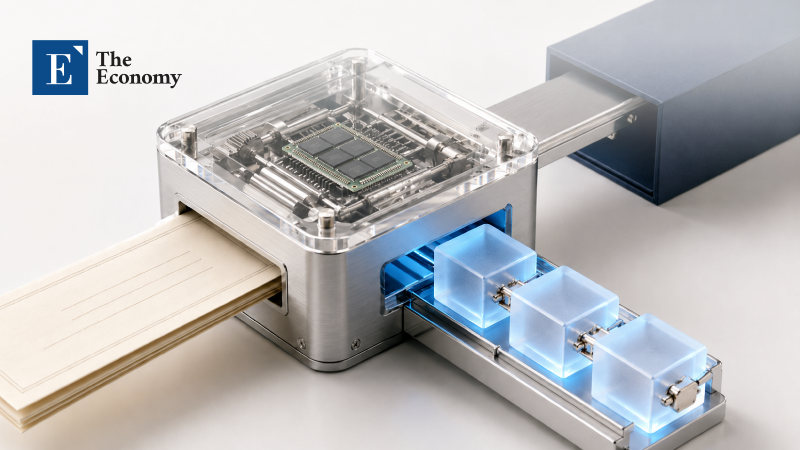
LG Electronics is withdrawing from Brazil’s laptop market after spending 20 years building a local manufacturing base. Following the suspension of sales in 2024, efforts to rebuild its component procurement network ultimately failed, while the concentration of production capacity on high-bandwidth memory (HBM) and server DRAM for artificial intelligence (AI) data centers sent commodity DRAM prices soaring and raised the barriers to resuming operations. The resulting memory-driven cost shock is translating into price increases and shipment declines across the electronics industry, including laptops, smartphones, gaming consoles, televisions and automotive electronics, with profitability deteriorating particularly rapidly among price-sensitive entry-level products.
Procurement Barriers Beyond the Reach of Two Decades of Localization Investment
According to Brazilian information technology outlet Tecnoblog on the 15th local time, LG Electronics recently decided to permanently discontinue sales of its flagship premium Gram laptop lineup in Brazil. The decision effectively formalizes the end of its local business two years after the company halted sales of new products in July 2024. LG Electronics instead plans to invest substantial capital in high-margin white goods—including premium televisions, air conditioners and refrigerators—in which it has established commanding market positions, thereby maximizing profitability in the domestic market.
LG Electronics’ Brazilian laptop business gained momentum in June 2006, when the company began local production at its Taubaté plant in São Paulo state. The facility, which began operations in 2005, produced mobile phones, monitors and laptops. Price competitiveness for locally assembled products also improved after the Brazilian government exempted laptops priced at approximately $590 or less from the Social Integration Program contribution (PIS) and the Contribution for the Financing of Social Security (Cofins). In Brazil, where importing finished products entails substantial costs, a localization strategy that integrated production and sales within the same market laid the foundation for the company’s foothold.
The results became visible from the outset. Buoyed by strong sales of mobile phones and IT products, LG Electronics’ Brazilian revenue rose by more than 38% year on year to $1.8 billion in 2006. In a 2010 comparison of low-cost laptops conducted by local media outlet UOL, the LG R460 was also selected as the model offering the best overall performance among competing products. Although LG Electronics never rose to the top tier in market share, the business was significant in that local production and product competitiveness helped the company build brand recognition.
LG Electronics subsequently restructured its Brazilian production network in 2021 following its withdrawal from the mobile phone business. It relocated its laptop and monitor production lines from Taubaté to Manaus in Amazonas state and invested approximately $63 million to expand the existing plant by 12,000 square meters. At the time, the company demonstrated its commitment to maintaining local production by unveiling plans to increase the Manaus workforce to 2,200 employees, including 150 new hires.
The turning point came in 2024. LG Electronics suspended sales in Brazil, saying it was preparing new products that would strengthen the Gram lineup’s local competitiveness, and began searching for domestic partners capable of supplying solid-state drives (SSDs), graphics processing units (GPUs), circuits and power supplies. Although the company considered resuming sales last year, it failed to complete the procurement network, bringing its long-running localization strategy to an end.
Commodity Memory Supply Crunch Amid Pivot to AI Servers
This downward pressure stems from the disproportionate pull of worldwide demand for AI data centers. As the shortage of consumer DRAM persists, component costs are surging. Samsung Electronics, SK hynix and Micron reduced the share of legacy DDR4 and LPDDR4X products in their output and successively announced plans to discontinue production as the profitability of HBM, double data rate 5 (DDR5) and LPDDR5X memory for AI servers improved. As investment in AI infrastructure reshaped suppliers’ production priorities, allocations for commodity memory also declined rapidly.
The shift in supply and demand was immediately reflected in prices. According to market research firm TrendForce, contract prices for PC DDR4 rose by 13% to 18% quarter on quarter in the second quarter of last year, while server DDR4 prices surged by 18% to 23%. With the Donald Trump administration preparing to impose tariffs at the time, advance purchases and inventory accumulation ahead of production discontinuations brought orders forward relative to underlying demand, creating a feedback loop in which shrinking supply and stockpiling pressure drove prices higher.
The imbalance accompanying the generational transition became even more pronounced in the third quarter of the same year. Contract prices for consumer DDR4 climbed by 40% to 45%, while PC DDR4 prices rose by 38% to 43%. Demand for DDR4 compatible with existing equipment remained intact even as production capacity shifted toward newer products, while the consumer market—where small-volume purchases account for a larger share—had weaker bargaining power and absorbed the price shock first.
The price surge also disrupted suppliers’ production schedules. Samsung Electronics and SK hynix extended DDR4 production through 2026, while Micron maintained its original phaseout plan. In July last year, the price of an 8-gigabyte (GB) PC DDR4 module even surpassed that of a DDR5 module with the same capacity, an unusual reversal. The phenomenon of legacy products becoming more expensive than newer ones was driven less by rising demand than by concerns over supply disruptions and intensifying competition to secure inventories.
Supply tensions have yet to ease this year. TrendForce forecasts that contract prices for commodity DRAM will rise by 13% to 18% quarter on quarter in the third quarter, while NAND flash contract prices will increase by 10% to 15%. Server DRAM prices are also projected to climb by 13% to 18% over the same period. Demand for AI servers and enterprise SSDs used in data centers continues to underpin suppliers’ pricing power. Even if the pace of price increases slows, manufacturing cost pressures will continue to accumulate because benchmark prices are already elevated.
Memory Cost Shock Spreads Across Industries
Rising costs are being passed directly through to laptop prices. Samsung Electronics’ 2026 Galaxy Book6 series starts at approximately $2,270. The 14-inch Pro model is priced at approximately $2,270, while the 16-inch version costs about $2,340. That represents a substantial increase from the previous-generation Book5 Pro series, which was priced between approximately $1,180 and $1,870. The higher-specification 16-inch Book6 Ultra is available in only two configurations, priced at approximately $3,090 and $3,290 depending on the graphics card. By contrast, the Book4 series released two years earlier offered a wider range of Ultra models priced from approximately $2,240 to $3,390. With the entry-level configuration of the latest model starting above approximately $3,070, consumers now face a considerably higher barrier to entry.
LG Electronics is following a similar trajectory. The 2026 16-inch LG Gram Pro rose from approximately $1,760 for a comparable 2025 configuration to about $2,090 in January, before increasing again to roughly $2,360 in April. Apple is likewise struggling to avoid rising memory costs. Last month, the company raised MacBook and iPad prices by approximately 20%, indicating that even premium brands have begun passing higher memory and storage costs on to consumers. Global laptop manufacturers including Dell Technologies of the United States, Asus and Lenovo are also raising launch prices for new products in succession.
The price increases appear to be translating into lower shipments. According to market research firm IDC, global laptop shipments are projected to decline by 13.6% to 159 million units this year from 184 million units last year. Rising manufacturing costs stemming from higher memory prices have driven up product prices, slowing demand for PC replacements. The decline in shipments is becoming particularly evident among low- and mid-priced products. In the first quarter of this year, US shipments of PCs priced below $500 fell by 18.7% year on year. Entry-level products, which face intense price competition, have struggled to fully pass higher costs on to consumers, leading manufacturers to reduce shipments.
These cost pressures are spreading beyond laptops to consumer electronics equipped with memory, including smartphones and gaming consoles. Market research firm Gartner forecasts that the combined increase in DRAM and SSD prices will reach 130% by the end of this year, pushing smartphone prices up by 13% year on year and reducing shipments by 8.4%. Global gaming-console shipments are also projected to decline by 4.4% this year as rising memory procurement costs erode manufacturers’ capacity to cut prices.
The situation is little different for televisions, set-top boxes, automotive electronics, industrial control systems and networking equipment. These products primarily use long-validated DDR4 and low-density DRAM, while changing memory specifications requires the redesign and certification of central processing units, motherboards and control circuits, making it difficult to respond swiftly to supply shifts. Global corporations with long-term supply contracts and substantial purchasing power can protect volumes and profitability to some extent, but companies heavily exposed to low-cost products or burdened by procurement and distribution expenses in particular regions must contend simultaneously with higher prices and declining sales volumes.
Anne-Marie Nicholson is a fearless reporter covering international markets and global economic shifts. With a background in international relations, she provides a nuanced perspective on trade policies, foreign investments, and macroeconomic developments. Quick-witted and always on the move, she delivers hard-hitting stories that connect the dots in an ever-changing global economy.
Similar Post