“Dermatology Absorbs Demand”: Korea’s Fast-Growing Medical Tourism Industry Faces Test as VAT Refund Ends Price-Driven Growth Model

Aoife Brennan is a contributing writer for The Economy, with a focus on education, youth, and societal change. Based in Limerick, she holds a degree in political communication from Queen’s University Belfast. Aoife’s work draws connections between cultural narratives and public discourse in Europe and Asia.
Authored On
Modified
Record Number of Tourists Visit Korea for Medical Treatment
“Affordable and Low-Burden” Dermatology Accounts for More Than Half of Treatment Demand
End of VAT Refunds for Cosmetic Medical Services Erodes Price Competitiveness
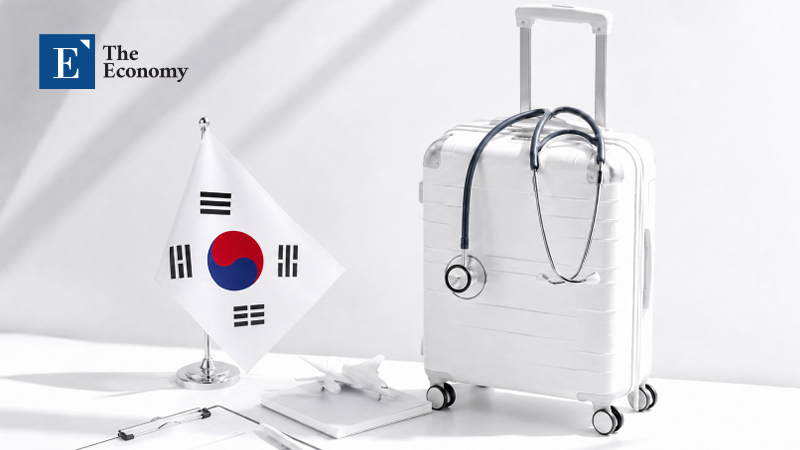
The number of foreign medical tourists visiting South Korea reached an all-time high last year. Foreign demand has become increasingly concentrated in dermatology, which offers more accessible procedures with less physical burden than plastic surgery while remaining highly price-competitive. However, the termination of the value-added tax refund program that had reduced treatment costs for foreign patients has recently exposed vulnerabilities in a beauty-focused medical tourism ecosystem built largely on affordability.
Continued Growth in Medical Tourism
According to a report published by Japan’s Nikkei on July 12, Ministry of Health and Welfare data showed that 2.01 million foreign tourists visited South Korea for medical purposes last year, the highest figure since records began. Medical tourism spending during the same period totaled $8.40 billion, of which direct medical expenditures accounted for $2.22 billion. The number of foreign medical tourists visiting South Korea had risen steadily from 2009 to 2019, recording average annual growth of 23.5%, before plunging to 120,000 in 2020 as the COVID-19 pandemic intensified. A visible recovery began in 2023 as the country entered the endemic phase. Approximately 610,000 medical tourists visited South Korea that year, with the figure climbing to 1.17 million in 2024.
Foreign patients’ demand was heavily concentrated in dermatology. A total of 1.313 million foreign patients received dermatological treatment in South Korea last year, accounting for 62.9% of the overall total. Plastic surgery ranked second, representing 11.2%, or 233,000 patients. Demand was also considerable for internal medicine services aimed at diagnosing and treating illnesses. A combined category covering cardiology, gastroenterology, pulmonology and endocrinology recorded 192,000 patients, equivalent to 9.2% of the total.
Another 65,000 foreign patients traveled to South Korea for comprehensive health screenings, accounting for 3.1% of the total. Demand was particularly pronounced among visitors from Russia and Central Asian countries, where medical travel is more frequently associated with serious illnesses and treatment needs. South Korea’s comprehensive screening system, which links multiple medical departments and allows patients to complete examinations within a relatively short stay, has helped attract overseas patients. The number of patients receiving dental treatment also increased 79.0% from the previous year, while obstetrics and gynecology patients rose 62.6%.
Dermatology Absorbing Foreign Demand
The growth in medical tourism has continued this year. According to an analysis by the Korea Tourism Organization’s Tourism Data Lab, medical spending by foreign visitors reached $633.34 million between January and May, surging 54.9% from $408.98 million during the same period a year earlier. As in the previous year, dermatology accounted for the largest share at 55.5%. Short procedure times and relatively limited recovery burdens are widely cited as the principal reasons dermatology has emerged as the center of South Korea’s medical tourism industry. Many of the nonsurgical treatments most frequently sought by foreign patients—including laser procedures, Botox injections, skin regeneration treatments and lifting procedures—can be completed within a short period, allowing visitors to continue shopping or sightseeing after leaving the clinic.
Price competitiveness is another significant advantage. Seoul has a dense concentration of hospitals and clinics offering dermatological and cosmetic services, fueling intense competition over pricing and service quality while making it easier for tourists to compare procedures and providers. The market also offers an accessible environment for foreign patients. Dermatology clinics in Seoul and other major tourist destinations commonly employ multilingual consultation staff fluent in English, Chinese and Japanese and operate dedicated booking channels for international patients. Some clinics also offer consultations and procedures on the same day. The Seoul Metropolitan Government has likewise provided multilingual medical tourism information and consultation services, enabling foreign visitors to compare hospitals and treatment options before departing for South Korea.
Korean cultural content has also likely contributed substantially to medical tourism demand. As Korean beauty and skincare practices have gained worldwide exposure through K-pop and Korean dramas, consumer interest has expanded beyond purchasing Korean cosmetics to receiving diagnoses and procedures directly from dermatology clinics in South Korea. The trend is also evident across social media platforms. Videos carrying the hashtag “Korea glow up,” for example, were posted in rapid succession on short-form platforms such as TikTok last year, attracting widespread attention. The content highlights positive changes in visitors’ appearance after traveling to South Korea. Videos in which foreign tourists disclose the consultation process, procedures and costs at Korean dermatology clinics have also recorded high view counts.
Limits of the Existing Growth Formula
The sustainability of this growth trajectory, however, remains uncertain. The termination of the value-added tax refund program for cosmetic medical services, which had reduced the financial burden on foreign patients, has effectively raised the cost of uncovered cosmetic procedures at dermatology and plastic surgery clinics by as much as approximately 10%. Previously, nonresident foreigners who underwent cosmetic surgery or dermatological procedures at registered medical institutions could subsequently receive a refund of the value-added tax included in their treatment fees. Patients first paid the medical bill and value-added tax, obtained a refund slip from the hospital and then applied for reimbursement within three months at an airport, seaport or downtown refund counter. Introduced as a temporary measure in 2016, the program was extended several times before expiring permanently on December 31 last year, its final sunset date.
Concerns over the resulting policy vacuum have poured in from medical professionals. Ban Jun-seop, president of the Korean Association of Plastic Surgeons, recently told the Seoul Medical Tourism Policy Forum, held as a special session of the Tourism Sciences Society of Korea’s Seoul International Conference, that “the VAT refund program for cosmetic procedures is not merely a tax benefit but an institutional foundation for maintaining a healthy medical tourism ecosystem.” He added that “it lowers the costs borne by patients and thereby secures global price competitiveness, reduces the intervention of illegal brokers charging excessive commissions through the issuance of official receipts, and helps ensure that medical institutions’ revenue is managed transparently within the formal system.” Ban continued, “The VAT refund program has served as an important selection criterion for price-sensitive foreign patients from Japan, Taiwan, China and Southeast Asia.” He emphasized, “When the refund program disappears, patients perceive the effective price in South Korea as having increased even when receiving the same treatment, prompting them to shift to competing destinations such as Japan, Thailand, China and Dubai.”
Others caution against interpreting the development as a crisis for South Korea’s entire medical tourism industry. While a model dependent on a narrow range of medical specialties and price discounts may attract short-term visitors, critics argue that it cannot establish a sustainable industrial ecosystem. One market expert said, “South Korea has a system capable of integrating treatment and follow-up care within a relatively short stay, making it an attractive option even for visitors traveling primarily for medical treatment.” The expert added, “If the country builds a framework that connects a broad range of medical specialties while also providing follow-up care and accommodation services, it could establish a stable medical tourism foundation capable of withstanding external variables such as the termination of VAT refunds.”
Aoife Brennan is a contributing writer for The Economy, with a focus on education, youth, and societal change. Based in Limerick, she holds a degree in political communication from Queen’s University Belfast. Aoife’s work draws connections between cultural narratives and public discourse in Europe and Asia.
- Previous Chinese Automakers Seek to Localize European Production Networks, but Industrial Sovereignty and High Costs Signal a Difficult Road Ahead
- Next “FCAS Collapse, GCAP Survival, and America’s Solo Push” Diverging Sixth-Generation Fighter Strategies Reshape Western Defense Landscape amid China’s Expanding Airpower
Similar Post