“Heat Waves and Wildfires”: EU Reels Under Extreme Weather as Emissions Fall but Adaptation Measures Lag

Oliver Griffin is a policy and tech reporter at The Economy, focusing on the intersection of artificial intelligence, government regulation, and macroeconomic strategy. Based in Dublin, Oliver has reported extensively on European Union policy shifts and their ripple effects across global markets. Prior to joining The Economy, he covered technology policy for an international think tank, producing research cited by major institutions, including the OECD and IMF. Oliver studied political economy at Trinity College Dublin and later completed a master’s in data journalism at Columbia University. His reporting blends field interviews with rigorous statistical analysis, offering readers a nuanced understanding of how policy decisions shape industries and everyday lives. Beyond his newsroom work, Oliver contributes op-eds on ethics in AI and has been a guest commentator on BBC World and CNBC Europe.
Authored On
Modified
‘Worst-Ever’ Heat Wave Sweeps EU, Hitting Wheat and Corn Output
Extreme Heat and Drought Fuel Large Wildfires in Spain and France
“Emissions Cut, Adaptation Neglected”: Limits of EU ESG Policy Laid Bare
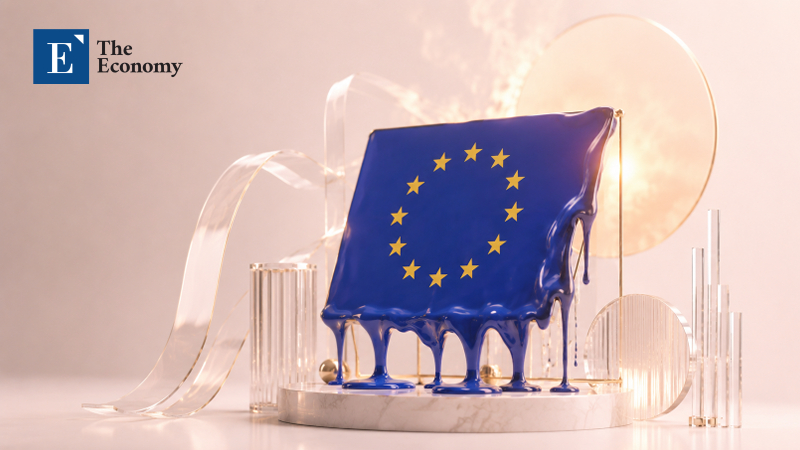
Extreme weather sweeping across Europe is causing widespread disruption. Record-high temperatures and drought have curtailed agricultural and livestock production, while major wildfires across the region are inflicting increasingly visible damage on society as a whole. Against this backdrop, experts are criticizing the European Union for building a stringent climate regulatory framework focused on cutting greenhouse gas emissions while failing to adequately prepare for the climate disasters that have already become a reality.
Record-Breaking Heat Wave Sweeps Europe
According to CNN on July 10 local time, Europe is paying a steep economic price this year due to a record-breaking heat wave. The crisis began in late May, when temperatures across much of Western Europe rose nearly 10 to 15 degrees Celsius above seasonal averages. Conditions deteriorated further in June as a heat dome took hold. Temperatures exceeded 45 degrees Celsius in Andújar, Spain, and climbed above 44 degrees Celsius in parts of France. More recently, temperatures surpassed 40 degrees Celsius for the first time on record in Eastern European countries including the Czech Republic and Poland, while even the typically cooler nations of Northern Europe have been unable to escape the heat.
The extreme weather is dealing a direct blow to the European economy by disrupting agricultural production and destabilizing food supplies. Crop yields can fall sharply when plants are exposed to high temperatures during critical growth stages such as flowering and grain filling. Even brief exposure to temperatures above 31 degrees Celsius for wheat and 35 degrees Celsius for corn is known to damage reproductive organs. This year’s heat wave coincided precisely with the grain-filling stage in Europe’s major wheat-producing regions, while corn entering its flowering stage faces an increased risk of pollen death, preventing kernels from developing properly.
France, the EU’s largest corn producer, is currently considered one of the countries suffering the most severe agricultural damage. The French Ministry of Agriculture has provisionally estimated that the heat wave could reduce domestic corn output by as much as 30%. Losses have also extended to other agricultural and livestock products. According to reports compiled from Bloomberg, AFP and other international media outlets, 60% of France’s hops used in beer production have been scorched, while orchards have sustained substantial losses. Hundreds of thousands of poultry have died, and some wheat farmers have complained that yields amounted to barely half the level needed for commercial viability. Concerns are also mounting in Spain and Italy, the Mediterranean’s largest olive-producing countries, that the combination of heat and drought will undermine this autumn’s olive harvest.
Wildfires Scorch Thousands of Hectares
Damage from major wildfires is also becoming increasingly apparent. According to data released by the European Forest Fire Information System on July 8, the EU has recorded 1,057 wildfires covering at least 30 hectares this year, more than double the 20-year average of 476. Approximately 155,569 hectares have burned, 16% above the 20-year average. Successive heat waves and prolonged drought have created conditions highly conducive to wildfires. When high temperatures persist without rainfall for extended periods, moisture rapidly evaporates from soil and trees, while dried grass, fallen leaves and shrubs form a combustible “fuel layer” that can turn a small spark into a major blaze within moments.
The deadliest wildfire occurred in Almería, in Spain’s southern region of Andalusia. The fire, which began near Los Gallardos on July 9, spread rapidly into residential areas on strong winds reaching approximately 50 kilometers per hour. At least 12 people were killed and 23 were reported missing, while four of the eight injured were in critical condition. More than 1,400 residents and tourists were evacuated, and the affected area subsequently expanded to between 5,000 and 6,000 hectares or more. Local authorities are investigating the initial cause of the fire, including the possibility of a fallen power line.
Multiple wildfires also broke out across France early this month. Flames spread through at least five départements, France’s second-tier administrative divisions, including Aude, Hérault and Var in the south. A wildfire in the Pyrenees near the Spanish border burned approximately 5,000 hectares, with more than 700 firefighters deployed to contain the blaze. On July 12, another major wildfire erupted in Fontainebleau Forest, roughly 60 kilometers southeast of Paris, burning approximately 800 hectares. The fire forced the partial closure of the A6 motorway, a major artery linking northern and southern France, and delayed high-speed rail services to and from Paris Gare de Lyon by as much as six hours.

Blind Spots in Europe’s Climate Strategy
Against this backdrop, experts are increasingly criticizing the shortcomings of Europe’s climate response. The EU is widely regarded as having established the world’s most comprehensive regulatory framework for reducing greenhouse gas emissions. The process began with the introduction of the EU Emissions Trading System in 2005. The system imposes emissions caps on power plants and energy-intensive industries such as steel, cement and chemicals, requiring companies to surrender allowances corresponding to the carbon they emit. Rather than merely encouraging voluntary reductions, the EU transformed the market structure itself so that higher carbon emissions translate directly into higher production costs. The bloc subsequently expanded the system to sectors including aviation and maritime transport and set a target of reducing emissions covered by the scheme by 62% from 2005 levels by 2030.
This pressure to reduce carbon emissions is also evident in trade policy, most notably through the Carbon Border Adjustment Mechanism. Under the system, the EU imposes charges corresponding to the carbon emitted during the production of carbon-intensive imports including steel, aluminum, cement, fertilizer, electricity and hydrogen. The policy reflects concerns that, without similarly stringent carbon rules on foreign products, investment by European companies could migrate to countries with comparatively weaker regulations. These measures have delivered meaningful reductions in emissions. According to the European Environment Agency, the EU’s net greenhouse gas emissions fell by approximately 40% between 1990 and 2024.
The problem is that the EU has failed to devote sufficient attention to adaptation policies designed to mitigate the effects of heat waves, droughts, floods and wildfires that are already occurring. Fewer than half of EU member states have nationwide heat-health action plans, while many aging buildings and urban infrastructure systems were not designed to withstand extreme temperatures. The underlying reason is a severe shortage of investment in adaptation. According to Reuters, 72% of climate-related spending under the EU’s common budget for 2021–2025 was allocated to mitigation policies aimed at reducing greenhouse gas emissions. Only 18% was earmarked for climate adaptation, while 9% was allocated to measures serving both purposes. A study commissioned by the European Commission and conducted by researchers from climate consultancy Ricardo, the Euro-Mediterranean Center on Climate Change and other institutions estimated that the EU, its member-state governments and the private sector will need to invest approximately $82 billion annually in climate adaptation through 2050 to strengthen resilience against climate disasters.
Oliver Griffin is a policy and tech reporter at The Economy, focusing on the intersection of artificial intelligence, government regulation, and macroeconomic strategy. Based in Dublin, Oliver has reported extensively on European Union policy shifts and their ripple effects across global markets. Prior to joining The Economy, he covered technology policy for an international think tank, producing research cited by major institutions, including the OECD and IMF. Oliver studied political economy at Trinity College Dublin and later completed a master’s in data journalism at Columbia University. His reporting blends field interviews with rigorous statistical analysis, offering readers a nuanced understanding of how policy decisions shape industries and everyday lives. Beyond his newsroom work, Oliver contributes op-eds on ethics in AI and has been a guest commentator on BBC World and CNBC Europe.
Similar Post