French Fighter Jet Rafale Exposes Technological Gap in Next-Generation Race, While South Korea’s KF-21 Also Faces Daunting Challenges Despite Expected Spillover Benefits

Siobhán Delaney is a Dublin-based writer for The Economy, focusing on culture, education, and international affairs. With a background in media and communication from University College Dublin, she contributes to cross-regional coverage and translation-based commentary. Her work emphasizes clarity and balance, especially in contexts shaped by cultural difference and policy translation.
Authored On
Modified
Rafale's limitations in scalability and modernization highlighted as fifth- and sixth-generation fighters proliferate
Latecomer South Korea's KF-21 still faces a difficult path into the export market
Combat experience and multirole capabilities remain the ultimate differentiators
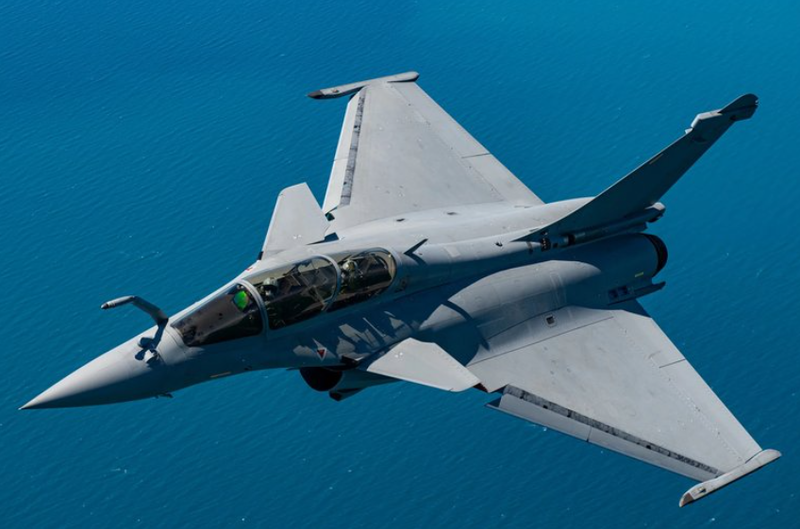
France's flagship Rafale fighter jet has reached the 40th anniversary of its maiden flight, but analysts say its technological limitations are becoming increasingly apparent amid the race for next-generation air combat. With the United States and China already competing to develop sixth-generation manned-unmanned combat aircraft, France remains constrained by fourth-generation technology, raising concerns that it could eventually become isolated in the global fighter market. Some observers argue that this could create new export opportunities for South Korea's indigenous KF-21 fighter, but the prevailing view is that the aircraft still faces significant hurdles, including the need to accumulate operational experience and establish a comprehensive long-term logistics support network.
Rafale's Scalability Limitations Become Increasingly Apparent
According to U.S. military publication Military Watch on July 9 (local time), the Rafale program marked the 40th anniversary of its first technology demonstrator flight on July 4, but severe budget constraints and prolonged development delays ultimately caused it to miss the generational transition that defines modern air combat. Although the aircraft first flew in 1986, it did not enter service with the French Air Force until 2006—two decades later—leading critics to describe it as a fighter that consistently lagged behind advances in U.S. and Chinese aerospace technology.
The Rafale's primary strength lies in its multirole capabilities. France designed the aircraft around an "omnirole" concept, enabling a single platform to conduct air superiority missions, precision strikes, nuclear deterrence operations, and carrier-based deployments. Export sales have also expanded to Egypt, India, Qatar, Greece, Croatia, the United Arab Emirates (UAE), and Indonesia. According to Dassault Aviation's financial results for last year, Rafale's order backlog stood at 220 aircraft, including 175 destined for overseas customers.
Despite its commercial success, however, the technological generation debate has increasingly turned against the Rafale. Because it was originally designed as a relatively compact aircraft, it entered service at a structural disadvantage compared with larger fighters such as the U.S. F-15 and Russia's Su-27 in terms of sensor size, growth potential, and operational range. The pace of technological upgrades also lagged considerably. While the United States integrated advanced active electronically scanned array (AESA) radar into the F-15 beginning in 2000 and Japan followed in 2002, the Rafale did not receive AESA radar until 2013, leaving it more than a decade behind.
The Rafale's position has become even more constrained as fifth-generation stealth fighters such as Lockheed Martin's F-35 and China's Chengdu J-20C have emerged as the new global standard. While the United States and China continue introducing increasingly advanced platforms such as the F-15EX and J-26, the Rafale has reached the limits of its airframe growth potential, leaving little room for further modernization. Meanwhile, the focus of major military powers has already shifted toward sixth-generation combat systems. The United States is advancing its Next Generation Air Dominance (NGAD) program, while the United Kingdom, Japan, and Italy are jointly pursuing the Global Combat Air Programme (GCAP). These initiatives combine artificial intelligence (AI), unmanned combat aircraft, advanced data links, and long-range sensor networks to redefine future aerial warfare.
The Rafale's technological shortcomings have also become evident in high-intensity operational scenarios. During the aerial clash between India and Pakistan in May last year, India's highly touted Rafale fighters were reportedly neutralized by Pakistan's Chinese-made J-20C fighters in beyond-visual-range missile engagements. The J-20C currently represents one of the lower-tier fifth-generation fighters in China's operational lineup. The Rafale's setback, coupled with an earlier incident in which the Eurofighter Typhoon was reportedly outperformed by the J-20C during joint exercises in Qatar, has fueled broader questions over the combat effectiveness of European tactical aircraft.
Can the KF-21 Surpass the Rafale?
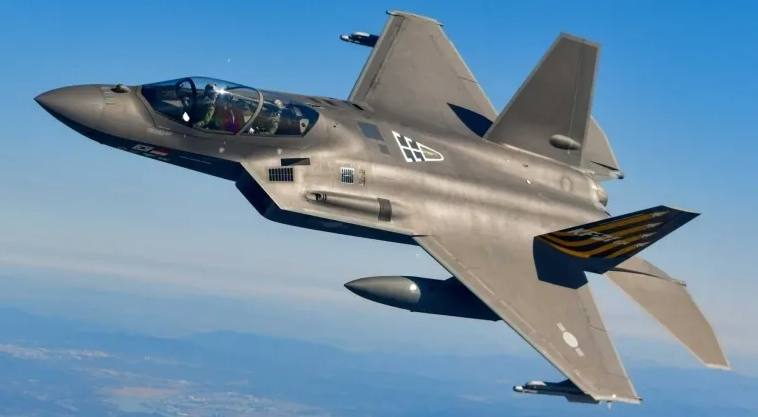
Against this backdrop, some market observers believe the Rafale's decline could create opportunities for South Korea's next-generation KF-21 Boramae, which entered mass production this year. For countries in Southeast Asia, the Middle East, and Europe that face difficulty acquiring top-tier U.S. or Chinese stealth fighters—or consider the Rafale too expensive relative to its performance—the South Korean 4.5-generation KF-21, combining cost-effectiveness with future growth potential, could emerge as an attractive alternative.
Nevertheless, while the KF-21 enjoys advantages in pricing, delivery schedules, and industrial cooperation opportunities, factors such as weapons integration, long-term maintenance guarantees, and political trust remain decisive variables for export success. According to the South China Morning Post (SCMP), although the KF-21 represents a landmark achievement for South Korea's defense industry, it still has numerous milestones to achieve before it can compete head-to-head with American, European, and Chinese fighters in the global market. The most critical factor is its timeline for proving operational capability. Only after the introduction of the Block II variant, which incorporates air-to-ground and anti-ship capabilities, can the KF-21 truly be regarded as a full-fledged multirole fighter. Further development of the stealth-enhanced Block III version and integration with collaborative combat drones will also be necessary before meaningful comparisons with aircraft such as the Rafale and J-10C become possible.
The KF-21 entered full-scale mass production in March after Korea Aerospace Industries (KAI) unveiled the first production aircraft. Under current plans, the Republic of Korea Air Force is scheduled to receive the initial batch of 40 aircraft by 2028. Analysts note, however, that market realities remain challenging. Although the KF-21 symbolizes South Korea's first domestically developed supersonic fighter, it is entering an export market already crowded with formidable competitors. The U.S. F-16 family benefits from decades of proven combat experience and an extensive global user base, while France's Rafale has established a solid export track record across the Middle East and Asia. China's J-10C, meanwhile, leverages competitive pricing alongside Beijing's diplomatic and military relationships to target niche markets. The KF-21 is effectively entering this competitive landscape as a latecomer.
Another challenge facing the KF-21 is that it has not yet matured into a fully capable multirole fighter. The initial Block I configuration focuses primarily on air superiority missions, employing Meteor beyond-visual-range air-to-air missiles and IRIS-T short-range air-to-air missiles to establish core air combat capability. However, air-to-air performance alone will not be sufficient for meaningful comparisons with aircraft such as the Rafale and J-10C in export competitions. It must ultimately demonstrate comprehensive multirole capabilities, including ground attack and maritime strike missions.
Rafale's Export Competitiveness Remains Intact
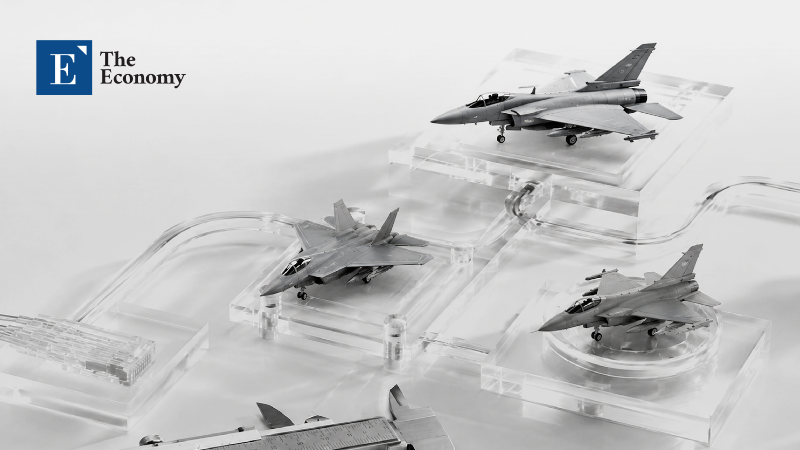
Moreover, the Rafale has by no means lost its competitiveness in the global fighter market. Combat-proven operational experience and an established long-term logistics support system remain key purchasing considerations for many countries. In April, India's Defence Acquisition Council approved a contract with France to procure an additional 114 Rafale fighters. India has relied on Russian-built aircraft as the backbone of its air force for decades.
As many of its Russian-built fighters approach retirement, India has decided to acquire a large number of Rafale aircraft to maintain its airpower. At the same time, the Indian military plans to manufacture approximately 80% of the 114 aircraft domestically in partnership with Dassault Aviation while maximizing localization and securing technology transfer. Once the transfer process is completed, roughly 50% to 60% of each Rafale—including the airframe, avionics, and engine—is expected to be produced using Indian-made components.
Despite controversy surrounding the combat performance of the Rafales currently operated by the Indian Air Force, New Delhi's decision to procure additional French fighters reflects a strategic emphasis on maintaining continuity with its existing force structure. India envisions high-altitude aerial combat against China and high-intensity short-range conflicts with Pakistan, and the Rafale is widely regarded as the aircraft best suited to both operational scenarios.
Furthermore, subsequent findings indicated that the earlier incident in which a Rafale was shot down by a Chinese-made missile was fundamentally an intelligence and information warfare issue rather than a failure of the aircraft itself. That conclusion appears to have influenced India's decision to proceed with large-scale Rafale procurement. In addition, while U.S.-made fighters are often subject to operational restrictions and potential software controls, and Russian aircraft face concerns over quality and international sanctions, French fighters offer far fewer operational limitations and lower delivery risks, providing buyers with a greater degree of strategic autonomy.
Siobhán Delaney is a Dublin-based writer for The Economy, focusing on culture, education, and international affairs. With a background in media and communication from University College Dublin, she contributes to cross-regional coverage and translation-based commentary. Her work emphasizes clarity and balance, especially in contexts shaped by cultural difference and policy translation.
- Previous "Retaliating With Precision Strikes After Merchant Ship Attacks" U.S.-Iran Military Clash Reignites, Deadlock Persists Over Nuclear Rollback and Control of the Strait of Hormuz
- Next “Profiting Even on Borrowed Money”: Big Tech Rushes Into Corporate Bond Market, Betting on Data Center Profitability
Similar Post