“Limits of Low-Cost Competition” China’s Smartphone Market Reels From Memory Crunch, Turns to On-Device AI for a Breakthrough

Aoife Brennan is a contributing writer for The Economy, with a focus on education, youth, and societal change. Based in Limerick, she holds a degree in political communication from Queen’s University Belfast. Aoife’s work draws connections between cultural narratives and public discourse in Europe and Asia.
Authored On
Modified
Sluggish Chinese smartphone sales during the peak 618 shopping festival
Surging memory prices compound cost pressures, triggering successive price increases
Accelerating development of high-performance devices tailored to on-device AI demand
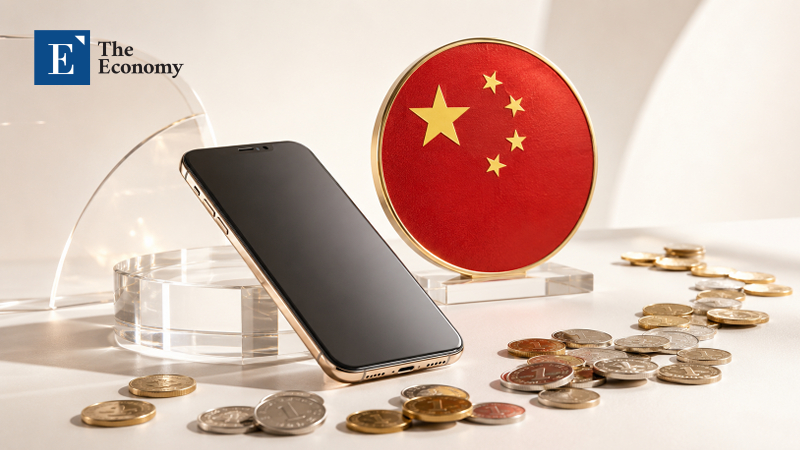
Growth in China’s smartphone market has stalled. As memory chip prices surge amid the global artificial intelligence (AI) boom, the price competitiveness of mid-range and budget smartphones from domestic brands has eroded, prompting a sharp contraction in market demand. Against this backdrop, Chinese smartphone makers are moving away from their traditional price-led growth strategies and increasingly turning to high-performance devices optimized for on-device AI as a new source of growth.
Frozen Chinese Smartphone Demand
According to Counterpoint Research’s China Smartphone Weekly Sales Tracker released on July 10, smartphone sales in China fell 13% year over year between May 26 and June 21 this year. The pronounced weakness came despite the period encompassing 618, China’s largest online shopping festival. Huawei was the only major smartphone brand whose sales did not decline from a year earlier during the period. The company ranked first in China’s smartphone market during the 618 festival with a 21% share. Its best-selling model was the Enjoy 90 Pro Max, while sales of the Mate 80 also increased sharply on the back of promotional campaigns and price cuts.
Apple ranked second in market share. Beginning one month before the 618 festival, Apple combined official discounts with price reductions offered by e-commerce platforms and trade-in incentives, cutting prices for the iPhone 17 Pro series by as much as $280. Nevertheless, its sales volume fell 9% from the same period a year earlier, largely because Apple had offered steeper discounts on the iPhone 16 series during the comparable period last year. Major Chinese smartphone brands other than Huawei also recorded double-digit sales declines over the period. Honor’s sales plunged 33% and Xiaomi’s dropped 24%, while Vivo and Oppo posted declines of 16% and 12%, respectively.
As the smartphone sales downturn becomes increasingly pronounced, domestic manufacturers are stepping up crisis-response measures, including adjustments to shipment volumes. Xiaomi’s recent decision to lower its smartphone shipment target for this year to 95 million units is a case in point. That represents a decline of approximately 44% from last year’s shipments of 170 million units. Oppo and Vivo have each revised their projected shipments for this year to fewer than 90 million units, while Honor, which posted record shipments of 71 million units last year, has informed suppliers that it will be difficult to sustain growth this year.
Erosion of Traditional Price Competitiveness
The memory supply crunch is widely cited as a key factor behind the weakening growth momentum in China’s smartphone market. Major memory manufacturers, including Samsung Electronics, SK Hynix and Micron, have been prioritizing production capacity for higher-margin products such as high-bandwidth memory (HBM), server-grade DDR5 and enterprise NAND flash in response to the AI boom. This has reduced the relative supply of mobile DRAM (LPDDR) and NAND flash used in smartphones, driving product prices sharply higher. Market research firm TrendForce has projected that contract prices for conventional DRAM will rise by another 13% to 18% quarter over quarter in the third quarter of this year, while NAND flash prices are expected to increase by an additional 10% to 15%.
These developments have dealt a devastating blow to China’s smartphone industry, which has long relied on price competitiveness as its primary engine of growth. Mid-range and budget smartphones carry slim profit margins, while memory accounts for a relatively large share of their total component costs. Manufacturers have therefore been left with little choice but to pass a substantial portion of the cost increase on to consumers. Oppo and its subsidiary brand OnePlus raised prices for their A and K series and selected existing OnePlus models in March, while the retail price of the Oppo K13 Turbo was increased by approximately $71. Vivo and its subsidiary brand iQOO likewise raised prices for certain models by $70 to $140, while Xiaomi’s budget brand Redmi also increased official prices for selected products.
A growing number of companies are also undertaking restructuring measures to alleviate memory-driven pressure on profitability. Chinese economic and financial news outlet Caixin Global reported on July 10, citing multiple sources, that Xiaomi had been gradually reducing headcount across its smartphone, electric vehicle, internet services and overseas business divisions since March. The adjustments reportedly encompassed personnel in research and development (R&D), testing, product planning and marketing, with some departments pursuing plans to cut labor costs by approximately 20%. Xiaomi, however, characterized the measures as routine organizational adjustments rather than large-scale layoffs, while some divisions were reportedly conducting workforce reductions and new hiring simultaneously.
AI’s Rapid Emergence as a New Growth Engine
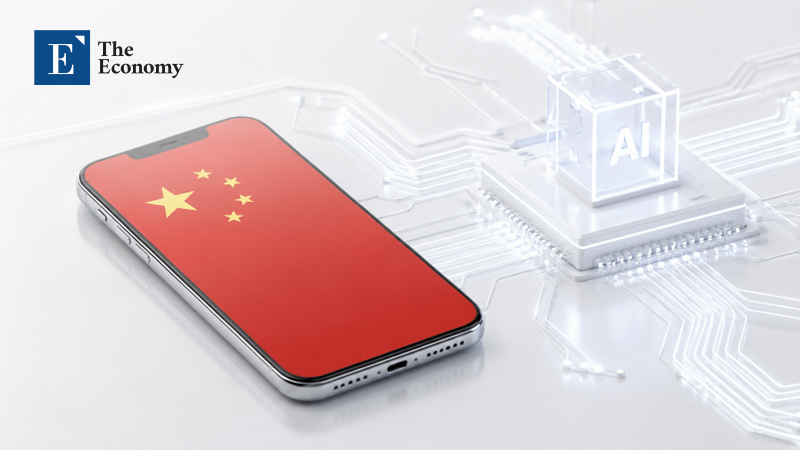
China’s smartphone industry is shifting its sales strategy in an effort to overcome the crisis. Rather than relying solely on price competitiveness, manufacturers are beginning to capitalize on the expansion of the AI industry. Tencent, operator of WeChat, China’s largest mobile messaging platform, is widely seen as the catalyst for this shift. Tencent is currently testing the integration of AI agents capable of performing tasks within WeChat, including product searches, order placement and content discovery. The initiative is designed to move beyond the conventional model, under which users must separately launch applications tailored to specific commands, by enabling AI to connect WeChat’s various mini programs and execute tasks internally. Tencent is also working with smartphone manufacturers such as Huawei and Xiaomi on plans to grant device-based AI assistants control over WeChat functions.
WeChat’s AI strategy, underpinned by its vast domestic user base, is reshaping the competitive criteria for smartphone hardware itself. AI agents require greater computing power and more memory than conventional smartphones to process data and multitask across applications. On-device AI, which runs large language models (LLMs) directly on the handset, requires devices equipped with sufficient DRAM capacity and bandwidth to manage model data and temporarily generated information. This suggests that competition centered on high-performance, high-value-added products is poised to emerge in China’s smartphone industry, which has historically grown around mid-range and budget devices.
The trend is also reflected in concrete market forecasts. IDC projects that total smartphone shipments in China will fall 2.2% year over year to approximately 278 million units this year. The firm expects overall market expansion to stagnate as rising memory prices, weakening consumer sentiment and lengthening smartphone replacement cycles compound the industry’s headwinds. By contrast, shipments of advanced smartphones equipped with AI capabilities are forecast to rise 31.6% to 147 million units over the same period, accounting for 53% of total shipments. As the broader market contracts, AI smartphones are effectively emerging as its only remaining growth segment.
Aoife Brennan is a contributing writer for The Economy, with a focus on education, youth, and societal change. Based in Limerick, she holds a degree in political communication from Queen’s University Belfast. Aoife’s work draws connections between cultural narratives and public discourse in Europe and Asia.
Similar Post