“Low-Price Offensive Backfires” Chinese Solar Industry Faces Earnings Decline and Restructuring Pressure as Emerging Markets Reap the Benefits

Matthew Reuter is a senior economic correspondent at The Economy, where he covers global financial markets, emerging technologies, and cross-border trade dynamics. With over a decade of experience reporting from major financial hubs—including London, New York, and Hong Kong—Matthew has developed a reputation for breaking complex economic stories into sharp, accessible narratives. Before joining The Economy, he worked at a leading European financial daily, where his investigative reporting on post-crisis banking reforms earned him recognition from the European Press Association. A graduate of the London School of Economics, Matthew holds dual degrees in economics and international relations. He is particularly interested in how data science and AI are reshaping market analysis and policymaking, often blending quantitative insights into his articles. Outside journalism, Matthew frequently moderates panels at global finance summits and guest lectures on financial journalism at top universities.
Authored On
Modified
Major Chinese solar companies post consecutive earnings declines
Triple blow from oversupply, weaker domestic demand and Western restrictions
Chinese government moves to contain crisis as emerging markets benefit from low-cost solar equipment
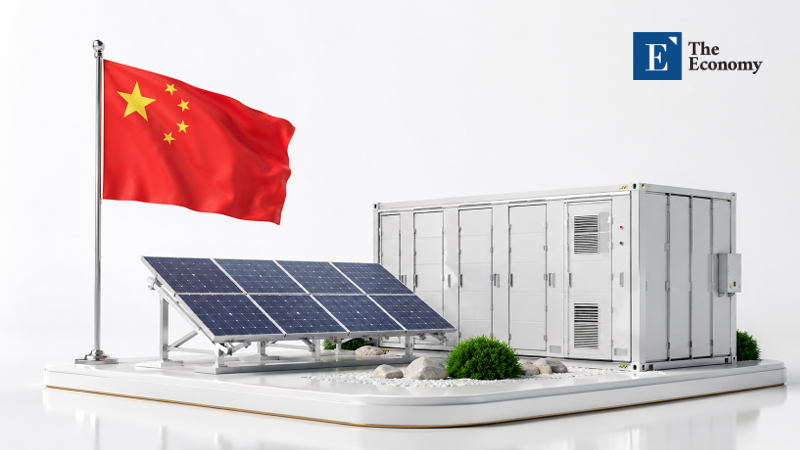
Chinese solar companies are seeing their earnings tumble across the board. The prolonged oversupply cycle has accelerated price declines, while weakening domestic installation demand and tighter regulations in Western countries have compounded the pressure. In response, the Chinese government has begun restructuring efforts aimed at weeding out marginal companies and outdated facilities. Emerging markets, meanwhile, are accelerating energy-infrastructure expansion as China-driven price competition sharply reduces the upfront investment burden for solar installations.
Performance Trends of China’s Three Leading Solar Companies
According to a report by global energy outlet OilPrice on the 30th, China’s three leading solar companies all reported deteriorating performance in the first half of this year. JinkoSolar’s first-half revenue fell 22.3% year on year to approximately $3.67 billion. Net loss attributable to shareholders widened 5.8% from a year earlier to approximately $457 million, compared with roughly $432 million in the same period last year, while net loss excluding non-recurring gains and losses reached approximately $500 million. Solar-module shipments in the first half totaled 29.64 gigawatts (GW).
JA Solar also saw revenue and profitability decline simultaneously. First-half revenue fell 26.8% year on year to approximately $2.60 billion, while net loss attributable to shareholders increased 3.2% to about $388 million. Net loss excluding non-recurring gains and losses expanded 32.2% from a year earlier to approximately $441 million, and operating cash flow plunged 80.9% year on year to roughly $128 million. Tongwei’s first-half revenue declined 15.2% year on year to approximately $5.11 billion, while net loss attributable to shareholders increased 3.3% to about $762 million. Net loss excluding non-recurring gains and losses also rose 5.1% to approximately $786 million.
Oversupply as a Chronic Malady
The fundamental cause of the worsening performance of Chinese solar companies is widely seen as years of persistent oversupply. China’s solar industry has aggressively expanded production facilities, supported by government-led strategic-industry promotion policies, local government subsidies and tax incentives, and low-cost land supplies. As a result, China has emerged as a core supplier accounting for more than 80% of global solar-module production capacity. At the same time, however, the pace of capacity expansion has outstripped actual demand growth. According to Reuters, China had, as of last year, enough capacity to manufacture roughly twice the volume of solar panels required by the world.
This excess capacity translated directly into price competition. As companies cut selling prices to maintain utilization rates and clear inventories, margins across the value chain—including polysilicon, wafers, cells and modules—collapsed. According to energy market research firm InfoLink Consulting, Chinese prices for n-type monocrystalline polysilicon fell from approximately $7.87–$8.91 per kilogram in early January to $4.89–$5.04 by mid-June, before slipping further to $4.45–$4.89 in late July. TOPCon modules for utility-scale projects in China, meanwhile, traded at approximately $0.10 per watt (W) in March and remained at roughly $0.10 per watt in late August, failing to break out of the low-price range. While prices of certain products have recently rebounded, it would be premature to interpret that recovery as a clear signal of a broader industry turnaround. Global energy-market analytics firm OPIS noted that “major solar companies have raised their quoted prices, but actual contract prices have not followed,” adding that module prices for large overseas projects have also remained broadly flat.
Table 1. Factors Behind the Deterioration in China’s Solar Industry Performance
| Factor | Key Developments | Industry Impact |
|---|---|---|
| Oversupply | Capacity sufficient to produce roughly twice global demand | Intensifying cutthroat competition to maintain utilization and clear inventories |
| Product price declines | Sharp falls in prices of polysilicon, wafers, cells and modules | Lower revenue and deteriorating profitability |
| Weaker domestic demand | New installations fell 66% year on year in the first half of 2026 | Fewer new orders and heavier inventory burdens |
| U.S. trade barriers | Anti-dumping and countervailing duties imposed on solar products from Southeast Asia | Restrictions on circumvention exports of Chinese products through third countries |
| European procurement rules | Supply-chain resilience criteria applied to renewable-energy auctions and public procurement | Reduced market access for Chinese products |
Domestic and Overseas Barriers Rise in Tandem
Solar installation demand in China’s domestic market has also contracted sharply this year. According to Reuters’ report last month citing an analysis of official statistics from the China Photovoltaic Industry Association (CPIA), China added 72.07GW of solar capacity in the first half of this year, down 66% from 212.21GW a year earlier. A large volume of installations had been brought forward in the first half of last year, immediately before the adoption of a market-based pricing system. As new project orders normalized this year, manufacturers experienced a much sharper decline in demand. CPIA projects annual new installations of 180–240GW this year, also 24–43% below the 315GW recorded last year.
Export growth has also encountered obstacles, as the United States and Europe have erected formidable trade barriers against Chinese solar products. In April last year, the U.S. Department of Commerce issued a final determination that solar cells and modules from Cambodia, Malaysia, Thailand and Vietnam had been dumped or benefited from Chinese government subsidies. In June of the same year, it put related anti-dumping and countervailing duty orders into effect, blocking Chinese solar companies’ circumvention exports. The European Union applies “resilience criteria” when a single third country accounts for more than 50% of renewable-energy product supply within the bloc, in an effort to protect its market and reduce supply-chain dependence. The system requires suppliers to be diversified in renewable-energy auctions and public procurement. China already far exceeds this threshold, accounting for 94% of EU supplies of solar modules and cells and 79% of wafer supplies.
Chinese Government’s Restructuring Efforts
As the crisis in China’s solar industry intensifies, the government is accelerating restructuring efforts aimed at curbing overproduction and destructive price competition. The most direct measure is a crackdown on below-cost sales. Last month, China’s State Administration for Market Regulation (SAMR) held a price-compliance meeting for the solar industry in Yancheng, Jiangsu Province, instructing companies to halt sales below cost and establish their own price-management systems. Authorities also outlined plans to link company-specific cost calculations with price enforcement, and to take administrative action against companies that seriously disrupt market order and fail to comply with corrective demands.
The policy direction is also shifting toward raising the cost burden on marginal operators. China’s Ministry of Finance, General Administration of Customs and State Taxation Administration announced last month that solar cells, previously exempt from consumption tax, will be subject to a 2% consumption tax beginning April 1, 2027, with the rate set to rise to 4% in April 2028. Energy industry outlet PV Magazine assessed that “for companies operating at a loss or near break-even, a tax rate of just 2–4% could further undermine profitability, accelerating the closure of outdated facilities and the exit of marginal companies.” Standards aimed at eliminating production facilities themselves have also been tightened. In June, the Chinese government released new mandatory national standards governing the energy consumption and efficiency of polysilicon, wafers, solar modules and inverters. OPIS estimated that strict implementation could affect up to 30% of China’s existing solar production capacity.
Clear Windfall for Emerging Markets
However, China’s intense solar-industry competition is not detrimental to every country. It has sharply reduced the upfront investment costs that have long been cited as a major barrier to wider solar deployment. According to the International Renewable Energy Agency (IRENA), the levelized cost of electricity for solar-and-battery systems has fallen to $54–$82 per megawatt-hour (MWh) in regions with favorable solar irradiation. This is notably below the $70–$85 per MWh cost of new coal-fired generation in China and the roughly $100 per MWh cost of new combined-cycle gas generation globally. IRENA projects that the cost of solar-plus-energy storage systems capable of providing stable baseload power will decline by a further 30% by 2030.
The decline in upfront costs has become a major boon for emerging economies with limited capacity to secure large-scale financing. Modular distributed solar generation can be developed incrementally in units of several megawatts (MW), with construction periods lasting only a few months. Unlike massive dams or thermal power plants, it does not require large, nation-scale upfront investment. For emerging markets weighed down by rapidly rising electricity demand, foreign-exchange shortages and high interest rates, the incentive is clear: build solar infrastructure instead of committing vast amounts of capital at once to large thermal power plants.
Matthew Reuter is a senior economic correspondent at The Economy, where he covers global financial markets, emerging technologies, and cross-border trade dynamics. With over a decade of experience reporting from major financial hubs—including London, New York, and Hong Kong—Matthew has developed a reputation for breaking complex economic stories into sharp, accessible narratives. Before joining The Economy, he worked at a leading European financial daily, where his investigative reporting on post-crisis banking reforms earned him recognition from the European Press Association. A graduate of the London School of Economics, Matthew holds dual degrees in economics and international relations. He is particularly interested in how data science and AI are reshaping market analysis and policymaking, often blending quantitative insights into his articles. Outside journalism, Matthew frequently moderates panels at global finance summits and guest lectures on financial journalism at top universities.
- Previous “Blocking Even Remote Access”: U.S. Expands Regulatory Net Against China’s Circumvention of AI Chip Procurement, While Nvidia Uses Whitelist to Screen Customers
- Next ‘10 Seoul National Universities’ Initiative Sets Sail, but Without Jobs and Livable Communities, Funding Risks Going Down the Drain
Similar Post