Europe’s Rare Earth Bargain Is Riskier Than It Looks

Authored On
Modified
Europe sidelined in US-China rare earth talks
US partnership may create new dependency
Europe needs stronger independent leverage
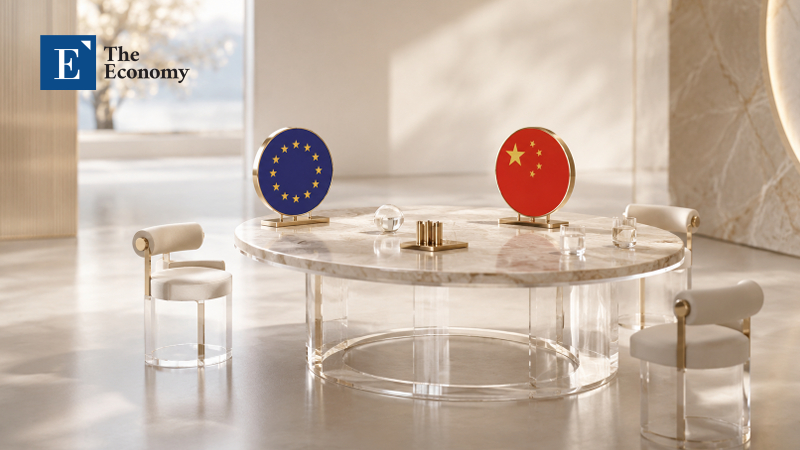
In three weeks, Xi Jinping will walk into the White House for the first state visit by a Chinese leader to Washington in eleven years. The September 24 summit, following Trump's May trip to Beijing, is being billed by both capitals as a chance to lock in the fragile trade truce struck in Busan last October — the one where Beijing agreed to suspend, not cancel, its rare earth export controls for a year, "routinely extended," in Trump's words.
Europe has no seat at that table. And that absence should worry Brussels more than the fanfare around its own critical minerals partnership with Washington suggests.
A Partnership Built on Someone Else's Leverage
The EU-US Memorandum of Understanding on critical minerals, signed in April, reads well on paper: joint work on processing standards, stockpiling, price floors, and rapid-response mechanisms against supply shocks.
But the entire architecture of that partnership rests on an American negotiating position with China that Europe did not shape and cannot control. When Trump and Xi met in Beijing in May, the White House readout touted a deal in which China would "address rare earth shortages," while China's own statement conspicuously omitted any mention of rare earths at all.
That asymmetry — one side claiming a concession the other side won't confirm in writing — is precisely the kind of fragile, verbally brokered arrangement that has defined US-China rare earth diplomacy since the Busan meeting, and Europe is now structurally dependent on its durability.
This is the first and starkest risk: Europe has outsourced its rare earth security to a bilateral relationship between Washington and Beijing that neither side has stabilized into a binding agreement.
The Busan truce was a one-year suspension of export controls, not a repeal. If Xi and Trump extend it on September 24, European manufacturers breathe easier for another year. If the talks falter — and Foreign Minister Wang Yi's public call to "overcome obstacles" ahead of the summit suggests the two sides are not yet aligned — European automakers, defense contractors, and wind-turbine manufacturers absorb the shock of a decision made in a room they were never in.
Restriction by Proxy
The deeper structural problem is that the US critical minerals strategy is not actually designed around Europe's interests; it is designed around American homeshoring, and Europe is being asked to plug into it on Washington's terms.
The Pentagon's $400 million equity stake in MP Materials and its 10-year, $110-per-kilogram price floor for neodymium-praseodymium exist to secure American supply chains and American magnet production. When European firms want access to that infrastructure — as with USA Rare Earth's exploratory tie-up with France's Carester project — they are plugging into a system whose first loyalty is to US industrial policy, not transatlantic parity.
That is a subtler form of restriction than an export ban, but it is restriction nonetheless: Europe's access to processing capacity, price-stability tools, and offtake agreements is contingent on how well it serves American priorities, not European ones.
Money makes this asymmetry concrete. Washington has committed roughly $40 billion in pre-financing for mineral projects since 2022; Brussels allocated about €6 billion in 2026.
When the two blocs have competed head-to-head for the same deals — as in Brazil, where the US reportedly pushed the EU off a shortlist entirely by "putting money on the table" — Europe has lost.
A partnership in which one party can simply outbid the other for the same assets is not a partnership of equals; it is an arrangement in which Europe's participation is conditional on Washington's spare capacity.
The Dependency Swap Nobody Wants to Name
Europe has been through this before. It swapped dependence on Russian pipeline gas for dependence on American LNG, and it did so in a matter of months, under duress, with limited room to negotiate terms.
Analysts are now warning openly that the same pattern is repeating with critical minerals: the EU risks "becoming just as reliant on the U.S. for critical minerals as it is now reliant on China."
The uncomfortable truth is that trading a Chinese chokehold for an American one is not diversification — it is a change of landlord.
China still controls roughly 60% of heavy rare earth mining, 91% of refining, and 94% of magnet production worldwide, and its dominance actually increases the further downstream production moves. Neither the US nor the EU has meaningfully dented that dominance yet.
What the transatlantic partnership has done, so far, is give Washington additional leverage over how Europe accesses the alternative supply chain that does exist.
There is a slower, quieter version of this risk too: American entities acquiring stakes in European rare earth processing assets outright, which would embed US influence directly inside EU industrial infrastructure rather than merely at the trade-policy level.
If that trend continues, "partnership" becomes a generous word for what is functionally ownership.
| Issue | Summary |
|---|---|
| Core risk | Europe depends on US-China rare earth negotiations |
| US partnership | Diversifies supply, but may deepen reliance on Washington |
| Structural weakness | Europe lacks comparable financing and processing capacity |
| September 24 summit | May extend the truce, but does not solve the dependency |
| Policy implication | Europe needs greater independent leverage and resilience |
Why September 24 Matters More Than Brussels Admits
The timing compounds all of this. Xi's decision to skip the UN General Assembly entirely and confine his US visit to a single day of talks at the White House signals that Beijing views this summit as a narrow, transactional negotiation with Washington — not a multilateral moment where European interests might get incidental airtime.
Reports suggest Chinese executives may join Xi's delegation, and that the one-year Busan arrangement is "almost certain" to be extended. If true, that is good news for European industry in the short term.
But it is good news that Europe secured by accident, not by leverage — a byproduct of a US-China deal, not the result of European diplomacy or European bargaining power.
That should be the uncomfortable headline for EU policymakers heading into autumn: rare earth security bought as a side effect of someone else's summit is not security at all. It is a grace period. And grace periods, as Busan itself proves, come with expiration dates.
What Europe Risks by Waiting
The pattern across every recent comparison — investment scale, deal competition, processing capacity, and now diplomatic access — points the same way.
Europe is not wrong to seek partnership with Washington; unilateral confrontation with Beijing was never a realistic option for a bloc with almost no domestic mining or refining base of its own. But partnership without independent leverage is not resilience. It is exposure dressed up as strategy.
If the September 24 summit produces a multi-year extension of the rare earth truce, European industry gets breathing room. If it produces friction, a partial deal, or another one-year stopgap subject to renewal, Europe discovers exactly how much of its own critical minerals security was actually in its own hands.
Based on the financing gap, the competitive losses, and the structural design of the current transatlantic framework, the honest answer right now is: not much.
The views expressed in this article are those of the author and do not necessarily reflect the views of The Economy, its Editorial Board, or any affiliated institution.