Humanoid Robots Make Inroads into Auto Plants, but Labor-Replacement Potential Remains Unclear Amid Technical Constraints

Anne-Marie Nicholson is a fearless reporter covering international markets and global economic shifts. With a background in international relations, she provides a nuanced perspective on trade policies, foreign investments, and macroeconomic developments. Quick-witted and always on the move, she delivers hard-hitting stories that connect the dots in an ever-changing global economy.
Authored On
Modified
Automakers Race to Adopt Humanoids to Boost Production Efficiency
Hyundai Plans Deployment of 25,000 Units as BMW, Mercedes and Chinese Automakers Expand Trials
Bipedal Locomotion, Battery and Durability Constraints Cloud Prospects for Labor Substitution
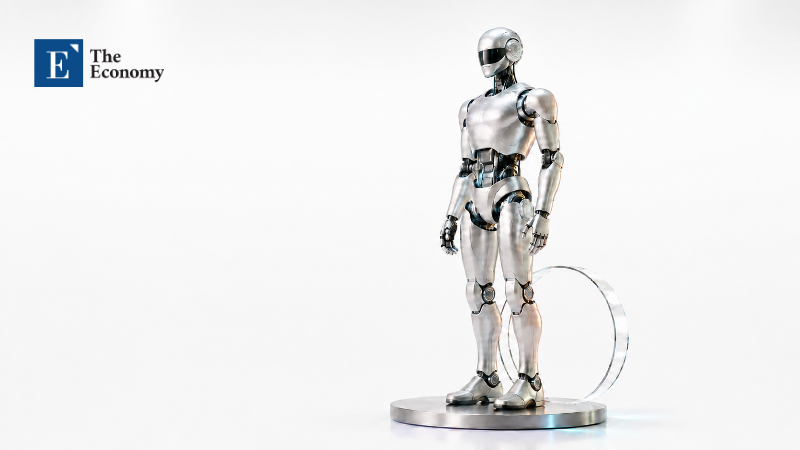
Global automakers are accelerating the race to automate production with humanoid robots. Hyundai Motor Group plans to deploy more than 25,000 Atlas units across its global plants by 2030, while BMW, Mercedes-Benz and Chinese manufacturers have also launched factory trials or in-house development programs. Yet considerable skepticism remains over whether humanoid robots have attained the technological maturity required to replace human workers on actual production lines. A formidable array of technical challenges remains unresolved, including stable bipedal locomotion, dexterous hand manipulation, battery life, the durability of critical components and safeguards against artificial intelligence (AI) malfunctions.
Hyundai to Deploy 25,000 Atlas Robots Across Plants by 2030
According to automotive industry sources on September 4, Hyundai Motor Group will deploy more than 25,000 Atlas humanoid robots at its global plants by 2030, advancing the automation of parts sequencing and logistics in earnest. The large-scale deployment coincides with Boston Dynamics' transition into a wholly owned subsidiary. Boston Dynamics is currently a robotics subsidiary wholly owned by Hyundai Motor Company. At the Robotics Metaplant Application Center (RMAC), which opened on the Hyundai Motor Group Metaplant America (HMGMA) campus in Savannah, Georgia, Atlas robots currently perform repetitive logistics tasks such as parts sorting and sequencing, with Hyundai planning to extend their use to assembly by 2030. Hyundai aims to raise the share of vehicles sold in the United States that are produced locally to more than 80% by 2029.
Efforts to establish the mass-production and supply infrastructure needed to support deployment at scale are also gathering pace. Hyundai Motor Group plans to secure annual robot production capacity of 30,000 units by 2028, while Hyundai Mobis will develop and supply actuators, a core component of Atlas. Hyundai Glovis will oversee logistics and supply-chain optimization, while Hyundai Motor and Kia will provide production equipment and process data, as the group seeks to build a self-contained robotics ecosystem spanning development, component procurement, mass production and on-site operations.
Atlas' task-learning capabilities are expected to play a pivotal role as its deployment expands from logistics to assembly. Atlas has 56 degrees of freedom and can carry payloads of up to 50 kilograms; when its battery runs low, it can replace the battery autonomously and resume work. A task learned by one unit can also be disseminated instantly to the entire fleet through the Orbit robot management software. Hyundai plans to combine Google DeepMind's AI foundation models with task data accumulated at RMAC to enhance both responsiveness to process changes and operational precision.
BMW and Mercedes Join the Race
Alongside Hyundai Motor Group, global automakers including BMW and Mercedes-Benz have joined the race by deploying humanoid robots in real-world production environments. Unlike fixed industrial robots, humanoids can operate in workspaces designed for people, allowing manufacturers to broaden the scope of automation without extensive facility retrofits.
BMW Group is testing Hexagon Robotics' AEON humanoid robot at its Leipzig plant in Germany for high-voltage battery assembly and exterior-component production. Following its first on-site test last December, the company has combined actual production work with further training since June and plans to begin full-scale deployment on the production line by year-end. AEON moves between work areas on a wheeled base and can be fitted with interchangeable hands, grippers and scanners on its upper body, enabling it to perform tasks ranging from parts transport to precision operations. BMW intends to use the Leipzig plant as its European validation hub for humanoids and develop an operating model that can be rolled out to other sites.
BMW previously conducted a long-term trial of Figure AI's Figure 02 at its Spartanburg plant in South Carolina. Over 10 months, Figure 02 supported the production of more than 30,000 BMW X3 vehicles, moving some 90,000 sheet-metal components to welding positions. The robot logged approximately 1,250 operating hours and about 1.2 million steps. After confirming its ability to repeat the same task with millimeter-level accuracy, BMW entered the evaluation stage for additional processes that could employ the next-generation Figure 03.
Mercedes-Benz has also entered the field by deploying Apollo, developed by U.S. robotics company Apptronik, at its Digital Factory Campus in Berlin-Marienfelde, Germany. Initial applications cover intralogistics—including transporting assembly kits and parts containers to production lines—and preliminary quality inspections of components. On-site employees transfer operational know-how through teleoperation and augmented reality (AR), enabling Apollo to learn the tasks, while the resulting data are accumulated within Mercedes-Benz's MO360 digital production ecosystem. Building on this foundation, the company plans to strengthen Apollo's autonomous capabilities before expanding its use primarily to repetitive and physically demanding processes.
China Accelerates the Race to Commercialize Humanoids
Chinese companies are also accelerating the commercialization race by deploying humanoid robots on automotive production lines. Rather than waiting for the technology to reach full maturity before rolling it out, Chinese manufacturers have opted to place robots that meet a certain performance threshold in factories first, then apply data gathered from real-world operations to the training and refinement of next-generation models. The strategy appears designed to translate China's vast manufacturing base and component supply chain into greater speed to commercialization.
A leading example is Xiaomi, which uses its own automotive plant as a robotics test bed. Xiaomi has deployed its internally developed CyberOne humanoid at an electric vehicle plant to test the installation of self-tapping nuts, the sorting of center-console components, and the folding and stacking of empty material containers. In the die-casting process, the robot operated continuously for three hours without human intervention while keeping pace with a production line that turns out one vehicle every 76 seconds. After four months of testing, its nut-installation success rate improved from 90.2% to 98%. Xiaomi Chairman Lei Jun has laid out a blueprint to deploy humanoids at scale across the group's factories within the next five years.
Collaboration between robotics specialists and automakers is also penetrating mass-production processes. SAIC-GM, the joint venture between SAIC Motor and General Motors (GM), has deployed AgiBot's A2-W on the battery production line at its Jinqiao plant in Shanghai to transport and stack battery cells. This marks the first deployment of a humanoid on an automotive mass-production line in China, effectively transferring AgiBot's operational experience in smartphone and tablet PC factories to vehicle manufacturing. UBTECH is likewise expanding the Walker series, equipped with actuators developed in-house, into automotive and aerospace production environments.
A clear trend is also emerging in which automakers move beyond adopting third-party robots and enter development and manufacturing themselves. Changan Automobile formally launched Changan Tianshu Intelligent Robotics Co. in April and set a target of beginning humanoid mass production in 2028. Following the earlier unveiling of its autonomous walking robot Xiaoan, the company aims to expand its robotics business into automotive components, the mobility ecosystem and specialized services. Because automobiles and humanoids share key technologies and components such as sensors, semiconductors and radar systems, the underlying calculation appears to be that existing automotive supply chains can reduce development costs and bring forward the start of mass production.
Table 1. Technical Challenges of Large-Scale Humanoid Robot Deployment
| Category | Technical Limitations | Impact on Production Operations | Validation and Mitigation Requirements |
|---|---|---|---|
| Core Performance | Inferior to conventional industrial robots in speed, precision, reliability and repeatability | Potential cycle-time delays, quality variation and unplanned downtime | Validation of mean time between failures (MTBF), frequency of human intervention and total cost of ownership |
| Bipedal Locomotion | Requires real-time adjustment of center of gravity and contact forces during walking, turning and load carrying | Risk of equipment damage and worker injury in the event of power failure or control error | Dynamic stability assurance and development of safety standards including ISO 25785-1 |
| Hand Manipulation and Environmental Perception | Limitations in precisely grasping components of varying shapes, sizes and weights, and in detecting occluded objects | Potential work stoppages or component damage from slippage, incorrect insertion or positional deviation | Autonomous recovery capabilities including error detection, task replanning, re-identification and re-grasping |
| Battery and Component Durability | Battery life of two to four hours; heat, wear and mechanical play in actuators, reducers and sensors | Productivity losses from frequent battery replacement and maintenance required for extended production shifts | Provision of spare batteries and long-duration durability testing of critical components under repeated operation |
| AI and Safety Controls | Potential collisions and component damage caused by sensor misperception and AI decision-making errors | Risk that operational errors propagate across the entire robot fleet or trigger repeated safety stops | Operation of lower-level safety controllers and establishment of software pre-validation, version control and recovery systems |
Fine Manipulation Is Easy for Humans but Highly Complex for Humanoids
However, numerous technical conditions must be met before large-scale deployment plans can translate into productivity gains. Automotive production lines must repeat the same motions thousands of times within prescribed cycle times while minimizing quality variation and unplanned downtime. The International Federation of Robotics (IFR) has assessed humanoids as underperforming conventional industrial robots in speed, precision, reliability and repeatability. Demonstration videos and short-term task success rates alone provide little insight into mean time between failures (MTBF), the frequency of human intervention or total cost of ownership.
Dynamic stability in bipedal locomotion is widely regarded as the greatest obstacle. Because the robot's contact area with the ground changes with every step, its control system must adjust the body's center of gravity and the forces exerted on the soles of its feet in real time. Turning while holding a heavy component in one hand or reaching toward a low shelf causes even greater shifts in the center of gravity. The IFR has warned that if a bipedal robot loses its balance because of a power failure or control error, the result could be equipment damage or worker injury. ISO 25785-1, which will define safety requirements for industrial mobile robots with dynamic stability, remains at the committee draft review stage.
Hand manipulation and perception of the surrounding environment also present significant unresolved challenges. Boston Dynamics notes that parts sequencing requires robots to handle thousands of components with different sizes, shapes and weights. Visibility becomes constrained when components are positioned deep inside dark containers or obscured by walls, while the robot must independently detect errors occurring during picking, transport and insertion and then replan the task sequence. It also needs recovery capabilities extending to re-identification and re-grasping when a component slips from its hand or moves outside its designated position. Google DeepMind has identified generality, interactivity and dexterity as the three core requirements for robot AI, noting that even fine manipulation tasks routinely performed by humans remain difficult for robots.
Battery and Component Durability Constraints Weigh on Productivity
Operating time and the durability of critical components also constrain deployment at scale. According to Boston Dynamics' product specifications, Atlas has a battery life of four hours under standard workloads and two hours when handling heavy loads. Replacing the battery takes three minutes and a full charge takes one hour and 30 minutes, meaning that multiple battery swaps and an ample reserve inventory are required to cover production shifts lasting eight to 12 hours. In addition, the heat, wear and minute mechanical play generated as the actuators, reducers and sensors that deliver 56 degrees of freedom operate repeatedly over extended periods can impair motion precision.
The process by which AI determines robot movements also requires a dedicated safety architecture. Misinterpreting inputs from cameras and tactile sensors can cause component damage or collisions, requiring lower-level controllers responsible for collision avoidance, contact-force limits and balance control to continuously monitor AI-generated motion commands. DeepMind has likewise emphasized that physical safety requires high-level AI decision-making to operate in tandem with machine-specific low-level safety controllers. Moreover, distributing a task learned by one unit across the entire robot fleet through Orbit requires pre-deployment validation, version control and a rollback system capable of restoring the previous state when errors occur. Key validation metrics in RMAC trials include cycle-time compliance, task success rates, the number of human interventions, component damage rates, unplanned downtime and the frequency of safety stops.
Anne-Marie Nicholson is a fearless reporter covering international markets and global economic shifts. With a background in international relations, she provides a nuanced perspective on trade policies, foreign investments, and macroeconomic developments. Quick-witted and always on the move, she delivers hard-hitting stories that connect the dots in an ever-changing global economy.
Similar Post