“Beyond Asia to Europe”: Counterfeit Samsung Smartphones Proliferate as Governments Tighten Platform Regulation and Intellectual Property Protection

Oliver Griffin is a policy and tech reporter at The Economy, focusing on the intersection of artificial intelligence, government regulation, and macroeconomic strategy. Based in Dublin, Oliver has reported extensively on European Union policy shifts and their ripple effects across global markets. Prior to joining The Economy, he covered technology policy for an international think tank, producing research cited by major institutions, including the OECD and IMF. Oliver studied political economy at Trinity College Dublin and later completed a master’s in data journalism at Columbia University. His reporting blends field interviews with rigorous statistical analysis, offering readers a nuanced understanding of how policy decisions shape industries and everyday lives. Beyond his newsroom work, Oliver contributes op-eds on ethics in AI and has been a guest commentator on BBC World and CNBC Europe.
Authored On
Modified
European Public Prosecutor’s Office cracks down on network selling counterfeit Samsung smartphones
Vietnam, India and Hong Kong also grapple with counterfeit goods
South Korean government agencies move to strengthen intellectual property protection for domestic companies
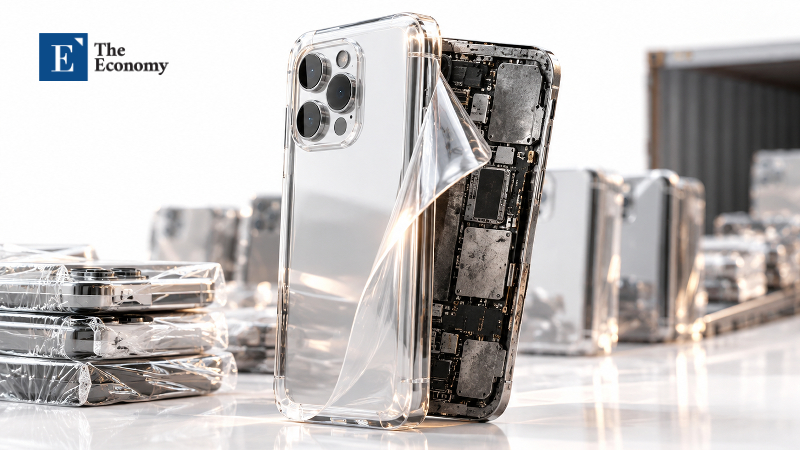
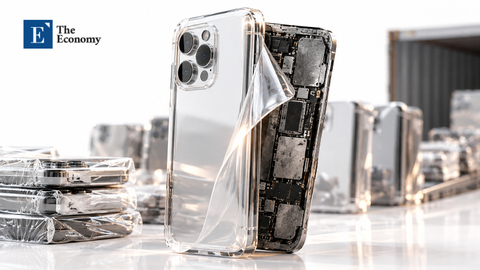
Counterfeit handsets imitating Samsung Electronics products have been distributed on a large scale in Europe’s smartphone market. Following repeated cases of counterfeit smartphone sales across Asia, Western markets are also confronting the practice of assembling devices from used components and packaging and selling them as new. Against this backdrop, the European Union is strengthening online platforms’ responsibility for policing illegal and counterfeit goods, while the South Korean government is expanding its protection framework to address overseas trademark infringement and counterfeit distribution.
Counterfeit Samsung Devices Circulate in Europe
According to German public broadcaster Westdeutscher Rundfunk (WDR) on October 4, with all dates hereafter referring to local time, the European Public Prosecutor’s Office (EPPO) conducted a sweeping crackdown on September 29 against an international criminal network that sold phones assembled from used components as new devices. The investigation, code-named “Troja,” began following a tip-off from the European Anti-Fraud Office (OLAF) and involved EU and national law enforcement agencies, including Europol and Eurojust. A total of 1,770 police, tax and customs personnel were deployed, with searches conducted at more than 160 locations across 19 countries, including Germany, the Netherlands, Spain and Austria. The EPPO estimated that the network sold more than 1 million used mobile phones as new, causing at least approximately $336.1 million in losses to EU consumers and more than approximately $33.6 million in value-added tax losses to member states.
The EPPO investigation found that the network assembled phones using secondhand components in Hong Kong and the United Arab Emirates, then cleaned and packaged the devices before importing them into the Netherlands. The phones were subsequently moved to warehouses in Germany and sold to end consumers through online marketplaces. WDR, which investigated the case jointly with Norddeutscher Rundfunk (NDR) and Süddeutsche Zeitung (SZ), reported that the devices were manufactured so meticulously that their appearance was difficult to distinguish from genuine Samsung models, and that many were advertised as new Samsung products. Seven suspects were arrested in Austria, Germany and Spain on September 26, including two suspected ringleaders.
DSA Leads Push for Tighter Regulation
This is not the first time counterfeit smartphones imitating Samsung products have been found on sale in Europe. In 2021, German technology publication Heise purchased and examined low-cost smartphones sold on online marketplaces such as AliExpress, reporting that some were counterfeits marketed under actual brand and model names. A sample survey of the top 100 products in AliExpress smartphone search results also classified numerous devices as fraudulently advertised or counterfeit because their actual performance did not match the specifications listed on their sales pages. Some handsets, in particular, displayed system information suggesting large memory capacities and recent versions of Android, while examination of their internal components revealed outdated processors and substantially less memory.
The EU has recently been holding online platform operators accountable for preventing and policing such counterfeit sales. A prominent example was the approximately $616.2 million fine imposed on AliExpress in July for violating the Digital Services Act (DSA). The European Commission said AliExpress had failed to adequately assess the risk of illegal and dangerous products, including counterfeits, being sold on its platform, and identified structural weaknesses in its counterfeit prevention system. AliExpress operated a “brand authorisation” scheme requiring merchants seeking to sell products from specific brands to demonstrate that they were authorised to do so. Investigators found, however, that some sellers could easily circumvent the procedure and list counterfeit goods. They also identified instances in which merchants sanctioned for selling illegal products continued operating on the platform, while unlawful listings remained online for weeks after detection or reappeared in modified form.
Counterfeits Also Proliferate in Vietnam and India
The problem extends beyond Europe, with repeated cases also documented across Asia. In June, police in Vietnam’s Tuyen Quang Province charged and detained three people accused of selling counterfeit Galaxy S23 Ultra smartphones through Facebook and their own website. The suspects attracted buyers with claims such as “100% genuine,” “70% discount” and “12-month warranty,” alongside cash-on-delivery (COD) payment, and sold more than 1,000 counterfeit smartphones nationwide. Authorities seized 469 counterfeit phones, packaging boxes, accessories and forged warranty certificates at the scene. Vietnamese authorities estimated that the seized goods would have been worth more than approximately $230,700 at genuine retail prices. In April 2024, police in Ha Tinh Province and Hanoi also arrested 22 members of a network that sold counterfeit iPhones and Samsung smartphones through e-commerce platforms. Investigators found that, since 2019, the suspects had advertised smartphones online at prices approximately $115 below those of genuine products, then shipped counterfeits to buyers and cut off contact. The network’s illicit proceeds were estimated at more than approximately $3.46 million.
A network carrying out similar offences was also uncovered in India. According to The Indian Express, Delhi police raided a workshop in the Karol Bagh area last December and arrested four people accused of manufacturing and selling counterfeit premium Samsung smartphones. Officers seized 512 counterfeit handsets imitating Galaxy Ultra, Fold and Flip models, 124 motherboards, 138 batteries and 459 fake IMEI stickers bearing the words “Made in Vietnam.” Police said the network imported components from China, including motherboards, cameras, speakers, frames and rear glass panels, assembled the devices locally, and sold them as new Samsung smartphones for approximately $363–$415 each.
Table 1. Counterfeit Smartphone Distribution Cases by Country and Region
| Country or Region | Major Cases |
|---|---|
| Europe | Authorities uncovered an international network selling phones assembled from used components in Hong Kong and the UAE online as new Samsung devices |
| Vietnam | Authorities repeatedly uncovered networks selling counterfeit Samsung smartphones and iPhones online as genuine products |
| India | Authorities uncovered a network locally assembling and selling imitations of premium Samsung smartphones using Chinese components |
| China and Hong Kong | Authorities intercepted large volumes of counterfeit smartphones and electronics destined for overseas transshipment |
| South Korea | Authorities uncovered the distribution of mobile phone accessories and related counterfeit goods bearing unauthorised Samsung and Apple trademarks |
Samsung’s Home Market of South Korea Also Affected
Mainland China and Hong Kong are believed to serve as production, sourcing and overseas transshipment hubs for counterfeit smartphones. According to Hong Kong’s South China Morning Post (SCMP), Hong Kong Customs uncovered 19 cases during a targeted crackdown on cross-border trafficking in counterfeit electronics in January 2024, seizing more than 14,800 counterfeit items, including mobile phones, smartwatches, earphones and tablets. The seized goods included products bearing Apple and Samsung trademarks and had an estimated market value exceeding approximately $1.27 million. Hong Kong Customs also inspected one container and three trucks arriving from mainland China, discovering approximately 4,900 additional counterfeit electronic items and arresting three truck drivers. Investigators found that the seized goods had been smuggled from mainland China into Hong Kong and were intended for re-export to overseas markets, including Bangladesh, Indonesia, the United States, France, Ireland and the United Kingdom.
South Korea has also documented cases involving the importation and distribution of counterfeit products bearing unauthorised Samsung branding. During a 40-day crackdown on counterfeit mobile phone products from December 2015 to January 2016, the Korea Customs Service uncovered 38 cases of intellectual property infringement and booked 41 people without detention on suspicion of violating the Trademark Act through their involvement in smuggling and distribution. Authorities detected 86,988 items in total, worth approximately $1.64 million at genuine retail prices. Mobile phone cases accounted for the largest category, at 42,307 items, followed by 13,263 earphones, 10,606 chargers, 6,777 power banks and 4,485 USB cables. Many of the products imitated Apple iPhone accessories or used Samsung trademarks without permission. Their routes into the country were also relatively clear: of the 38 cases, 32, or 84%, involved imports from China, while the remaining six, or 16%, involved imports from Hong Kong.
South Korean Government Moves to Strengthen Protection Framework
As counterfeit Samsung products continue to circulate worldwide, the government in South Korea, where Samsung is headquartered, is stepping up its response. The Ministry of Intellectual Property, for example, recruited its first cohort of participating companies for the K-Brand Government Certification Scheme in August and September. Under the scheme, the government officially certifies products as belonging to South Korean companies and becomes the rights holder of the certification mark, enabling it to directly address the manufacture and distribution of counterfeit goods overseas. For brands selected for certification, the government directly files and registers the K-Brand certification mark in approximately 70 export markets, including major export destinations and countries with a high risk of counterfeit distribution. Participating companies are also authorised to use the government certification mark and receive up to approximately $148,800 in support for adopting product authentication technology. If trademark infringement, including counterfeit distribution, occurs overseas, the certification framework enables the government to coordinate a response across agencies through engagement with local authorities.
On October 2, the Ministry of SMEs and Startups and the Ministry of Intellectual Property also held a kickoff meeting for the “SME K-Brand Intellectual Property Protection Council” and, together with the Korea SMEs and Startups Agency, announced plans for cooperation in responding to intellectual property infringement overseas. The initiative will use the agency’s Global Business Centers (GBCs) and overseas intellectual property centres operated by the Korea Intellectual Property Protection Agency under the Ministry of Intellectual Property to share cases of infringement as they arise, including bad-faith trademark registrations and counterfeit distribution. It will also strengthen coordination between programmes so that SMEs participating in the Ministry of SMEs and Startups’ export support initiatives can access complementary assistance through overseas intellectual property protection programmes.
Oliver Griffin is a policy and tech reporter at The Economy, focusing on the intersection of artificial intelligence, government regulation, and macroeconomic strategy. Based in Dublin, Oliver has reported extensively on European Union policy shifts and their ripple effects across global markets. Prior to joining The Economy, he covered technology policy for an international think tank, producing research cited by major institutions, including the OECD and IMF. Oliver studied political economy at Trinity College Dublin and later completed a master’s in data journalism at Columbia University. His reporting blends field interviews with rigorous statistical analysis, offering readers a nuanced understanding of how policy decisions shape industries and everyday lives. Beyond his newsroom work, Oliver contributes op-eds on ethics in AI and has been a guest commentator on BBC World and CNBC Europe.
Similar Post