“High Costs, Low Growth, and the Rise of China and Japan” — South Korea’s MMORPG Growth Formula Falters as Game Industry Seeks New Growth Engine in Poland

As one of the youngest members of the team, Tyler Hansbrough is a rising star in financial journalism. His fresh perspective and analytical approach bring a modern edge to business reporting. Whether he’s covering stock market trends or dissecting corporate earnings, his sharp insights resonate with the new generation of investors.
Authored On
Modified
South Korean game industry reels from underinvestment and weakening content competitiveness
Heavy labor costs and mounting pressure from China and Japan add to burdens
Investment in overseas developers rises as Poland offers cost and regulatory advantages
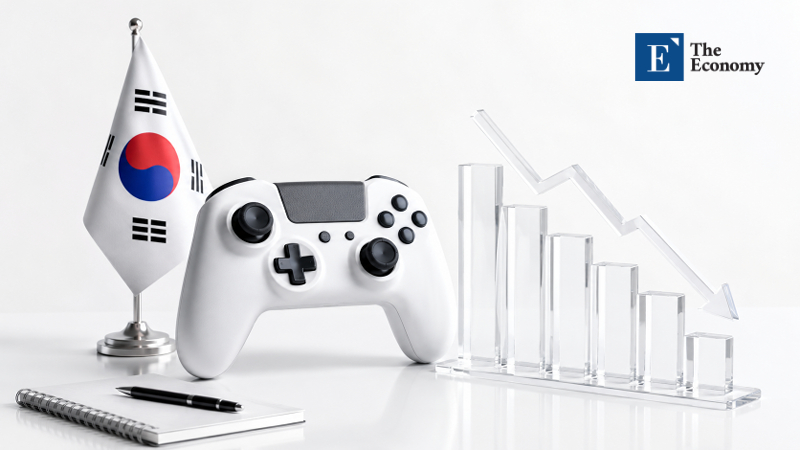
The competitiveness of South Korea’s game industry is deteriorating by the day. A confluence of factors—including a contraction in investment, a standardized revenue model centered on massively multiplayer online role-playing games (MMORPGs) and randomized in-game items, rising labor costs, and the ascent of China and Japan—has steadily eroded the industry’s growth potential. Against this backdrop, South Korean game companies are increasingly investing in overseas developers, including those in Poland, in a bid to secure new PC and console intellectual properties (IPs) and development capabilities.
South Korean Games Lose Global Market Share
According to IT industry sources on the 28th, South Korean games have recently been losing ground in the global gaming market. A report published by the Korea Creative Content Agency in June showed that South Korean game revenue declined 1.4% year on year, from $16.06 billion in 2023 to $15.833 billion in 2024. South Korea’s global market share also fell from 7.8% to 7.2% over the same period. China, meanwhile, increased its share from 20.9% to 24.2%, overtaking the United States, which held a 20.9% share, to claim the top global position for the first time. Japan maintained a double-digit share of 10%. As China leads a rapid realignment of the market, South Korea’s competitiveness has visibly weakened.
The reasons behind this trend are multifaceted. A shortage of investment has been a major constraint. According to the Ministry of SMEs and Startups, new venture investment in South Korea’s game sector amounted to just $30.6 million in the first half of this year. This represented a 76.3% plunge from $129.1 million in the first half of last year. Over the same period, total new venture investment rose 54.3%, from $4.15 billion to $6.40 billion. As promising investment fields such as artificial intelligence (AI), drones, and biotechnology attract growing attention, the game industry—where large upfront investments must be made before commercial viability can be validated—has increasingly fallen out of favor among investors.
MMORPG-Centric Revenue Structure
The industry’s standardized approach to content is also widely regarded as a structural limitation. South Korea’s game industry has grown primarily around MMORPGs since the success of Nexon’s “The Kingdom of the Winds,” released in 1996, and NCSoft’s “Lineage,” released in 1998. According to market research firm Sensor Tower, MMORPGs accounted for as much as 56.2% of South Korea’s mobile gaming market in 2024, after reaching 78.8% in 2020. “Because character progression and competition over equipment are central to MMORPGs, these games generate strong demand for rare items and powerful incentives to pay for randomized in-game items,” one market industry official said. “South Korea’s gaming market has remained locked for decades into a distinctive revenue structure centered on randomized items and so-called ‘whales,’ or high-spending users.”
User resentment toward this revenue model is also considerable, reflecting repeated controversies over the manipulation of item probabilities within the industry. A prominent example is Nexon’s “MapleStory.” After introducing “Cubes”—paid randomized items that reset the potential attributes of equipment—in May 2010, MapleStory changed the probabilities in September of the same year so that options favored by users appeared less frequently. In August 2011, it reduced the probability of certain popular duplicate-option combinations, commonly known as “Boss-Boss-Boss,” “Drop-Drop-Drop,” and “Ignore Defense-Ignore Defense-Ignore Defense,” to zero without separate notice. An investigation also found that the probability of a “Black Cube” raising an item to the highest tier was progressively lowered from 1.8% at launch to 1.4% at the end of 2013 and 1% in January 2016.
These facts surfaced in 2021 after user opposition to the randomized-item system intensified and Nexon disclosed probability information concerning Cubes. In January 2024, the Korea Fair Trade Commission concluded that Nexon had changed probabilities to consumers’ disadvantage without notifying them or had provided misleading information. It consequently issued a corrective order and imposed a penalty of approximately $8.4 million. At the time, it was the largest penalty ever imposed in a case involving violations of the Electronic Commerce Act.
Pandemic-Era Labor Cost Burden Persists
The high-cost workforce structure established during the COVID-19 pandemic continues to weigh heavily on South Korea’s game industry. In 2021, a boom in contactless industries coincided with economy-wide digital transformation, intensifying the shortage of developers. Major South Korean game companies subsequently raised salaries across development positions as they competed to attract talent. This upward wage trajectory did not reverse even after the post-pandemic transition gained momentum. According to company business reports and other disclosures, Krafton’s average compensation per employee rose from approximately $78,700 in 2024 to $93,100 in 2025, while Pearl Abyss saw an increase from approximately $71,100 to $96,800 over the same period. NCSoft’s figure rose from approximately $78,000 to $84,500, Netmarble’s from approximately $55,600 to $62,800, and Kakao Games’ from approximately $63,500 to $65,000. Shift Up’s average salary per employee also reached approximately $95,000 in 2024.
The problem is that the revenue growth needed to sustain these costs has failed to materialize. As delays in new game launches and commercial successes have become more frequent, and revenue from existing titles has declined, companies have found it increasingly difficult to cover the fixed costs of their development workforces solely with cash flow from established games. Game companies have consequently begun scaling back the organizations they expanded during the pandemic. Since 2024, NCSoft has successively implemented voluntary retirement programs, recommended resignations, and spin-offs of development and support divisions, reducing its workforce from 4,886 employees in 2024 to 3,170 at the end of last year. Krafton also launched a voluntary departure program late last year, while Nexon has moved to streamline its organization by curbing new hiring and reassigning existing personnel.
Table 1. Growth Constraints Facing South Korea’s Game Industry
| Factor | Key Details | Industry Impact |
|---|---|---|
| Investment contraction | New venture investment in the game sector fell 76.3% year on year in the first half of 2026 | Insufficient funding for new game development and genre diversification |
| MMORPG concentration | Growth engines remain disproportionately concentrated in the MMORPG genre | Entrenchment of a revenue structure centered on randomized items and high-spending users |
| Erosion of user trust | Repeated controversies over probability manipulation and nondisclosure | Attrition among existing users and weaker acquisition of new users |
| High-cost workforce structure | Developer labor costs that surged during the COVID-19 pandemic have remained elevated after the pandemic | Greater fixed-cost burdens and accelerating workforce reductions |
| Intensifying overseas competition | China expands through live-service operations and genre experimentation, while Japan capitalizes on powerful IPs | Declining global market share and competitiveness of South Korean games |
Chinese and Japanese Game Industries Surge Ahead
Another factor deepening the sense of crisis within South Korea’s game industry is the rise of Chinese and Japanese game companies. China is rapidly expanding its market presence by leveraging capabilities accumulated in mobile gaming, including live-service operations, monetization design, and global publishing. Alongside major game companies such as Tencent and NetEase, emerging players including Century Games and First Fun have also increased their visibility by releasing successive hit titles in major markets. Genre experimentation and rapid localization are also regarded as key strengths. A representative strategy is to lower entry barriers and retain users over extended periods by combining established strategy-game mechanics with mass-market elements such as puzzles, survival, and city-building. More recently, China has also produced global blockbusters in the PC and console markets, including “Black Myth: Wukong.”
Japan’s core competitive advantage lies in its powerful IP portfolio. Major franchises such as Nintendo’s “Mario” and “The Legend of Zelda,” and Capcom’s “Monster Hunter” and “Resident Evil,” function as long-term assets that can be repeatedly monetized through sequels, remakes, films, animation, toys, and character merchandise. Nintendo’s “Switch 2,” released last year, sold more than 3.5 million units within four days and triggered widespread shortages because a global user base seeking access to established Nintendo IPs was already firmly in place. Another strength is the distinctive structure under which the success of a new release also drives sales of earlier installments in the franchise.
Poland Emerges as a Leading Investment Destination
Against this backdrop, South Korean game companies are expanding investment in overseas developers as they seek a breakthrough. Poland has emerged as one of the leading destinations. According to the “2026 Overview of Poland’s Game Industry” report released by the Korea Creative Content Agency in February, NCSoft invested in Polish developer Virtual Alchemy in December 2024 and secured global publishing rights for a PC strategy role-playing game currently under development by the company. Virtual Alchemy is known to have been founded by industry veterans who participated in major projects including “The Witcher 3” and “Cyberpunk 2077.” Through the investment, NCSoft intends to move beyond its existing MMORPG-centered portfolio and secure new IPs in the PC and console segments. Krafton invested in Polish PC and console developer People Can Fly, becoming its second-largest shareholder. People Can Fly is a specialist shooter-game developer responsible for titles including “Bulletstorm” and “Outriders,” and also participated in the production of the “Gears of War” series.
Polish game companies have attracted growing attention because Poland ranks among Europe’s foremost game development hubs. Approximately 71.8% of Polish game developers focus primarily on console and PC platforms, with most optimized for the development of narrative-driven, AAA-scale titles. The country also offers ready access to talent. More than 65 game-related degree programs are offered at 52 Polish universities, producing a substantial pool of highly skilled workers. Yet average annual salaries range from $53,000 to $60,600, only about half the levels seen in Western Europe or the United States. The Polish government also provides extensive institutional support. Its “IP Box” regime applies a 5% tax rate, rather than the standard 19% corporate tax rate, to income generated from IP created through research and development (R&D), while offering tax deductions of up to 200% for labor and material expenses incurred during the R&D process.
As one of the youngest members of the team, Tyler Hansbrough is a rising star in financial journalism. His fresh perspective and analytical approach bring a modern edge to business reporting. Whether he’s covering stock market trends or dissecting corporate earnings, his sharp insights resonate with the new generation of investors.
Similar Post