Despite Iran's oil offensive aimed at the U.S. midterm elections, the U.S. opts for containment over compromise, considering re-striking nuclear facilities

Matthew Reuter is a senior economic correspondent at The Economy, where he covers global financial markets, emerging technologies, and cross-border trade dynamics. With over a decade of experience reporting from major financial hubs—including London, New York, and Hong Kong—Matthew has developed a reputation for breaking complex economic stories into sharp, accessible narratives. Before joining The Economy, he worked at a leading European financial daily, where his investigative reporting on post-crisis banking reforms earned him recognition from the European Press Association. A graduate of the London School of Economics, Matthew holds dual degrees in economics and international relations. He is particularly interested in how data science and AI are reshaping market analysis and policymaking, often blending quantitative insights into his articles. Outside journalism, Matthew frequently moderates panels at global finance summits and guest lectures on financial journalism at top universities.
Authored On
Modified
Iran pressures Trump before elections to secure favorable ceasefire terms
U.S. and Israel respond by considering re-strikes on nuclear facilities
Aim goes beyond blocking nuclear rebuild to weakening Iran's leadership power base
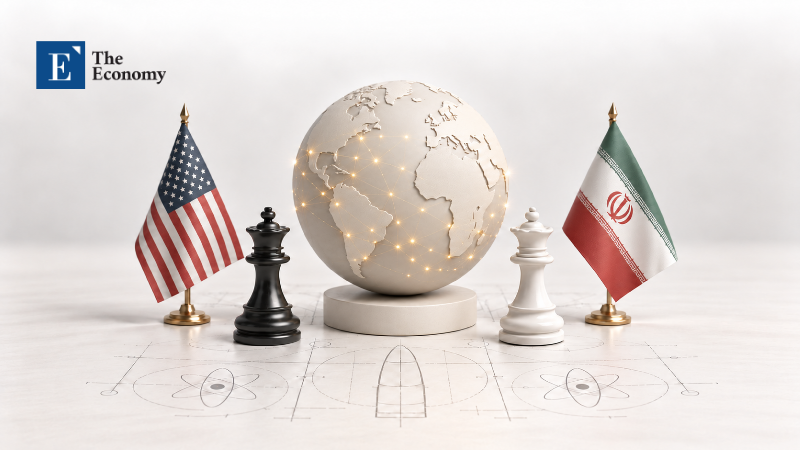
Ahead of the U.S. midterm elections, Iran's maritime attacks and the U.S. crude oil blockade have intertwined, intensifying the power struggle over the terms of a ceasefire. Iran aims to disrupt oil supplies to increase political pressure on the Trump administration and secure the lifting of the blockade and easing of sanctions. Meanwhile, the U.S. is maintaining pressure by considering renewed strikes on Israeli and Iranian nuclear facilities. This is interpreted as a strategy to cut off Iran’s path to rebuilding its nuclear capabilities, weakening its negotiating leverage and shaking the postwar power base of the leadership.
Iran concentrates attacks on oil transshipment vessels
According to the United Kingdom Maritime Trade Operations (UKMTO) on the 14th (local time), at least 24 vessels were attacked between the 28th of last month and the 11th of this month in the Strait of Hormuz area. This represents the largest scale in a two-week period since the war began at the end of February this year, with six vessels attacked in one day on the 11th alone. The attack locations were widely distributed from near Qeshm Island, where the strait narrows, to waters about 500 km off Qatar. According to the International Maritime Organization (IMO) statistics, attacks, mainly targeting oil carriers, have continued this month, threatening the safety of commercial vessels navigating the strait and surrounding waters.
Iran's primary targets are maritime transshipment vessels carrying oil to evade the blockade. Gulf oil-producing countries continue exports by transferring oil from small tankers that pass through the Strait of Hormuz to larger tankers waiting in the Gulf of Oman. The operation divides the transport into segments: vessels traversing the strait and vessels delivering oil to final buyers. The U.S. has also supported oil shipments exiting the strait, and this transshipment method has played a crucial role in recovering export volumes in the Gulf region. Consequently, the Iranian military is reported to have attacked at least five small vessels attempting maritime transshipment every night. This is interpreted as an effort to block the process by which oil exiting the strait is loaded onto large tankers.
Iran is also developing tactics to better locate commercial vessels. According to U.S. military officials, after U.S. attacks significantly destroyed Iran Revolutionary Guard Corps (IRGC) radar systems, unarmed surveillance personnel have been placed on small boats to locate maritime targets. These personnel are reportedly responsible for identifying the positions of commercial vessels and U.S. naval ships and relay the information to the IRGC. The U.S. military last week assessed that such activities were taking place on traditional wooden dhow ships, evacuated occupants, and destroyed the vessels. Iranian officials indicated that recent changes in attack means and frequency were decided at the leadership level and also aimed to thwart U.S. and allied efforts to stabilize oil prices.
Targeting energy supply chains ahead of U.S. elections
Iran is tightening the blockade of the strait with the intention of raising international oil prices ahead of the U.S. midterm elections on November 3. The strategy aims to amplify voter dissatisfaction over surging diesel and gasoline prices to pressure the Trump administration and the Republican Party. Iranian government officials told Reuters, “The goal of Iran’s new strategy is to influence the U.S. election results. It will frustrate the efforts of the U.S. and its allies to lower international oil prices.” The changes in attack tactics were decided by Iran’s highest leadership and coordinated among power institutions. Iran’s negotiation demands have included lifting the U.S. blockade of its ports and easing oil sanctions. The strengthened attacks seem intended to leverage control over the strait to enforce these demands.
Yemen’s Iran-aligned Houthi rebels are aligning with Iran’s strategy by raiding Saudi oil facilities. On the 13th, the Houthis launched missiles targeting the Saudi state oil company's Aramco headquarters in Dahran in eastern Saudi Arabia, approximately 1,100 km from the Yemen border. The Saudi-led coalition said debris from intercepted missiles fell onto nearby residential neighborhoods, and Saudi Energy Ministry reported a limited fire at an Aramco administrative building. Prior to the attack, the Houthis warned employees and civilians near Saudi oil facilities to evacuate. After the Saudi-led coalition airstrikes on Yemen’s Sanaa oil facilities, the Houthis had threatened retaliations targeting Aramco headquarters and Riyadh refining facilities. On the following day, the 14th, the Houthis declared plans for additional strikes on Saudi airports and oil facilities, claiming they had attacked Aramco in Dahran, King Khalid International Airport in Riyadh, and refining facilities with ballistic missiles, cruise missiles, and drones.
Table 1. U.S. and Israel's efforts to block restoration of Iran's nuclear capabilities
| Country | Response Direction | Key Details |
|---|---|---|
| Israel | Propose ceasefire conditions | Demand weakening to the point of inevitable regime collapse or nuclear program termination |
| Guard against nuclear rebuilding | Claims previous airstrikes delayed nuclear development by several years, warns of facility and capability reconstruction potential | |
| Sustain regime pressure | Prime Minister Netanyahu claims the Iranian regime is fighting to survive in its most vulnerable state since establishment | |
| United States | Prepare for underground facility strikes | Consider limitations of existing large penetrator bombs against Pickaxe Mountain facility beneath granite, move forward with military preparations |
| Prepare live-fire tests | DTRA contract documents specify urgent restoration and preparation for live-fire testing at White Sands underground test site; sources explain it is linked to developing methods to attack Iran's underground facilities |
U.S. and Israel considering additional strikes on Iran nuclear facilities
Amid Iran and Houthis shaking energy supply chains, the U.S. and Israel are reportedly reviewing a resumption of military operations against Iran. The American online media Axios reported on the 13th that President Trump and Netanyahu had a phone call last week during which they considered a joint military strike on Iranian nuclear and military facilities. Netanyahu reportedly conveyed Israeli intelligence assessments expressing concern over Iran’s efforts to rebuild its nuclear program to President Trump. A U.S. official remarked, “Netanyahu seems eager to attack Iran again,” and explained that Trump told Netanyahu, “Be prepared.”
At the core of discussions on additional strikes is concern that Iran could restore its nuclear program by utilizing underground facilities. The underground complex at Pickaxe Mountain, about 2 km south of the Natanz nuclear facility, is viewed as a primary surveillance target. Satellite imagery analysis released last month by the Center for Strategic and International Studies (CSIS) showed road activity in the area this year was the most intense recorded during the observation period. Enhancements such as tunnel entrance reinforcements, road paving, and excavated soil removal were observed, suggesting ongoing underground internal construction. Israeli intelligence reportedly informed the U.S. that Iran moved centrifuges and related components there.
Preparing live-fire drills in anticipation of strikes on Iran's underground nuclear facilities
Israel, wary of Iran rebuilding its nuclear capabilities, insists pressure must continue until the leadership abandons its nuclear program. Prime Minister Netanyahu claimed in an interview with Fox News on July 26 that previous airstrikes delayed Iran’s nuclear development by years but warned of the potential for reconstruction of damaged facilities and capabilities. He proposed conditions for ceasefire that involve the regime either collapsing or becoming weakened enough to halt its nuclear program. These statements are interpreted as efforts to repeatedly block nuclear facility reconstruction, aiming to destabilize the Iranian leadership’s attempt to maintain postwar influence relying on nuclear capabilities. On November 5, Netanyahu continued to pressure the regime, claiming it is fighting to survive in its most vulnerable state since establishment.
The U.S. has also been conducting military preparations needed to neutralize Iran’s nuclear development infrastructure in underground facilities. Given that the Pickaxe Mountain installation lies under solid granite, existing large penetrator bombs are considered insufficiently effective. According to contract documents from the Defense Threat Reduction Agency (DTRA) released last month, the White Sands special underground testing facility in New Mexico was urgently restored this year for live-fire test preparations. Sources indicate this testing is connected to developing methods for striking Iran’s underground facilities. The White Sands site, also inside granite formations, can be used to verify weapon effectiveness against underground targets.
U.S. likely to continue pressure targeting depletion of Iran's war resources
The U.S. administration assesses that by combining military pressure with blocking Iran’s revenue from oil exports, Iran’s capacity to sustain the war will progressively decline. On November 8, the U.S. Treasury designated 17 additional vessels involved in transporting Iranian crude oil, petroleum products, and petrochemicals for sanctions. At the time, Treasury officials explained that only about 20 million barrels of Iranian crude remained aboard vessels outside the blockade line, and that shipments and loading/unloading of Iranian crude were halted due to maritime blockades and sanctions. The objective of sanctions is to cut off funding used for war expenses, missile production, and Revolutionary Guard Corps activities. Even if Iran’s maritime attacks increase burdens on other countries, if it cannot restore its exports, imports, and military supplies, its capacity to sustain a prolonged conflict will erode.
Consequently, within the U.S. administration, there is growing support for maintaining economic pressure until Iran accepts negotiation terms. Most of President Trump's aides reportedly prefer to continue observing the effects of sanctions and blockades rather than immediately resuming large-scale airstrikes. A U.S. official explained that, judging by increasing effectiveness of economic pressure, they intend to maintain the current policy. On November 8, President Trump also clearly stated his intention to fully maintain the blockade against Iran. Based on this stance, the U.S. is likely to continue the blockade even after the midterm elections, sustaining pressure to force Iran into accepting negotiation conditions.
Matthew Reuter is a senior economic correspondent at The Economy, where he covers global financial markets, emerging technologies, and cross-border trade dynamics. With over a decade of experience reporting from major financial hubs—including London, New York, and Hong Kong—Matthew has developed a reputation for breaking complex economic stories into sharp, accessible narratives. Before joining The Economy, he worked at a leading European financial daily, where his investigative reporting on post-crisis banking reforms earned him recognition from the European Press Association. A graduate of the London School of Economics, Matthew holds dual degrees in economics and international relations. He is particularly interested in how data science and AI are reshaping market analysis and policymaking, often blending quantitative insights into his articles. Outside journalism, Matthew frequently moderates panels at global finance summits and guest lectures on financial journalism at top universities.
- Previous "Relaxation of Internal Combustion Engine Vehicle Regulations and Preference for European-Made Cars" — EU Defends Against Market Infiltration by Chinese Automotive Industry, Impacting Overseas Complete Vehicle Manufacturers
- Next "Immediate counterattack if attacked" NATO raises warning level against Russia, accelerates rearmament amid tensions in Kaliningrad and the Baltic Sea
Similar Post