“Rebuilding Lost Semiconductor Dominance”: Japan Injects Massive Funding into Rapidus, Accelerating Its Entry into the Advanced 2-Nanometer Foundry Market
“Rebuilding Lost Semiconductor Dominance”: Japan Injects Massive Funding into Rapidus, Accelerating Its Entry into the Advanced 2-Nanometer Foundry Market

As one of the youngest members of the team, Tyler Hansbrough is a rising star in financial journalism. His fresh perspective and analytical approach bring a modern edge to business reporting. Whether he’s covering stock market trends or dissecting corporate earnings, his sharp insights resonate with the new generation of investors.
Authored On
Modified
Japanese government seeks an additional JPY 400 billion equity investment in state-backed foundry Rapidus
Having lost its lead in the global semiconductor market, Japan launches government-led efforts to rebuild its industrial base
Massive fiscal support accelerates advanced process development, but securing competitive yields and pricing remains a challenge
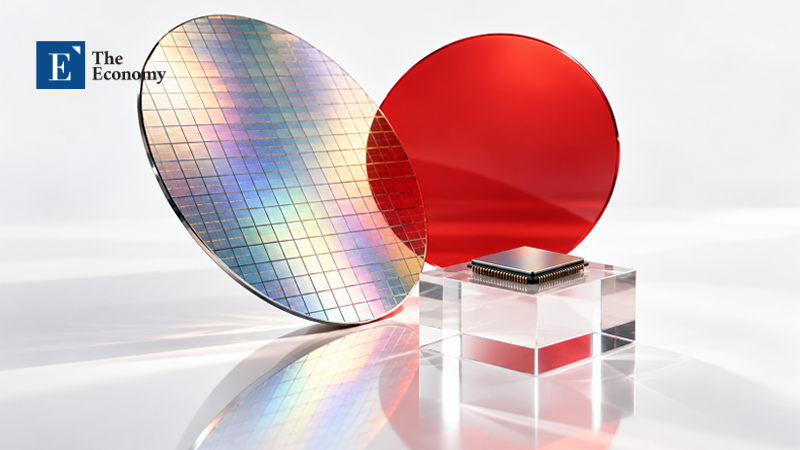
Japan’s Ministry of Economy, Trade and Industry will make an additional public equity investment in Rapidus, a state-backed foundry company. With the country’s once globally dominant semiconductor industry having lost its competitive edge, Japan is accelerating efforts to rebuild its advanced chip production base through massive fiscal support and private fundraising. Rapidus is expected to use the government investment to strengthen its equity base and secure loans from financial institutions, accelerating its push toward mass production using a 2-nanometer (nm, one billionth of a meter) process.
Rapidus to Receive Additional Government Funding
According to a Nikkei report on the 20th, Japan’s Ministry of Economy, Trade and Industry announced the previous day that it would seek a total equity investment of JPY 400 billion (approximately USD 2.58 billion) in Rapidus over fiscal 2027–2029. Having already included JPY 150 billion (approximately USD 966 million) in its preliminary budget request for fiscal 2027, the ministry plans to spend an additional JPY 150 billion in fiscal 2028 and JPY 100 billion (approximately USD 644 million) in fiscal 2029. The investments for fiscal 2027–2029 will be made through “industrial investment,” a mechanism that uses dividends from government-held shares and other funds to invest in private companies.
The additional equity investment is seen as a measure to support Rapidus’s private fundraising. Since securing large loans from financial institutions requires maintaining an equity ratio above a certain level, the strategy is to expand its capital base and strengthen its financial soundness through government investment. Rapidus is seeking to borrow a total of JPY 2 trillion (approximately USD 12.9 billion) from private financial institutions, including major banks, to finance production line construction and other needs. Last year, it secured nonbinding letters of intent from financial institutions for loans of that size and is currently negotiating to finalize the lending.
The Decline of Japan’s Semiconductor Industry
Behind the Japanese government’s all-out effort to nurture Rapidus lies the decline of its semiconductor industry, which once led the global market. As recently as the late 1980s, Japan wielded overwhelming influence, accounting for roughly 50% of the global semiconductor market. Japanese companies including NEC, Toshiba, Hitachi, Fujitsu and Mitsubishi Electric also dominated the global semiconductor revenue rankings, leveraging their ability to reliably mass-produce high-quality DRAM.
However, Japan’s semiconductor industry lost considerable ground as industry and market structures changed rapidly. First, a deteriorating external trade environment eroded Japanese companies’ competitiveness. As the rapid growth of Japanese semiconductor companies in the 1980s intensified trade friction with the United States, the two countries signed the U.S.–Japan Semiconductor Agreement in 1986 to prevent dumping and expand access to the Japanese market for foreign-made chips. Japanese semiconductor companies began facing pressure to raise export prices and open their domestic market to overseas competitors. In addition, the yen’s sharp appreciation following the 1985 Plaza Accord further weakened the price competitiveness of Japanese semiconductor exports, while the collapse of the bubble economy in the early 1990s constrained companies’ capacity to invest in production facilities.
Slow to Respond to Structural Changes
Japanese companies are also seen as having failed to keep pace with changes in the industry’s structure. Historically, Japan’s semiconductor industry adhered to a vertically integrated model in which everything from product design to manufacturing and final product production was handled within the same corporate group. By contrast, a horizontal division of labor spread rapidly in the United States and Taiwan, with fabless companies focusing on chip design and foundries handling contract manufacturing. In particular, while Taiwan’s TSMC attracted customers worldwide with its specialized foundry business model, Japanese companies remained tied to their existing production structure centered on integrated electronics manufacturers and failed to respond in time. Because decisions on major semiconductor investments had to take into account the financial condition of the entire group and the interests of other business divisions, there were limits to how quickly decisions could be made.
Shifts in semiconductor market demand also worked against Japanese companies. Memory chips were a key driver of industry growth in the 1980s, but as personal computers (PCs) and the internet became widespread from the 1990s onward, followed by the expansion of the smartphone market, logic chips used for high-performance computing, such as central processing units (CPUs) and systems on chips (SoCs), grew in importance. Japanese companies, however, failed to restructure their memory-focused businesses in time and were unable to capture this demand. Aggressive investment by South Korean semiconductor companies further eroded Japan’s market dominance. While Japanese companies scaled back investment because of the economic downturn and deteriorating profitability, South Korean manufacturers continued expanding production facilities, particularly for DRAM, significantly improving their cost competitiveness and market share.
Table 1. Factors Behind the Decline of Japan’s Semiconductor Industry
| Category | Key Details |
|---|---|
| Trade Pressure | The signing of the 1986 U.S.–Japan Semiconductor Agreement increased pressure for lower export prices and market opening |
| Strong Yen and Economic Downturn | Price competitiveness weakened after the Plaza Accord, while the collapse of the bubble economy curtailed investment in production facilities |
| Rigid Industry Structure | Adherence to vertical integration delayed the response to a division of labor centered on fabless companies and foundries |
| Failure to Respond to Changing Demand | Fell behind the expansion of the market for logic chips such as CPUs and SoCs |
| Rival Countries Catching Up | Market share declined as South Korean companies invested aggressively in DRAM production facilities |
Rapidus as a Vehicle for Rebuilding the Industry
These difficulties led to a succession of business exits and restructuring efforts among major semiconductor companies. Elpida Memory, established in 1999 by merging the DRAM businesses of NEC and Hitachi, went bankrupt in 2012 amid financial difficulties, while Toshiba completed the sale of its semiconductor business in 2018. Panasonic also agreed in 2019 to sell its semiconductor business to Taiwan’s Nuvoton Technology. As Japanese semiconductor companies’ presence in the global market gradually diminished, the Japanese government selected Rapidus as the “driving force” for rebuilding the country’s semiconductor industrial base. Rapidus was established in August 2022 with a total investment of JPY 7.3 billion (approximately USD 46.9 million) from eight major Japanese companies: Toyota Motor, Sony Group, NTT, SoftBank, NEC, Denso, Kioxia and MUFG Bank. Tetsuro Higashi, a former chairman of Tokyo Electron, serves as chairman of the board, while Atsuyoshi Koike, the former head of Western Digital’s Japanese operations, leads the business as chief executive officer (CEO).
The Japanese government has also provided substantial fiscal support to Rapidus. According to materials from Japan’s Ministry of Economy, Trade and Industry, the government allocated JPY 1.7 trillion (approximately USD 10.9 billion) in commissioned project funding through fiscal 2025 for Rapidus’s research and development and the establishment of its production base. This year, it also began strengthening the company’s capital base through direct equity investments. Following an investment of JPY 100 billion in February through the Information-technology Promotion Agency (IPA), which operates under the ministry, the government injected an additional JPY 150 billion in June, bringing its cumulative equity investment to JPY 250 billion (approximately USD 1.61 billion). In addition, 32 Japanese private companies, including NTT, Sony Group, Canon and SoftBank, invested a total of JPY 167.6 billion (approximately USD 1.08 billion) in February. As a result, Rapidus’s combined stated capital and capital reserves rose to JPY 424.95 billion (approximately USD 2.74 billion) as of June.
Plans for 2-Nanometer Mass Production Underway
Rapidus is currently accelerating the expansion of its production base and technology development, targeting mass production of advanced 2-nanometer chips in the second half of fiscal 2027. Through technological cooperation with IBM of the United States, it plans to secure cutting-edge logic chip manufacturing technology and enter the contract manufacturing market for high-performance chips used in artificial intelligence (AI), data centers and other applications. To this end, Rapidus built the “IIM-1” semiconductor manufacturing facility in Chitose, Hokkaido, and began operating a pilot production line in April last year. In July of the same year, it confirmed that 2-nanometer-class gate-all-around (GAA) transistors operated properly on 300 mm wafers. This year, it is focusing on improving yields by refining prototypes and reducing defect rates during production.
The company is also actively working to improve its price competitiveness. In July, CEO Koike said at a Japan Productivity Center event in Karuizawa, Nagano Prefecture, “We will price Rapidus’s 2-nanometer chips at a level similar to or slightly below that of Taiwan’s TSMC.” At the time, TSMC’s 2-nanometer wafers were expected to cost JPY 3 million–3.5 million each (approximately USD 19,307.69–USD 22,538), and Rapidus intended to use that as its pricing benchmark. Unlike TSMC, however, Rapidus has yet to sufficiently verify the yields and product reliability required for commercial mass production.
As one of the youngest members of the team, Tyler Hansbrough is a rising star in financial journalism. His fresh perspective and analytical approach bring a modern edge to business reporting. Whether he’s covering stock market trends or dissecting corporate earnings, his sharp insights resonate with the new generation of investors.
Similar Post