[AI and the Workforce] “Turning Thousands of Bankers into AI Developers”: Mizuho’s Transformation Experiment Risks Pushing Job Transitions Ahead of Systems Overhaul
[AI and the Workforce] “Turning Thousands of Bankers into AI Developers”: Mizuho’s Transformation Experiment Risks Pushing Job Transitions Ahead of Systems Overhaul

Matthew Reuter is a senior economic correspondent at The Economy, where he covers global financial markets, emerging technologies, and cross-border trade dynamics. With over a decade of experience reporting from major financial hubs—including London, New York, and Hong Kong—Matthew has developed a reputation for breaking complex economic stories into sharp, accessible narratives. Before joining The Economy, he worked at a leading European financial daily, where his investigative reporting on post-crisis banking reforms earned him recognition from the European Press Association. A graduate of the London School of Economics, Matthew holds dual degrees in economics and international relations. He is particularly interested in how data science and AI are reshaping market analysis and policymaking, often blending quantitative insights into his articles. Outside journalism, Matthew frequently moderates panels at global finance summits and guest lectures on financial journalism at top universities.
Authored On
Modified
Sales and clerical staff begin transitioning to development roles to ease labor shortages
Goal is to learn everything from coding to security validation within three months
AI training without systems and organizational reform could merely increase the verification burden
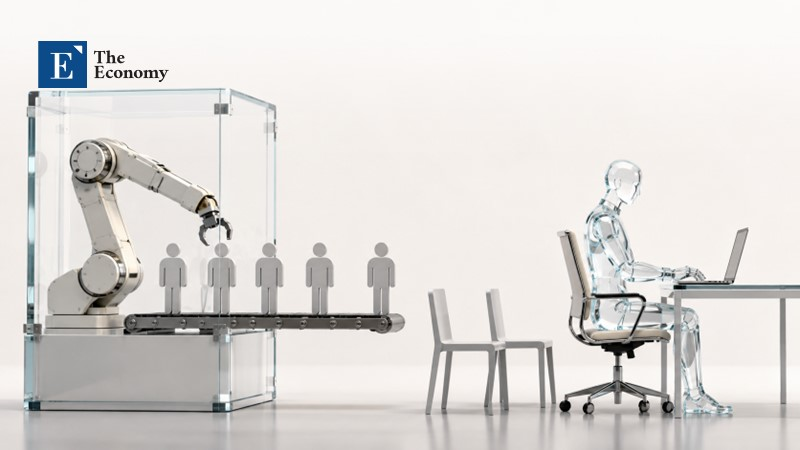
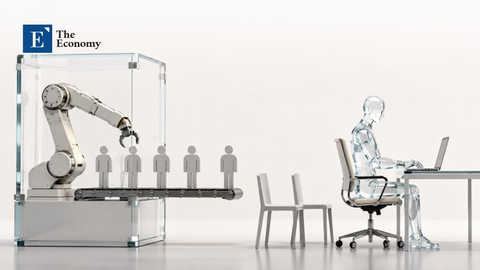
Mizuho Financial Group, Japan’s third-largest bank, has launched an experiment to retrain sales and clerical employees as artificial intelligence (AI) developers in response to labor shortages. It plans to use generative AI coding tools to shorten developer training to three months and expand the program starting in November. While the initiative aims to accelerate developer training with generative AI amid chronic hiring difficulties, substantial concerns remain about the effectiveness of short-term training and whether it can ensure sufficient expertise. If employees lack the ability to identify errors and security vulnerabilities in AI-generated code, they could merely increase the review burden on existing skilled staff. Observers say that companies seeking better results from AI need to overhaul their IT systems and departmental workflows while strengthening training tailored to practical workplace needs.
Sales and Clerical Staff Transition into Development Roles
According to a report in the Nihon Keizai Shimbun (Nikkei) on the 16th, Mizuho Financial Group will fully launch its “Mizuho AI Boot Camp” in November to train sales and clerical employees as AI developers. The idea is to teach development skills to employees familiar with financial operations so they can build the systems their workplaces need. Five employees, including four with no programming experience, participated in a pilot program held from June to August. All met the assessment criteria and moved into development roles in September. Mizuho has decided to increase the number of trainees to around 20 in November.
Coding assistance tools powered by generative AI made it possible to compress the training period to three months. Participants spend the first month intensively learning AI-assisted development methods, then gain hands-on experience on actual projects over the remaining two months. The program uses tools such as Codex and Claude Code, which generate or modify program code in response to natural-language instructions. Training also covers checking whether AI-generated code serves its intended business purpose and meets quality and security requirements. Mizuho said that combining foundational learning with on-the-job training has shortened the roughly year-and-a-half period normally required to train employees from non-development roles as developers.
Employees who have moved into development roles are applying the financial knowledge gained in their previous jobs to designing AI applications and reviewing their functions. To support this in-house development, Mizuho has established a dedicated organization called the “In-house Development Lab” and a shared development and operations platform called “Mizuho Wiz Base.” The aim is to accumulate technical expertise and know-how within the organization by directly developing programs that reflect workplace needs. Mizuho initially plans to train 100 AI application developers, then expand training to employees who will plan and develop AI agents tailored to each department’s work.
Such job transitions are continuing as AI becomes a determinant of corporate competitiveness while developers remain difficult to recruit. Japanese railway company JR East previously decided to shift around 5,000 employees, equivalent to 10% of its workforce, into development work in digital fields such as AI. Singaporean bank DBS also plans to cut around 4,000 positions, equivalent to 10% of its workforce, while adding around 1,000 AI-related staff. “AI adoption is reducing workloads while breaking down the boundaries between clerical and technical roles,” Nikkei reported. “Job responsibilities need to be redefined.”
AI Use Remains Limited at Japanese Companies
Chronic hiring difficulties are a major factor behind Japanese companies’ efforts to change how they deploy their existing workforce. In a survey by Japanese employment information provider Mynavi of 1,600 recruiters at companies that hired experienced workers in the first half of this year, 43.5% reported a shortage of permanent employees. More businesses are also shutting down because they cannot secure the staff they need in time. According to Teikoku Databank, there were 427 labor shortage-related bankruptcies last year resulting from employee departures, recruitment difficulties and rising labor costs, setting a record for the third consecutive year. Companies with fewer than 10 employees accounted for 77% of these cases, highlighting the vulnerability of small businesses that struggle to remain operational when even a few employees leave.
AI, which has attracted attention as a response to labor shortages, has yet to become firmly established across Japanese companies’ operations. In a Reuters-commissioned survey of 219 Japanese companies conducted by Nikkei Research from late July to early August, around 60% said they used AI in only some departments or for limited purposes. Another 24% had either not decided whether to adopt it or had not even begun considering it. Just 16% said they used AI company-wide as a core business tool. Some respondents used it only for document drafting even after a company-wide rollout, while others had yet to identify specific uses, indicating difficulties in applying AI to their operations.
Concerns About Errors and Reputation Encourage Caution on AI
Analysts say an organizational culture that avoids errors and prioritizes internal consensus contributes to these adoption delays. In a recent BBC interview, Parissa Haghirian, a professor of international management at Kyoto University of Advanced Science, said Japanese companies are cautious about using AI because they are sensitive to errors, uncertainty and reputational risks. The need to obtain agreement from multiple stakeholders when introducing new technology lengthens the time it takes to put it to practical use. Austin Hsu, co-founder of Kuse AI, which has entered the Japanese market, also noted that decision-making practices emphasizing procedures and consensus in some organizations slow adoption. Companies are particularly intolerant of AI mistakes in customer-facing work, he explained, and therefore seek sufficient evidence of reliability before adopting it.
Even after AI adoption, checking and correcting its output remains a burden for employees. In a survey of 1,851 small and medium-sized business owners and administrative staff released on the 9th by Japanese accounting software company Freee, 51.1% said they used AI at work at least once a week. Among AI users, 23.7% said preparation, checking and corrections required as much effort as the time saved, suggesting that repeated verification limits time-saving benefits. Among respondents with experience using AI, 37.7% also said they had not felt a reduction in administrative work such as accounting and labor administration. Asked for the biggest reason AI use was not advancing or delivering results, 19.5% of users cited the fact that human checking and corrections meant their workload had not decreased.
Table 1. Labor Shortages and AI Use at Japanese Companies
| Category | Key Points | Figures and Details |
|---|---|---|
| Shortage of permanent employees | Labor shortages persist even at companies recruiting experienced workers | 43.5% of 1,600 recruiters reported a shortage of permanent employees |
| Labor shortage-related bankruptcies | Employee departures, hiring difficulties and rising labor costs increase the burden of keeping businesses operating | 427 cases last year, a record for the third consecutive year Companies with fewer than 10 employees accounted for 77% |
| Limited AI use | Use concentrated in certain departments and limited applications | Around 60% of 219 companies responding to the Nikkei Research–Reuters survey |
| Undecided on AI adoption | Have not decided whether to adopt AI or have not begun considering it | 24% of 219 responding companies |
| Company-wide AI use | AI used company-wide as a core business tool | 16% of 219 responding companies Some companies limit AI to document drafting or are still exploring uses even after company-wide adoption |
| Organizational culture constraints | Concerns about errors, uncertainty and reputational damage | Particularly sensitive to mistakes in customer interactions Prefer to adopt AI after obtaining evidence of reliability |
| Decision-making delays | Emphasis on procedures and internal consensus | Securing agreement from multiple stakeholders delays practical implementation |
Fast-Track Developer Training Sidelines Verification of Expertise
These verification burdens raise substantial concerns about Mizuho’s short-term developer training plan as well. In particular, the burden of having people recheck AI-generated output could also hinder Mizuho’s transition of employees into development roles. Even if employees can write code with AI after three months of training, their ability to identify and correct errors must be verified separately. The initial results Mizuho disclosed consisted of five trainees passing assessments and changing roles; it did not indicate how much support they needed from existing specialists during actual development. Expanding the number of employees making this transition under such circumstances would likely leave skilled developers responsible for training and code reviews as well. In other words, developer headcount could grow while experienced developers face an even heavier workload.
Even people with coding experience may fail to accurately assess the security of AI-generated code. In a study released last month by researchers at institutions including Tufts University in the United States, 100 participants with experience using the C programming language who had passed a preliminary assessment were asked to select and modify AI-generated code. The researchers found no difference between the selection rates for the most secure and most vulnerable code, suggesting that participants did not adequately distinguish vulnerabilities. Many focused on whether the functionality worked or on the code’s formatting, and some judged code to be secure simply because it contained exception-handling statements. This means that vulnerabilities can go undetected even during human review if reviewers lack sufficient expertise.
The Limits of Coding Training Regardless of Job Role
Hyundai Card previously pursued an effort to change working practices by having employees learn coding. In 2017, Hyundai Card made four weeks of coding training mandatory for 300 team leaders and department heads at its affiliates and placed notices written in Python around its offices. It later included coding in new-employee orientation regardless of job role. The following year, it even converted in-house café menus and notices into coding formats to help employees become familiar with programming languages in everyday settings. Although the aim was to improve communication with developers, critics warned that this approach risked skewing training toward copying the outward form of code. Learning coding syntax alone, they argued, is not enough to develop the ability to analyze complex tasks and design procedures for solving them.
Experts agree that reducing these risks requires companies first to overhaul the IT systems and organizational operating structures needed to integrate AI into day-to-day work. In an analysis of a corporate survey released last year, McKinsey found that workflow redesign had the greatest influence among 25 factors related to generative AI’s contribution to earnings. Providing role-specific training so employees can use AI appropriately in their own work was also identified as a key implementation priority. Boston Consulting Group (BCG) likewise recommended reviewing the systems and data foundations needed for AI adoption and clearly separating the responsibilities of organizations managing shared technical infrastructure from those applying it to individual business functions. Employee training, experts say, should include practice in clearly defining workplace problems and interpreting AI output in the relevant business context.
Matthew Reuter is a senior economic correspondent at The Economy, where he covers global financial markets, emerging technologies, and cross-border trade dynamics. With over a decade of experience reporting from major financial hubs—including London, New York, and Hong Kong—Matthew has developed a reputation for breaking complex economic stories into sharp, accessible narratives. Before joining The Economy, he worked at a leading European financial daily, where his investigative reporting on post-crisis banking reforms earned him recognition from the European Press Association. A graduate of the London School of Economics, Matthew holds dual degrees in economics and international relations. He is particularly interested in how data science and AI are reshaping market analysis and policymaking, often blending quantitative insights into his articles. Outside journalism, Matthew frequently moderates panels at global finance summits and guest lectures on financial journalism at top universities.
Similar Post