BYD Plans to Employ 40,000 in Europe by 2030 as Local Expansion Raises Workforce Management Challenges Amid Labor Rights Controversies in Brazil and Hungary
BYD Plans to Employ 40,000 in Europe by 2030 as Local Expansion Raises Workforce Management Challenges Amid Labor Rights Controversies in Brazil and Hungary

As one of the youngest members of the team, Tyler Hansbrough is a rising star in financial journalism. His fresh perspective and analytical approach bring a modern edge to business reporting. Whether he’s covering stock market trends or dissecting corporate earnings, his sharp insights resonate with the new generation of investors.
Authored On
Modified
BYD seeks to expand its European workforce to more than 40,000 by 2030
Expansion of local production facilities and entry into auto financing expected to increase demand for workers
Labor rights controversies in Brazil and Hungary put compliance with European labor standards in focus
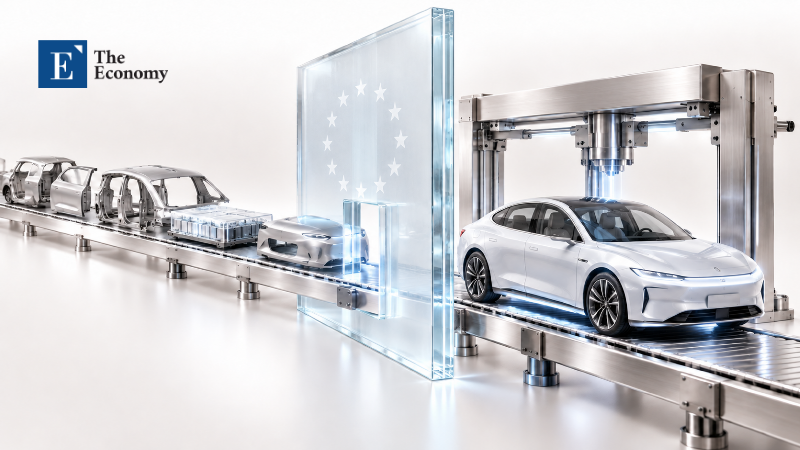
China’s largest electric vehicle manufacturer, BYD, has announced plans to sharply increase local employment in Europe. As it accelerates the expansion of its production facilities and operations in Europe, the company has outlined a medium- to long-term employment plan to meet future growth in demand for local workers. However, market observers say that, given previous controversies over labor rights violations during factory construction in countries including Brazil and Hungary, compliance with local labor standards and regulations could remain a factor affecting its European expansion.
BYD’s Plans to Expand Its European Workforce
According to a Bloomberg report on the 12th (all dates hereafter are local time), BYD Executive Vice President Stella Li, who oversees its overseas operations, told Bloomberg TV at the Paris Motor Show in France that day, “By 2030, our workforce in Europe will definitely exceed 40,000.” With BYD’s European workforce approaching 10,000, the plan amounts to roughly quadrupling local employment over the next four years. If realized, this would make BYD the largest employer among non-European automakers operating in Europe.
BYD’s plans to expand its European production facilities appear to underpin this employment strategy. Last month, Alfredo Altavilla, BYD’s special adviser for Europe, said at the opening of a new dealership for BYD’s premium brand Denza in Turin, Italy, “To achieve our target sales volumes while complying with European regulations, we need three vehicle assembly plants and one battery plant in Europe.” The aim is to secure additional production sites beyond its first European passenger car plant in Szeged, southern Hungary.
Considering Acquisitions of Local Factories
Altavilla also said that day that BYD was visiting automotive production facilities across Europe to identify acquisition targets. He explained that a key assessment criterion was the cost of converting a factory’s equipment after acquisition to make it suitable for producing BYD vehicles. Unlike some Chinese automakers that form joint ventures with European companies or share production lines, BYD prefers to buy existing factories outright and operate them independently. Its strategy is to reduce the time and cost of securing new factory sites and building production lines, while using existing equipment and logistics infrastructure to begin production sooner.
France and Spain are currently the leading candidates for new production sites. Altavilla said the two countries offered relatively favorable conditions for acquiring and converting factories. At the Paris Motor Show, Li also raised the possibility of securing two additional factories in Europe, naming France and Spain as leading candidates. Italy, by contrast, is effectively slipping out of contention. On the 14th, Italian Minister of Enterprises and Made in Italy Adolfo Urso told parliament, “Representatives of Chinese automakers, including BYD, visited several factories in Italy and held discussions with the government, but could not find suitable facilities.” He added, “Chinese companies want so-called ‘turnkey’ factories that can begin production immediately after acquisition, but Stellantis is not selling its existing Italian factories, so no properties meeting those conditions are available.”
Potential Demand for Finance Professionals
BYD’s auto financing business in Europe could also increase its demand for local workers. On the 13th, Bloomberg reported that BYD was considering launching its own auto financing business as early as next year to expand Denza’s European sales. With leasing and installment financing widely used to purchase vehicles in Europe’s premium car market, the company aims to compete not only on vehicle prices but also on monthly payments and financing terms. Established premium automakers such as BMW and Mercedes-Benz already provide a range of purchase support services through their own financial subsidiaries.
Operating these in-house financing products requires specialists across a range of fields. Denza entered the European market in April this year and therefore has limited data on used-car transaction prices and long-term residual values, making specialists who can assess the profitability and risks of financing products particularly important. Differences in financial regulations and consumer protection systems across European countries will also inevitably increase the need for local legal and regulatory compliance staff.
Table 1. BYD’s Plans to Expand Production and Operations in Europe
| Category | Key Details |
|---|---|
| Expansion of Production Sites | Seeking to add two vehicle assembly plants and one battery plant by acquiring and converting existing production facilities, with France and Spain under consideration as leading candidates |
| Entry into Auto Financing | Pursuing plans to operate an in-house leasing and installment financing business to expand Denza’s European sales |
Previous Labor Rights Disputes
Some observers, however, have raised concerns that BYD’s large-scale employment expansion may not proceed smoothly. Chinese-style long working hours and complex subcontracting arrangements have previously caused controversy in several countries. In December 2024, for example, Brazilian labor authorities inspected a BYD factory under construction in Camaçari, Bahia, and concluded that 163 Chinese workers were working in conditions effectively equivalent to slave labor. Employed by China’s Jinjiang Group, a BYD construction subcontractor, they worked hours exceeding the limits permitted under local labor law or worked seven days a week. Some workers lived with their passports held by their employer, while others had contracts under which most of their wages were remitted to China. Accommodation was also poor, with one documented case involving 31 workers sharing a house with a single bathroom.
Jinjiang Group categorically denied the allegations of labor exploitation, arguing that the controversy stemmed from cultural differences between China and Brazil and misunderstandings during interpretation. In particular, it claimed that 107 workers had voluntarily submitted their passports to obtain temporary Brazilian identity documents, but local authorities had interpreted this as forced confiscation. Despite these explanations, Brazilian labor prosecutors upheld their findings, put the number of affected workers at 220, and filed a damages lawsuit against BYD and two subcontractors in May last year. Late last year, the parties agreed to total compensation of BRL 40 million (approximately USD 8.18 million), with the subcontractors paying the compensation and BYD guaranteeing payment. The controversy resurfaced in April this year when Brazil’s Labor Ministry placed BYD on a list of companies that had subjected workers to conditions analogous to slavery. BYD challenged the listing in court that same month. The court suspended the listing pending a final ruling, saying there could be legal problems with the authorities’ decision to regard BYD as the actual employer of workers employed by subcontractors.
Controversy at the Hungarian Factory
Similar allegations of labor rights violations also emerged in Hungary. According to The Guardian, the U.S.-based labor rights organization China Labor Watch (CLW) alleged in May that Chinese migrant workers at BYD’s electric vehicle factory under construction in Szeged, southern Hungary, had faced long working hours, unpaid wages, and unfair employment practices. CLW conducted field investigations in October and November last year and interviewed 50 workers, then published its findings after further investigations early this year. Some workers told investigators that they worked up to 14 hours a day, seven days a week, without receiving proper overtime pay. Some subcontractors were also found to have withheld 20–30% of wages or delayed payment for up to three months, while requiring workers to cover visa, airfare, and job placement costs, making it harder for them to quit.
A complex subcontracting structure was identified as a root cause of these problems. The Chinese workers involved in factory construction included employees hired directly by BYD and workers recruited through the main construction contractor, multiple tiers of subcontractors, and labor agencies. Problems including delayed wage payments, opaque contract terms, and improper visa use were reportedly concentrated among subcontractor employees. Local authorities subsequently carried out a total of 47 employment and occupational safety inspections at the BYD factory construction site and imposed cumulative fines of HUF 139.2 million (approximately USD 443,308). They also temporarily halted work by 594 workers and the operation of 20 pieces of equipment after identifying safety problems. The fines were imposed mainly on construction subcontractors, while BYD’s local subsidiary also received warnings over certain labor and safety violations.
As one of the youngest members of the team, Tyler Hansbrough is a rising star in financial journalism. His fresh perspective and analytical approach bring a modern edge to business reporting. Whether he’s covering stock market trends or dissecting corporate earnings, his sharp insights resonate with the new generation of investors.
Similar Post