Did Trump’s Subsidy Review Cause the Semiconductor Price Surge? The Real Bottleneck Lies in Apple’s Supplier-Squeeze Practices

Anne-Marie Nicholson is a fearless reporter covering international markets and global economic shifts. With a background in international relations, she provides a nuanced perspective on trade policies, foreign investments, and macroeconomic developments. Quick-witted and always on the move, she delivers hard-hitting stories that connect the dots in an ever-changing global economy.
Authored On
Modified
AI Server Memory Concentration Deepens Amid Uncertainty Over Support for Samsung, SK
Bottlenecks Worsened by Downcycle Investment Cuts and Apple’s Supplier Squeeze
China-Made Memory Sourcing Push Draws Sharper Scrutiny of Apple
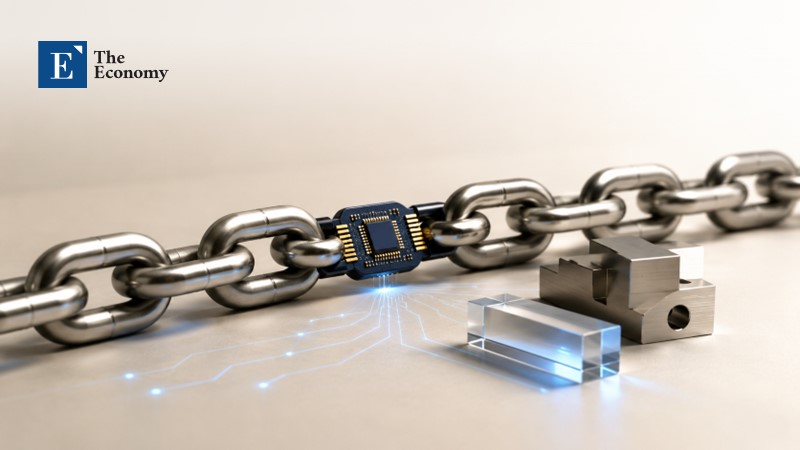
Criticism has emerged in U.S. political circles that a reassessment of the CHIPS Act has triggered memory shortages and rising electronics prices. The argument is that the Donald Trump administration undermined the predictability of subsidy disbursements, delaying the construction of manufacturing facilities in the United States. Yet the current shortage is the cumulative result of surging demand from artificial intelligence (AI) data centers, sweeping production cuts and investment reductions across the memory industry in 2023, and years of price pressure from device makers. Apple, in particular, has come under the spotlight in the debate over accountability for the shortage and the U.S. semiconductor strategy toward China, after pressuring suppliers’ profitability and investment capacity with its formidable purchasing power and then turning to Chinese memory as a sourcing option in response to soaring prices.
Rep. Ro Khanna: “Undermining Support for Samsung and SK Has Fueled Price Increases”
According to the Financial Times on July 27, Rep. Khanna criticized President Trump in a July 22 letter to Commerce Secretary Howard Lutnick, saying that reconsidering subsidies approved by the former Joe Biden administration to support Samsung Electronics and SK hynix in building semiconductor plants in the United States was “a major mistake.” The administration’s intervention in support already promised to Samsung Electronics and SK hynix has destabilized U.S. production expansion, with the resulting effects feeding into higher electronics prices.
Khanna urged the Commerce Department to disclose specifically which previously signed subsidy agreements, including those involving Samsung Electronics and SK hynix, could face delayed or suspended payments. Samsung Electronics, SK hynix and Micron were all approved for incentives to invest in U.S. manufacturing facilities under the CHIPS Act, enacted in 2022. The legislation includes a $49 billion subsidy program that makes phased payments as companies meet investment targets for individual projects. The United States has viewed investments by these companies as a central pillar in expanding its domestic semiconductor ecosystem.
President Trump, however, has criticized the CHIPS Act, arguing that tariffs rather than subsidies should be used to encourage companies to invest in the United States. Secretary Lutnick has also said the administration is reviewing existing subsidy agreements, citing the possibility that some incentives may have been overly generous. The memory industry, however, requires long lead times for equipment orders, cleanroom construction, process stabilization and customer qualification. Tariff pressure alone is unlikely to generate immediate capacity expansion, while weaker confidence in subsidy commitments inevitably clouds the prospects for recovering the investment required to establish U.S. manufacturing bases.
How AI Has Reshaped Memory Production Allocation
Above all, the immediate force driving memory prices higher has been the expansion of AI infrastructure by U.S. Big Tech companies. As generative AI inference services enter a phase of broad commercialization, competition to secure high-capacity server DRAM and enterprise solid-state drives (SSDs) has intensified. Data center operators have moved to secure volumes through long-term supply agreements, while memory manufacturers have prioritized production capacity for higher-margin server products and high-bandwidth memory (HBM).
HBM production expansion reduces the volume of commodity DRAM that can be manufactured from the same wafer capacity. With more demanding stacking yields, process stages and packaging requirements, HBM consumes far more production resources than conventional DRAM of equivalent capacity. As Samsung Electronics, SK hynix and Micron prioritize equipment capacity for higher-margin AI products, mobile DRAM, PC DRAM and consumer NAND have slipped down the supply hierarchy. Micron’s decision to discontinue its Crucial consumer-memory brand and concentrate its resources on serving data center customers directly illustrates this shift in production allocation.
Market research firm TrendForce forecasts that contract prices for commodity DRAM will rise 58% to 63% quarter on quarter in the second quarter of this year, while NAND flash contract prices are expected to increase 70% to 75%. As suppliers reorient their production portfolios toward HBM and server DRAM, volumes allocated to PCs, smartphones and consumer storage devices have contracted rapidly. AI demand has therefore lifted the pricing structure not only for advanced accelerators but across memory and storage products more broadly.
Table. Global Memory Supply Bottlenecks Triggered by Surging AI Demand
| Category | Core Development | Market Impact |
|---|---|---|
| Expanding AI demand | Intensifying competition for server DRAM and enterprise SSDs | Higher memory prices |
| Production-capacity reallocation | Priority allocation to HBM and server DRAM | Reduced supply of commodity DRAM and NAND |
| 2023 investment reductions | Production cuts and lower capital expenditure by the three major suppliers | Weaker near-term capacity-expansion capability |
| Contraction in the materials supply chain | Declining silicon wafer shipments and revenue | Delayed supply recovery |
The Aftermath of Massive Production Cuts
The severe oversupply that sent memory prices plunging in 2023 also contributed to today’s shortage. At the time, weak PC and smartphone sales combined with excess customer inventories to push DRAM and NAND prices down to levels that damaged manufacturers’ profitability. SK hynix posted an operating loss of approximately $2 billion in the second quarter of 2023 and maintained its plan to cut annual investment by at least 50% from the previous year. Samsung Electronics also expanded its reduction in wafer input for DDR4 products to roughly 30% in the fourth quarter of that year.
Micron’s revenue for fiscal 2023 likewise fell 49% year on year to $15.5 billion. The company subsequently reduced DRAM and NAND wafer input by roughly 30% from its 2022 peak, restraining both capital expenditure and supply to support a market recovery. During this process, some production equipment was redeployed for advanced-node transitions, reducing overall wafer-production capacity. Conditions making it difficult to restore previous production levels quickly were thus established well before the industry recovered. The materials supply chain was also hit by the same downturn. According to SEMI, global silicon wafer shipments fell another 2.7% in 2024 following the adjustment that began in 2023, while revenue declined 6.5%.
Apple’s Supplier Squeeze Helped Create an AI-Era Supply Gap
The broader memory supply chain’s investment cuts reflected not only the industry downturn but also price-reduction pressure from major customers. As smartphone and PC demand weakened, device makers used their purchasing scale and competition among suppliers to demand lower prices. Manufacturers cut capital expenditure as they sought to balance volume retention against profitability protection, and those conservative decisions later returned as a supply gap once AI demand surged.
Micron brought these accumulated tensions into public view. Last month, Micron Chief Business Officer Sumit Sadana told The Wall Street Journal that “some major customers demanded very aggressive pricing in 2023, and the low prices and weak profitability at the time led to reduced investment across the industry.” Although he did not identify any specific customer, the market has interpreted the remark as referring to Apple, which has exercised formidable purchasing power for years. The criticism is that Apple used large order volumes to foster unlimited competition among suppliers and drive margins to extreme lows, ultimately leaving semiconductor manufacturers without the financial capacity to invest for the future.
Apple, at the apex of the global industrial value chain, has in fact long been regarded as a particularly demanding buyer among component suppliers. In 2010, when Apple was the dominant force in the global mobile and IT markets, it used overwhelming purchasing power to induce key suppliers—including Samsung Electronics, SK hynix and Micron—to accept large advance orders on terms heavily tilted in its favor. When Apple’s actual purchases subsequently fell short of expectations, however, DRAM prices, which had reached a peak in the first half of that year, collapsed by more than 40% in a matter of months. The result was a severe deterioration in profitability across the memory industry. It also became a decisive factor in the eventual bankruptcy of Elpida, then Japan’s last remaining DRAM manufacturer.
Suppliers have since changed their approach. Micron said it signed 16 strategic customer agreements last month, applying take-or-pay provisions that generally require purchases of specified volumes over five years. The contracts cover roughly 20% of the company’s future DRAM output and one-third of its NAND output. Fourteen of the agreements carry minimum contract values totaling $100 billion, while cash deposits and related financing commitments amount to $22 billion. This new contractual order—requiring customers seeking supply guarantees to commit to long-term purchases and financial obligations—demonstrates that the short-term negotiating leverage Apple has historically wielded is weakening.
Apple’s China Memory Gambit Collides With U.S. Supply-Chain Strategy
With its pricing leverage diminished, Apple has turned to Chinese suppliers. To ease cost pressure, Apple has begun testing DRAM from China’s ChangXin Memory Technologies (CXMT) for devices sold in China, while Chief Executive Tim Cook has asked President Trump, Secretary Lutnick and others to permit the use of Chinese-made memory. Apple has recently been reported to have proposed incorporating products from CXMT and Yangtze Memory Technologies Co. (YMTC) into devices sold outside the United States as well. CXMT is included on the U.S. Department of Defense’s list of Chinese military companies but is not on the Commerce Department’s export-control list. YMTC is subject to Commerce Department export-control restrictions.
Congress immediately moved to block the effort on a bipartisan basis. In a July 14 letter to the Commerce Department, House Select Committee on the Chinese Communist Party Chairman John Moolenaar and Rep. George Whitesides called for CXMT to be added to the export-control list and for U.S. companies’ purchases of CXMT and YMTC memory to be restricted. Their concern is that if Chinese government-backed companies use the supply shortage to enter U.S. and allied markets, Western memory makers may lose investment resources and future dependence on China could deepen.
CXMT is also unlikely to serve as the low-cost, high-volume supplier Apple is seeking. The company has already established a large-scale production system and expanded independently under Chinese government support. CXMT has grown into the world’s fourth-largest DRAM supplier, accounting for roughly 11% of global DRAM production capacity, but a substantial share of that existing capacity has already been brought to market and newly added production lines require time to stabilize yields. Demand from Chinese AI companies and smartphone makers is also rising rapidly, limiting the likelihood that even additional volumes secured by Apple could meaningfully alleviate the global supply shortage.
An industry source said, “Apple is advancing the argument that it is a victim of soaring memory prices, but it will be difficult for the company to avoid questions of responsibility if its past procurement practices—which constrained suppliers’ capacity to invest—are also brought into public discussion.” The source added, “Its decision to use Chinese memory as a bargaining chip also conflicts with Washington’s strategy of limiting China’s role in semiconductor supply chains, meaning criticism from Congress and the industry is likely to spread to Apple’s broader purchasing strategy.”
Anne-Marie Nicholson is a fearless reporter covering international markets and global economic shifts. With a background in international relations, she provides a nuanced perspective on trade policies, foreign investments, and macroeconomic developments. Quick-witted and always on the move, she delivers hard-hitting stories that connect the dots in an ever-changing global economy.
Similar Post