“Cheap Crude Had Kept Costs in Check” — Iran War Sends China’s Production Costs Soaring, Pushing Deflation Exit Further Out of Reach

Anne-Marie Nicholson is a fearless reporter covering international markets and global economic shifts. With a background in international relations, she provides a nuanced perspective on trade policies, foreign investments, and macroeconomic developments. Quick-witted and always on the move, she delivers hard-hitting stories that connect the dots in an ever-changing global economy.
Authored On
Modified
Iran War disrupts supplies of discounted Russian and Iranian crude
China’s PPI rises 3.8% as energy and commodity costs surge
Weak domestic demand hampers pass-through of higher production costs

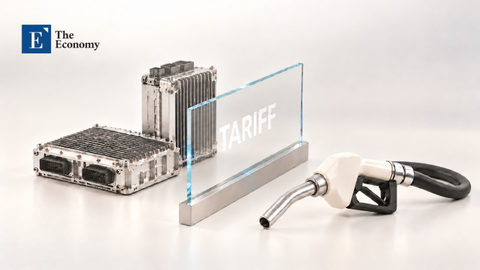
The Iran War is upending China’s “low-cost production formula.” China had preserved its export competitiveness by combining discounted Russian and Iranian crude with vast production capacity, but the paralysis of the Strait of Hormuz and mounting US sanctions pressure have sent input costs soaring. Despite the sharp rise in producer prices, the recovery in consumer prices remains sluggish, leaving the benefits of the price rebound confined to upstream industries. With local government debt and an export-dependent growth model impeding cost pass-through, concerns are mounting that commodity-driven inflation could instead erode corporate profits and household purchasing power, further intensifying deflation.
China’s Producer Prices Rise 3.8% in August, Exceeding Market Forecast
According to China’s National Bureau of Statistics on the 10th, the country’s Producer Price Index (PPI) rose 3.8% year-on-year in August. The figure was below the 4.1% increase recorded in June, which marked a 47-month high, but above July’s 3.5% gain. It also exceeded the 3.6% increase forecast in a Reuters poll. China’s monthly PPI growth had remained negative for more than three years since October 2022, during the COVID-19 pandemic, before the 41-month run of declines ended with a 0.5% increase in March this year.
By industry, price increases were especially pronounced across the energy and raw-material sectors, including coal mining, washing and beneficiation (+26.6%), nonferrous metal smelting and rolling (+20.8%), petroleum and coal-fuel processing (+11.1%), and oil and natural gas extraction (+10.5%). Prices also continued to rise in electrical machinery and equipment manufacturing (+5.9%) and computer, communications and other electronic-equipment manufacturing (+5.3%). By contrast, electricity and heat production and supply, automobile manufacturing, nonmetallic mineral manufacturing, pharmaceutical manufacturing, and liquor, beverage and refined-tea manufacturing recorded year-on-year price declines ranging from 1.7% to 5.3%. Over the same period, the Consumer Price Index (CPI) rose 0.8% from a year earlier, in line with market expectations. The increase accelerated from 0.5% in July. Core CPI, which excludes food and energy, also edged up to 1.0% from 0.9% in July.
Iran War Supply Shock Intensifies Inflationary Pressure
The principal factor driving August prices higher was a commodity supply shock stemming from the Iran War. International crude prices, which had briefly stabilized during a temporary ceasefire in early July, are once again threatening the $100-per-barrel threshold after the United States and Iran resumed retaliatory airstrikes and commercial shipping through the Strait of Hormuz—the Persian Gulf’s principal maritime artery—ground to a complete halt. Dong Lijuan, chief statistician at the National Bureau of Statistics, said in an official briefing that “sharp increases in international crude-oil and nonferrous-metal prices directly drove up costs in related domestic manufacturing sectors.”
Detailed statistics from the National Bureau of Statistics show that prices in coal mining and washing surged 26.6% year-on-year in August, while those in nonferrous metal smelting and rolling soared 20.8%. Prices in oil and natural gas extraction also jumped 10.5%, sharply lifting upstream costs across the manufacturing supply chain. Lynn Song, chief economist for Greater China at ING, said that “the surge in raw-material input costs is supporting reflation in the Chinese economy,” but cautioned that “a closer look at the data reveals a pronounced sectoral divergence—a K-shaped split—in which only upstream industries benefiting from higher commodity prices are prospering, while downstream consumer-goods producers remain mired in weak demand.”
China’s “Cheap Crude” Formula Falters
China has long imported discounted crude from Russia and Iran, whose access to international markets has been constrained by sanctions, and combined it with relatively low labor costs and vast production capacity. Columbia University’s Center on Global Energy Policy (CGEP) estimated that more than 22% of China’s crude imports last year may have consisted of sanctioned oil from Russia, Iran and Venezuela. Iranian crude accounted for 1.38 million barrels per day, while Iranian light crude was priced $8–$10 per barrel below comparable Omani grades. Cheap inputs and economies of scale served as a buffer that lowered the production cost of Chinese goods and sustained export competitiveness despite sluggish domestic demand.
The Iran War, however, has overturned those cost calculations. According to provisional figures compiled by Reuters using data from ship-tracking firm Kpler, China’s imports of Iranian crude plunged from an average of 1.4 million barrels per day last year to 534,000 barrels per day last month. Some grades of Iranian light crude, which had traded at a discount of approximately $3 per barrel to Brent as recently as a month earlier, carried a premium of approximately $2 per barrel in late August. Even the discount on Russia’s East Siberia–Pacific Ocean (ESPO) crude, a key substitute, narrowed from $10 per barrel before the war to just $1–$2 for September-loading cargoes. As the Donald Trump administration intensified pressure on major Russian oil companies, Iran’s shipping and port networks, and Chinese refiners purchasing Iranian crude, the price advantage of sanctioned oil flowing into China also diminished.
Table 1. Transmission of Commodity Price Increases to Chinese Inflation Since the Iran War
| Category | Key Change | Impact on Companies and Households | Impact on Inflation and Economic Activity |
|---|---|---|---|
| Initial Expectations | 8.4% rise in the CSI Energy Sub-Index, cost pass-through by chemical companies, and implementation of the “anti-involution” policy | Expectations of improved corporate earnings and share prices following a rebound in producer prices | Prospect of escaping deflation as higher prices spread to finished goods, services, wages and consumption |
| Upstream Industries | Higher selling prices concentrated in oil, coal and nonferrous metals | Improved revenue and profitability for raw-material suppliers | Benefits of the price rebound concentrated in upstream industries |
| Downstream Industries | Higher commodity prices and National Development and Reform Commission (NDRC) restrictions on fuel-price increases | Greater cost burdens and weaker profitability for refiners, transportation companies and consumer-goods producers | Contraction in capital investment, production, new hiring and wage increases |
| Households and Domestic Demand | Weaker household purchasing power amid employment and income insecurity | Lower consumption and intensified inventory liquidation and discount competition among companies | Falling consumer-goods prices and greater deflationary pressure |
| Policy Burden | Persistent weakness in domestic demand despite rising producer prices | Upstream price increases passed on as additional burdens for downstream companies and households | Emergence of a vicious cycle combining rising costs with contracting demand |
Hopes of Escaping Deflation Fade
During the early stages of the Iran War, the prevailing view was that commodity-driven inflation could serve as a catalyst for ending China’s protracted deflation. After the outbreak of the war pushed the CSI Energy Sub-Index up 8.4% and prompted some chemical companies to pass higher costs on to product prices, expectations spread that rising oil prices and Beijing’s “anti-involution” policy would return the PPI to positive territory and lift both corporate earnings and share prices. The premise was that the rebound in producer prices would successively spread to finished goods and services, and then to wages and consumption.
As time passed, however, the price rebound became increasingly concentrated in upstream industries such as oil, coal and nonferrous metals. Raw-material suppliers benefited from higher selling prices, but downstream manufacturers purchasing those materials were left to absorb the full increase in input costs. China’s National Development and Reform Commission (NDRC) also limited increases in domestic fuel prices to ease the burden on households, adding to the costs that refiners, transportation companies and consumer-goods producers were required to absorb. With domestic demand showing little sign of recovery, raising product prices would force companies to accept lower sales volumes, sharply narrowing the scope for higher producer prices to translate into corporate profits and household incomes.
If household incomes stagnate while production costs rise, deflationary pressure could instead intensify. Companies unable to pass higher costs fully on to product prices are likely to cut capital expenditure and production to preserve profitability, while remaining reluctant to expand hiring or raise wages. The resulting increase in employment and income insecurity would prompt households to reduce spending further, forcing downstream companies confronting weak sales back into aggressive discounting to clear inventories. Inflation originating in upstream industries could thus develop into a vicious cycle that weakens both corporate profitability and household purchasing power while driving consumer-goods prices lower. Chinese policymakers now face a difficult environment in which producer prices are rising even as domestic demand remains moribund.
Debt and Export Dependence Obstruct China’s Cost Pass-Through
The current divergence between producer and consumer prices does not depart significantly from the trajectory initially expected. Commodity price shocks are typically reflected first in producer prices after one or two quarters, while their transmission to consumer prices takes two or three quarters. Given that only about six months have passed since the Iran War began and that China has endured severe deflation for an extended period, a comparatively delayed response in consumer prices is entirely foreseeable.
Nevertheless, it would be difficult to assume that higher producer prices will pass smoothly through to consumer prices. The first constraint on cost pass-through is the accumulated deterioration in public finances. Revenue from land-use-right sales has declined amid the property downturn, while the principal and interest repayment burden of local government financing vehicles (LGFVs) has continued to mount, constraining the capacity of local governments to stimulate consumption. The International Monetary Fund (IMF) has warned that the prolonged property-sector downturn and debt burden spreading to local governments are sustaining weak domestic demand and deflationary pressure, while policy responses to date have been insufficient relative to the scale of the crisis. If fiscal policy cannot adequately support household incomes and the social safety net, consumption will struggle to recover and corporate pricing power will inevitably remain weak.
Anne-Marie Nicholson is a fearless reporter covering international markets and global economic shifts. With a background in international relations, she provides a nuanced perspective on trade policies, foreign investments, and macroeconomic developments. Quick-witted and always on the move, she delivers hard-hitting stories that connect the dots in an ever-changing global economy.
Similar Post