“Domestic Sourcing for Key Components, Too”: China’s EV Push Encroaches on Korean, German and Japanese Parts Supply Chains

Siobhán Delaney is a Dublin-based writer for The Economy, focusing on culture, education, and international affairs. With a background in media and communication from University College Dublin, she contributes to cross-regional coverage and translation-based commentary. Her work emphasizes clarity and balance, especially in contexts shaped by cultural difference and policy translation.
Authored On
Modified
Wider adoption of Chinese components reshapes global procurement networks
Orders for established suppliers shift to Chinese companies
Korean, German and Japanese auto industries face pressure on both sales and supply contracts
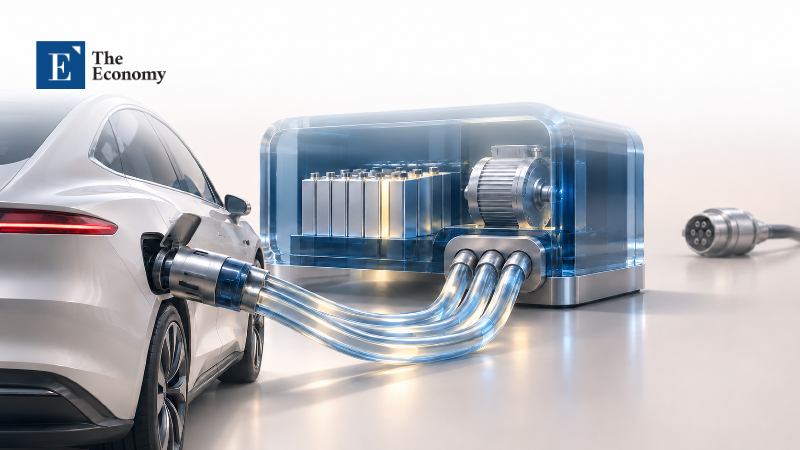
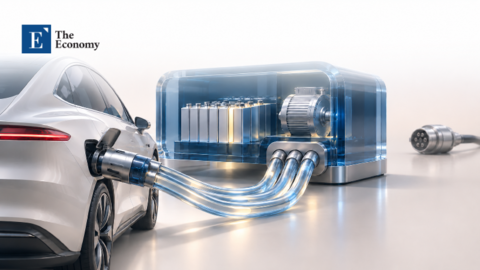
China’s electric vehicle offensive is shaking up the global automotive parts supply chain. Chinese companies that have grown with government guidance encouraging the use of domestic components and tax support are acquiring European parts makers and becoming key suppliers to Japanese automakers, taking work away from established suppliers. In particular, a clear trend has emerged in which vehicle brands remain unchanged while the sourcing of their internal components and technology shifts to China. Automotive export powerhouses such as South Korea, Germany and Japan now face not only sales competition from Chinese EVs but also the erosion of the parts supply chains that have underpinned their domestic auto industries.
Chinese-Made Vehicles Account for 83% of EV Imports, Threatening Work for Korean Parts Makers
At a supply chain policy seminar held by Korea University’s Institute for Future Growth on the 3rd, concerns were raised that expanding market share for Chinese-made EVs and a weakening domestic production base could affect the employment of 410,000 workers in South Korea’s automotive parts industry. Cho Chul, a specially appointed professor at the institute who presented at the event, said Chinese-made EVs accounted for 51.2% of markets outside China in the first half of this year, more than five times their 9.2% share in 2021, five years earlier. In South Korea, Chinese-made vehicles accounted for 83.1% of EV imports from January through July this year, roughly quadrupling from 21.1% in 2023. As vehicles produced in China absorb more domestic demand, parts suppliers linked to South Korean auto plants face growing pressure to secure work.
Concerns about the employment impact stem from the domestic parts industry’s heavy dependence on internal combustion engines. Internal combustion engine-related components account for 37.3% of businesses in South Korea’s automotive parts industry and 39.1% of its production value, while the share of related companies reaches 77.6% when second- and third-tier suppliers are included. If the spread of Chinese-made EVs weakens South Korea’s internal combustion vehicle production base, pressure from declining orders will extend from first-tier suppliers that deliver directly to automakers to lower-tier suppliers handling materials and processing. If domestic automakers also accelerate their transition to EVs, companies that have sustained revenue with conventional engine components will face both shrinking demand for their main products and the burden of converting production facilities. The projected employment impact on 410,000 workers reflects the nature of supply chains, through which changes in vehicle production ripple across multiple tiers of suppliers.
China-Centered Procurement Networks, From Finished Vehicles to Key Components
Another factor making it difficult for South Korean parts suppliers to secure new markets is the Chinese government’s drive to build an EV powerhouse. Its strategy combines expanding vehicle production with reorganizing the development and procurement of key components around domestic companies. China’s automotive semiconductor localization target has risen to the point of using entirely self-developed and domestically produced chips by 2027. The target is reportedly a nonbinding policy guideline, and Chinese authorities have encouraged major automakers, including SAIC, FAW, GAC and BYD, to increase their use of Chinese-made semiconductors. GAC and others have also begun testing the performance of domestic alternatives with Chinese chipmakers, including SMIC. By securing automakers as initial customers, this approach links component development with installation in actual vehicles, raising barriers for South Korean parts makers seeking entry into Chinese companies’ procurement networks.
The Chinese government is also developing testing, certification and technical standards to support the adoption of domestic components. An automotive standardization work plan released early this year by China’s Ministry of Industry and Information Technology included the development of automotive semiconductor standards and criteria for battery safety, charging systems and all-solid-state batteries. It also identified testing and security requirements for artificial intelligence (AI) models used in autonomous driving, along with guidelines for large-scale automotive models, as key priorities. The aim is to establish national verification procedures needed to move components from development to installation in finished vehicles. Because automotive semiconductors must demonstrate safety and long-term supply reliability before they can be supplied, a shared verification framework helps lower market-entry costs for emerging Chinese parts makers. The combination of domestic-sourcing guidance and testing and certification systems is seen as creating conditions that encourage Chinese automakers to choose domestic suppliers.
Chinese EV Subsidies Fuel Expansion of Parts Supply Chains
Long-running support for EV demand has underpinned the production scale needed to localize components. The U.S.-based Center for Strategic and International Studies (CSIS) analyzed China’s support for its EV industry in five categories—purchase subsidies, vehicle purchase tax exemptions, charging infrastructure, research and development (R&D), and public procurement—and concluded that purchase subsidies and tax relief accounted for most of the support. Fiscal assistance has thus been concentrated on increasing sales by reducing consumers’ vehicle purchase costs. The International Energy Agency’s (IEA) Global EV Outlook 2026 also found that purchase tax exemptions accounted for more than 90% of Chinese government support for consumers last year. Starting this year, the program has been adjusted to a 50% purchase tax reduction, with benefits continuing through the end of 2027. When tax support increases vehicle sales, automakers place more orders for batteries and electronic components, allowing suppliers to increase output and lower fixed costs per unit. Combined with wider adoption of domestic components, this further concentrates the additional orders generated by demand support among Chinese suppliers.
Having nurtured its domestic supply chain through demand support, China has also tightened controls on overseas transfers of its accumulated manufacturing technology. In July last year, China’s Ministry of Commerce and Ministry of Science and Technology revised the list of technologies prohibited or restricted from export, adding manufacturing technology for battery cathode materials, including lithium iron phosphate (LFP), to the restricted category. Technology for producing lithium carbonate from lithium ore was also brought under control, requiring official approval to transfer battery-material manufacturing and processing technology overseas. As a result, foreign companies seeking to establish local production facilities using Chinese technology must navigate export licensing procedures in addition to contract negotiations. Delays in acquiring technology could disrupt production-process development and mass-production schedules, potentially postponing plans to reduce reliance on Chinese materials. Expert analysis reported by The Wall Street Journal (WSJ) also characterized the measures as a means of preserving China’s technological edge and making it harder for overseas competitors to catch up.
Table 1. China’s Support for EV Demand and Controls on Battery Technology Exports
| Category | Key Items | Details |
|---|---|---|
| Support for EV demand | Support framework | Purchase subsidies, purchase tax exemptions, charging infrastructure, research and development, and public procurement Support centered on purchase subsidies and tax relief |
| Share of purchase tax exemptions | More than 90% of government support for consumers in 2025 | |
| Adjustment of tax support | 50% purchase tax reduction starting in 2026 Benefits maintained through the end of 2027 | |
| Supply chain expansion effects | Increased orders for batteries and electronic components as vehicle sales rise Higher production volumes create room to reduce fixed costs per unit Wider adoption of domestic components concentrates orders among Chinese suppliers | |
| Technology export controls | Expansion of restricted technologies | List of technologies prohibited or restricted from export revised in July 2025 Addition of manufacturing technology for battery cathode materials, including LFP, and technology for producing lithium carbonate from lithium ore |
| Overseas transfer procedures | Official approval required for overseas transfers of controlled technologies Foreign technology adopters face the burden of contract negotiations and export licensing procedures | |
| Impact on overseas competitors | Delays in acquiring technology could disrupt process development and mass-production schedules Delays in reducing dependence on Chinese materials and preservation of China’s technological edge |
Even Europe, the Birthplace of the Auto Industry, Falls Within China’s Supply Chain Reach
China’s grip on supply chains is becoming a reality even in Europe, the birthplace of the automotive industry. Chinese companies have already penetrated deeply into European automakers’ procurement networks by acquiring local parts suppliers. According to Rhodium Group, a U.S. economic and policy research firm, Chinese companies have invested in more than 130 automotive parts suppliers in European countries, including Germany and France, since the mid-2000s. A prominent example is Chinese electronic components maker Luxshare’s acquisition last year of German automotive cable maker Leoni. Buying established parts makers provides production facilities and technical personnel while also transferring existing supply relationships with European automakers. This reduces the time and cost a new supplier would otherwise need to find customers and build a supply track record. As more European parts makers face financial difficulties from the cost of the EV transition and weak sales, opportunities for Chinese investors to acquire established business networks are also seen as expanding.
Efforts are also taking shape to establish supply relationships between Chinese companies locally in Europe by building battery and vehicle production facilities together. Multinational automaker Stellantis and Chinese battery company CATL have established an equally owned joint venture in Zaragoza, Spain, and are building an LFP battery plant with annual capacity of up to 50 gigawatt-hours (GWh), targeting the start of production at the end of this year. A module production base was added when Leapmotor International, a joint venture between Stellantis and China’s Leapmotor, opened a battery assembly facility in nearby Mallén in June. Initial supply volume is approximately 65,000 units, with space secured to expand production to as many as 100,000 units in the future.
Production workers have also been deployed to apply manufacturing experience from Chinese factories locally. Spanish workers receive training at battery facilities in China before working alongside Chinese employees at the local assembly facility. This approach secures the personnel and technology needed to operate production processes as facilities are established. A schedule has also been set for vehicle assembly linked to the battery production network. Leapmotor plans to assemble its B10 electric sport utility vehicle (SUV) at a Stellantis plant in the same region of Aragon at the end of this year. CATL’s battery cell plant is likewise targeting a year-end production launch, bringing cell manufacturing, module assembly and vehicle production sites into place in the same region in succession.
Japan’s Parts Industry Also Loses Ground as Chinese Supply Chains Expand
Japan is no exception. Affiliated parts makers that have supported Japanese automakers’ sales are being displaced by Chinese supply chains. An analysis by Nikkei Xtech estimated that locally sourced components account for 90% of Toyota’s bZ3X EV for the Chinese market. It also found that established Toyota-affiliated suppliers had lost supply contracts as the Chinese joint venture led development and adopted a large number of local suppliers. As automakers cut prices in the Chinese market, orders once awarded to long-standing partners have shifted to local companies. The adoption of Chinese technology also appears to be expanding into core vehicle systems. According to Nikkei, Honda has announced plans to use a chassis developed by a Chinese company, while Toyota has incorporated Huawei technology into its bZ7 EV. Because the chassis determines a vehicle’s basic structure and driving performance, this means Chinese companies are becoming major suppliers in new vehicle development.
Pressure to adopt Chinese-made components has reached into the internal procurement networks of Japan’s first-tier suppliers. An internal Honda document reviewed by Reuters in September asked suppliers to increase their own use of Chinese-made parts. Honda set a target of cutting costs by 30% in three areas—stamped and forged parts, electronic components, and parts related to software-defined vehicles—and communicated individual savings targets to suppliers. It reportedly also considered increasing direct procurement from Chinese suppliers. Japanese suppliers must lower their supply prices to retain existing contracts, increasing their incentive to replace components from their lower-tier suppliers with Chinese alternatives. This opens routes for Chinese suppliers through both automakers’ direct purchases and their suppliers’ purchases of lower-tier components. Even if Japanese companies continue delivering the final components, changes in the sourcing of the materials and processed parts inside them reduce the work available to existing small and midsize suppliers.
Siobhán Delaney is a Dublin-based writer for The Economy, focusing on culture, education, and international affairs. With a background in media and communication from University College Dublin, she contributes to cross-regional coverage and translation-based commentary. Her work emphasizes clarity and balance, especially in contexts shaped by cultural difference and policy translation.
Similar Post