“From AI Chips to Security Robots”: Is SoftBank Seeking to Maximize Corporate Value by Expanding Its Value Chain Amid the U.S. Industrial Automation Boom?
“From AI Chips to Security Robots”: Is SoftBank Seeking to Maximize Corporate Value by Expanding Its Value Chain Amid the U.S. Industrial Automation Boom?

Oliver Griffin is a policy and tech reporter at The Economy, focusing on the intersection of artificial intelligence, government regulation, and macroeconomic strategy. Based in Dublin, Oliver has reported extensively on European Union policy shifts and their ripple effects across global markets. Prior to joining The Economy, he covered technology policy for an international think tank, producing research cited by major institutions, including the OECD and IMF. Oliver studied political economy at Trinity College Dublin and later completed a master’s in data journalism at Columbia University. His reporting blends field interviews with rigorous statistical analysis, offering readers a nuanced understanding of how policy decisions shape industries and everyday lives. Beyond his newsroom work, Oliver contributes op-eds on ethics in AI and has been a guest commentator on BBC World and CNBC Europe.
Authored On
Modified
SoftBank considers acquiring Allied Universal, the largest U.S. security company
Expanding its AI value chain across semiconductors, data centers and power infrastructure
Accelerating automation across U.S. industry raises hopes for synergies with existing investments
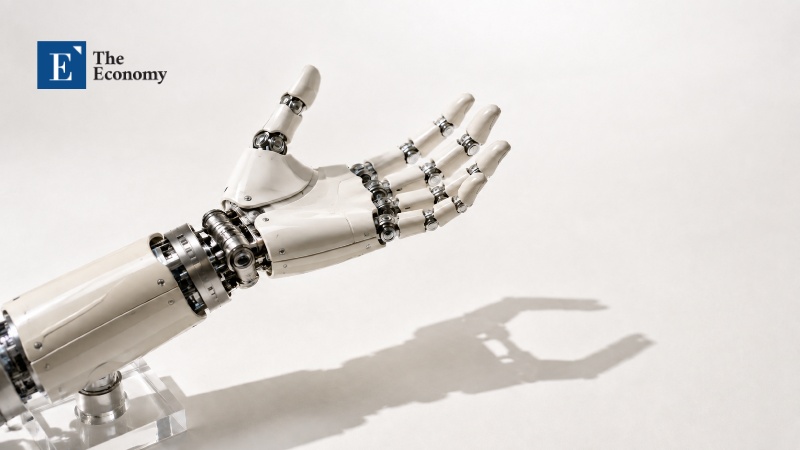
Japan’s SoftBank Group is considering acquiring Allied Universal, the largest private security company in the United States. As automation using artificial intelligence (AI) and robots gains momentum across U.S. industry, the move is seen as an effort to broaden the commercialization of AI technology by connecting its existing semiconductor, data center and robotics assets with frontline security services. Market observers say that if the acquisition goes through and a system for automating security work is established, it could provide an opportunity to increase corporate value across SoftBank’s AI value chain.
SoftBank Eyes U.S. Security Company
Bloomberg reported on the 17th, local time, that SoftBank was considering acquiring Allied Universal. Allied Universal is a privately held company that supplies security personnel to businesses, commercial properties and public facilities in the United States and other countries around the world. Its major shareholders currently include U.S. private equity firm Warburg Pincus and Canadian pension investment manager La Caisse.
According to market sources, the equity value being discussed for Allied Universal in the transaction is as high as USD 18 billion (approximately USD 18.5 billion). Including the company’s USD 12 billion (approximately USD 12.3 billion) in debt, such as loans and corporate bonds, its total enterprise value is estimated to approach USD 30 billion (approximately USD 30.8 billion). However, acquisition discussions are still at an early stage, and neither whether a deal will materialize nor the final acquisition price and specific transaction structure has been determined. SoftBank reportedly declined to comment on the report.
A String of AI-Related Acquisitions
SoftBank’s consideration of the acquisition is seen as being driven by plans to commercialize AI-based robotics technology. The approach would replace some security tasks performed by Allied Universal’s existing workforce with robots, substantially reducing labor costs. SoftBank is positioned to pursue this strategy because it has steadily acquired AI companies, building a value chain of its own. A prime example is its acquisition of U.S. chip designer Ampere Computing.
Founded in 2017, Ampere develops central processing units (CPUs) for data centers based on the instruction set architecture of British chip designer Arm. Unlike Intel and AMD, which dominate the existing server chip market, Ampere has focused its product designs on low-power, high-efficiency computing. SoftBank signed an agreement in March last year to acquire all of Ampere’s shares for USD 6.5 billion (approximately USD 6.68 billion), completing the process in November of the same year. Following the acquisition, Ampere has retained its name and operates as a wholly owned subsidiary of SoftBank.
Strengthening Digital Infrastructure Investment Capabilities
SoftBank also signed an agreement last December to acquire DigitalBridge, a U.S. asset manager specializing in digital infrastructure. The proposed terms called for a cash payment of USD 16 (approximately USD 16.45) per share. The transaction closed at the end of last month, with SoftBank acquiring all of DigitalBridge’s outstanding common shares for USD 3.1 billion (approximately USD 3.19 billion) and making it a subsidiary. Following the acquisition, DigitalBridge has continued to operate as a separate investment platform under its existing chief executive officer (CEO), Marc Ganzi.
DigitalBridge specializes in investing in digital infrastructure assets, including data centers, cell towers, fiber-optic networks, small cells and edge computing facilities. As of the end of June, its total assets under management (AUM) stood at USD 120.6 billion (approximately USD 124 billion), with more than 45 companies in its investment portfolio. Fee-earning equity under management (FEEUM) totaled USD 40.2 billion (approximately USD 41.3 billion) over the same period. SoftBank plans to leverage this investment and management platform to strengthen its capabilities in developing and financing data centers and telecommunications infrastructure.
Table 1. SoftBank’s AI Value Chain Investments
| Category | Key Details |
|---|---|
| Acquisition of Ampere Computing | Securing capabilities to design low-power CPUs for data centers |
| Acquisition of DigitalBridge | Strengthening investment and management capabilities in digital infrastructure, including data centers and telecommunications networks |
| Participation in the Portsmouth Consortium | Pursuing the construction of AI data centers and power generation facilities in Ohio, United States |
Plans to Build Data Centers and Power Plants
An AI data center construction project involving SoftBank is also underway in the United States. According to reports by Nikkei, Kyodo News and other outlets, SoftBank Group Chairman Masayoshi Son attended a groundbreaking ceremony for a gas-fired power plant in Piketon, Ohio, in March and announced the launch of the Portsmouth Consortium. Formed to pursue data center and power plant construction projects, the consortium includes 12 Japanese companies, including SoftBank, Toshiba, Hitachi, Mizuho Bank and Sumitomo Mitsui Banking Corporation, and nine U.S. companies, including Goldman Sachs, GE Vernova and Bechtel. At the time, Son explained that consortium members and future data center tenants, among others, planned to invest a total of USD 500 billion (approximately USD 515 billion) and begin data center construction within the year.
The proposed project site is the former Portsmouth uranium enrichment facility, managed by the U.S. Department of Energy (DOE). According to development plans announced by the U.S. Department of Commerce, the site will house 10 gigawatts (GW) of AI data center capacity and a total of 10 GW of supporting power generation facilities. Of that generation capacity, 9.2 GW will come from natural gas-fired power plants, with Japanese funding for the power generation project stated at USD 33.3 billion (approximately USD 34.2 billion). AEP Ohio, a subsidiary of major U.S. utility American Electric Power (AEP) that supplies electricity to approximately 1.5 million customers across Ohio, will also participate in expanding transmission infrastructure.
U.S. Companies Accelerate Automation
SoftBank is increasing its AI-related investments because AI applications are expanding beyond traditional software and data processing into real-world industrial operations. In the United States, cases of companies using AI and robots to automate tasks previously performed by employees are surging. U.S. employment information firm Challenger, Gray & Christmas reported that U.S. companies announced plans to cut a total of 87,714 jobs from January through May this year, explicitly citing AI as a reason for the layoffs. That figure already exceeds the 71,825 AI-related job cuts announced over the three years from 2023 through last year.
Looking at individual companies, U.S. e-commerce company Amazon had deployed more than 1 million robots across over 300 logistics facilities worldwide as of June last year. About 75% of all customer orders are processed with robotic assistance. As a result, the average number of workers per Amazon fulfillment center has fallen to approximately 670, its lowest level in 16 years. Walmart, the largest U.S. retailer, offers a similar example. According to earnings materials released last November, more than 60% of Walmart stores in the United States receive some merchandise from automated distribution centers, while more than 50% of e-commerce order fulfillment volume is automated. On the 8th of this month, a next-generation automated distribution center with more than 900,000 square feet of floor space also opened in Stockton, California.
Market observers see SoftBank’s proposed security company acquisition as aligned with this trend. “As major U.S. companies use robots and AI to boost productivity, SoftBank also appears to be seeking to automate labor in the security industry,” one market expert said. “If the Allied Universal acquisition goes through and AI robots are successfully deployed in frontline security operations, SoftBank could improve profitability by linking the technologies and services of the semiconductor, data center and robotics companies it already owns.” The expert added, “This resembles the private equity industry’s ‘bolt-on’ strategy, in which additional businesses that can create synergies with existing portfolio companies are acquired to increase overall enterprise value. If security services become a platform for commercializing AI technology, that could also have a positive impact on the growth potential and corporate value of the related companies SoftBank owns.”
Oliver Griffin is a policy and tech reporter at The Economy, focusing on the intersection of artificial intelligence, government regulation, and macroeconomic strategy. Based in Dublin, Oliver has reported extensively on European Union policy shifts and their ripple effects across global markets. Prior to joining The Economy, he covered technology policy for an international think tank, producing research cited by major institutions, including the OECD and IMF. Oliver studied political economy at Trinity College Dublin and later completed a master’s in data journalism at Columbia University. His reporting blends field interviews with rigorous statistical analysis, offering readers a nuanced understanding of how policy decisions shape industries and everyday lives. Beyond his newsroom work, Oliver contributes op-eds on ethics in AI and has been a guest commentator on BBC World and CNBC Europe.
Similar Post