“Investment Rises, but Self-Sufficiency Remains Elusive”: Questions Mount over EU Chip Policy as Calls Grow to Rethink Strategy for Attracting Global Companies
“Investment Rises, but Self-Sufficiency Remains Elusive”: Questions Mount over EU Chip Policy as Calls Grow to Rethink Strategy for Attracting Global Companies

Aoife Brennan is a contributing writer for The Economy, with a focus on education, youth, and societal change. Based in Limerick, she holds a degree in political communication from Queen’s University Belfast. Aoife’s work draws connections between cultural narratives and public discourse in Europe and Asia.
Authored On
Modified
EU’s push to attract large-scale investment for semiconductor self-sufficiency yields limited results
Despite investments by TSMC, Infineon and others, securing cutting-edge chip production facilities proves difficult
Greater emphasis on upgrading existing facilities and investing in R&D than on building new plants
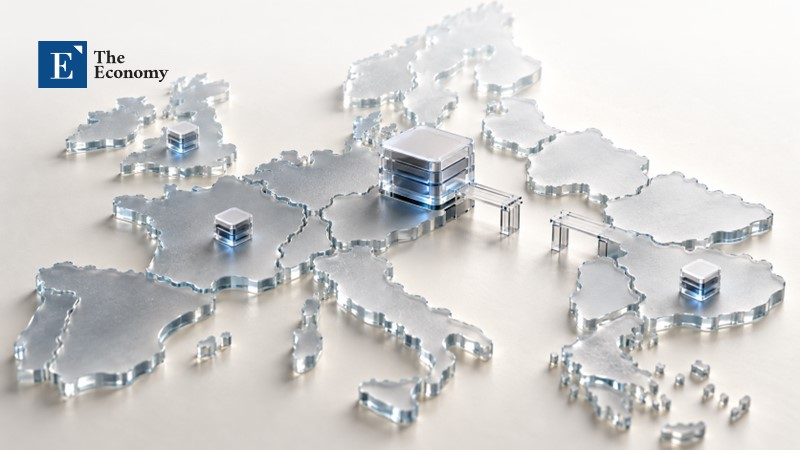
The European Union’s (EU) plan to achieve semiconductor supply chain self-sufficiency is faltering. Despite offering substantial subsidies to expand semiconductor production facilities within the bloc, investment by global chipmakers has struggled to gain momentum because of constraints specific to the European market, including high production costs and regulatory barriers. Indeed, European investments by major companies such as TSMC, Intel and Nvidia are increasingly focused on upgrading existing production facilities and building research and development (R&D) capabilities rather than constructing cutting-edge fabrication plants.
Cost and Regulatory Barriers in the EU Semiconductor Market
According to European news outlet EU Perspectives on the 15th (all dates hereafter are local time), Berlin-based technology policy think tank Interface recommended in a policy report released that day that “the EU should expand cooperation incrementally rather than focus on attracting large-scale production facilities from South Korean semiconductor companies.” The report argued that higher semiconductor production costs in Europe than in Asia, coupled with substantial regulatory pressure, leave South Korean companies with insufficient economic incentives to build large factories there. Data from the German Electro and Digital Industry Association (ZVEI) show that semiconductor production costs in Europe were 15–30% higher than in cost-competitive Asian locations. In Germany in particular, labor costs were estimated to be 3–4 times higher than in Asia, electricity prices 2–3 times higher, and factory construction costs 20–25% higher.
The European Chips Act 2.0, which the EU is pursuing, has also been identified as a barrier to market entry. Under the Chips Act 2.0 proposal, foreign companies receiving EU public funding may be required to provide supply chain information to EU authorities and respond to requests for information on production and supply disruptions. In the event of a semiconductor supply crisis, they could also be required to prioritize orders from critical industries in Europe. This would increase the burden of disclosing sensitive information while also restricting their autonomy over production and supply decisions. The report therefore urged the EU to reconsider how it cooperates with South Korean semiconductor companies. It called for an incremental approach, including establishing a consultative body between the South Korean and EU semiconductor industries, expanding joint R&D, creating joint ventures that draw on research results, and making small-scale investments. Promising areas for cooperation included AI chip design, environmentally friendly semiconductor technologies, compound semiconductors and chips for defense applications.
Effectiveness of Semiconductor Self-Sufficiency Strategy Remains Unclear
These recommendations come against the backdrop of the EU’s plan to achieve semiconductor supply chain self-sufficiency. The EU previously set a goal of raising Europe’s share of global semiconductor value chain revenue to 20% by 2030 and brought the European Chips Act into force in September 2023. The act aims to strengthen the industry ecosystem, from semiconductor R&D to design and production, and encourage global chipmakers to invest within the bloc through subsidies. According to the European Commission, investment in manufacturing facilities within the EU announced or planned since the act took effect totals EUR 80 billion (approximately USD 92.3 billion). Of that amount, public and private investment committed to production facility projects currently underway exceeds EUR 52 billion (approximately USD 60.0 billion).
Despite attracting enormous investment, however, whether the EU can achieve semiconductor self-sufficiency remains uncertain. Commission statistics show that Europe accounted for just 10.5% of global semiconductor value chain revenue in 2024, with its share estimated to have fallen to 8.8% last year. Although revenue in Europe’s related industries is growing, its position in the global market has barely improved as major regions, including the United States and Asia, continue to attract large-scale investment. In a report released last April, the European Court of Auditors (ECA) also projected that the EU’s share of the global semiconductor value chain would reach only 11.7% in 2030, far below its 20% target, and concluded that achieving the goal under the existing Chips Act alone would be virtually impossible. Moreover, the EU’s semiconductor competitiveness is reportedly confined to certain fields, such as power semiconductors, microcontrollers and semiconductor manufacturing equipment, while it remains heavily dependent on the United States and Asia for key technologies, including advanced chips below 5 nanometers (nm).
Investment in Advanced Chips Remains Rare
These limitations are also evident in actual investments in semiconductor production facilities. Companies that have recently invested in European facilities are expanding production primarily in product categories where Europe already has strengths, such as automotive and industrial chips and power management semiconductors. A leading example is the chip plant under construction in Dresden, Germany, through a joint venture involving Taiwan’s TSMC, Germany’s Infineon and Bosch, and the Netherlands’ NXP. The project, undertaken through the joint venture European Semiconductor Manufacturing Company (ESMC), broke ground in August 2024 with EUR 5 billion (approximately USD 5.77 billion) in subsidies from the German government and aims to begin operations in late 2027. Once completed, it will have the capacity to produce 40,000 12-inch (300 mm) wafers per month and will manufacture automotive and industrial chips using four process nodes: 28 nm, 22 nm, 16 nm and 12 nm.
Germany’s Infineon opened its EUR 5 billion Smart Power Fab in Dresden this past July. The facility produces power semiconductors and analog and mixed-signal chips using 12-inch wafers. U.S.-based GlobalFoundries also announced plans to invest EUR 1.1 billion (approximately USD 1.27 billion) in its existing Dresden production site to increase annual 12-inch wafer capacity to more than 1 million by the end of 2028. It also plans to introduce FDX Fusion, a low-power, highly integrated chip manufacturing technology, to increase production of semiconductors used in vehicles and industrial equipment. An industry official noted, “TSMC’s Dresden plant will not use the leading-edge 2–3 nm processes currently commercialized in the global advanced foundry market, and the FDX Fusion technology being developed by GlobalFoundries also differs from technologies used to mass-produce cutting-edge chips for high-performance computing.” The official added, “Despite the expansion of semiconductor production capacity within the EU, its dependence on overseas production facilities for advanced artificial intelligence (AI) computing chips and high-performance memory remains largely unresolved.”
Nvidia Focuses on R&D and Other Areas
Nvidia, too, is focusing on acquiring stakes in local companies, supporting R&D and training specialized personnel rather than building new factories in Europe. A notable example is its announcement last June of plans to establish or expand AI technology centers in six countries: Germany, Sweden, Italy, Spain, the United Kingdom and Finland. Nvidia is pursuing joint research in healthcare and robotics in Bavaria, Germany, while providing technical support and hands-on training to local researchers in Sweden. In Italy and Spain, it is expanding AI computing infrastructure through national supercomputing research institutions CINECA and the Barcelona Supercomputing Center, respectively.
On the 13th, Nvidia CEO Jensen Huang also announced during a visit to Paris, France, that the company would invest an additional USD 2 billion (approximately USD 2.05 billion) in Europe. This funding is separate from the USD 8 billion (approximately USD 8.21 billion) Nvidia invested in Europe over the past year. The new investments include French healthcare platform Doctolib, robotics developer Genesis AI, enterprise software company Pigment and AI-driven materials research company Entalpic. The amounts invested in each company were not disclosed.
Table 1. European Investments by Major Semiconductor Companies
| Company | Major Investments | Investment Focus |
|---|---|---|
| TSMC, Infineon, Bosch and NXP | Construction of the ESMC joint-venture plant in Dresden, Germany, targeting the start of operations in late 2027 | Production of automotive and industrial semiconductors |
| Infineon | Opened the Dresden Smart Power Fab in July 2026 | Production of power, analog and mixed-signal semiconductors |
| GlobalFoundries | Investing EUR 1.1 billion in its existing Dresden plant to expand production capacity by the end of 2028 | Expanding automotive and industrial semiconductor production and introducing FDX Fusion technology |
| Nvidia | Expanding AI technology centers in six European countries and investing in European companies | Focusing on R&D, workforce training and corporate investments rather than local production |
| Intel | Canceled plans for new plants in Germany and Poland; investing EUR 5 billion in its Leixlip plant in Ireland | Upgrading existing facilities and expanding server processor production |
Intel Shelves New Plant Plans and Invests in Existing Facilities
U.S.-based Intel is also making large-scale investments in European semiconductor production facilities, but is focusing on improving existing manufacturing sites rather than building new plants. Intel had originally planned to invest EUR 30 billion (approximately USD 34.6 billion) in two advanced chip factories in Magdeburg, Germany, and to build a semiconductor assembly and testing facility in Wrocław, Poland. The German government had also sought to provide approximately EUR 10 billion (approximately USD 11.5 billion) in subsidies for the Magdeburg project. Both projects, however, were definitively canceled last July because of Intel’s deteriorating financial performance and adjustments to its investment spending.
Intel subsequently announced this past July that it would invest an additional EUR 5 billion in its Leixlip production site near Dublin, Ireland. The Leixlip site, which Intel has operated since 1989, is a key European semiconductor manufacturing hub producing high-performance processors using the Intel 4 and Intel 3 processes. The investment will be used to upgrade production lines in existing cleanrooms, introduce advanced manufacturing equipment and expand automated transport systems connecting the campus’s various manufacturing facilities. Through these measures, Intel plans to increase its capacity to produce next-generation server processors using the Intel 3 process and meet growing semiconductor demand in the AI and high-performance computing (HPC) markets.
Aoife Brennan is a contributing writer for The Economy, with a focus on education, youth, and societal change. Based in Limerick, she holds a degree in political communication from Queen’s University Belfast. Aoife’s work draws connections between cultural narratives and public discourse in Europe and Asia.
Similar Post