Growing Confident in Its Technology, China Tightens Controls on Overseas Technology Transfers and Movement of Key Personnel

Siobhán Delaney is a Dublin-based writer for The Economy, focusing on culture, education, and international affairs. With a background in media and communication from University College Dublin, she contributes to cross-regional coverage and translation-based commentary. Her work emphasizes clarity and balance, especially in contexts shaped by cultural difference and policy translation.
Authored On
Modified
China heightens vigilance against overseas technology leakage as advanced industries grow
Controls expand from trade and investment sanctions to overseas travel management for key personnel
US-China competition to secure technology intensifies amid US restrictions on investment in China

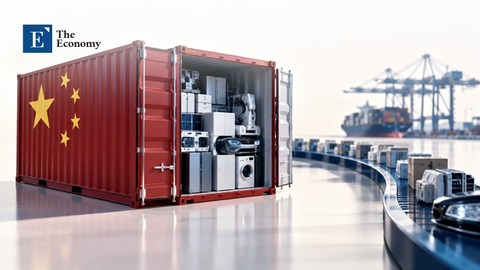
China is drawing up rules to directly sanction foreign companies and individuals to prevent the leakage of critical technologies. The plan is to impose trade and investment restrictions and entry bans on entities that threaten national security and industrial development by infringing on Chinese trade secrets. After tightening controls on technology exports and overseas investment, China is also managing the overseas movement of key personnel, systematically closing off routes through which technology could leave the country. The moves are seen as an effort to prevent the competitive advantages China has built in artificial intelligence (AI), electric vehicles and batteries from passing to foreign rivals. With the United States also expanding restrictions on advanced semiconductor exports and investment in China, the two countries' struggle over the movement of technology, capital and talent is intensifying.
China Seeks Direct Sanctions on Foreign Companies That Infringe Trade Secrets
According to Reuters on the 26th (all dates hereafter are local time), the Chinese government released draft Special Provisions on the Protection of China's Trade Secrets, which would impose trade and investment restrictions on foreign companies, organizations and individuals that infringe Chinese trade secrets. The rules would apply to infringement of Chinese trade secrets in international trade and related economic activities that harms, or poses a real threat to, national sovereignty, security or development interests. Protected rights holders include both trade secret owners and entities authorized by the owners to use those secrets. The Ministry of Commerce will enforce the system with other relevant departments, and public comments will be accepted through the 24th of next month.
The sanctions in the draft cover the companies' China-related transactions and new investments, as well as the entry and stay of associated individuals. Specified measures include restricting or prohibiting imports and exports of goods and technologies and international trade in services, and blocking exports of particular items to the companies concerned. Bans on new investment in China and restrictions on the entry of associated individuals and means of transport are also listed. The draft further provides for restricting or revoking associated individuals' work permits and permission to stay or reside in China, and imposing fines according to the severity of the violation. The Ministry of Commerce would be authorized to apply multiple measures together depending on the case.
The draft sets out foreign companies' obligations to submit documents and cooperate during investigations. Once the Ministry of Commerce opens an investigation, the company concerned must answer questions and provide relevant materials, while also receiving an opportunity to state its position or offer explanations. If a company fails to cooperate with or obstructs an investigation, the ministry may determine the measures to impose based on the facts already available. Applications to modify or lift sanctions must provide facts and reasons supporting corrective actions, such as ending the infringement, eliminating risks and paying compensation for damages. A separate exemption application procedure would allow Chinese companies with special circumstances requiring transactions with sanctioned entities to conduct such transactions with ministry approval.
Controls Expand from Advance Registration of Technology Exports to Overseas Investment Reviews
Alongside establishing sanctions for trade secret infringement, China is also working to control overseas transfers of critical technologies. On the 16th, the Ministry of Commerce and the Ministry of Science and Technology released proposed revisions adding 40 technologies in AI, biopharmaceuticals and solar power to the list of prohibited or restricted exports. They include 23 AI-related technologies, such as large-scale AI models, agents and computing clusters; 5 biopharmaceutical technologies, including cell and gene therapies; and 12 technologies related to manufacturing polysilicon, wafers and solar cells. Of these, 14 were classified as prohibited exports and 26 as restricted exports requiring approval. Although public comments will be accepted through the 15th of next month, interim measures requiring registration before exports involving overseas transfers of ownership or licensing of these technologies took effect on the day of the announcement. Technologies already publicly disclosed in papers or as open source were excluded from the controls. Overseas users' access to AI services through apps or websites will also not be considered technology exports.
China has also established controls on technology transfers through personnel assignments or training in the course of overseas investment. The Regulations on Overseas Investment, promulgated by China's State Council in June and effective from July 1, prohibit transfers of technologies and data barred from export in connection with overseas investment, and require prior approval for restricted items. They also prohibit transferring controlled technologies and data without approval by sending technical personnel abroad or conducting local training. A new procedure was established to review overseas investments affecting national security, as well as transfers and disposals of related assets and interests. Depending on the violation, penalties may include suspension of investment, orders to dispose of equity holdings or assets, and confiscation of illegal proceeds, with fines set at up to 1% of the investment amount.
Table 1. China's Efforts to Protect Advanced Industrial Technologies and Its Competitiveness
| Category | Key Items | Details |
|---|---|---|
| AI technology protection | Blocking Western acquisitions | Consultations between the Ministry of Commerce and major AI companies in July this year Discussion of measures to protect critical technologies and promising startups |
| Restrictions on data and weight transfers | Discussion of restrictions on overseas transfers of key training data and downloads of model weights by foreign users | |
| AI competitiveness | DeepSeek R1 performance | Reached parity with the top US models at the time in major performance evaluations in February last year |
| US-China model gap | A 2.7% difference in evaluation scores between the top models tracked by the report as of March this year | |
| Research and patent base | Leads in the number of AI papers, citations and patent output | |
| Electric vehicle and battery supply chains | Electric vehicles and battery cells | Share of global production last year 70% of electric vehicles and more than 80% of battery cells |
| Key battery materials | Share of global production last year About 85% of cathode active materials and more than 90% of anode active materials | |
| Concentration of production networks | Concentrated in China, from critical mineral refining to the manufacturing of materials, batteries and finished vehicles | |
| Limits on supply outside China | Battery material production capacity outside China alone is insufficient to meet demand outside the country |
Developing Homegrown AI as a National Strategic Asset
Underlying China's efforts to prevent technology leakage is confidence in the competitiveness of its advanced industries. According to the Financial Times (FT) in July, China's Ministry of Commerce held talks with major AI companies, including Alibaba, ByteDance and Zhipu, on preventing Western companies from acquiring critical technologies and promising startups. The discussions included proposals to restrict overseas transfers of key data needed for AI training and downloads of model weights by foreign users. Model weights are numerical information accumulated during training; obtaining them allows users to run or modify the model on their own servers. The talks are interpreted as a sign that Chinese authorities have begun viewing AI development achievements as strategic assets requiring national protection.
Performance improvements by Chinese AI companies lend support to calls for technology protection. According to the 2026 AI Index from Stanford's Institute for Human-Centered Artificial Intelligence (HAI), DeepSeek's R1 reasoning model reached parity with the top US models at the time in major performance evaluations in February last year. As of March this year, the evaluation score gap between the top US and Chinese models tracked by the report was just 2.7%. China also led in the number of AI papers, citations and patent output, indicating an expansion of its research base. Individual companies' model development achievements, combined with accumulated research and patents, support the assessment that China is developing the capacity to sustain an independent AI ecosystem.
China-Centered Supply Chains Take Hold, from Materials to Finished Vehicles
In electric vehicles and batteries, supply chains that dominate global production are bolstering confidence in China's technological competitiveness. According to the International Energy Agency (IEA), China accounted for 70% of global electric vehicle production and more than 80% of battery cell production last year. Its share of production of cathode active materials used in electric vehicle batteries was about 85%, while its share of anode active materials exceeded 90%. Production networks spanning critical mineral refining through the manufacturing of materials, batteries and finished vehicles are concentrated within China. The IEA assessed that battery material production capacity outside China alone would struggle to meet demand outside the country, highlighting the substantial reliance of other countries' electric vehicle industries on Chinese materials and components.
China's leadership has outlined plans to consolidate its lead in next-generation industries based on the technologies and production base it has secured. The 15th Five-Year Plan, released in March this year, mentioned AI more than 50 times and included an 'AI Plus' policy to apply it throughout the economy, including manufacturing, logistics, education and healthcare. In a separate report at the time, the National Development and Reform Commission also assessed that China was leading research and development (R&D) and applications in AI, biopharmaceuticals, robotics and quantum technology. To support these efforts, it has set a target of increasing R&D spending by an annual average of at least 7% from 2026 to 2030. Specific tasks include expanding large-scale computing clusters and developing humanoid robots, 6G and brain-computer interfaces. The plan also calls for deploying robots in industries facing labor shortages and expanding the use of AI agents that perform tasks with minimal instructions.
US-China Technology Rivalry Intensifies Controls on Investment and Talent
China's tighter controls on the outflow of technology and talent are seen as a strategic move with its long-term competition with the United States for technological supremacy in mind. Having restricted exports of advanced semiconductors and manufacturing equipment to China, the United States is also expanding controls on US capital flowing into China's advanced industries. Proposed rules released by the US Treasury Department on the 22nd would extend restrictions on investment in China beyond the existing semiconductor, quantum technology and AI sectors to include biotechnology and supercomputing. The aim is to prevent US funding and the expertise accompanying investment from being used to strengthen China's military and intelligence capabilities. As China's access to foreign technology and capital narrows, it is also seen as seeking to control routes through which its homegrown technologies and talent could move to the United States.
Measures directly managing the overseas movement of key personnel also suggest an intention to keep technological capabilities within China. According to Bloomberg in May, some specialists handling strategically important AI work at private companies such as Alibaba and DeepSeek were required to obtain approval from authorities before traveling abroad. Last month, the spouses and children of executives at certain AI and semiconductor companies deemed important to national security were also reportedly required to obtain approval before short overseas trips. People cited by Bloomberg described the measures as an effort to prevent critical technology and information from leaking to the United States. Those covered included prominent startup founders and heads of strategic technology companies, and authorities had reportedly already notified several individuals of the requirement to obtain approval for family members' overseas visits.
Siobhán Delaney is a Dublin-based writer for The Economy, focusing on culture, education, and international affairs. With a background in media and communication from University College Dublin, she contributes to cross-regional coverage and translation-based commentary. Her work emphasizes clarity and balance, especially in contexts shaped by cultural difference and policy translation.
Similar Post