Is the U.S.–Ukraine Rift Good News for Russia? Trump Is on Neither Side—He Is on the Side of Money

Matthew Reuter is a senior economic correspondent at The Economy, where he covers global financial markets, emerging technologies, and cross-border trade dynamics. With over a decade of experience reporting from major financial hubs—including London, New York, and Hong Kong—Matthew has developed a reputation for breaking complex economic stories into sharp, accessible narratives. Before joining The Economy, he worked at a leading European financial daily, where his investigative reporting on post-crisis banking reforms earned him recognition from the European Press Association. A graduate of the London School of Economics, Matthew holds dual degrees in economics and international relations. He is particularly interested in how data science and AI are reshaping market analysis and policymaking, often blending quantitative insights into his articles. Outside journalism, Matthew frequently moderates panels at global finance summits and guest lectures on financial journalism at top universities.
Authored On
Modified
U.S. steps up pressure to end war as support costs mount
Frozen assets and energy deals included in negotiations
Peace talks seek to ease fiscal and price pressures simultaneously
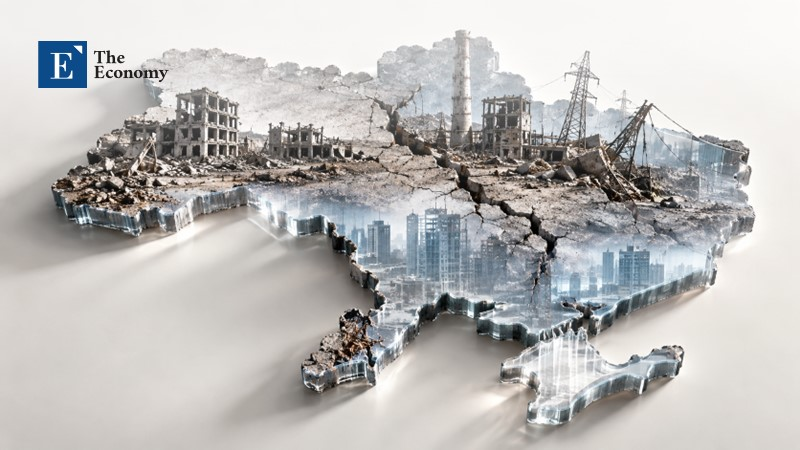
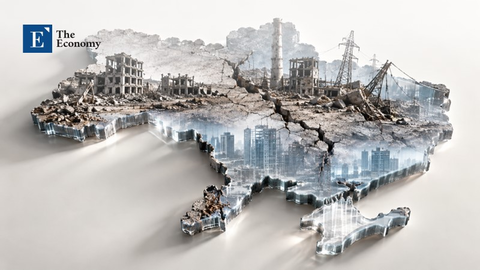
Russian hardliners welcomed U.S. President Donald Trump’s public clash with Ukrainian President Volodymyr Zelenskyy, believing that discord between Washington and Kyiv could create negotiating conditions favorable to Russia. However, Washington’s plan to end the war appears intended to reduce the West’s burden of war support and secure economic gains from frozen assets and energy deals. Its moves to have allies pay for weapons purchases and expand diesel supplies through dealings with Russia are likewise seen as choices that prioritize U.S. interests in curbing fiscal spending and stabilizing prices.
Trump and Zelenskyy Clash Head-On Over Sanctions Relief
According to Reuters on the 20th (all dates hereafter are local time), Russian hardliners have welcomed the recent public clash between Trump and Zelenskyy, expecting deteriorating U.S.–Ukraine relations to benefit Russia’s war effort and negotiations to end the conflict. The dispute erupted on the 9th, when Trump announced that he had agreed with Russian President Vladimir Putin on diesel supplies and would temporarily ease related sanctions. The plan was to lower fuel prices by supplying Russian diesel to the U.S. and global markets. Zelenskyy immediately objected, saying that allowing Russia to sell diesel amounted to “investing in a war that must be ended.” His concern was that sanctions relief could encourage further attacks, since Russia could channel its energy export earnings into the war.
In response to Zelenskyy’s criticism, Trump escalated his attacks, taking issue with Ukrainian strikes on Russian oil refineries. His argument was that even if supplies of Russian diesel increased, attacks on refineries would disrupt production and make it difficult to lower fuel prices. After using this reasoning to press for a halt to attacks on energy facilities, he went further on the 10th, calling for Zelenskyy’s replacement by saying, “It is time for Ukraine to have a new president.” Zelenskyy countered that Ukraine could not unilaterally stop its attacks while Russian airstrikes continued. He stipulated that Russia must stop attacking Ukrainian energy facilities or that the United States must provide additional Patriot interceptor missiles.
As the dispute between the two leaders intensified, Russian hardliners echoed Trump’s remarks and joined the attacks on Zelenskyy. On Telegram, Dmitry Medvedev, deputy chairman of Russia’s Security Council, mocked Zelenskyy, saying that the man once hailed as “Person of the Year” and a “new Churchill” had been branded an obstacle to American interests and peace. He blamed this on Zelenskyy having “bitten the hand that fed him until it bled.” Kirill Dmitriev, Putin’s special envoy for economic negotiations with the United States, also claimed that Zelenskyy had been “too greedy” and would pay the price for attacking Trump. He shared an illustration showing a bear representing Russia and an eagle representing the United States facing off against Britain’s lion and the European Union (EU), with the caption “Things are different now” beneath it.
Ukraine’s Surging War Costs Increase the Burden on Western Backers
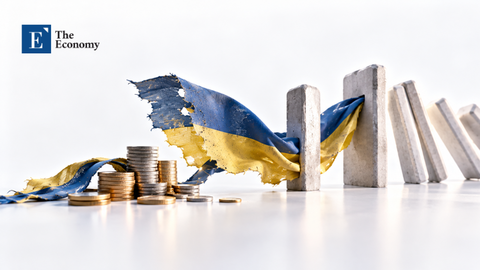
Trump’s succession of remarks may appear to bolster Russia, but they are interpreted as being underpinned by a calculation to reduce U.S. war costs and secure economic gains. Ukraine’s war expenses have now grown to a level difficult to cover even with both its own finances and Western support. The Ukrainian government put this year’s total war costs at USD 155 billion (approximately USD 160 billion) late last month, a figure that includes domestic budget spending and in-kind Western aid such as air-defense missiles, ammunition and aircraft. Even if it devotes its entire domestic budget revenue target of USD 70 billion (approximately USD 72.2 billion) to defense, it must still rely on military and financial assistance from the United States and Europe. At the time, the government estimated its funding shortfall at USD 27 billion (approximately USD 27.8 billion). It said it would cover USD 7 billion (approximately USD 7.22 billion) through measures such as deferring spending and reallocating budget funds, while discussing ways to raise the remaining USD 20 billion (approximately USD 20.6 billion) with donor countries. Since the immediate shortfall must be filled to order weapons for use early next year, securing additional aid is directly tied to holding the front line.
As the war drags on, European countries face the burden of finding additional resources to cover Ukraine’s war-funding shortfall. On the 16th, Zelenskyy told EU leaders that next year’s war costs would total EUR 155 billion (approximately USD 178 billion) and requested at least EUR 70 billion (approximately USD 80.3 billion) in additional assistance. European Commission President Ursula von der Leyen confirmed a funding gap of the same size, making ways to cover it an immediate priority for the EU. EU leaders accordingly instructed the Commission to propose funding options by the end of November. With the United States also shifting the cost of weapons assistance onto its allies, Europe must commit funds to both financial aid and weapons purchases. In July last year, Trump announced a plan for NATO allies to purchase U.S.-made weapons and deliver them to Ukraine. The arrangement supplies Ukraine with needed weapons while limiting additional U.S. spending and leaving European allies to cover the purchase costs.
Table 1. Ukraine’s War Costs and Western Support
| Category | Item | Amount and Key Details |
|---|---|---|
| This year’s war costs | Total war costs | USD 155 billion Includes domestic budget spending and in-kind Western weapons aid |
| Domestic budget revenue target | USD 70 billion U.S. and European support needed even if committed to defense | |
| Funding shortfall | USD 27 billion Ukrainian government estimate as of late last month | |
| Plan to cover the shortfall | USD 7 billion: Spending deferrals, budget reallocations and other measures USD 20 billion: Discuss funding options with donor countries | |
| Next year’s war costs | Required war funding | EUR 155 billion Presented by President Zelenskyy on the 16th |
| Request for additional EU aid | At least EUR 70 billion European Commission president confirms shortfall of the same size | |
| Funding timetable | EU leaders instruct Commission to propose funding options by the end of November | |
| U.S. weapons aid mechanism | Purchase and delivery by NATO allies | Announced by President Trump in July last year Allies purchase U.S.-made weapons and deliver them to Ukraine Europe faces burdens of both financial aid and weapons purchases |
U.S. Funding Has Also Sustained Ukraine’s Basic Government Functions
Europe will also likely need to take on more debt to provide additional assistance. The EU is raising funds in the markets, backed by its common budget, for a EUR 90 billion (approximately USD 103 billion) loan to Ukraine agreed late last year, and joint borrowing is being discussed as a way to cover the newly emerging shortfall as well. Estonian Prime Minister Kristen Michal also said on the 16th that additional loans were a likely solution. Borrowing conditions have deteriorated since the existing aid package was prepared. The yield on the EU’s 10-year bonds rose from 2.8% in January this year to 3.44% in September, increasing the interest payable on the same amount of borrowing. A proposal to ease the burden by using frozen Russian assets has also failed to make progress, with Belgium, which holds most of the assets, opposing it over legal and financial risks. European countries seeking to continue supporting Ukraine must now weigh both the interest costs of additional borrowing and the risk of losses associated with using frozen assets.
The United States has also committed substantial funding to supporting the operation of Ukraine’s government. According to the U.S. Government Accountability Office (GAO), USD 30.2 billion (approximately USD 31.1 billion) in direct budget support managed by the U.S. Agency for International Development (USAID) had been disbursed to Ukraine by the end of 2024, mostly through the World Bank. The funding helped Ukraine maintain basic state functions while concentrating its own resources on defense. As the assistance has continued, the U.S. government’s burden of monitoring how funds are used and reporting to Congress has also grown. GAO reviews found that accounts of aid expenditures varied between reports and that materials submitted to Congress also contained inaccuracies.
Territorial Concessions From Ukraine, Release of Frozen Assets for Russia
Ukraine has appealed for support by emphasizing that checking Russian expansion is directly linked to the security of Europe as a whole. But donor countries, whose fiscal burdens have increased as the war drags on, are finding it increasingly difficult to approve additional spending. Zelenskyy has maintained that withdrawing from the Donbas would hand key defensive positions to Russia, leaving Ukraine vulnerable to another invasion in the future. His argument is that holding the front line with Western support is the way to reduce Europe’s security costs. U.S. negotiators, however, believe a Ukrainian decision to withdraw could bring an agreement closer. On the 11th of last month, Trump’s special envoy Jared Kushner said the rest of the agreement was ready if Ukraine withdrew to the line demanded by Putin. He added that Ukraine did not want to do so, appearing to hold Zelenskyy responsible for the negotiating impasse because of his refusal to concede territory.
The United States is currently seeking an agreement to end the war by putting both Ukrainian territorial concessions and economic incentives for Russia on the negotiating table. At a meeting of U.S., Ukrainian and European officials in Miami early this month, U.S. negotiators reportedly proposed unfreezing some Russian assets and transferring them to a U.S.-supervised financial institution. The idea is to encourage progress in the negotiations by incorporating the issue of frozen assets, a matter of interest to Russia, into a peace agreement. A U.S. official also explained that the procedures for unfreezing the assets and the uses of the funds were being discussed as part of a comprehensive peace agreement. If the proposal goes through, the United States would be able to participate in the process of releasing funds in accordance with the terms for ending the war. The move is seen as an effort to encourage Russia’s participation in the negotiations while also securing authority over the management of a large pool of funds.
U.S. Export Gains Also Factored Into Adjustments to Russia Sanctions
The practical gains Washington is seeking through the negotiations are also evident in energy deals. A prime example is its consideration of easing sanctions on vessels that would transport Russian diesel, after allowing its export. The Trump administration reportedly discussed selling sanctioned oil tankers linked to Russia and Iran to regular commercial operators and lifting operating restrictions on those vessels. Energy Secretary Chris Wright identified a shortage of tankers as a major factor driving up shipping costs. The reasoning is that expanding the supply of vessels to lower freight rates could improve conditions for U.S. crude oil exports while also reducing fuel prices paid by consumers. In effect, U.S. interests in energy exports and domestic prices have both been reflected in the process of adjusting sanctions on Russia.
Efforts to lower fuel prices also appear to reflect concerns that high inflation could translate into pressure from interest rates. Diesel is widely used in freight transportation, agriculture and construction, so sustained price increases raise goods transportation and production costs. If those higher costs feed through to consumer prices, price stabilization could be delayed and room for interest-rate cuts could narrow. Energy prices are also a major factor in the bond market. On the 20th, the yield on the 10-year U.S. Treasury note fell 0.019 percentage points from the previous day to 5.116%, as oil prices declined and housing data came in weaker than expected. For Trump, ahead of the midterm elections, stabilizing fuel costs would be an achievement that could ease the burden on households and businesses while tempering voters’ frustration over the cost of living.
Matthew Reuter is a senior economic correspondent at The Economy, where he covers global financial markets, emerging technologies, and cross-border trade dynamics. With over a decade of experience reporting from major financial hubs—including London, New York, and Hong Kong—Matthew has developed a reputation for breaking complex economic stories into sharp, accessible narratives. Before joining The Economy, he worked at a leading European financial daily, where his investigative reporting on post-crisis banking reforms earned him recognition from the European Press Association. A graduate of the London School of Economics, Matthew holds dual degrees in economics and international relations. He is particularly interested in how data science and AI are reshaping market analysis and policymaking, often blending quantitative insights into his articles. Outside journalism, Matthew frequently moderates panels at global finance summits and guest lectures on financial journalism at top universities.
- Previous “A refugee crisis involving 20 million people could emerge”: Zelenskyy appeals to EU for support as funding and weapons shortages threaten Ukraine’s ability to sustain the war
- Next “Close the Borders and Face a Population Crisis, Open Them and Face Social Conflict”: Europe’s Immigration Policy Dilemma as French Riots Fuel Anti-Immigration Sentiment
Similar Post