"Annual limit of 350,000 units" China concedes hybrid vehicle exports under EU trade pressure; prospects of difficulties in securing alternative markets and local production

Oliver Griffin is a policy and tech reporter at The Economy, focusing on the intersection of artificial intelligence, government regulation, and macroeconomic strategy. Based in Dublin, Oliver has reported extensively on European Union policy shifts and their ripple effects across global markets. Prior to joining The Economy, he covered technology policy for an international think tank, producing research cited by major institutions, including the OECD and IMF. Oliver studied political economy at Trinity College Dublin and later completed a master’s in data journalism at Columbia University. His reporting blends field interviews with rigorous statistical analysis, offering readers a nuanced understanding of how policy decisions shape industries and everyday lives. Beyond his newsroom work, Oliver contributes op-eds on ethics in AI and has been a guest commentator on BBC World and CNBC Europe.
Authored On
Modified
Discussion expected on China trade imbalance and industry damage response at EU summit
China maintains optimism despite hybrid vehicle export limits, but market skepticism persists
Expansion of local production by Chinese automakers in Europe faces burdens from production costs and local procurement regulations
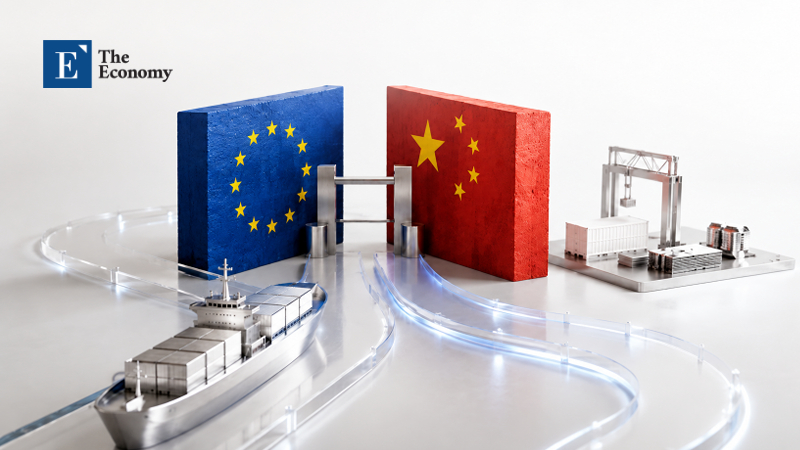
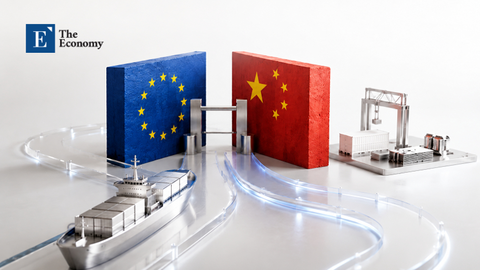
There are forecasts that trade relations with China will emerge as a key agenda at the European Union (EU) summit. As trade imbalances deepen and conflicts between the two sides intensify, international attention is focused on the EU’s further response measures. Recently, China has made some concessions, such as agreeing to limit hybrid vehicle export volumes amid tense trade relations, but considering sluggish domestic demand and high entry barriers in alternative export markets, it appears difficult to reduce dependence on Europe in the short term.
EU struggles with trade deficit against China
According to Reuters on the 14th (local time), leaders of the 27 EU member states will hold a summit on the 15th-16th in Brussels, Belgium, to discuss damage to regional industries and trade response measures caused by a surge in imports of Chinese automobiles and manufactured goods. The EU's trade deficit in goods with China reached 360 billion euros (about US$419 billion) last year, and hit 200 billion euros (about US$233 billion) in the first half of this year. This deficit is occurring not only in automobiles, which have been the main source of conflict between the two sides, but also across manufactured goods including machinery, textiles, basic metals, and chemicals, raising growing concerns over weakening competitiveness and employment declines among regional companies.
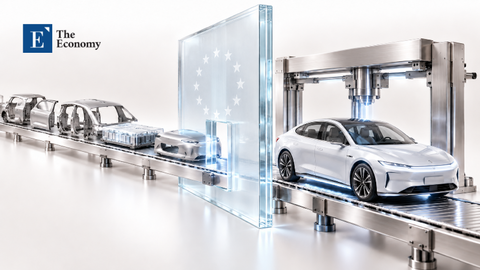
Meanwhile, the policy direction of the EU Commission is shifting toward curbing the influx of Chinese products into the region. A representative example is the imposition of high tariffs on Chinese electric vehicles (EVs). Since 2023, the Commission has conducted an anti-subsidy investigation on Chinese EVs for about a year, and in July 2024, it imposed provisional countervailing duties on Chinese EVs, judging that Chinese government subsidies distorted competition in the regional market. This was the first large-scale trade sanction against Chinese EVs. In October of the same year, the EU finalized, with member states' approval, additional tariffs up to 35.3% on Chinese EVs per company. These tariffs are added to the existing 10% tariff on vehicle imports and will be applied from October 30, 2024, for five years.
China limits hybrid vehicle import volumes
Amid this trade pressure, China recently made some concessions in negotiations with the EU, easing tensions. On the 12th, the Financial Times reported that the Commission is pushing a plan to limit annual import volumes of Chinese hybrid and plug-in hybrid vehicles to 350,000 units. This agreement was reached during trade talks between Maroš Šefčovič, EU Commissioner for Trade, and Wang Wentao, China's Minister of Commerce, held in Beijing on the 8th-9th. The import limit will be implemented in December this year, setting an annual import cap at 350,000 units in 2027, with a 6% annual increase starting in 2028, through 2030.
The restriction applies to hybrid vehicles produced in China and exported to the EU, including vehicles manufactured by European automakers in their Chinese plants. However, vehicles of Chinese brands produced within the EU are exempt from the import quota. The EU estimates China's hybrid vehicle exports to the EU will reach about 800,000 units this year. This agreement aims to reduce the import volume of Chinese hybrid vehicles by more than half and lower their market share from the current approximately 6% to around 3% within the regional market.
"Exports will rather expand," China's confidence
On the other hand, China claims that this agreement creates opportunities for expanding exports of its enterprises. On the 12th, China's Ministry of Commerce released an official statement noting, "According to EU statistics, EU imports of Chinese hybrid vehicles were 107,000 units in 2024 and rose to 302,000 units in 2025," adding that "both sides agreed to expand imports based on 2025 volumes, ensuring export capacity and stable growth for Chinese companies." While the EU emphasizes the reduction effect based on expected imports this year, China highlights that the agreement allows increasing export volumes based on last year's actual import figure of 302,000 units.
Additionally, China’s Ministry of Commerce explained that the hybrid vehicle trade agreement is based on three principles: respect for facts, non-discrimination, and compliance with World Trade Organization (WTO) rules. Regarding the non-discrimination principle, it stated, "No measures should target only Chinese products or discriminate against Chinese companies," and added, "The import quota allocated to China will not be less than that allocated to any other import source country in the EU." On WTO compliance, it affirmed, "China retains all rights within the WTO framework, including initiating dispute settlement procedures and requesting trade remedies."
Table 1. Chinese Hybrid Vehicle Import Restriction Plan and Positions of Both Sides
| Category | Main content |
|---|---|
| Import Restriction Plan | Set an annual import limit of 350,000 Chinese hybrid vehicles in 2027, with a 6% annual increase from 2028 through 2030 |
| EU Position | Measure to reduce Chinese hybrid vehicle inflow by more than half compared to this year's expected imports and lower market share |
| China's Position | Quota increases compared to last year's actual imports, making the agreement favorable for export expansion and stable growth |
Difficulty in seeking alternative markets
However, skepticism remains about China's optimism in the market. There are concerns that China will face difficulties absorbing its existing European export volumes in other markets. First, the Chinese domestic automobile market is sluggish due to weakened consumer sentiment and reduced purchase subsidies. According to the China Passenger Car Association (CPCA), domestic passenger car sales in China were about 1.63 million units in September, a 28.1% year-on-year decline, marking the 12th consecutive month of decrease. Entry barriers in alternative export markets are also rising. The U.S. has imposed a 100% additional tariff on Chinese EVs and tightened regulations on Chinese connected car software and hardware, effectively blocking market entry. Mexico approved a bill last December imposing tariffs up to 50% on about 1,400 items, including automobiles imported from non-FTA countries such as China, while Brazil raised tariffs on imported electric and hybrid vehicles to 35% starting July.
Absorption capacity in existing major export markets is also limited. According to a March report by global accounting firm PwC, Chinese exports of passenger and light commercial vehicles to Russia fell sharply by 46% to about 556,000 units last year due to factors such as increased import taxes by the Russian government and weakening domestic vehicle demand. Southeast Asia, targeted by China as a new export hub, is relatively small in scale. PwC data shows that automobile sales in six major ASEAN countries—Indonesia, Thailand, Malaysia, Philippines, Vietnam, and Singapore—totaled about 3.5 million units last year, with Chinese automakers holding only 11% market share.
Uncertain effectiveness of local production strategies
Under these circumstances, Chinese companies are striving to establish local production and supply chains in Europe to open new paths. On the 12th, Stella Li, BYD’s Senior Vice Chairman, told French economic broadcaster BFM Business in an interview that the company plans to secure two additional production hubs in Europe, with France being a strong candidate. BYD already built its first complete car production plant in Europe in Hungary, which is scheduled to begin full operation in the fourth quarter this year. Additionally, XPeng continues contract manufacturing through Magna International’s factory in Austria and is considering partnering with local manufacturers to build new factories or utilize existing ones. Changan Automobile also aims to expand its European production capacity to 180,000 units annually by 2028 and 350,000 units by 2030.
The problem is that expanding local production in Europe may not directly enhance the competitiveness of Chinese companies. They have to bear higher labor and energy costs in Europe compared to China and incur additional expenses while establishing new local parts supply chains. Furthermore, the direction of the EU’s industrial regulations remains unsettled. The Commission is currently promoting stricter local production and parts procurement requirements for EVs under the Industrial Accelerator Act (IAA), with ongoing debates among member states and industries over the scope of products recognized as European. Controversies persist over whether vehicles and parts produced in non-EU countries such as Turkey, the UK, and Morocco should be recognized as European. Chinese automakers risk additional burdens of adjusting their parts procurement and production systems depending on the regulations finalized in the future.
Oliver Griffin is a policy and tech reporter at The Economy, focusing on the intersection of artificial intelligence, government regulation, and macroeconomic strategy. Based in Dublin, Oliver has reported extensively on European Union policy shifts and their ripple effects across global markets. Prior to joining The Economy, he covered technology policy for an international think tank, producing research cited by major institutions, including the OECD and IMF. Oliver studied political economy at Trinity College Dublin and later completed a master’s in data journalism at Columbia University. His reporting blends field interviews with rigorous statistical analysis, offering readers a nuanced understanding of how policy decisions shape industries and everyday lives. Beyond his newsroom work, Oliver contributes op-eds on ethics in AI and has been a guest commentator on BBC World and CNBC Europe.
- Previous Despite Iran's oil offensive aimed at the U.S. midterm elections, the U.S. opts for containment over compromise, considering re-striking nuclear facilities
- Next “AI abuse in hostile nation cyber offensives” UK’s growing national security concerns test the effectiveness of existing cyber defense systems
Similar Post