“China Leans on Exports as the EU Raises Its Defenses”: Trade Tensions Escalate, Fueling Calls for Tougher Measures Including a European Version of Section 301

As one of the youngest members of the team, Tyler Hansbrough is a rising star in financial journalism. His fresh perspective and analytical approach bring a modern edge to business reporting. Whether he’s covering stock market trends or dissecting corporate earnings, his sharp insights resonate with the new generation of investors.
Authored On
Modified
EU-China trade tensions deepen, spreading to chemicals
Germany and France urge a European version of Section 301 modeled on the U.S. framework
China’s drive to offload excess output abroad compounds Europe’s economic strain, threatening industrial competitiveness
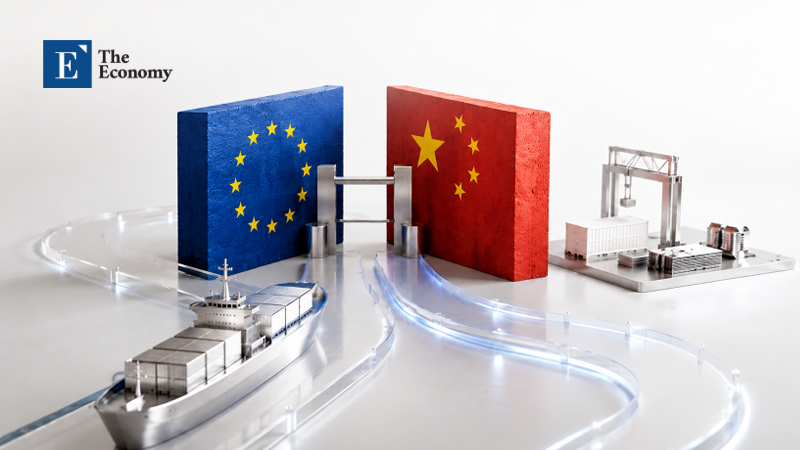
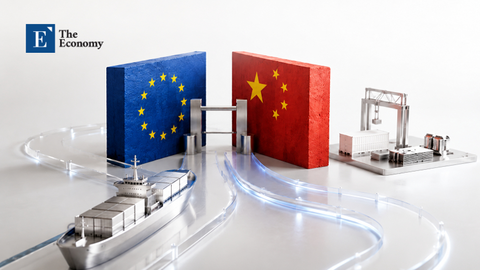
China has launched an anti-dumping investigation into chemicals imported from the European Union (EU). The move follows a series of recent EU trade remedy actions against Chinese chemicals, prompting Beijing to respond in kind. Market observers expect the trade dispute between the two sides could become structurally entrenched and protracted. China’s growing dependence on exports is colliding directly with mounting European concerns over its trade deficit with China and weakening manufacturing competitiveness.
EU and China Exchange Trade Remedy Actions
According to a report by China’s state-run Xinhua News Agency on October 3, with all dates given in local time, China’s Ministry of Commerce announced that day that it had opened an anti-dumping investigation into para-nitrotoluene imported from the EU. Also known as p-nitrotoluene, the substance is a chemical intermediate used in the production of dyes, pharmaceuticals and pesticides. The ministry said the investigation followed a complaint by Chinese para-nitrotoluene producers and was based on preliminary evidence that EU products were being imported at dumped prices, causing injury to domestic producers. Industry data show that prices of EU-origin para-nitrotoluene fell by approximately 60% cumulatively between 2022 and 2025. The ministry’s investigation covers alleged dumping from July last year through June this year and is scheduled to conclude in October next year.
The investigation is widely interpreted as a response to recent EU trade remedy actions. The European Commission opened three anti-dumping investigations last month into chemical products, including imports from China. The products under investigation are polyvinyl chloride (PVC), acetylsalicylic acid and cellulose ethers. Specifically, on September 23, the Commission launched separate investigations into certain PVC imports from China, South Korea, Mexico and Taiwan, and into acetylsalicylic acid from China. On September 24, it opened another investigation into cellulose ethers from China and South Korea. The EU cited industry complaints alleging that these products were entering the bloc’s market at dumped prices and causing injury to European producers.
The Tariff War Between the Two Sides
This is not the first exchange of trade restrictions between the EU and China. In September 2023, for example, the EU announced plans for an anti-subsidy investigation, arguing that low-priced electric vehicles benefiting from Chinese government subsidies were distorting the European market. In October that year, it formally launched an investigation on its own initiative into battery electric vehicles (BEVs) from China. The EU subsequently introduced provisional countervailing duties in July 2024, completed the investigation in October that year and imposed definitive countervailing duties for five years. The final rates included 17.0% for BYD, 18.8% for Geely and 35.3% for SAIC, while Tesla’s China-made vehicles were subject to a rate of 7.8%. These duties are levied in addition to the EU’s existing 10% tariff on cars.
China responded by expanding trade remedy investigations into EU products. In January 2024, China’s Ministry of Commerce launched an anti-dumping investigation into EU brandy, including French cognac. In June that year, it opened an anti-dumping investigation into EU pork and pig by-products, followed in August by an anti-subsidy investigation into certain EU dairy products, including cheese and cream. China subsequently introduced provisional anti-dumping measures in October 2024 requiring deposits of 30.6–39.0% on EU brandy, before issuing a final determination and confirming anti-dumping measures in July last year. EU pork was also subjected to provisional anti-dumping measures of 15.6–62.4% in September last year, followed by a final decision in December to impose anti-dumping duties of 4.9–19.8%. Certain EU dairy products likewise became subject to countervailing duties of 7.4–11.7% for five years following the conclusion of the anti-subsidy investigation this February.
A Head-On Clash in Public Procurement
EU-China trade tensions have also been pronounced in public procurement. In April 2024, the Commission launched an investigation on its own initiative into China’s public procurement market for medical devices. It cited practices by the Chinese government and public institutions that encouraged purchases of domestically produced equipment or imposed unfavorable conditions on imported products during tendering, restricting European companies’ market access. According to findings released by the Commission in January last year, approximately 87% of the Chinese medical device procurement tenders examined contained conditions excluding or discriminating against imported equipment. The EU said consultations with China had failed to produce an agreement on opening the market and finalized restrictions in June last year. As a result, Chinese companies were generally barred from bidding for EU medical device procurement contracts worth approximately $5.60 million or more. Even where a non-Chinese company won a contract, medical devices originating in China could account for no more than 50% of its total value.
China’s Ministry of Finance retaliated by excluding EU companies from medical device government procurement projects with budgets of approximately $6.71 million or more from July last year. EU companies are excluded from bidding for these projects regardless of their products’ origin, while medical devices imported from the EU must account for less than 50% of the contract value when a non-EU company submits a bid. However, European-owned companies manufacturing products locally in China were exempted from the restrictions, as were cases in which only EU products could meet procurement requirements. China’s Ministry of Commerce publicly described the policy as a “reciprocal restrictive measure” responding to the EU’s medical device procurement restrictions.
Table 1. Key Fronts in the EU-China Trade Dispute
| Sector | EU Measures | China’s Response |
|---|---|---|
| Chemicals | Launched anti-dumping investigations into Chinese polyvinyl chloride, acetylsalicylic acid, cellulose ethers and other products | Launched an anti-dumping investigation into EU-origin para-nitrotoluene |
| Automobiles and Agricultural Products | Imposed definitive countervailing duties on Chinese electric vehicles | Imposed anti-dumping and countervailing duties on EU brandy, pork and dairy products |
| Medical Device Procurement | Restricted Chinese companies’ participation and the share of Chinese-origin products in public procurement contracts above a specified threshold | Restricted EU companies’ participation in major government procurement projects and the share of European-origin products |
| Trade Policy Framework | France and Germany proposed a European version of Section 301 of the U.S. Trade Act to respond swiftly to structurally unfair trade practices | Opposed the proposal as unilateralist and protectionist |
Calls for a Tougher European Response
As the trade dispute drags on, Europe has recently stepped up efforts to counter China. On October 5, for example, Germany and France released a joint non-paper on responding to the expansion of low-priced Chinese exports and supply chain dependence. They urged the Commission to develop a new instrument capable of restricting third countries’ access to the single market more swiftly and forcefully than existing trade remedy mechanisms. Although the document did not explicitly name any country, it identified an oversupply of Chinese products and heavy dependence on critical raw materials and components as central concerns, leading observers to view the proposal as effectively targeting China.
The framework under discussion resembles Section 301 of the U.S. Trade Act. Section 301 authorizes the Office of the U.S. Trade Representative (USTR) to investigate unfair or discriminatory trade practices by foreign governments and, at the president’s direction, take action such as imposing tariffs or restricting market access. The so-called “European Section 301” envisaged by France and Germany similarly focuses on enabling the EU to act swiftly against broader structural issues, including Chinese industrial subsidies and restricted market access, rather than conducting separate anti-dumping or anti-subsidy investigations into individual products. China, however, has warned that the proposal is unilateralist and protectionist and could undermine China-EU trade and the stability of global supply chains.
The Heavy Economic Toll of the China Shock
Behind the escalating trade confrontation lies China’s deepening dependence on exports. As the property downturn erodes household wealth and domestic demand while deflationary pressures persist, the Chinese government is sustaining economic growth by expanding manufacturing output and exports. According to Bloomberg’s calculations published on September 30, based on data from China’s General Administration of Customs, Chinese exports totaled $2.92 trillion in the first eight months of this year. If that growth trajectory continues, annual exports are projected to reach $4.48 trillion, approximately 80% above their 2019 level.
China’s export strategy has dealt a direct blow to Europe. Eurostat data show that last year the EU exported approximately $223.63 billion in goods to China and imported approximately $626.75 billion, leaving a trade deficit of approximately $403.12 billion. Meanwhile, European manufacturing is steadily losing market share and seeing its production base weaken. In an analysis published last month, Bloomberg Economics estimated that the EU’s economic losses from ceding market share to Chinese manufacturers totaled $150 billion last year, equivalent to 0.7% of the bloc’s gross domestic product (GDP). “As Chinese companies rapidly extend their competitive strength into advanced manufacturing, EU companies are finding their room to compete increasingly constrained,” one market expert said. “With existing product-specific anti-dumping and anti-subsidy measures proving insufficient to address China’s excess supply, Europe is ultimately likely to shift toward a more confrontational strategy, matching China’s hard line much as the United States has done.”
As one of the youngest members of the team, Tyler Hansbrough is a rising star in financial journalism. His fresh perspective and analytical approach bring a modern edge to business reporting. Whether he’s covering stock market trends or dissecting corporate earnings, his sharp insights resonate with the new generation of investors.
- Previous “Netflix’s Transformation of the Content Ecosystem”: Mid- and Low-Budget Productions Gain Ground as Major Players Cut Investment, Accelerating the Inroads of Private Capital and AI
- Next “Beyond Asia to Europe”: Counterfeit Samsung Smartphones Proliferate as Governments Tighten Platform Regulation and Intellectual Property Protection
Similar Post