Europe’s Push for an “EU Version of Section 301”: Darkening Prospects for Chinese Exports as Trade Restrictions Expand

Anne-Marie Nicholson is a fearless reporter covering international markets and global economic shifts. With a background in international relations, she provides a nuanced perspective on trade policies, foreign investments, and macroeconomic developments. Quick-witted and always on the move, she delivers hard-hitting stories that connect the dots in an ever-changing global economy.
Authored On
Modified
EU pressure on China amid a widening trade deficit and manufacturing weakness
Proposed import volume restrictions and coordination with neighboring trading partners
Mounting pressure on China to secure alternative markets to offset lost U.S. exports
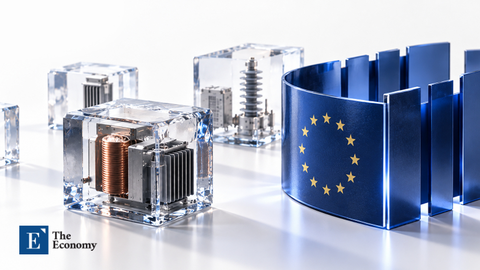
Trade tensions between the European Union (EU) and China are intensifying as France and Germany, the bloc’s two central powers, pursue sweeping trade sanctions targeting China’s unfair trade practices and supply-chain distortions. Faced with a widening trade deficit and manufacturing weakness, the EU is increasing pressure through proposed import volume restrictions and calls for neighboring trading partners to coordinate their policies toward China. For China, which has expanded into other markets to circumvent U.S. tariff barriers, a contraction in access to Europe would make further export losses difficult to avoid. Rising import restrictions in emerging economies and weak domestic demand also leave limited scope to redirect goods shut out of Europe to other markets.
China’s Opposition to an “EU Version of Section 301”
According to China’s Ministry of Commerce on October 2, a ministry spokesperson said in a written question-and-answer exchange with reporters the previous day: “If the EU insists on implementing discriminatory restrictions against Chinese companies and products, China will respond resolutely to safeguard the legitimate rights and interests of Chinese industry.” What provoked Beijing was a trade defense policy toward China reportedly being developed by the French and German governments. The two countries are said to be drafting a joint document urging the European Commission to swiftly establish a mechanism equivalent to a “European version of Section 301 of the U.S. Trade Act,” granting the EU new powers to deny Chinese products market access. Just as the United States has used Section 301 of the Trade Act of 1974 to impose steep tariffs, the proposal would give the Commission legal authority to bar products from specified third countries from the European single market altogether.
A senior official familiar with the document said the mechanism, if introduced, would give the EU sweeping enforcement powers to shut certain Chinese products out of its internal market entirely within 24 hours when necessary. Spanish outlet Dossier Bruselas also reported that the two governments were finalizing a reform proposal to substantially ease the conditions for activating the EU’s existing Anti-Coercion Instrument (ACI), allowing the Commission to swiftly impose retaliatory tariffs and import and export restrictions on its own authority without a unanimous vote by member states.
China’s Ministry of Commerce immediately condemned the proposals. The spokesperson described them as “typical protectionist and unilateral measures” that would “disrupt bilateral trade and the stability of global supply chains.” The spokesperson continued: “The EU has itself been a victim of such instruments and should not impose on others what it would not accept for itself,” adding that “if the EU, which has always portrayed itself as a defender of multilateralism, takes the lead in violating World Trade Organization (WTO) rules, it will deal a severe blow to the rules-based multilateral trading system.” The spokesperson said: “If the EU increases pressure on China while simultaneously engaging in dialogue and negotiations, it will seriously undermine mutual trust, obstruct overall progress in negotiations and affect the broader framework of bilateral economic and trade cooperation.” The spokesperson added: “We urge the EU to remain on the right track of managing differences through dialogue. We will closely monitor its subsequent actions.”
Record Trade Deficit and Manufacturing Weakness Behind EU Import Restrictions
A substantial trade deficit underlies the EU’s drive to tighten trade restrictions. The bloc’s trade deficit with China reached a record approximately $406.7 billion last year, up 15% from the previous year. That amounts to a deficit accumulating at roughly $1.13 billion a day. The EU is therefore pursuing direct limits on import volumes in its negotiations with China. According to Euronews, the European Commission has proposed import quotas on certain Chinese products. When the two sides launched negotiations in June to address trade imbalances, they set this month as the deadline for tangible results. The Commission reportedly delayed protective measures for the bloc’s chemicals industry, which faces competition from Chinese products, to preserve room for negotiation. China has, however, rejected voluntary restrictions on its electric vehicle exports, leaving disagreements over product-specific volume adjustments unresolved.
Declining production and exports across major manufacturing industries have also lent urgency to Europe’s response. Steel is a prominent example. Excess supply from China, high energy costs and U.S. tariffs have combined to depress both exports and production among European steelmakers. According to the European Steel Association, EU steel exports to the United States fell 29% year on year in the first half of this year. The United States’ 50% tariff on imported steel contributed to a 20% decline in EU steelmakers’ overall exports during the same period. Exports to Türkiye, India and China each fell by at least 18%. Crude steel production within the bloc declined 3% last year to 126 million metric tons and fell a further 1% in January–May this year.
Table 1. Trade Policy Coordination on China in Steel and Electric Vehicles
| Sector | Participants | Key Measures | Objectives and Issues |
|---|---|---|---|
| Steel | Members of the Global Forum on Steel Excess Capacity | Collect and disclose country-of-melt-and-pour information; share trade data | Trace the production routes of steel processed in third countries and identify tariff circumvention |
| Pursue reductions in market-distorting subsidies and support for capacity expansion | Curb excess supply and coordinate national responses | ||
| Electric vehicles | EU and UK (Coordination requested by the EU) | Urge the UK to raise tariffs on Chinese EVs and align its trade policy on China with the EU | Address concerns over tariff differences enabling Chinese products to enter the EU via the UK |
| Link UK companies’ eligibility for “Made in Europe” support to trade policy alignment | Use access to subsidies and public procurement benefits as a negotiating condition |
Sources: Global Forum on Steel Excess Capacity, “Milwaukee Framework”; CnEVPost
Closer Coordination on China in Steel and Electric Vehicles
With steel production and exports remaining weak, the EU agreed to work with major importing countries to address excess supply from China. The “Milwaukee Framework,” setting out a coordinated response, was adopted at a ministerial meeting of the Global Forum on Steel Excess Capacity in Milwaukee, United States, on September 30. The framework includes collecting and disclosing information on the country where steel was initially melted and poured, and sharing data among members to identify suspicious trade flows. The aim is to trace the production routes of steel subsequently processed in third countries and determine whether tariffs have been circumvented. Reducing market-distorting subsidies and government support that encourages capacity expansion was also identified as a joint priority. At the meeting, U.S. Trade Representative (USTR) Jamieson Greer said countries would adopt measures suited to their own circumstances while coordinating their responses.
The EU has also moved to strengthen coordination with neighboring trading partners on China in the automotive sector. According to electric vehicle publication CnEVPost, the EU called on the United Kingdom to raise tariffs on Chinese EVs and closely align its trade policy toward China with the bloc’s. Britain did not join the EU when it introduced additional tariffs on Chinese EVs in 2024. Concerns have emerged within the bloc that these tariff differences could allow Chinese products to enter its market through the United Kingdom. The Commission therefore decided to link British companies’ inclusion in “Made in Europe” policies, which concentrate subsidies and public procurement benefits on manufacturers within the bloc, to trade policy coordination. With Britain seeking eligibility for its automotive, chemicals and energy supply chains, the EU is effectively making access to benefits in its market a negotiating condition.
European Restrictions, Emerging-Market Barriers and Weak Domestic Demand: China’s Triple Export Challenge
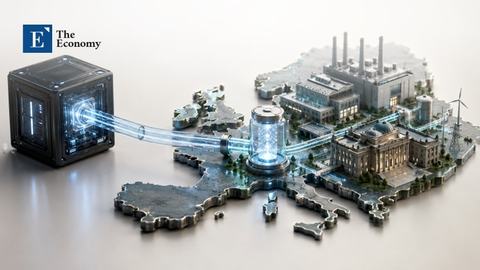
As Europe draws neighboring trading partners into coordinated trade measures against China, Beijing faces the prospect of shrinking export markets. China has offset export losses in the United States through increased sales elsewhere, making additional European restrictions a potentially significant constraint on its export strategy. According to the European Central Bank (ECB), Chinese exports to the United States fell 20% last year, a decline of $104 billion from the previous year. Over the same period, exports to the euro area rose 8%, while shipments to the Association of Southeast Asian Nations (ASEAN) increased 13%. Exports to Africa and Latin America also expanded, allowing China’s total exports to maintain growth of 5.5%. Demand across these regions compensated for declining shipments to the United States, but additional European restrictions could narrow one of the principal outlets China has secured.
Redirecting goods excluded from Europe to emerging economies also faces constraints. Countries experiencing increased inflows of Chinese products are raising import barriers to protect domestic manufacturing. Starting this year, Mexico imposed tariffs of up to 50% on automobiles, steel, textiles and plastics from countries, including China, with which it has no free trade agreement (FTA). Brazil also decided in February to impose anti-dumping duties on Chinese cold-rolled and hot-dip galvanized steel for five years. Nor are exports to ASEAN supported solely by local consumption. The ECB found that growth in Chinese exports to ASEAN was concentrated in intermediate goods destined for further local processing and assembly, and was linked to increased ASEAN exports to the United States. Expanding shipments to Southeast Asia could therefore still leave China exposed to import restrictions in the ultimate consumer markets.
China also lacks sufficient domestic demand to absorb goods it cannot sell overseas. Statistics from the United Nations Industrial Development Organization (UNIDO) and the World Bank show that China accounts for 30% of global manufacturing output, while its share of global household consumption remains just 13%. Indeed, according to the Financial Times (FT), Chinese retail sales rose only 0.4% year on year in August. Fixed-asset investment also fell 7.2% year on year in January–August, extending the weakness in both consumption and investment. A prolonged property downturn continues to weigh on household confidence, leaving manufacturing output and exports to support the economy. Tighter European import restrictions could therefore leave Chinese companies facing both rising inventories and falling capacity utilization. The possibility that redirecting export volumes to the domestic market could intensify price competition is another consideration for Beijing.
A Smaller Surplus Under Consideration to Preserve European Market Access
With its domestic recovery remaining slow, China faces a growing need to reduce trade friction to preserve access to the European market. Its earlier proposal to increase purchases of European products appears to reflect these circumstances. According to the South China Morning Post (SCMP), Chinese Commerce Minister Wang Wentao told the EU in July that Beijing was willing to consider an agreement to purchase European goods. The proposal would preserve Chinese merchandise exports while opening the domestic market further to European companies and increasing imports. Discussions at the time also included lowering tariffs on EU products. The approach is seen as an attempt to ease dissatisfaction over trade imbalances by expanding European companies’ sales opportunities in China. Beijing’s calculation is that it could preserve overseas outlets for Chinese businesses while responding to EU demands for a smaller trade surplus.
China also intends to extend this import expansion strategy to trade in services and cooperation in emerging industries. In outlining the results of bilateral consultations on July 2, China’s Ministry of Commerce said the two sides had agreed to expand cooperation in artificial intelligence (AI) and the green transition. They also planned to identify additional opportunities for cooperation in services trade and resolve disagreements over market access through separate consultations. Working-level discussions were divided into four areas: trade and investment balance, export controls, intellectual property rights and WTO reform. The two sides further agreed to hold regular ministerial meetings once or twice a year. China’s Ministry of Commerce set out the principle of pursuing balance by expanding the overall volume of trade, with subsequent consultations covering both European companies’ access to the Chinese market and export controls on each side.
Anne-Marie Nicholson is a fearless reporter covering international markets and global economic shifts. With a background in international relations, she provides a nuanced perspective on trade policies, foreign investments, and macroeconomic developments. Quick-witted and always on the move, she delivers hard-hitting stories that connect the dots in an ever-changing global economy.
Similar Post