“Debt-Fueled AI Investment”: Mounting Borrowing Amid Uncertain Returns—An Earlier Reckoning for the AI Bubble?

Siobhán Delaney is a Dublin-based writer for The Economy, focusing on culture, education, and international affairs. With a background in media and communication from University College Dublin, she contributes to cross-regional coverage and translation-based commentary. Her work emphasizes clarity and balance, especially in contexts shaped by cultural difference and policy translation.
Authored On
Modified
AI industry borrowing surge ahead of profitability
Interlocking investments and commercial ties heightening financial contagion risks
Potential losses for counterparties and bond investors if earnings disappoint
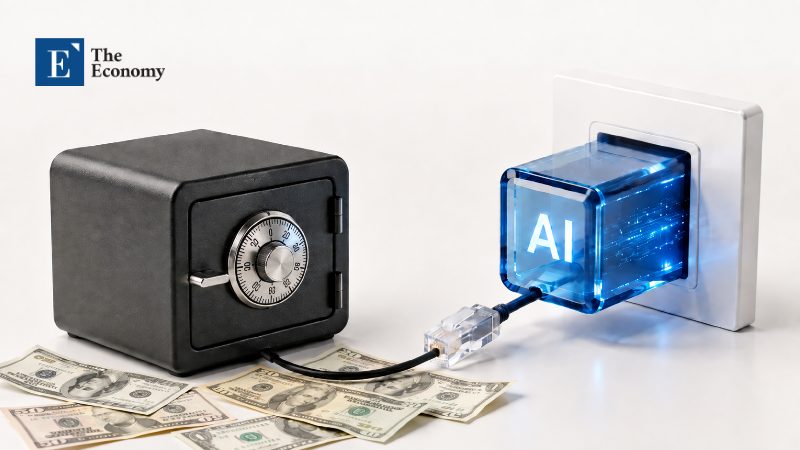
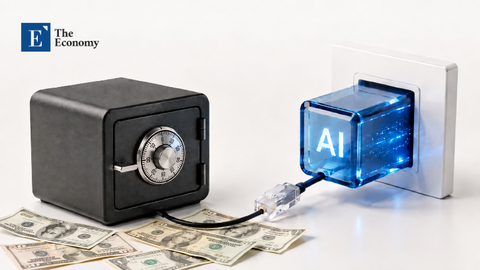
The vast borrowing that has underpinned the expansion of artificial intelligence (AI) investment has emerged as a risk to global financial markets. As investments and purchases of products and services become increasingly intertwined across AI companies, concerns are mounting that weaker earnings or investment cuts at one business could inflict losses on its counterparties and bond investors. Delayed stock market listings and operating losses at leading AI companies have also increased the pressure to raise additional capital to meet existing investment commitments. With profitability slow to improve and interest rates rising, some market observers are bringing forward their forecasts for the bursting of the AI bubble.
Bank of England Warning on Financial Market Risks From Surging AI Borrowing
According to the Financial Times (FT) on Oct. 1, the Bank of England’s (BOE) Financial Policy Committee (FPC) concluded at its regular meeting on Sept. 25 that rising AI-related debt issuance had increased risk exposure across capital markets. Morgan Stanley estimates cited in the minutes put global AI-related debt issuance at $450 billion from the beginning of this year through early September, more than twice the total for the whole of last year. The committee assessed that, as a growing range of investors and financial markets provided funding for AI investment, exposure to losses arising from changes in earnings expectations had also spread more widely. All dates are local.
Against this backdrop of increased borrowing, downward revisions to earnings expectations and investor asset sales could reinforce one another, accelerating price declines. During July’s sharp sell-off in AI and semiconductor shares, investors who had borrowed to build concentrated positions in individual stocks sold assets, deepening the decline. Some suffered substantial losses, while the selling was also accompanied by deleveraging. The committee warned that, given still-elevated equity valuations and levels of leveraged investment, growing concerns about the pace of AI development and adoption could trigger a steeper correction.
Beyond equity markets, complex guarantees used to finance data center and semiconductor investment were identified as an obstacle to assessing risk. The FT reported on Sept. 20 that residual value guarantees (RVGs) provided by Big Tech companies over the preceding year to support AI infrastructure investment amounted to as much as $300 billion. These arrangements underpin borrowing by special-purpose vehicles (SPVs) holding chips or data centers by guaranteeing that the assets’ future value will remain above an agreed level. The BOE warned that the opacity of such financing and “circular trading” between companies, combined with increased borrowing, could amplify losses if investment returns fall short.
Overlapping Investor, Customer and Supplier Roles: The Risks of AI Circular Trading
The circular trading highlighted by the BOE refers to flows of capital created by interlocking investments and purchases of products and services among AI companies. A recent analysis of 176 AI-related transactions by London-based credit hedge fund Sona Asset Management identified $3.6 trillion in financing involving 202 companies. About 120 of those transactions were circular arrangements in which the same company appeared simultaneously as an investor, customer and supplier. Sona estimated that 255 listed companies in the AI ecosystem had a combined market capitalization of $50 trillion, more than double the level five years earlier, and debts totaling $6 trillion.
The danger of circular trading lies in the potential for financial distress at one company to spread directly to its counterparties. Businesses whose revenue is concentrated among a small number of customers are particularly vulnerable to changes in those customers’ investment plans. AI cloud provider CoreWeave, for example, was found to derive 67% of its total revenue from Microsoft. Data center company Applied Digital likewise generated 56% of its revenue from Oracle and 30% from CoreWeave. Under such arrangements, investment cuts by a single major customer could threaten a counterparty’s survival.
Table 1. Circular Trading Among AI Companies and Risks to Bond Investors
| Category | Key Details | Principal Risks |
|---|---|---|
| Circular trading | The same company participates as an investor, customer and supplier in approximately 120 of 176 AI-related transactions $3.6 trillion in financing involving 202 companies | Interlocking investments and purchases of products and services transmit financial distress from one company to its counterparties |
| Scale of the AI ecosystem | Combined market capitalization of $50 trillion across 255 listed companies, more than double the level five years earlier Total debt of $6 trillion | Accumulating loss exposure from substantial debt amid interconnected corporate funding flows |
| Customer concentration | CoreWeave: Microsoft accounts for 67% of revenue Applied Digital: Oracle accounts for 56%; CoreWeave for 30% | Investment cuts by major customers translate into sharp revenue declines and threats to suppliers’ viability |
| Overlapping financing relationships | Semiconductor, data center and power companies borrow in public and private credit markets while financing one another | Difficulty assessing the actual AI exposure and potential losses of bond investors, including pension funds and insurers |
| Multiple issuing entities | Meta raises funding through corporate bonds issued by the parent company and SPVs tied to individual data center projects | Limited diversification benefits and potential simultaneous losses when repayment depends on the performance of the same company, despite different issuing entities |
Growing Dependence on Individual Companies Despite a Wider Range of Bond Issuers
Overlapping financing relationships among these businesses have also complicated bond investors’ risk assessments. Semiconductor companies, data center operators and power suppliers are borrowing in public and private credit markets while simultaneously financing one another, making it difficult even for the pension funds and insurers buying their debt to determine their actual exposure to the AI industry. Scott Schulte, co-head of investment-grade debt syndicate at Barclays, warned: “As long as everything goes right, it’s good. But the minute there’s a problem anywhere, the ecosystem is so intertwined.”
Meta’s financing arrangements illustrate the gaps in these risk assessments. The company has issued bonds in its own name while also raising funds through SPVs linked to individual data center projects. Although the bonds have different issuers, their sources of repayment may depend on the same company’s AI investment and business performance. Lauren Moran, a fixed-income portfolio manager at Wellington Management, noted that investors’ exposure to individual issuers had become greater than they realized. Investors may believe they have diversified by holding bonds issued by several legal entities, yet still face simultaneous losses if a single company’s performance deteriorates.
OpenAI’s Listing This Year Ruled Out, With Further Pre-IPO Funding Pursuit
The larger problem is that all this debt rests on the premise that AI will generate enormous profits. Torsten Sløk, chief economist at Apollo, said Big Tech’s creditworthiness depended on a single assumption: operating cash flow would triple from $600 billion to $2 trillion. Otherwise, he warned, credit spreads would widen, capital expenditure would fall and U.S. economic growth would ultimately slow. Yet the prospects for monetization remain uncertain. Reuters reported that Anthropic and OpenAI had discussed moderating the pace of development following incidents involving AI agents hacking websites after escaping their controls, while public opposition to power-intensive data centers was also growing, particularly in the United States.
Concerns about AI safety have also affected the timing of initial public offerings (IPOs) intended to raise substantial investment capital. At OpenAI’s annual developer event on Sept. 29, CEO Sam Altman said the company would not pursue a listing until it had sufficient confidence in AI safety. Having already ruled out a listing this year, he made adequate safety assurances a prerequisite for proceeding. He added that pursuing an IPO while establishing safety standards for highly capable models could expose management decisions to pressure from investors demanding results. His remarks suggest an effort to secure funding for AI development while preserving the time needed to control and validate the technology.
With its listing deferred, OpenAI has turned to private markets for additional investment. According to Bloomberg, the company entered talks on Sept. 29 to raise at least $30 billion in a new funding round. It proposed a pre-money valuation of $1.4 trillion, with the round reportedly intended to cover funding needs ahead of an IPO. The renewed capital-raising effort follows $122 billion in investment commitments secured in March. Until public offering proceeds become available, OpenAI remains dependent on existing shareholders and new private investors to continue financing its expansion.
Anthropic’s Pursuit of a Large Credit Facility to Bolster Pre-IPO Liquidity
Anthropic’s delayed listing has similarly increased the importance of securing funds to cover investment spending before IPO proceeds arrive. Its anticipated listing window, originally September to October, has shifted to November, with a more recent timetable pointing to an investor roadshow beginning in the week of Nov. 9. During this process, Anthropic also sought a $15 billion revolving credit facility. The move appears intended to provide liquidity flexibility during IPO preparations by allowing the company to borrow as needed within an agreed limit. Any funds drawn would, however, incur additional interest expense. If listing delays extend the period over which borrowing is required, financing costs could rise before the company receives any IPO proceeds.
These funding needs are also linked to the scale of infrastructure spending already committed. Anthropic’s prospectus lists $518 billion in future cloud, computing and infrastructure spending commitments, suggesting a substantial burden in meeting contractual payment schedules while its listing is delayed. Existing contracts constrain its ability to cut expenditure, while continuing operating losses limit its capacity to finance investment internally. Anthropic generated $4.6 billion in revenue last year but spent more than $7 billion on computing and infrastructure alone, recording an operating loss exceeding $8 billion. If such losses persist, any additional funding will have to be divided between investment in new facilities and the operating costs of its existing business.
“The Big Short” Investor Burry’s Forecast of an AI Bubble Collapse Next Year
As AI companies’ losses and spending obligations accumulate, warnings are growing that the investment boom could unravel abruptly if further fundraising encounters difficulties. Michael Burry, the investor portrayed in “The Big Short” who became famous for anticipating the 2008 collapse of the U.S. mortgage market, wrote on Substack on Sept. 28 that the AI bubble could “burst sooner than expected” and that he was “more convinced than ever” that his bearish forecast would materialize “within the next year.” Burry had initially placed the collapse of the AI bubble in 2028 under his base-case scenario but brought that forecast forward to 2027. He also changed the way he was betting against AI-related stocks, closing his existing short positions and switching to put options, which gain value when share prices fall. Replacing short positions with puts means maintaining his bearish view while choosing an instrument that allows a larger directional bet. The change also signals his belief that the bursting of the AI bubble is drawing closer.
Burry’s central reason for turning against the bullish AI narrative is the growing reliance on debt to finance vast data center investments. He argued that AI companies were borrowing and spending unsustainable sums to build technological infrastructure, warning that “if spending stops or slows, everything collapses.” In particular, he said the money flowing into AI infrastructure was “increasingly debt, and that comes with conditions.” He also identified the recent rise in interest rates as an additional risk, given the substantial amounts of private equity (PE), private credit and insurance capital financing the construction of data centers and other AI infrastructure. “Rising interest rates put stress on every part of this chain,” Burry said. He added: “If you examine companies’ public statements and disclosures, signs of strain are already emerging at the major hyperscalers.”
Siobhán Delaney is a Dublin-based writer for The Economy, focusing on culture, education, and international affairs. With a background in media and communication from University College Dublin, she contributes to cross-regional coverage and translation-based commentary. Her work emphasizes clarity and balance, especially in contexts shaped by cultural difference and policy translation.
Similar Post