“From Covert Recording to Exam Cheating”: Smart Glasses Draw Growing Restrictions as Risks Become Clear

Oliver Griffin is a policy and tech reporter at The Economy, focusing on the intersection of artificial intelligence, government regulation, and macroeconomic strategy. Based in Dublin, Oliver has reported extensively on European Union policy shifts and their ripple effects across global markets. Prior to joining The Economy, he covered technology policy for an international think tank, producing research cited by major institutions, including the OECD and IMF. Oliver studied political economy at Trinity College Dublin and later completed a master’s in data journalism at Columbia University. His reporting blends field interviews with rigorous statistical analysis, offering readers a nuanced understanding of how policy decisions shape industries and everyday lives. Beyond his newsroom work, Oliver contributes op-eds on ethics in AI and has been a guest commentator on BBC World and CNBC Europe.
Authored On
Modified
UK courts and businesses increasingly restrict the entry, use and recording functions of smart glasses
Risks extend beyond privacy violations to exam cheating and leaks of sensitive information
Meta responds with stronger safeguards and a new camera-free model
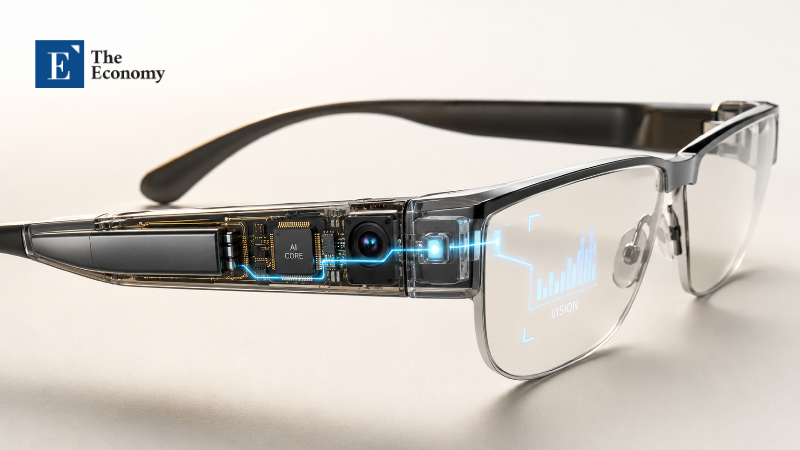
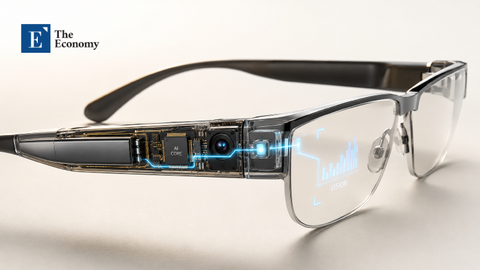
Social unease over smart glasses is mounting. As adoption grows, incidents involving unauthorized recording, invasions of privacy and exam cheating have prompted courts and businesses to impose their own restrictions on wearing the devices and using their cameras. Amid the controversy, market leader Meta has strengthened safeguards, including its “capture LED,” and adjusted its product strategy by introducing smart glasses without a camera.
Growing Restrictions on Smart Glasses in the UK
According to technology industry sources on September 29, restrictions on smart glasses have recently spread across both public and private venues in the UK. Last month, HM Courts & Tribunals Service (HMCTS), which administers courts and tribunals in England and Wales, banned camera-equipped smart glasses from court buildings. Visitors carrying the devices must leave them at the entrance and collect them when they depart. The measure is intended to prevent unauthorized filming and audio recording in courtrooms.
Restaurants have also introduced their own restrictions. According to The Guardian, prominent London restaurateur Jeremy King said last month that guests must not wear camera-equipped smart glasses at establishments he operates, including Simpson’s in the Strand, Arlington and The Park. His aim is to prevent filming that could infringe on customers’ privacy. Soho House, which operates private members’ clubs, hotels and restaurants primarily in London, and major UK pub chain JD Wetherspoon are likewise applying their existing bans on filming inside their premises to smart glasses.
Theatre and Cinema Operators Tighten Rules
A similar shift is evident in the UK theatre industry. According to a CNN report on September 22, ATG Entertainment, which operates London’s Piccadilly Theatre, the Bristol Hippodrome and the Edinburgh Playhouse, does not permit audiences to record performances with smart glasses. ATG told CNN that if an audience member is found wearing smart glasses during a performance, staff ask them to remove the glasses and delete any footage already recorded. Staff at the Piccadilly Theatre said covert filming with smart glasses could expose details of a production and its staging, diminishing the audience experience and potentially affecting the copyrights and revenue of performers and producers.
The UK Cinema Association (UKCA), whose members account for more than 90% of UK cinema operators, said in an official statement last month that many operators were adopting policies banning or restricting camera-equipped smart glasses. Cinema staff can usually tell whether someone is using a mobile phone during a screening, but cannot readily determine whether a person wearing smart glasses is recording, prompting calls for stronger preventive restrictions. The UKCA has issued guidance restricting wearable devices capable of capturing images inside cinemas. Under the guidance, staff may ask patrons to remove the devices or, if necessary, leave.
Documented Harms Involving Smart Glasses
These measures have emerged as incidents of unauthorized recording and privacy violations have multiplied with the spread of smart glasses, rapidly heightening concern. In January, for example, the BBC reported that a Brighton resident identified as Ona had unknowingly been filmed with smart glasses while speaking to a man on a beach in June last year. After asking for her name, where she lived and her contact details, the man posted a video of their conversation to the short-form platform TikTok, where it drew about one million views. It also attracted numerous sexual and insulting comments. Another woman, Kate, who lives in London, later discovered that a man who approached her at a gym had secretly filmed their conversation with smart glasses and posted it on TikTok. The video received about 50,000 views within six hours, followed by comments mocking her appearance and behavior.
Similar cases have been reported in the United States. Last month, The Guardian reported that Breck Metra, a Utah mother of two, was filmed without her consent by a seller wearing smart glasses during a secondhand clothing transaction inside her home. The footage showed the faces of Metra and her two young children, while her full name was exposed through the Venmo account used for payment. Metra learned she had been filmed only after a stranger in Philadelphia saw the video and contacted her. The problem extends beyond individual incidents. Researchers at the University of Sydney analyzed 350 videos filmed with smart glasses and posted to Instagram between 2023 and 2026. Among videos recorded without the subjects’ awareness, roughly 60% showed circumstances that could be classified as potential harassment, including subjects expressing discomfort or avoiding contact. In 43% of videos featuring women, the researchers also identified subsequent harms, including abusive comments after publication or further exposure of personal information such as identities and locations.
Table 1. Principal Risks Associated With the Spread of Smart Glasses
| Category | Principal Risk |
|---|---|
| Privacy violations | Recording is difficult to detect, increasing the risk of filming daily life and private spaces without consent |
| Secondary online harms | Unauthorized footage posted on social media can cause further harm |
| Exam cheating | Growing number of cases involving cameras and AI to solve exam questions |
| Information leaks | Risk of exposing sensitive information, including computer screens, internal documents and meeting discussions |
| Enforcement challenges | Resemblance to ordinary eyewear makes recording devices difficult to identify and control on site |
Exam Cheating and Information-Leak Risks
Smart glasses have given rise to social problems beyond privacy violations, notably exam cheating. According to a June report by Taiwan’s Taipei Times, National Taiwan University (NTU) caught an applicant using artificial intelligence (AI) smart glasses to cheat on a medical school entrance exam and invalidated the applicant’s score. Wearing a hat and thick-framed glasses, the applicant drew a proctor’s suspicion by staring at the exam paper for extended periods and repeatedly bringing it close to their face. An inspection then found that the device’s camera could recognize exam questions and that its AI could provide answers and calculation steps. Taiwanese admissions authorities subsequently classified smart glasses as a distinct means of serious exam misconduct and tightened the relevant rules. Similar cases have occurred in South Korea. Proctors caught two candidates using AI smart glasses during Test of English for International Communication (TOEIC) exams held on May 10 and 31. The Korea TOEIC Committee invalidated both candidates’ scores and barred them from taking the exam for four years.
The information security sector is also taking precautions. DEF CON, one of the world’s largest hacking conferences and held annually in Las Vegas, announced ahead of its July event that camera-equipped smart glasses would be restricted at the venue. Photography and video recording without a subject’s consent were already prohibited. Organizers introduced a separate measure for smart glasses because they are difficult to distinguish from ordinary eyewear and can record continuously while being worn. A market analyst said the information security industry views smart glasses and other wearables as a new threat because they can record sensitive information—including computer screens, internal documents and meeting discussions—from the wearer’s point of view.
Meta Strengthens Its Safeguards
As controversy over smart glasses has intensified, Meta has strengthened its safeguards. A principal feature is the capture LED on the front of its glasses. In a product briefing released in July, Meta said the light flashes briefly when a photograph is taken and continues flashing until video recording ends. The company does not provide a setting that allows users to switch off the indicator, enabling people nearby to see when the glasses are recording. Starting with its second-generation smart glasses, Meta added a feature that automatically disables the camera if tape or another object covers the capture LED. More recently, it has made further changes to prevent the camera from operating if the LED is physically modified or damaged.
Meta is also changing its approach to product development. At Meta Connect 2026 on September 23, the company unveiled Ray-Ban Meta Audio, its first camera-free smart glasses. Whereas existing Ray-Ban Meta products use a camera to capture the wearer’s field of view for AI processing, the new model removes the camera entirely and focuses on AI functions supported by open-ear speakers and microphones. Meta has thus divided its product range between existing camera-equipped models with enhanced safeguards for users who want to record and a camera-free audio model for those seeking to reduce privacy concerns.
Oliver Griffin is a policy and tech reporter at The Economy, focusing on the intersection of artificial intelligence, government regulation, and macroeconomic strategy. Based in Dublin, Oliver has reported extensively on European Union policy shifts and their ripple effects across global markets. Prior to joining The Economy, he covered technology policy for an international think tank, producing research cited by major institutions, including the OECD and IMF. Oliver studied political economy at Trinity College Dublin and later completed a master’s in data journalism at Columbia University. His reporting blends field interviews with rigorous statistical analysis, offering readers a nuanced understanding of how policy decisions shape industries and everyday lives. Beyond his newsroom work, Oliver contributes op-eds on ethics in AI and has been a guest commentator on BBC World and CNBC Europe.
Similar Post