The Dark Side of Smart Glasses Adoption: Privacy and Exam Integrity Under Threat

Anne-Marie Nicholson is a fearless reporter covering international markets and global economic shifts. With a background in international relations, she provides a nuanced perspective on trade policies, foreign investments, and macroeconomic developments. Quick-witted and always on the move, she delivers hard-hitting stories that connect the dots in an ever-changing global economy.
Authored On
Modified
Meta commands an 85% market share, spearheading smart glasses adoption
Misuse proliferates, from illicit filming to exam cheating
China’s price-cutting offensive drives up on-site enforcement costs
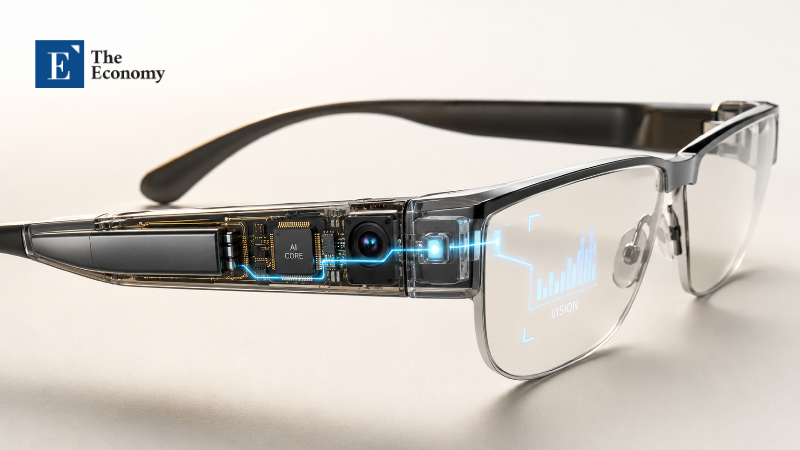
Smart glasses virtually indistinguishable from conventional eyewear are rapidly emerging as the next-generation interface of the artificial intelligence (AI) era. Meta controls 85% of the global market, while Chinese manufacturers are rapidly lowering barriers to adoption by flooding the market with products priced between roughly $70 and $140. Yet the devices’ defining feature—turning the wearer’s line of sight into a camera—has enabled illicit filming and exam cheating, repeatedly exposing gaps in existing regulations and oversight systems. As smart glasses penetrate deeper into everyday life, establishing social rules governing where and how they may be used and operated as recording devices has become an urgent priority.
Meta’s 85% Grip Ignites the Chase
According to market research firm Omdia on Wednesday, the global smart glasses market entered a growth trajectory following the launch of Ray-Ban Meta, jointly developed by Meta and EssilorLuxottica. Worldwide smart glasses shipments surged 322% year on year to 8.7 million units last year. Meta shipped 7.4 million units, capturing an 85.2% market share.
Growth has accelerated further this year. Counterpoint Research reported that first-quarter shipments of smart glasses without displays climbed 210% from a year earlier. Meta’s market share rose two percentage points to 84% over the same period, up from 82% in the previous quarter. As consumers increasingly use photography, calling, translation, and search functions without reaching for a smartphone, smart glasses have become a primary growth engine in the wearable device market.
Rivals are intensifying their pursuit. Google has partnered with Warby Parker and Gentle Monster to launch Gemini-powered eyewear this fall, while Snap is currently taking preorders for its consumer smart glasses, Specs. Amazon is also developing consumer eyewear after introducing smart glasses for delivery drivers. Apple is reportedly working on camera-equipped AirPods and a separate brooch-style wearable fitted with a camera. All are targeting a screenless interface that provides access to AI without requiring users to take out their smartphones.
Privacy Blind Spot
Privacy breaches and other incidents have proliferated as competition heats up. Last month, Seoul’s Gangseo Police Station arrested a man accused of secretly filming the bodies of women he was dating with Meta smart glasses and distributing the footage online. The suspect neither took out a smartphone nor pointed a camera lens at the victims. Recording occurred simply by looking at them while wearing what appeared to be ordinary glasses. The products’ near-identical resemblance to conventional eyewear reportedly made it difficult for the victims to realize at the scene that they were being filmed. Overseas, videos covertly recording women on streets and in bars have spread across social media, earning smart glasses the moniker “pervert glasses.”
Such crimes are enabled by the distinctive appearance of smart glasses. Although a camera is embedded in one side of the frame, the devices are virtually indistinguishable from ordinary eyewear. A small indicator light turns on during recording, but it can be difficult to notice on brightly lit streets or inside dimly illuminated venues. Even when bystanders see the light, they may fail to recognize that filming is underway if they do not understand what the indicator signifies
AI Enters the Physical World, Rules Remain Absent
As the controversy intensified, Meta introduced a feature restricting camera operation when the indicator light is covered and began advising users to switch off the devices in hospitals, changing rooms, restrooms, schools, and other sensitive locations. Yet these measures depend heavily on wearers’ willingness to comply, raising doubts about their effectiveness. Smartphones operate only when users take them out, whereas smart glasses make their presence perceptible to bystanders simply by being worn. The moment AI leaves the screen in a user’s hand and enters physical space, privacy becomes a matter of public concern.
The existing legal framework, however, remains ill-equipped to keep pace with the proliferation of wearable cameras. South Korea’s Personal Information Protection Act classifies smart glasses as “mobile visual data processing devices” and requires users recording for business purposes in public places to provide notice through a light or sound. The provision has limited applicability when individuals wear the devices for private purposes, making it difficult to preempt unauthorized recording in everyday spaces. Preventive measures also remain centered on manufacturers’ user guidance and venue-specific entry rules. These limitations have fueled calls for legally binding requirements covering the minimum brightness and size of recording indicators, tamper-resistant designs, and restrictions on bringing such devices into sensitive locations.
Table 1. Detected Cases of Exam Cheating Using Smart Glasses
| Country or Region | Examination or Institution | Cheating Method | Detection and Disciplinary Action |
|---|---|---|---|
| China | University examinations | Scanning exam papers with smart glasses and copying answers displayed on the lenses | At least 20 universities disclosed cases and penalties involving smart-device-assisted cheating in 2026 |
| Taiwan | Second-round written examination at National Taiwan University College of Medicine | Concealing smart glasses with a hat and thick frames while attempting to photograph the exam paper | Proctors discovered the device while it was still warm from operation |
| Taiwan | General Scholastic Ability Test subject examination | Wearing smart glasses during physics and chemistry examinations | Detected with a metal detector and disqualified; authorities began revising rules to impose a zero score for possession alone |
| Japan | Waseda University entrance examination | Photographing exam papers, transmitting them through X, and receiving answers from external accomplices | The examinee was found to have paid answer providers online |
| Japan | TOEIC | Transmitting questions externally through smart glasses and a miniature microphone hidden inside a mask, then supplying answers to other examinees | Kyoto University graduate student arrested and indicted |
| South Korea | Industrial Engineer Electricity examination | Concealing a smartphone linked to smart glasses and attempting to view answers through the lenses | Booked on suspicion of violating the National Technical Qualifications Act |
| South Korea | Fire Protection Systems Engineer examination | Viewing answers through glasses linked to a self-developed AI program | Examinee in his 40s referred for summary trial |
Exam Integrity Under Threat
While regulatory reform has stalled, the discreet nature of smart glasses has begun to threaten exam integrity directly. At least 20 Chinese universities disclosed cheating cases and disciplinary actions involving smart glasses, smartwatches, and other electronic devices this year. South China Agricultural University announced that it had handled multiple attempts to cheat by bringing smart glasses into examination rooms. In one case, a university student in Hebei Province reportedly scanned an exam paper with smart glasses and copied answers displayed on the lenses.
Entrance examinations in Taiwan have also suffered repeated breaches. During the second-round written examination at National Taiwan University College of Medicine in June, an examinee was caught concealing smart glasses with a hat and thick frames. After noticing the examinee repeatedly staring at the exam paper for extended periods and bringing it close to the face, a proctor inspected the glasses and discovered the device while it was still warm from operation. During Taiwan’s General Scholastic Ability Test subject examination last month, another candidate wearing smart glasses during the physics and chemistry sections was detected with a metal detector and disqualified. Taiwanese testing authorities have begun revising regulations to impose a zero score in the relevant subject for possession of such a device, even when it has not been used.
In Japan, smart glasses have served as a central tool for leaking exam questions and orchestrating proxy cheating schemes. An 18-year-old examinee who sat Waseda University’s entrance examination in 2024 used glasses equipped with camera and communication functions to photograph chemistry and other test papers, transmitted the images through social media platform X, and received answers from accomplices recruited in advance. Investigators found that the examinee had also paid the answer providers online. A TOEIC cheating case surfaced last year. A Kyoto University graduate student was arrested and indicted for allegedly using camera-equipped smart glasses and a miniature microphone concealed inside a mask to transmit exam questions externally and provide answers to other candidates.
South Korea has also recorded successive cases of smart-glasses-assisted cheating. In May, a man in his 20s taking the Industrial Engineer Electricity examination brought two smartphones, surrendered only one to the proctor, and entered the testing room with the other concealed on his body and linked to smart glasses. A proctor became suspicious after observing him repeatedly touching the frames of his glasses. He was subsequently booked on suspicion of violating the National Technical Qualifications Act.
That same month, an examinee in his 40s was referred for summary trial after using glasses linked to a self-developed AI program to retrieve answers during the Fire Protection Systems Engineer examination. It marked South Korea’s first case in which cheating on a national qualification examination using smart glasses was handled as a criminal matter. Post-incident sanctions that invalidate scores and revoke eligibility, however, remain inadequate. Experts say the current monitoring system, centered on collecting smartphones and conducting visual inspections, contains significant gaps that make conventional-looking wearable devices difficult to detect. Delayed regulation will inevitably erode confidence in the examination system and harm legitimate candidates.
The Paradox of China’s Price War: Surging Social Oversight Costs
China’s aggressive smart glasses pricing strategy is accelerating mass adoption and intensifying the urgency of regulation. According to Chinese technology industry publication TMTPost, the first 500 pairs of smart glasses launched by KTC were sold for $149 each. A 30-day rental cost just $40. During a limited promotion on JD.com last December, Xiaomi’s product was offered for $104, roughly one-third of its regular $298 price.
Chinese authorities also added smart glasses to the list of products eligible for purchase subsidies this year, offering support equal to 15% of the retail price, capped at $75. The combination of lower prices and policy support pushed smart glasses shipments in mainland China to nearly 1 million units last year, giving the country a 10.9% share of the global market and placing it second behind the United States. Rokid and Xiaomi rose to second and third place, respectively, in worldwide shipments. In display-equipped smart glasses, Chinese companies including Rokid, Alibaba, and Even Realities secured a combined market share of 71%.
Lower prices are driving up the cost of on-site enforcement. According to market research firm IDC, camera-equipped products accounted for 39.4% of China’s audio and camera glasses market in the fourth quarter of last year, surging from 7.1% in the first quarter. More than 68% of all smart glasses were distributed through online channels. Easier price comparisons, cross-border direct purchases, and short-term rentals have made it increasingly difficult for schools, hospitals, courts, and companies to determine recording capabilities based solely on a product’s appearance. A blanket ban on wearing such devices would also restrict navigation, interpretation, visual and hearing assistance, and remote support at industrial sites. This creates an urgent need for granular rules that distinguish among recording, audio capture, storage, and cloud transmission functions while setting different usage limits according to the sensitivity of each location.
Anne-Marie Nicholson is a fearless reporter covering international markets and global economic shifts. With a background in international relations, she provides a nuanced perspective on trade policies, foreign investments, and macroeconomic developments. Quick-witted and always on the move, she delivers hard-hitting stories that connect the dots in an ever-changing global economy.
Similar Post