“Oil Exports Choked Off, Economy Nearing Its Limit”: U.S. Confident Economic Pressure on Iran Is Working, Expects Financial Markets to Stabilize After War

As one of the youngest members of the team, Tyler Hansbrough is a rising star in financial journalism. His fresh perspective and analytical approach bring a modern edge to business reporting. Whether he’s covering stock market trends or dissecting corporate earnings, his sharp insights resonate with the new generation of investors.
Authored On
Modified
“Oil Exports Will Soon Dry Up”: U.S. Stresses Effectiveness of Economic Pressure on Iran
Iran’s Economic Isolation Deepens, With Limited Support Channels Through China and Russia
Trump Administration Strikes Optimistic Note, Urges Fed to Refrain From Further Rate Hikes
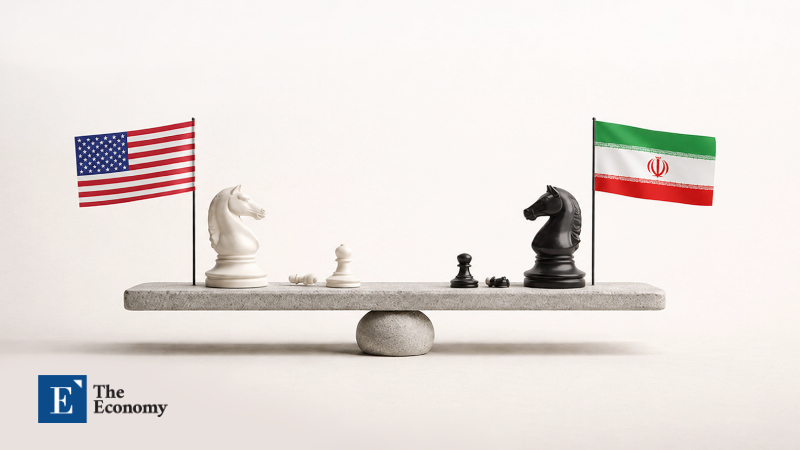
The United States has expressed confidence that its economic pressure campaign against Iran is working. Washington assesses that its maritime blockade and financial and oil sanctions have cut off Tehran’s principal sources of foreign currency, leaving the Iranian economy increasingly unable to withstand further pressure. The Trump administration also expects an eventual end to the war to ease Middle Eastern supply disruptions and bring down both international oil prices and long-term U.S. Treasury yields. On that basis, it has pushed back against the need for further tightening by the Federal Reserve (Fed).
What Has the U.S. Economic Isolation Campaign Achieved?
In an interview with Fox News on the 27th (local time; all subsequent dates are local), U.S. Treasury Secretary Scott Bessent said that “about 15 million barrels” remained in the last shipments of Iranian oil headed to China and that, “probably within two weeks, Iran will have very little left to trade.” He argued that the situation demonstrated the effectiveness of Washington’s campaign to isolate Iran economically, known as “Operation Economic Outcast.” The Trump administration has recently expanded measures targeting Iran’s foreign-currency channels across the oil, financial, aviation and digital-asset sectors. This month, the Treasury Department imposed successive sanctions on Iran’s aviation network, a digital-asset sanctions-evasion network and organizations supporting Iran-aligned armed groups.
Bessent stressed that the pressure had renewed Iran’s interest in negotiations. His remarks appeared to refer to the so-called “seven-day plan” that Iranian Foreign Minister Abbas Araghchi conveyed to the United States through mediator Qatar while attending the United Nations (UN) General Assembly on the 24th. Under the reported proposal, Iran would reopen the Strait of Hormuz within seven days and resume talks to end the war if Washington lifted its maritime blockade of Iran, released frozen funds and eased restrictions on Iranian oil sales. President Trump, however, told reporters at the White House on the 26th that he had rejected Iran’s proposal. In a phone interview with the online outlet Axios the following day, he said Iran had overestimated its hand in the negotiations. His comments signaled that, with Washington holding the stronger bargaining position, he saw no reason to accept Tehran’s terms.
Further Help From China and Russia Appears Unlikely
As the U.S. government contends, Iran’s economic isolation appears to be deepening by the day. Iran has long circumvented U.S. financial sanctions by using a “shadow fleet,” among other means, to export oil to China. It has accumulated the proceeds as credit within China and used that credit to procure medicines, automobiles, telecommunications equipment and other goods. But the tighter U.S. maritime blockade has made it harder for newly shipped Iranian crude to pass through the Strait of Hormuz and reach China. Most of the oil China can still receive consists of cargoes that had already left Iran by sea before the blockade. According to commodity analytics firm Kpler, Iranian crude shipments stood at about 260,000 barrels per day at the beginning of this month, down roughly 85% from 1.7 million barrels per day a year earlier.
Russia, for its part, has expanded settlement in the two countries’ own currencies and direct transactions between their banks under a comprehensive strategic partnership agreement with Iran. Russia’s VTB Bank is also believed to have established correspondent banking relationships with sanctioned Iranian financial institutions and participated in transferring frozen assets and developing a bilateral settlement network. Yet Russia is not a major end market for Iranian oil on the scale of China and cannot readily replace the decline in exports to Chinese buyers. U.S. pressure has recently narrowed its financial support channels as well. The Treasury Department has imposed additional sanctions on VTB for allegedly helping Iran evade sanctions and warned financial institutions in third countries that transactions with Russian banks could expose them to secondary sanctions.
Iran’s Economy on the Brink
The weakening of support from these partners has dealt a severe blow to Iran’s economy. Iran was already in a deep downturn before the war. According to the World Bank (WB), its real gross domestic product (GDP) contracted 2.8% last year from the previous year, while consumer prices rose 42.2%. The figures reflected the accumulated effects of longstanding U.S. sanctions, chronic fiscal and monetary instability, and energy shortages. The war that began in late February compounded the crisis. Early in the conflict, the Iranian government raised bank withdrawal limits and suspended penalties for late payments on small loans in an effort to calm financial anxiety. Airstrikes, supply-chain disruptions and internet shutdowns nevertheless caused the economic damage to spread rapidly.
Inflation and currency instability have also reached alarming levels. Iran’s currency has plunged from roughly $1 per million units a year ago to less than $0.46 per million units recently, while the official average inflation rate over the past 12 months has surged to 69.9%. Price increases for food, beverages and tobacco have approached twice the overall average. Household hardship has become acute. The average Iranian worker earns just $125 a month, while the monthly cost of basic household necessities has climbed to about $450. The unemployment rate rose to 9.1% in the spring, and employment fell by approximately 450,000 from a year earlier. The growth outlook is bleak as well. In its Global Economic Prospects report released in June, the WB estimated that Iran’s real GDP would contract 2.8% in the 2025/26 fiscal year, a substantial downgrade from the 1.1% contraction it had forecast in January.
Table 1. Economic Impact on Iran of a Protracted War
| Area | Key Developments |
|---|---|
| Declining support from partners | Maritime blockade sharply reduces oil exports to China; additional U.S. sanctions constrict channels for financial and economic support through Russia |
| Economic crisis | Currency collapse, high inflation and worsening unemployment compound the downturn and weaken economic activity across the board |
| Household and humanitarian crisis | Medicine shortages and steep price increases impair access to treatment for patients with chronic and serious illnesses |
Even Medicines Are Hard to Obtain
The humanitarian crisis is becoming more pronounced. CNN recently reported that Iranians with chronic and serious illnesses are struggling to obtain medicines essential to their survival. One example is Shima, a 35-year-old Iranian woman with kidney failure whose life depends on continuing her medication. She visited seven pharmacies before finally finding her prescribed medicine in an affluent neighborhood of Tehran. Even then, the sharp rise in its price meant she had to reduce her dosage. Iranian media reports indicate that shortages affect a wide range of medicines, including antidepressants, pregnancy-related drugs and migraine treatments. Shahram Kalantari, head of the Iranian Pharmacists Association, said that nearly 800 types of medicine were in short supply.
Patients with serious diseases such as cancer face even greater uncertainty. One patient told CNN that doctors were administering cancer drugs only to patients in the very early stages of the disease, withholding them altogether from those with advanced or terminal cancer. Another cancer patient, aged 55, said they were asking people returning from abroad to obtain medicines unavailable in Iran and described the uncertainty caused by the war as deeply distressing. Some cancer patients have reportedly sold household appliances, including televisions and refrigerators, to pay for costly medication.
What Lies Ahead for U.S. Financial Markets?
As the limits of Iran’s economy become more apparent, Washington is considering the possibility that Tehran will make further concessions and the war will end. Under that scenario, Iran would capitulate, hostilities would cease and turmoil in financial markets would subside. In an interview on CNBC’s “Squawk Box” on the 21st, Bessent noted an unusually strong recent correlation between yields on 10-year and 30-year U.S. Treasuries and international oil prices and refining margins. He predicted that “once this conflict is past us, supply conditions in the oil market will be better than before, and rates will come down.” The view is that an end to the war would ease Middle Eastern supply fears, reducing upward pressure on oil prices and, in turn, the burden of inflation and long-term Treasury yields. War-related costs, oil prices and Treasury yields have become closely watched variables in U.S. financial markets.
Bessent is also focused on the possibility that conditions for interest-rate cuts could emerge after the war. Appearing on Fox News on the 27th, he argued that the enormous inflation during President Biden’s term occurred because expanding regulation had constrained supply when the economy encountered a demand shock. By contrast, he said, the current economy was experiencing a private-sector demand shock, but deregulation had increased supply and enabled it to respond. He added that one of the biggest mistakes in central-bank history was the European Central Bank’s (ECB) decision to raise rates in the summer of 2008. Oil had exceeded $140 a barrel at the time, he said, yet the ECB raised rates amid a supply shock, with the consequences becoming clear during the financial crisis. His remarks could be interpreted as an indirect appeal for the Fed to refrain from further rate hikes.
As one of the youngest members of the team, Tyler Hansbrough is a rising star in financial journalism. His fresh perspective and analytical approach bring a modern edge to business reporting. Whether he’s covering stock market trends or dissecting corporate earnings, his sharp insights resonate with the new generation of investors.
Similar Post