North Korea–Russia Military Ties Put South Korea in a Wartime Bind as Ukraine Seeks Arms and Moscow Warns Against Supplying Them

Anne-Marie Nicholson is a fearless reporter covering international markets and global economic shifts. With a background in international relations, she provides a nuanced perspective on trade policies, foreign investments, and macroeconomic developments. Quick-witted and always on the move, she delivers hard-hitting stories that connect the dots in an ever-changing global economy.
Authored On
Modified
North Korean troop deployments and Russian technology transfers deepen military ties built on mutual gains
Ukraine seeks air-defense weapons from South Korea as Russian warnings add to pressure on Seoul
Disclosure of prisoner transfers sparks diplomatic friction, compounding security burdens
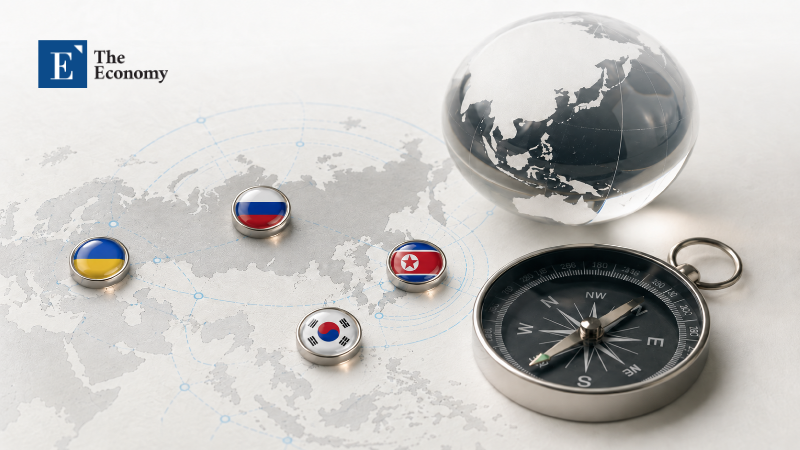
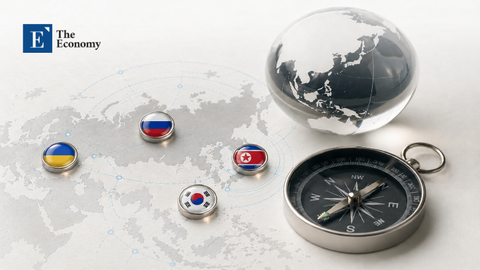
Expanding military cooperation between North Korea and Russia is adding to South Korea’s diplomatic and security burdens. In return for deploying troops, North Korea has secured economic assistance and military technology, while Russia has replenished its manpower and ammunition supplies, strengthening its capacity to sustain the war. As the two countries draw closer, Ukraine is invoking the threat to security on the Korean Peninsula to seek air-defense weapons from South Korea, while Russia has warned that such assistance would damage its relations with Seoul. Diplomatic friction has also erupted over whether a confidentiality agreement existed after Ukrainian President Volodymyr Zelensky publicly disclosed the transfer of North Korean prisoners of war to South Korea.
Zelensky Says North Korea Is Preparing to Expand Troop Deployment to Russia
According to the Ukrainian presidential office on the 28th (all dates local time), Zelensky said in an address to the nation that afternoon that newly obtained information showed “more than 8,000 North Korean troops are on Russian territory, and preparations are underway to deploy another 10,000.” He added that “Russia is providing technology and other support in exchange for North Korean troops” and claimed that “Shahed-type attack drones are being produced on North Korean territory with Russian technical assistance.” The Shahed is a family of Iranian-designed loitering munitions that Russia has used to attack Ukraine. Zelensky stressed that “this is how evil spreads, and how threats to life reach other regions,” adding that “we can overcome it only by responding together.”
Ukraine has repeatedly argued that North Korea’s troop deployment to Russia goes beyond providing manpower and could strengthen Pyongyang’s military capabilities. Kyrylo Budanov, head of the Ukrainian presidential office, also referred to North Korean troops’ experience in the Russia-Ukraine war in a social-media post that day, asserting that “North Korea is learning and arming itself through our war.” He placed particular emphasis on the Korean Peninsula. Citing a recent incident along the Military Demarcation Line between South and North Korea, Budanov said that “the situation is deteriorating by the day.” An incident with consequences that would be difficult to contain, he added, was only a matter of time.
North Korea Reaps Economic, Military and Diplomatic Gains from Troop Deployment
North Korea is easing the burden of longstanding sanctions by securing economic support and military equipment in exchange for supplying Russia with troops and weapons. According to Bank of Korea estimates, North Korea’s real gross domestic product (GDP) grew 3.5% last year, marking a third consecutive year of growth in the 3% range. The central bank identified expanded economic cooperation with Russia, increased trade with China and state-led development projects as the main drivers. Income generated by workers sent abroad and troops deployed to Russia also made a substantial contribution to its foreign-currency earnings, it said. Russian demand for weapons boosted output at North Korean munitions plants and related manufacturers, helping lift manufacturing growth to 6.6% last year. Accommodation, food services and tourism also benefited from an influx of Russian visitors and expanded transport links. As exchanges of personnel grew alongside the troop deployments and arms shipments, North Korea’s sources of income from Russia became more diverse.
In the military sphere, North Korea has gained an opportunity to collect data on how its weapons perform in combat and use it to improve them. Citing an assessment by South Korea’s Defense Intelligence Agency, Reuters reported on the 24th of last month that North Korean missiles used in the Ukraine war may have become more accurate through battlefield data, Russian technical advice and component supplies. This would allow Pyongyang to incorporate information from actual combat conditions, which it could not readily obtain through domestic test launches, into weapons upgrades. South Korean military authorities also assessed that development of some North Korean ballistic missiles and multiple-launch rocket systems believed to be intended for use in a conflict with South Korea was nearing completion. North Korea’s leadership has meanwhile conducted a series of inspections at munitions facilities, urging an expansion of firepower. According to a Reuters report on the 19th, North Korean leader Kim Jong Un visited major arms factories over three days that week and emphasized the artillery’s ability to deliver concentrated, destructive strikes. Kim asserted at the time that the broader modernization of North Korea’s defense capabilities was bringing significant changes to the military’s composition and means.
Russian support is also bolstering North Korea’s international standing. Russia, a permanent member of the United Nations Security Council, has publicly defended Pyongyang’s military buildup and possession of nuclear weapons. According to North Korea-focused outlet NK News, Russian Foreign Minister Sergei Lavrov reaffirmed support for North Korea’s efforts to strengthen its defense capabilities in July and voiced opposition to demands for its denuclearization. Pyongyang has thus secured diplomatic backing from a major power while continuing its nuclear development. With that support, North Korea has maintained its rejection of international calls to relinquish its nuclear arsenal. On the 19th, its Foreign Ministry dismissed an International Atomic Energy Agency (IAEA) resolution concerning North Korea and insisted that its status as a nuclear-armed state was irreversible. Pyongyang has also reinforced its ties with Russia, which has supported its position. In a reply sent to Russian President Vladimir Putin on the 14th of this month, Kim said he intended to expand bilateral cooperation across the board and reiterated his support for Russia’s war effort.
Table 1. Benefits to North Korea and Russia from Their Military Cooperation
| Beneficiary | Area | Key Details |
|---|---|---|
| North Korea | Economy | Income from troop deployments and arms supplies, alongside expanded trade and exchanges of personnel with Russia. Real GDP grew 3.5% and manufacturing output rose 6.6% last year. |
| Military | Potential to use battlefield performance data, Russian technical advice and component supplies to improve weapons. | |
| Diplomacy | Secured public Russian support for its military buildup and possession of nuclear weapons. | |
| Russia | Force deployment | North Korean participation in the defense of Kursk and counteroffensive operations eased pressure on Russia to disperse its forces. |
| Arms supplies | Ammunition estimated at the equivalent of more than 15 million 152mm artillery shells in total, along with short-range ballistic missiles, strengthened Russia’s supplies for a prolonged war. |
North Korean Troops Also Strengthen Russia’s Capacity to Sustain the War
Russia, which has supplied assistance in return, has eased the strain of managing its forces during a prolonged war by deploying North Korean troops. After Ukraine launched a surprise incursion into Russia’s Kursk region in August 2024, Moscow had to commit substantial forces to the defense of its own territory. One of Ukraine’s objectives was to draw Russian troops concentrated in Donbas toward Kursk and relieve pressure on the eastern front. French newspaper Le Monde reported that Russia deployed North Korean troops to Kursk while maintaining its forces and positions in Donbas. By taking part in the defense of Russian territory and subsequent counteroffensive operations, North Korean troops reduced Moscow’s need to disperse its own forces. They are assessed to have played a significant role in Russia’s counteroffensive to drive Ukrainian forces out of Kursk. Russia and North Korea officially acknowledged the North Korean troops’ participation in April last year, and Pyongyang said its forces had contributed to recapturing Kursk.
Large-scale North Korean ammunition deliveries have also provided critical support for Russia’s ability to continue the war. Artillery shells supplied by North Korea to Russia are estimated to total the equivalent of more than 15 million 152mm rounds. Deliveries of other weapons systems, including short-range ballistic missiles, are also understood to have continued. For Russia, which continually expends artillery shells in large quantities, securing North Korean ammunition has substantially strengthened the supplies needed for a prolonged campaign. More recently, officials have highlighted North Korean troops’ contributions as a demonstration of the countries’ close ties. NK News reported on the 22nd that authorities in Russia’s Kursk region planned to develop areas where North Korean and Russian troops fought into tourist attractions. Kursk Governor Alexander Khinshtein proposed opening command posts used by North Korean troops to visitors, while local authorities are reviewing with the military whether to include underground facilities and defensive positions on tourist routes.
Diplomatic Pressure from Ukraine and Russia
As North Korea and Russia deepen their cooperation, Ukraine is intensifying its requests for military support from South Korea. Kyiv has long sought South Korean air-defense weapons on the grounds that North Korean participation in the war also threatens security on the Korean Peninsula. According to the Financial Times (FT), Ukraine has requested U.S.-made Patriot interceptor missiles and other weapons from South Korea. Those requests reflect a shortage of interceptors needed to counter Russian missile strikes. Reporting on Ukraine’s difficulties in securing interceptors on the 24th, the FT said Zelensky had requested at least 300 Patriot PAC-3 missiles. His appeal to South Korea is likewise seen as an effort to obtain the missiles needed to sustain Ukraine’s air defenses immediately. Despite Ukraine’s repeated requests, however, the South Korean government has maintained its policy of not directly supplying lethal weapons to countries at war.
Russia has repeatedly warned that a change in that policy could damage relations with South Korea. In an interview with TASS on the 25th, Russian Deputy Foreign Minister Andrey Rudenko said Moscow had conveyed through diplomatic channels on several occasions that South Korean military assistance to Ukraine would have negative consequences for bilateral relations. Responding to reports that South Korea had rejected Ukraine’s request for air-defense weapons, he called on Seoul to maintain its existing position. His remarks were interpreted as an attempt to raise the costs of a policy shift by directly linking arms supplies to South Korea-Russia relations. In the same interview, Rudenko also raised economic cooperation, citing sentiment within South Korea in favor of restoring political dialogue and trade. He said relations would be difficult to improve unless South Korea changed its policy of participating in Western sanctions against Russia. By demanding both restraint on military assistance and a change in sanctions policy, Moscow is pressing Seoul over its broader approach to Russia.
Disclosure of North Korean Prisoners’ Transfer to South Korea Sparks Fallout
Amid pressure from both Ukraine and Russia, the disclosure that North Korean prisoners of war had been transferred to South Korea has further increased Seoul’s diplomatic burden. The dispute began when Zelensky said in an address to the United Nations General Assembly on the 23rd that two captured North Korean soldiers had been sent to South Korea. According to the Associated Press (AP), the two prisoners expressed a wish to settle in South Korea while they were held in Ukraine, and the South Korean government asked that they not be returned to North Korea. Their transfer to South Korea went ahead, but Zelensky’s decision to make it public triggered friction between the two countries. On the 28th, South Korea’s Foreign Ministry summoned Andrii Veshkin, Ukraine’s chargé d’affaires in Seoul, and expressed strong regret over the unilateral disclosure and Ukraine’s denial that an agreement existed. The ministry called Ukraine’s assertion that there had been no confidentiality agreement false and demanded an official explanation, an apology and measures to prevent a recurrence.
Some experts interpret Zelensky’s disclosure of the prisoner transfer as diplomatic pressure aimed at securing military support. AP cited analysts who suggested he may have sought to heighten awareness of North Korea’s involvement in the war and thereby expand assistance from South Korea and Western countries. On this reading, announcing at the United Nations that North Korean prisoners had been sent to South Korea was intended to underscore Seoul’s direct stake in the war. Some analysts also pointed to frustration over Ukraine’s unsuccessful request for air-defense weapons. In a commentary published by state-run RIA Novosti on the 28th, Russian columnist Dmitry Bavyrin claimed that Zelensky had disclosed the transfer in retaliation for failing to obtain Patriot missiles from South Korea.
Political Costs Behind the Confidentiality Agreement
The dispute over disclosure appears to reflect the political costs each country faced in handling the prisoners. The South Korean government cited the safety of the soldiers’ families remaining in North Korea as a reason for confidentiality, while experts also raised the possibility that Seoul was mindful of a backlash from Pyongyang. In an interview with AFP, Park Won-gon, a professor at Ewha Womans University, explained that North Korea had portrayed deployed soldiers as heroes in its state propaganda, so publicizing their move to South Korea could heighten hostility toward the South. Such concerns may also have informed Seoul’s efforts to handle the matter discreetly. Ukraine, for its part, risked criticism for giving up an opportunity to exchange the North Korean prisoners for Ukrainian troops held by Russia. According to Sung Ki-hong, South Korea’s presidential senior secretary for public relations and communication, Ukraine had reportedly agreed to keep the transfer confidential because of concerns about domestic public opinion.
AFP assessed that the dispute could set back Ukraine’s efforts to obtain weapons from South Korea. Seoul must also weigh the risk of worsening relations with Russia as it responds to North Korea-Russia military cooperation. A prolonged rift with Ukraine could additionally complicate intelligence cooperation aimed at tracking North Korean troops. The Wall Street Journal (WSJ) described the two North Korean prisoners who arrived in South Korea as rare firsthand sources of information on the North Korean military. South Korea’s National Intelligence Service had, in fact, cooperated with Ukrainian authorities by assisting their questioning of the prisoners while the men were detained in Ukraine. If distrust over the disclosure affects subsequent intelligence sharing, however, Seoul could face greater difficulty establishing the scale of North Korea’s deployment and changes in its battlefield tactics. The dispute arising from the prisoners’ transfer has thus placed a strain on security cooperation between South Korea and Ukraine at a time when both need to respond to North Korea-Russia military ties.
Anne-Marie Nicholson is a fearless reporter covering international markets and global economic shifts. With a background in international relations, she provides a nuanced perspective on trade policies, foreign investments, and macroeconomic developments. Quick-witted and always on the move, she delivers hard-hitting stories that connect the dots in an ever-changing global economy.
Similar Post