“Higher Tariffs, Continued Reliance on Chinese Components”: Europe’s Automotive Supply-Chain Dilemma as Escalating Trade Tensions Threaten Domestic Production

Anne-Marie Nicholson is a fearless reporter covering international markets and global economic shifts. With a background in international relations, she provides a nuanced perspective on trade policies, foreign investments, and macroeconomic developments. Quick-witted and always on the move, she delivers hard-hitting stories that connect the dots in an ever-changing global economy.
Authored On
Modified
Europe’s heavy reliance on foreign automotive inputs, limiting near-term supply-chain self-sufficiency
Tighter import restrictions, increasing both production disruption risks and investment needs for alternative supply chains
Limited scope for vehicle price increases, adding pressure on automakers’ profitability
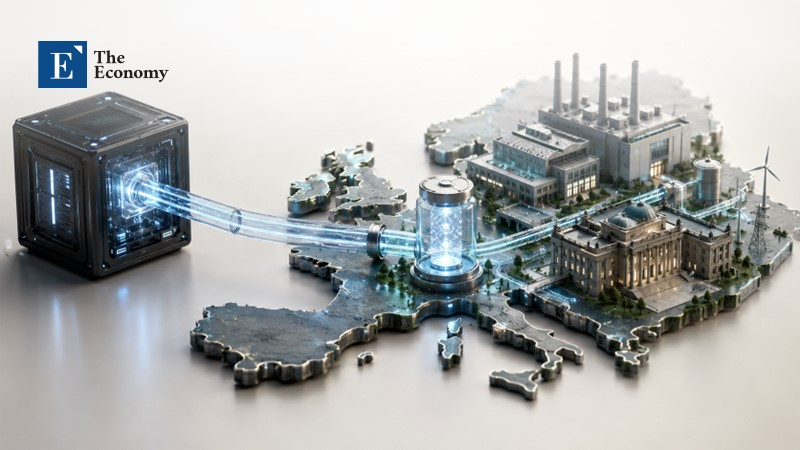
Europe has raised trade barriers against Chinese electric vehicles and moved to expand production within the region, but its heavy reliance on foreign suppliers of critical materials and components has emerged as a constraint on those policies. With refining and processing capacity concentrated in China and an insufficient battery supply base at home, tighter import restrictions could also increase production disruption risks and costs for European automakers. Building alternative supply chains requires substantial investment, while existing import volumes must be maintained throughout the transition, creating a dual financial burden. The capacity of companies and governments to absorb rising costs, coupled with affordability pressures on consumers, is putting Europe’s ambitions for supply-chain self-sufficiency to the test.
Refining and Processing as the Weakest Links in Europe’s Automotive Supply Chain
According to a report commissioned by the European Automobile Manufacturers’ Association (ACEA) from EY in Germany and the Czech Republic and released on September 29, local time, vulnerabilities in Europe’s automotive supply chain are concentrated in the refining and processing stages that convert raw materials into automotive-grade inputs. An analysis of the supply chains for 10 critical materials and components, broken down by production stage, identified refining and processing as the most vulnerable stages for six of them.
The study, which examined geopolitical supply-chain risks associated with electrification and digital transformation, identified the concentration of processing capacity in a small number of countries and companies, along with limited alternative suppliers, as the principal causes. China’s dominant position in rare-earth refining, permanent-magnet production, and gallium and germanium processing was singled out as a factor increasing European automakers’ reliance on foreign suppliers. Even after securing raw materials, manufacturers must route them through specific production hubs to obtain inputs suitable for automotive manufacturing, leaving them exposed to export controls or production disruptions in those locations. Moreover, integrating new processing facilities into operational supply chains requires specialist expertise and skilled workers, as well as permits, technical validation, and automotive quality certification. These procedures take years, making it difficult to switch sourcing routes quickly when existing suppliers encounter problems.
With the expansion of alternative supply capacity proceeding slowly, rising demand for critical materials driven by electrification was also identified as a factor increasing procurement pressures on European automakers. Electric vehicle production and the expansion of digital vehicle functions require large quantities of semiconductors and power electronics, intensifying competition for supplies with the artificial intelligence (AI), data center, defense, and clean energy industries, which use the same inputs. Yet the automotive industry accounts for just 17% of semiconductor end demand and 3% of gallium demand, limiting its purchasing leverage over suppliers. These figures suggest that automakers may struggle to secure priority allocations when supplies tighten. Further advances in autonomous driving are also increasing reliance on semiconductors, sensors, gallium, and germanium, pointing to growing demand for the critical materials and electronic components needed in vehicle development.
Table 1. EU Automotive Supply-Chain Localization Policies and Key Constraints
| Category | Key Details | Industry Burden |
|---|---|---|
| Trade and localization policies | Introduction of countervailing duties on Chinese electric vehicles. Proposed application of European-content requirements to public procurement and subsidies under the draft Industrial Accelerator Act (IAA) | Higher production costs and supply disruption risks if trade in Chinese materials and components contracts. Potential exclusion of European manufacturers from support if European sourcing capacity is insufficient |
| Battery cell shortages | Supply shortfalls projected under all three demand scenarios, even with production reaching 306 GWh in 2032 | Potential failure of approximately 3 million vehicles to meet support eligibility requirements if the IAA takes effect in 2028, owing to insufficient European battery supplies |
| Critical material shortages | Cathode and anode material shortages potentially persisting until 2038–2040, even under the low-demand scenario | Delayed battery supply-chain localization and continued reliance on Asian materials |
| Production expansion challenges | High production costs for European battery cells, alongside financing risks and project delays at new factories | Higher costs and greater challenges in securing the production capacity needed to replace Asian supplies |
Tighter European-Content Requirements as a Burden on Domestic Automakers
This supply-chain dependence is expected to impose significant constraints on the European Union’s (EU) efforts to increase trade pressure on China. If import restrictions also curtail trade in critical materials and components, European automakers could face higher production costs and greater supply disruption risks. After introducing definitive countervailing duties on Chinese electric vehicles in October 2024, the EU unveiled a draft Industrial Accelerator Act (IAA) in March this year to promote manufacturing within the bloc. The proposal seeks to encourage regional production and investment by applying European-content requirements to public support, including procurement and subsidies. European automakers must therefore consider not only where vehicles are assembled, but also the origins of batteries and major components. If regulations tighten before sufficient supply capacity is available to meet European-content requirements, manufacturers within the bloc could themselves become ineligible for support.
In batteries, an assessment has already warned that production capacity is unlikely to keep pace with the localization timetable required by policy. According to an analysis commissioned by ACEA from market research firm Mobility Global and released on September 22, supply shortfalls are projected under all three demand scenarios examined, even if European battery cell production rises to 306 gigawatt-hours (GWh) by 2032. In particular, the study estimated that, if the IAA takes effect in 2028, shortages of European batteries could prevent approximately 3 million vehicles from meeting the relevant support eligibility requirements. Cathode and anode material shortages could also remain unresolved until 2038–2040, even under the low-demand scenario. High production costs for European battery cells, combined with financing risks and project delays at new factories, are further increasing the burden of replacing Asian supplies.
Chinese Rare-Earth Export Restrictions and Disruptions to European Manufacturing
The damage European manufacturing could sustain if trade tensions with China escalate into restrictions on critical material exports has already been demonstrated by actual production shutdowns. In June last year, the European Association of Automotive Suppliers (CLEPA) said China’s rare-earth and magnet export controls had halted multiple production lines and factories in Europe. At the time, only about a quarter of the hundreds of export license applications submitted since April had been approved, while differences in review procedures across regions were also identified as a cause of supply delays. Because the affected components are used in both internal combustion engine vehicles and electric vehicles, the disruptions raised the risk of production losses spreading across vehicle categories. The episode suggests that additional EU tariffs intended to pressure China could also require the bloc to absorb domestic production losses resulting from Chinese supply restrictions. CLEPA’s call at the time for dialogue between EU and Chinese authorities to ensure transparent and predictable export licensing procedures came against this backdrop of mounting damage.
Disagreements among member states over what should qualify as European content are also interpreted as reflecting trade conditions that make sweeping restrictions on commerce with Asia difficult. According to Euronews, Germany proposed on September 24 that products from trading partners offering EU companies reciprocal market access should also qualify as European. The proposal would broaden eligibility to countries with free trade agreements (FTAs), members of customs unions, and signatories to the World Trade Organization’s (WTO) Government Procurement Agreement, among others. The Financial Times (FT) reported that Japan, the United Kingdom, Canada, and Türkiye could be included under this approach.
An Estimated $9.1 Trillion in Investment to Reduce Dependence on China
Even if the range of participating trading partners is adjusted, however, reducing foreign dependence built up over decades will inevitably require substantial capital investment. According to an analysis released by consultancy EY-Parthenon in July, the investment needed to replace China-linked supply chains could reach $9.1 trillion in the euro area and $800 billion in the United Kingdom by 2050. These estimates cover not only manufacturing facilities and transport networks, but also the cost of establishing research and development (R&D), software, supplier networks, and workforce capabilities. Based on an assumed restructuring of supply chains across major industries, including automotive manufacturing, the estimates illustrate the scale of investment Europe would need to undertake as it reduces imports from China. The study projected that, after initial investment in selected sectors with particularly high dependence, funding requirements would rise sharply as the range of inputs targeted for replacement expands.
This investment burden has also been reflected directly in European public funding for industry. In December last year, the European Commission unveiled a “Battery Booster” strategy allocating approximately $2.04 billion to the region’s battery production base as part of its automotive industry support package. Of that amount, approximately $1.70 billion was earmarked for interest-free loans to European battery cell manufacturers. The aim is for the public sector to share the financing costs companies face while building production capacity. Although interest-free funding can help reduce the initial investment burden, companies remain responsible for repaying the principal and achieving commercial profitability. If production expansion and sales fall short of plans, investment recovery will be delayed, inevitably increasing pressure on companies to seek further support or pass costs through to product prices.
Import Bills and Transition Investment as a Dual Burden on European Automakers
As companies pass their costs through to selling prices, restrictions on low-priced imports could further increase the financial burden on consumers. The price competitiveness of Chinese products has helped restrain inflation in Europe. In an Economic Bulletin published in the first half of the year, the European Central Bank (ECB) found that falling prices for Chinese imports had contributed to lower goods inflation in the euro area. In March this year, prices of Chinese imports fell 3.3% from a year earlier, while China’s share of the euro area’s imports from outside the currency bloc was found to have risen from 14% to 17% since 2024. This indicates that European businesses and households have used China’s production base to reduce procurement and purchasing costs. Accordingly, a narrower choice of competitively priced imported vehicles could leave consumers with fewer opportunities to lower their purchase costs. The International Energy Agency (IEA) has also identified upfront purchase prices as a major obstacle to electric vehicle adoption in Europe.
Given these affordability pressures on consumers, European automakers have limited scope to pass supply-chain transition costs through to vehicle prices. They must continue purchasing foreign materials and components until alternative production facilities are operating reliably, while also committing funds to building new supply chains. Procurement costs needed to sustain existing production will therefore overlap for a considerable period with investment aimed at reducing import dependence. EY-Parthenon estimated that, if companies bear the cost of supply-chain restructuring, capital expenditure in certain industries, including automotive manufacturing, machinery, and electronics, could rise to as much as twice existing levels. Companies unable to pass these additional outlays fully through to product prices must simultaneously protect profitability and secure funding for new investment. Governments also have limited fiscal scope to keep expanding support, leaving room for delays in the development of regional production capacity. Throughout that period, Europe must continue paying for the Asian materials, components, and finished vehicles needed to sustain its production and consumption.
Anne-Marie Nicholson is a fearless reporter covering international markets and global economic shifts. With a background in international relations, she provides a nuanced perspective on trade policies, foreign investments, and macroeconomic developments. Quick-witted and always on the move, she delivers hard-hitting stories that connect the dots in an ever-changing global economy.
Similar Post