Global Automakers Face Profit Squeeze from Low-Priced Chinese Cars, Turn to Trade Protection and Factory Automation

Oliver Griffin is a policy and tech reporter at The Economy, focusing on the intersection of artificial intelligence, government regulation, and macroeconomic strategy. Based in Dublin, Oliver has reported extensively on European Union policy shifts and their ripple effects across global markets. Prior to joining The Economy, he covered technology policy for an international think tank, producing research cited by major institutions, including the OECD and IMF. Oliver studied political economy at Trinity College Dublin and later completed a master’s in data journalism at Columbia University. His reporting blends field interviews with rigorous statistical analysis, offering readers a nuanced understanding of how policy decisions shape industries and everyday lives. Beyond his newsroom work, Oliver contributes op-eds on ethics in AI and has been a guest commentator on BBC World and CNBC Europe.
Authored On
Modified
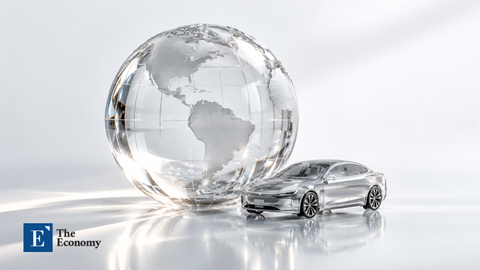
Global automakers' profits decline as Chinese exports expand and electrification costs mount
EU steps up pressure on Chinese EVs through countervailing duties and local sourcing requirements
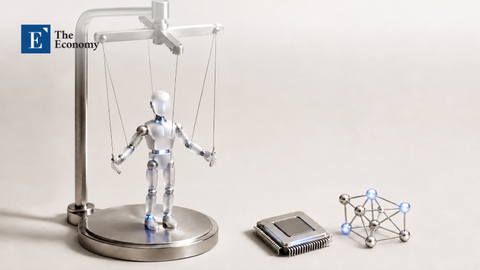
Hyundai and Tesla expand humanoid robot deployment in the race to cut production costs

Profits across the global automotive industry fell sharply in the first half of this year. Low-price competition from Chinese electric vehicle manufacturers, combined with the cost of transitioning to electrification, is eroding profitability at major automakers. Governments are responding with tariffs and local production requirements to protect their domestic industries, while manufacturers are accelerating production automation using humanoid robots to reduce costs and defend margins.
Automakers' Profitability Under Pressure
According to a report titled “Changes in Automakers' Profitability and Their Implications”, published by the Korea Automotive Technology Institute (KATECH) on September 29, data from Germany's Center of Automotive Management (CAM) show that earnings before interest and taxes (EBIT) at 25 global automakers fell 16.3% year on year in the first half of this year. That contrasts with a decline of just 1.0% in their combined revenue over the same period. The deterioration is also evident in annual figures. KATECH's own analysis found that the combined annual operating profit of 20 major global automakers peaked at $19.6 billion, approximately KRW 26.542 trillion, in 2023, before falling to $15.9 billion, approximately KRW 21.531 trillion, in 2024 and $5.9 billion, approximately KRW 7.99 trillion, last year. Their combined operating margin plunged from 7.9% in 2023 to 2.3% last year.
KATECH described the trend as unusual even allowing for the industry's characteristics. It attributed the deterioration to rising overseas supplies of Chinese-made vehicles and the burden of maintaining production across multiple powertrain types during the transition to electrification. Kim Han-sol, a senior researcher in KATECH's industry research division, said sales of Chinese vehicles were rising rapidly in major markets such as Europe, while intense price competition within China was spreading globally. He added that, although global automakers continued to transition towards battery electric vehicles (BEVs), regional demand and regulations required them to maintain internal combustion engine (ICE) and hybrid electric vehicle (HEV) businesses while simultaneously investing in BEV platforms, batteries and manufacturing facilities.
Chinese Automakers Gain Ground
A range of indicators illustrates the growing influence of Chinese automakers. According to the China Association of Automobile Manufacturers (CAAM), China's passenger car exports rose 21.9% last year to 6.038 million vehicles. Exports in the first eight months of this year exceeded 6.2 million, already surpassing last year's annual total. Overseas shipments in August reached around 890,000 vehicles, up 67.1% year on year. Electric vehicles, in particular, have become a central driver of the Chinese automotive industry's international expansion. According to the International Energy Agency (IEA), sales of Chinese-made EVs in Europe reached around 940,000 last year, an increase of nearly 50%, while China accounted for 60% of the European Union's total EV imports. Growth was also rapid outside the United States and Europe. Imported Chinese-made vehicles accounted for around 55% of EV sales in those markets. Sales of Chinese-made EVs rose 130% year on year in Southeast Asia, 60% in the Middle East and 55% in Latin America.
Price is widely regarded as a key competitive advantage for China's EV industry. According to the IEA's recently published Global EV Outlook 2026, around 70% of BEVs sold in China last year were cheaper than comparable internal combustion vehicles even without government purchase support. Their sales-weighted average purchase price also fell by more than 10% year on year. A comparison of European EV prices by the International Monetary Fund (IMF), drawing on European Commission data and other sources, found that Chinese manufacturers' EVs were, on average, around 20% cheaper than comparable European models in 2023. In the mid-size segment, Chinese vehicles cost €31,000, approximately KRW 47.6 million, compared with €38,000, approximately KRW 58.4 million, for European vehicles—a difference of around 18%. In the premium segment, prices were €41,000, approximately KRW 63 million, and €51,000, approximately KRW 78.35 million, respectively, a gap of roughly 20%. For luxury vehicles, the difference widened to 34%, with prices of €68,000, approximately KRW 104.5 million, for Chinese models and €103,000, approximately KRW 158.25 million, for European models.
Growth in Scale Fails to Deliver Higher Profits
The expansion of Chinese automakers' businesses, however, has not translated into improved profitability. An analysis of National Bureau of Statistics (NBS) data by the China Passenger Car Association (CPCA) found that profits in China's automotive manufacturing sector fell 16% year on year to 253.4 billion yuan, approximately KRW 5.12 trillion, in the first eight months of this year. Revenue grew 2.9% to 7.0062 trillion yuan, approximately KRW 141.559 trillion, but costs rose faster, increasing 4% to 6.237 trillion yuan, approximately KRW 126.0173 trillion. The industry's profit-to-revenue ratio consequently fell to 3.6%, continuing a decline from 4.3% in 2024 and 4.1% last year.
Profit per vehicle also declined. According to the CPCA's analysis, revenue per vehicle across China's automotive industry value chain rose 5.5% year on year to 345,000 yuan, approximately KRW 69.7 million, in the first eight months of this year. Costs per vehicle increased 6.7% to 307,000 yuan, approximately KRW 62 million. Profit per vehicle consequently fell 5.1% to 12,000 yuan, approximately KRW 2.4 million. As manufacturers cut vehicle prices to secure sales volumes and market share, the gap between business expansion and profitability widened. CPCA Secretary-General Cui Dongshu said the industry was facing the combined pressures of weak domestic demand and rising costs this year.
Table 1. Changes in Global Automakers' Profitability
| Category | Key Trends |
|---|---|
| Global profitability | Revenue declines remain limited, while operating profits and margins fall rapidly |
| Drivers of declining profitability | Growing overseas supply of low-priced Chinese vehicles and mounting costs of producing internal combustion, hybrid and electric vehicles simultaneously |
| China's overseas expansion | Price-competitive Chinese-made EVs gain sales in Europe, Southeast Asia, the Middle East and Latin America |
| Chinese manufacturers' profitability | Weak domestic demand, lower selling prices and rising costs reduce margins and profit per vehicle |
EU Adopts a Strategy of Stronger Trade Barriers
As profit growth slows across the global automotive market, governments are stepping up efforts to protect domestic industries and restructure supply chains. The EU, in particular, has steadily raised trade barriers targeting Chinese-made EVs. The European Commission launched an anti-subsidy investigation in October 2023 after concluding that Chinese government subsidies were distorting competition in the European EV market. Since October 30, 2024, it has imposed definitive countervailing duties of 7.8–35.3% on BEVs manufactured in China, in addition to the existing 10% passenger car tariff. Manufacturer-specific countervailing rates include 17.0% for BYD, 18.8% for Geely and 35.3% for SAIC. The measures remain in place for five years unless an expiry review is initiated.
The EU's scrutiny is also extending to production arrangements that could circumvent tariffs and to investment within the bloc. In its Industrial Action Plan for the European Automotive Sector, published in March last year, the Commission said it would consider introducing rules of origin tailored to the EV ecosystem in trade defence measures. The aim is to prevent Chinese manufacturers from bypassing existing tariffs by establishing production bases in third countries that enjoy preferential tariff arrangements with the EU. The plan also envisaged requiring Chinese investment within the EU to make a greater contribution to the local industrial base. One subsequent proposal intended to give legislative effect to this policy direction is the Industrial Accelerator Act (IAA), formally proposed by the Commission in March this year. The proposal links local production requirements to EVs purchased through public procurement and vehicles receiving certain forms of public support, while also imposing separate local contribution conditions on large-scale foreign direct investment (FDI).
Humanoid Robot Automation Accelerates
Major automakers are also accelerating factory automation. Their aim is to reduce labour costs and production variability in repetitive tasks, lowering unit production costs and protecting profitability. At the Robot Metaplant Application Center (RMAC), which opened on September 21 at Hyundai Motor Group Metaplant America (HMGMA) in Georgia, Boston Dynamics' Atlas humanoid robot is learning to sort and position automotive parts in assembly order. Hyundai Motor Group plans to deploy Atlas in actual production processes from 2028, beginning at HMGMA, and expand its use to more complex tasks, including component assembly, in 2030. The group has also outlined plans to gradually deploy a total of 25,000 Atlas robots across Hyundai and Kia's global manufacturing sites. Possible expansion to European plants is also being discussed in concrete terms. In a September interview with the local automotive industry association, Petr Michník, head of administration at Hyundai's Nošovice plant in the Czech Republic, said the factory was discussing the introduction of Atlas with Boston Dynamics and Hyundai Motor Group headquarters and hoped to begin testing and operating humanoid robots in the Czech Republic as soon as possible.
Tesla is pursuing production automation with its own humanoid robot, Optimus. This year, the company dismantled parts of the existing Model S and Model X production lines at its Fremont factory in California and converted them into Optimus production lines. It is also increasing investment in supply chains and manufacturing facilities for mass production. According to materials released by Tesla earlier this year, the third-generation Optimus was designed for mass production from the outset, with production targeted to begin this year. For now, however, Optimus is being used primarily for a limited range of internal tasks. Tesla has also acknowledged significant difficulties in assembling precision components and establishing new supply chains as it scales up production.
Oliver Griffin is a policy and tech reporter at The Economy, focusing on the intersection of artificial intelligence, government regulation, and macroeconomic strategy. Based in Dublin, Oliver has reported extensively on European Union policy shifts and their ripple effects across global markets. Prior to joining The Economy, he covered technology policy for an international think tank, producing research cited by major institutions, including the OECD and IMF. Oliver studied political economy at Trinity College Dublin and later completed a master’s in data journalism at Columbia University. His reporting blends field interviews with rigorous statistical analysis, offering readers a nuanced understanding of how policy decisions shape industries and everyday lives. Beyond his newsroom work, Oliver contributes op-eds on ethics in AI and has been a guest commentator on BBC World and CNBC Europe.
Similar Post